
EXPERT: Frank Budelewski - WBFF pro bodybuilder, strength specialist and arm wrestling competitor and coach.
Whether it’s an organized contest at your local drinking hole or for settling a bet against your buddies, being able to win an arm wrestling match really separates the boys from the men. It’s about pitting your guns against the next guy’s in the ultimate battle of skill, power and mental fortitude.
And once the battle is over, you can either bask in the glory of your victory, like a modern-day duelist, or whimper in the shadows, licking your wounds.
It’s not tough to work out which camp you’d rather be in, because most men are desperate for that kind of arm strength in their arm-ory. Sadly, if you think your regular routine will prepare you for it, you’re wrong.
Research at the iWorx advanced physiology laboratory found that arm wrestling requires a team effort from your biceps, forearms, chest, lats, triceps and shoulders. So jumping in to an impromptu match of this nature can cause some serious damage.
One study in the German sports journal Sportverletz Sportschaden found that the most common injury was a fracture to the humerus and that regular training for this sport is key to limiting the intensity of these injuries. In other words, don’t take it lightly.
Fortunately, the unique training plan on the following pages will help you overcome the fiercest competition to become a hero, even if it is for just a few glorious minutes. Get ready to go over the top.
HOW TO GAIN ARM WRESTLING POWER
Group 1: Fingers, Wrist And Forearms.
Being able to torque your wrist more powerfully than your opponent will help you create and gain a better and higher hand position. This gives you the positional edge to put more power behind your wrestling arm.

A) Rest a sledgehammer on the ground, weighted end on the floor and handle facing upwards. Place the fingers of each of your hands together and open them apart. Now place the handle of the sledgehammer in between your fingers and raise it off the ground.
B) Walk your fingers up and down the handle without using your thumbs. You’ll use your top fingers to hold the hammer while your bottom fingers re-grip lower on the handle.
A) Sit on the edge of a bench and grab a barbell with a shoulder-width overhand grip. Rest your forearms on your thighs with your wrists going just beyond your knees.
B) Raise the barbell by pointing your knuckles upward as high as possible. Return until knuckles are pointing downward.
A) Stand holding a dumbbell with a weight on just one end. Hold the unweighted side, keeping your elbow locked and close to your side.
B) Bend your wrist to raise the weight up, pause and then lower it.
A) Loop a short towel over a pull-up bar. Grab one end of the towel in each hand, palms facing each other, and hang with your arms straight.
B) Bend your elbows to pull yourself up until your chin crosses the plane of the bar. Slowly lower yourself to the start.
Group 2: Biceps
These muscles are tasked with maintaining your arm and body position so that your forearms and wrists have a platform to work off.
A) Stand with your feet hip-width apart while holding a dumbbell in each hand. Your palms should be facing each other.
B) Bend your elbows to curl the weights to a point that’s just below your shoulders. Squeeze your biceps at the top of the movement, then slowly lower them to the start.
A) Hold a barbell with an underhand grip and position yourself at the front side of the preacher bench (the part where the arms usually lie). You should be at a 45º slant with your torso and stomach pressed against the front side of the preacher bench.
B) Bend your elbows to curl the barbell upwards.
Group 3: Triceps
Get the strength required to finish off your opponent when in a dominant position.
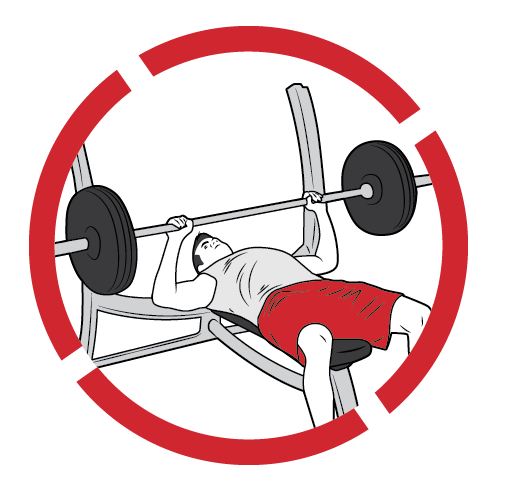
A) Lie on a bench with your feet flat on the floor. Grab the barbell with an overhand grip (palms facing away from you), your hands slightly wider than shoulder-width apart.
B) Remove the bar from the uprights and position it above your chest, then lower it halfway to your chest. Straighten your elbows to press the weight back up until your arms are straight, but not locked.
THE WINNING ARM WRESTLE TECHNIQUE
Step 1: Walk up to the table and stand with your shoulders square on to it.
Step 2: If you’re using your right hand, place your right foot centered under the table, hips pressed against the edge and your left leg outside the table leg. Bend your knees slightly. You should feel as though you’ll fall backwards if you let go of your opponent’s hand.
Step 3: When you lock hands with your opponent, the most basic technique is to curl your wrist so your wrist bone touches your opponent’s, and your wrists wrap around each other’s. This is called a hook.
Step 4: When you begin, you should be standing tall and have your nose as close to your hand as possible. Lock that arm and keep it tight. Do not allow your opponent to open up your arm position or pull it towards him.
Step 5: Row (make small backwards and forwards movements) that arm back as if you want to pull your opponent to your side of the table. This will open his arm up – hopefully, securing victory before you’ve even started.
Step 6: The moment you feel his arm open, drop all your bodyweight to the side while keeping your opposite elbow high. Victory is yours for the taking.
View more ARM WRESTLE TECHNIQUE articles