
Justin Gaethje has spent a career giving everything away to his fans, but now he’s seeing if control can finally give something back to them.
“This is my last chance.”
This is what Gaethje said on his YouTube channel, not for sympathy or leverage. He said it because there’s no reason to float falsehoods that he’s in the prime of his career. At 37, he’s inhabiting a body that’s clocked up decades of violence, but he understands exactly where he’s at amidst the aftermath. This must be a growing feeling, considering his classmates, who include the likes of Holloway and Poirier, are slowly graduating to either defeats or retirements. He’s not at the start of something new but standing inside the final chapter of something he’s spent a lifetime building. Fortunately, he has the world of experience to control the outcome because what makes this moment different is that he hasn’t arrived desperate. He is here deliberately because the reckless brawler in him, who once treated defense like the terms and conditions nobody reads, has quietly been replaced by a fighter trying to be perfect for 25 minutes. Few know better about what’s required, because he’s been there before. His last three wins have come from decisions because he’s fought smart, and this will be his second time fighting for the interim lightweight title, which is also called a title eliminator. This doesn’t mean he needs to abandon who he is, but he will most likely seek to build a new legacy using tactics we haven't seen from him before.
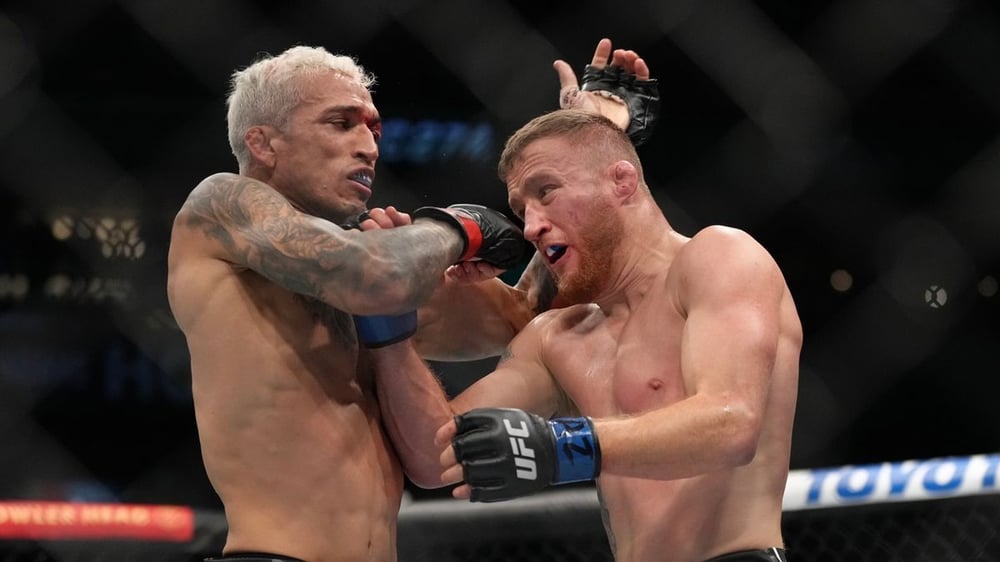
THE COST OF GIVING EVERYTHING
Gaethje has built an almost cult-like following thanks to attack that carries the chummed aggression of a great white shark. However, this pursuit of hard-hitting perfection runs directly against the fighter Gaethje once openly described to us.
“Safety is never going to be my number one concern when I’m in a fight,” he once told Fighters Only, admitting that when things got wild, his instincts usually took over. To this end, he’s always known the risks and just accepted them.
“I know this doesn’t last forever and that it’s a really small window and that it’s a really small window but I’m going to do the best I can and create the biggest platform I can so I can make a living for when I’m done doing this,” he told us, fully aware that his unique style came with an expiry date.
This attitude has never come from an overinflated ego or bravado. Instead, it’s always been driven by a deep-seated generosity he’s had for the fans. He wants to give them what they want, and that’s because he carries a more generous spirit than people might realize.
“He knew people were paying for tickets and he was going to give them the best fight he’d ever seen,” Trevor Wittman, Gaethje’s long-time coach. “It’s a gift, and he’s a giver. Anyone who knows him knows what type of person he is. He gives you time, he talks to you. He doesn’t regard himself as a star. He’s not gone ‘showtime.’ He’s not changed from his first fight until now. And he never will change. He’s just a really good person and a pleasure to work with.”
Gaethje has never shied away from this trade-off, where he believes he needs to give everything because it’s what the fans deserve.
“If I was going to change, I would have already started by now,” he once insisted to us. “I’d be going down an alternate path.”
What makes these words so compelling is that he has changed because that’s probably the next thing that the fans want. They want to see him win a championship belt. They want him to succeed. They want him to be recognized for his contributions to the sport. The way to deliver that to them is to adapt, rather than chase the anarchy we loved at UFC 300 and see whether control can extend the violence, rather than end it faster.
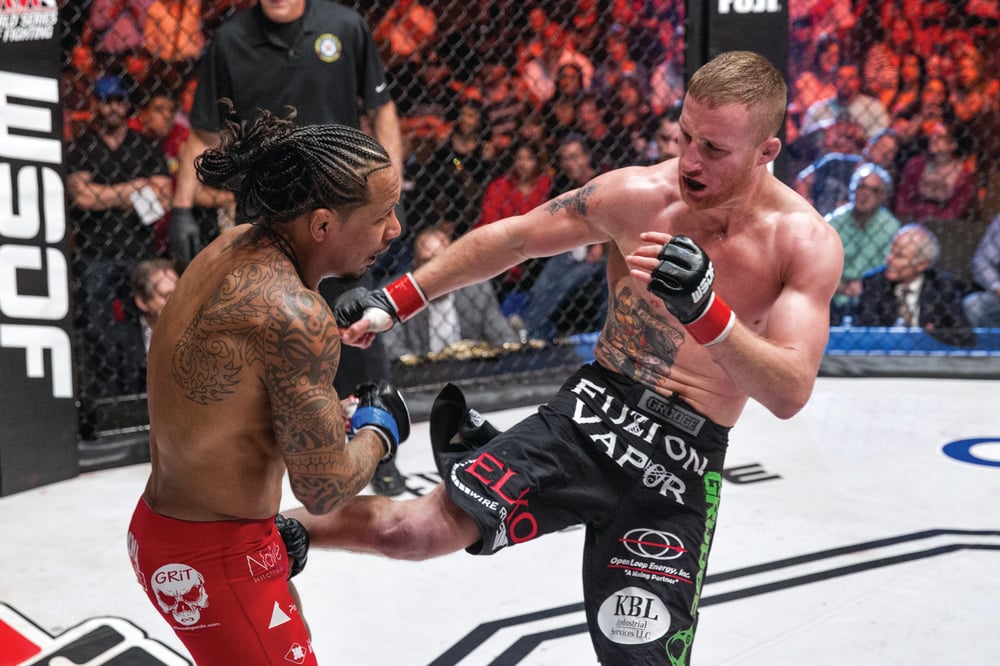
CHOOSING CONTROL
The version of Justin Gaethje that’s been evolving over the years did not arrive suddenly, and it certainly was not imposed on him. It emerged from years of self-awareness, recognizing what costs his style demanded in return.
“If you want to be the most exciting fighter in the world, you have to pick how many fights you have left in you,” Trevor Wittman once explained, long before Gaethje reached this stage of his career.
Gaethje has clearly taken that warning seriously, even if the adjustment took time. However, it’s a price he’s willing to pay.
“I said after I fought Poirier that I had five wars left. Five all-out wars like the Dustin Poirier and Eddie Alvarez fights,” he admitted to us some years ago. “But I wouldn’t consider my last four fights wars. I didn’t take any damage or anything like that.”
That internal shift away from the mindset of always being ‘The Highlight’ marked the beginning of a different calculation that he’s working on today. Perhaps there’s now less emotional spending and some more deliberate choices.
“I had to make the choice to fight differently,” Gaethje said. “I wasn’t sure it would work but my coach is great and, like I said, I’ve had these skills forever.”
What makes this moment compelling is that Gaethje is no longer trying to prove he can go the distance in this sport. He already has on and off the canvas. Now he is testing whether discipline, timing, and restraint might buy him something the highlights never could. Time. Clarity. And one final opportunity to turn all that hard work into a permanent legacy.
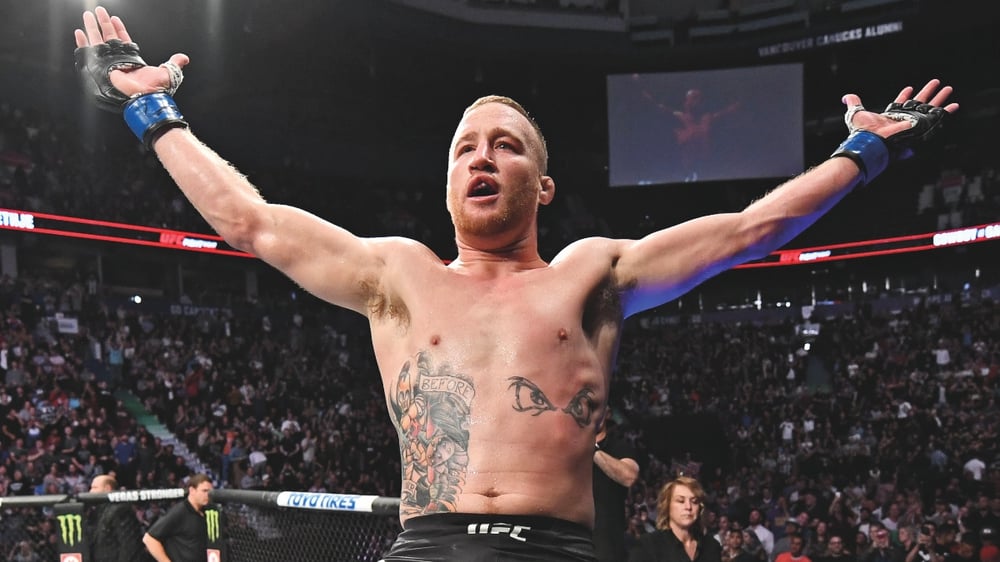
PERFECT FOR 25 MINUTES
What Gaethje recently described on his YouTube channel is not a reinvention, but a compression of sorts, in which he wants his career distilled into a single demand. He has no interest in pretending this moment opens a new chapter.
“It would be foolish to think that this is the beginning of my career,” he said.
That honesty matters because it reframes everything around him. The interim belt. The opponent. The politics of the division. None of it exists without that underlying truth. Gaethje knows the scale of what he’s asking because he understands how rarely perfection shows up in this sport.
“I’ve had 38 fights, 31 professional, and these are 15-minute or 25-minute time slots, and it’s impossible to be perfect every time,” he said. “So, the challenge right now is for me to be perfect for 25 minutes, seven weeks from now.”
That is a radically different mindset from the fighter who once tried to overwhelm opponents with volume and durability. Right now, perfection is situational, tactical, and temporary.
“I’m planning on fighting perfect. And when I fight perfect, I think that you have to get lucky to beat me,” Gaethje said.
Few other fighters can make this statement because it’s rooted in experience rather than swagger. And nobody knows the margins for error are very slim.
“There’s a lot of things, a lot of variables. It’s one day at a time for now. I worked my ass off last week, I’m going to work my ass off this week, and these days are going to add up.”
This is not a man promising domination, but rather preparation. And when he talks about how he wants this to end, there is no ambiguity.
“That’s the best way I can ever imagine finishing off my career.”
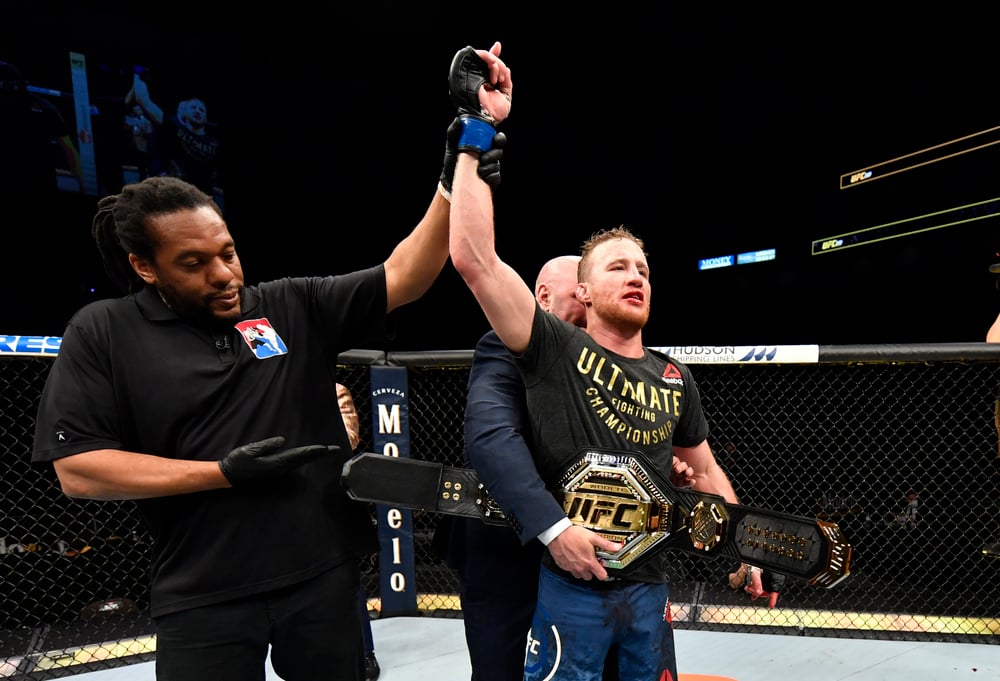
WHAT HE WALKS AWAY WITH
Gaethje has never treated MMA as something he could do forever. Even in the loudest years of his career, he spoke about the end with a clarity most fighters avoid.
“I want to play golf when I’m 50, 60 years old,” he told us. I don’t want to do this forever.”
That perspective changes how this final stretch reads. This is not a man trying to squeeze more hits on a fading body. It is a fighter trying to leave the sport on his own terms, with his mind, identity, and sense of self intact. He has always known how fragile relevance can be.
“You’re only remembered by your last fight,” he said. “Right now, that’s my last fight, but I’m going to have a next fight.”
That awareness cuts deeper, because the next fight may define the entire arc rather than just the moment. Justin Gaethje will forever be ‘The Highlight.’ That version of him is permanent. The wars, the bonuses, the nights where survival and spectacle blurred together. But what makes this chapter different is that it is not driven by the need to be loved or feared. It is driven by the desire to leave whole. To prove that evolution is not betrayal. If this truly is his last chance, then chasing perfection is not a contradiction of who he has been. It is the most honest expression of it.
...