

issue 220
August 2025
Backed by fascinating new research, Ray Klerck explores how MMA is quietly becoming one of the most powerful science-backed tools for women to rebuild control, strength, and connection.
MMA doesn’t look like therapy. It's more like something you’d need therapy to recover from. There’s sweat. Bruising. Bleeding. Probably a playlist that sounds like they’re plotting against you. However, for a growing number of women, it delivers something the couch never could: genuine healing. A June 2025 study in the Journal of Gender-Based Violence followed women with lived experience of trauma who then gave MMA training a crack for the first time. They didn’t join in because they wanted to compete. They did it to reclaim a sense of control in their lives. An outsider may think they were walking toward violence, but instead, they found a voice where their nervous system could reset so that their pasts didn’t dictate their present. The result? Emotional regulation. Self-trust. A reclaimed identity they could carry without apology. Here’s why our sport might be the best thing every woman should do, even if she never has a real bout.
MMA REBUILDS A RELATIONSHIP WITH YOUR BODY
Sometimes trauma can create a body-mind disconnect where you don’t feel control. Flinching at a loud sound. Freezing in conflict. Feeling like an uninvited visitor in your own skin. For these women, MMA training had a pretty much opposite effect. In the study, they reported that it helped them “reconnect with their bodies” and “experience their bodies in a powerful and present way.” The training seemed to be a means for them to reconnect with themselves without having to relive painful experiences. It created a place where they could feel strong in a world that had told them to shrink and gave them a reason to take up space.
FEMININE ENERGY THAT STAYS PRESENT
There’s no shifting into the stationary-bike-zone-out headspace. Tomorrow’s emails or grocery lists are not front of mind. Every practice round demands your full attention, so you know where your feet are placed and how your hips are turning. For the women in the study, that focus became something they carried with them when they left the gym. One of the women said it was her “mental clarity,” which is the kind of calm that comes from doing instead of overthinking. This wasn’t about learning to survive the stress but operating inside it with confidence. To stop second-guessing and act when it counts.

MMA HELPS YOU PRACTISE POWER SAFELY
For anyone who has been hurt before, there can be a fear that being stronger can be a double-edged weapon, protecting you and used against you. Here’s where MMA flips the narrative. The research outlined how the women described the gym as a safe space where they could “practise feeling strong” in ways that were “supported and encouraged.” Here, they could use all their force so it was respected and expected, never shamed. One of them even said it helped to see herself differently. They were able to explore all of their power without fearing that they might be judged.
YOU GET BOUNDARIES AND PRACTISE THEM
MMA thrives on clear rules, hierarchy, and respect. A tap. A bell. A boundary. Learning to operate within those limits empowered them to set their own outside the gym. One participant explained how it gave her “space to build boundaries” that were not just with herself, but with other people. This wasn’t a hardening or being confrontational, but more about finding the clarity to recognise what felt okay and what didn’t. This developed what the study called interpersonal effectiveness, which they defined as being able to engage with others without losing yourself in the process.
YOU’RE NOT AFRAID TO BE IN ANY ROOM
For many survivors, standing out can feel risky. Blending into the background becomes a form of self-defence. MMA broke that reflex quickly. One participant described how the training helped her feel “less shame about being seen and taking up space.” Every gym is a space where there zero-Fs are given for being loud, sweating, or standing your ground. Over just 12 weeks, they were able to undo the years of conditioning that told them to be small, compliant, or accommodating.
CONNECTION WITHOUT SMALL TALK
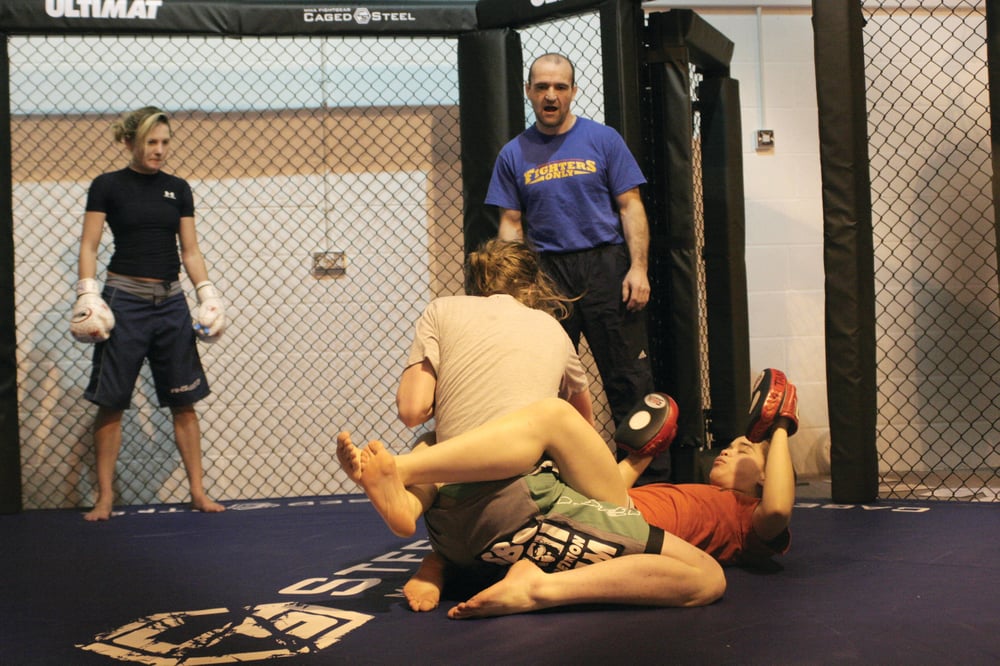
Finding a crew can be tough. It often takes years of emotional nuances and sometimes politely awkward conversations. MMA condenses friendship into weeks. The research found that these women “formed strong relationships with each other” purely by training together. MMA gave their friendships all the things good buddies crave. Mutual respect. Group cohesion. A sense of safety. When you’re holding the pads for someone, you get a front row seat to them pulling the worst faces they have to offer, and vice versa. You can be your rawest self, and those shared moments become the foundation of lasting camaraderie.
YOU’RE NOT BROKEN AND NEVER WERE
MMA seems to create a unique kind of rehabilitation that many other methods struggle to achieve. The idea wasn’t to fix them, but rather to learn who they were. The research concluded that “MMA helped women make sense of who they were and how they wanted to be.” There’s no long analysis, no endless retelling of the past. It’s more about showing up, punching on, and learning to be better. It’s not the gloves or the drills that create the change. It’s the proof you give yourself that you’re in control now.
A HEALING THAT HITS DIFFERENT
No one’s here to say MMA will replace therapy. But for some women, it’s what got real-world results. Not everyone wants to discuss their feelings and rehash hurtful past experiences. Sometimes talking about strength and feeling it grow in your quads are two different beasts that can be equally effective. This study didn’t try to make pro fighters out of the women. It simply invited them into an environment where punching was less violent and more like healing. The recovery came from the doing, camaraderie, and moments where they showed up for themselves without apology. You don’t need a win or title belt to change your life. You just need a pair of gloves. A crew. A reason to keep coming back.
...