

issue 220
September 2025
E. Spencer Kyte traces the exits of Cruz, Aldo, and Poirier, asking if the end of their journeys signals the end of something bigger.
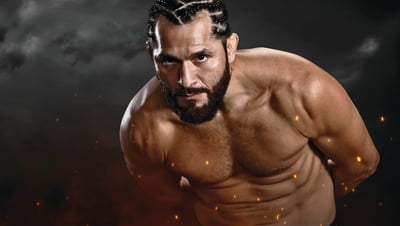
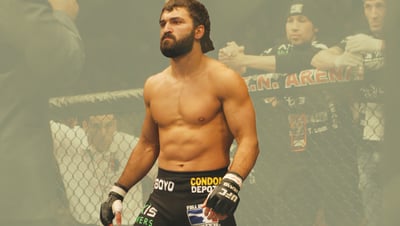
Retiring fighters. Every year, it’s one of the sport’s overarching narratives. A thread that stitches the months together. However, there is something about a trio of competitors that bid the sport adieu this year that has made it feel like the end of an era. The three that stand outs are Dominick Cruz, Jose Aldo, and Dustin Poirier. Of the three, one holds more weight than the others.
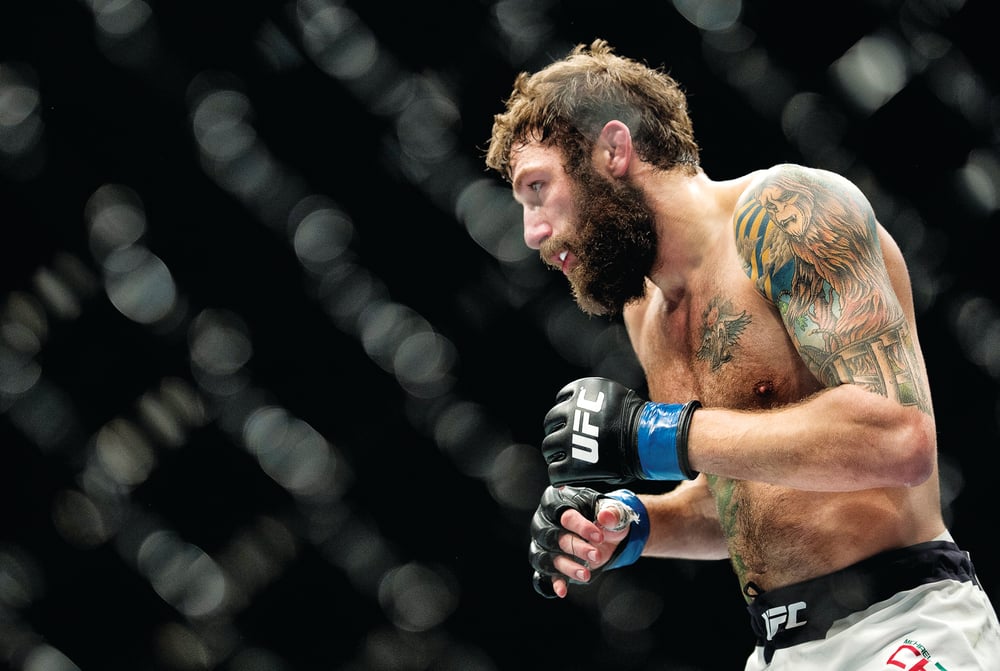
“The name that stands out when I think of the notable retirements in 2025, that really had an impact on my foray into being a fan of mixed martial arts, is Dominick Cruz,” says UFC welterweight and analyst Michael Chiesa, when asked about this year’s prominent retirees. “That’s the name that stands out to me because I will never forget the days of the WEC and seeing Dominick fight. This was after I started getting a hold of UFC, I’m starting to watch it, and WEC is becoming available on Versus. I’ll never forget watching Dominick Cruz fight because it was something that I had never seen before. It was a style that was so new. Even to this day, nobody has ever fought like Dominick Cruz. He’s a one-of-one fighter. Dominick’s style was more unique than anybody’s, and he made me become so more of a fan of mixed martial arts. He really showed me there are more layers to this game than I even know. This was before I started fighting, started training, before I had a grasp on the sport in the way that I do now, but Dominick Cruz showed me there was so much more to mixed martial arts than just what I had seen.”
DIFFERENT ERAS, INDELIBLE MEMORIES
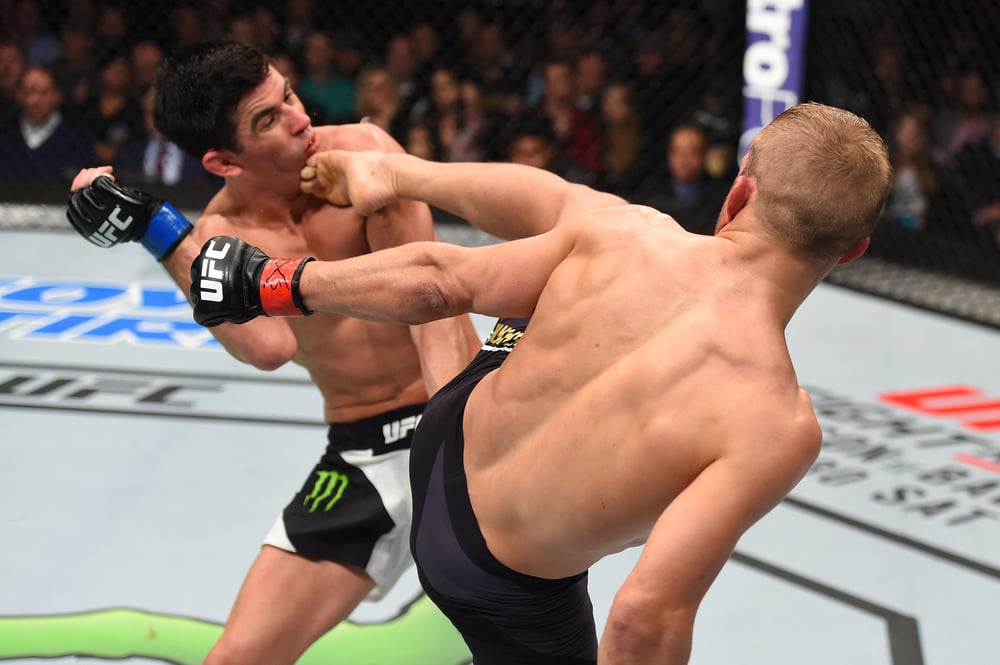
Cruz stood out because of his movement and footwork, operating in what felt like an unpredictable pattern of feints and exits. Aldo also stood out as a generational evolution, and for all his quiet humility, the ‘King of Rio’ had undeniable swagger. From memorably bolting into the crowd following one win to talking out to ‘Run This Town’ ahead of his championship clash with Faber, Aldo oozed bravado, all while refusing to look at his opponents when they faced off at weigh-ins or during introductions. Much like Cruz, but in a very different way, the Brazilian was an ‘I’ve never seen anyone like this guy’ fighter when he exploded into the greater spotlight.
“I think what makes this era of fighter stand out — these three main guys we’re talking about — is that they’ve transcended so many different paradigm shifts in the sport, even just from a broadcast standpoint,” offers Chiesa, connecting the dots on why the trio of Cruz, Aldo, and Poirier departing feels like we’re watching an entire era to an end. “They’ve gone from Versus to Fuel TV to FOX to ESPN, and they were a pivotal part in the growth of the sport and what it’s become. Think about the monumental events they’ve been a part of?”

CAREERS LAID BARE
A lot of people watched the majority of these athletes’ careers unfold. The good, the bad, and the heartbreaking. They were competitors who remained at the forefront as the sport flourished into the monolith it is today. All three had massive moments in their first UFC appearances. Poirier upsetting Grispi at UFC 125 t. Aldo defending his title against Mark Hominick at UFC 129. Cruz facing his chief rival, Faber, at UFC 132. Ironically, the single most memorable moment of both Aldo's and Cruz’s careers was a loss. Aldo rushing in and getting put to sleep by Conor McGregor. Cruz getting styled on by Cody Garbrandt. While Poirier frequently fell on the wrong side of the results in the biggest spots. That’s part of what endeared them to us. Whether you were rooting for them or against them, you felt some kind of way about them. They were inescapable, and they were a massive part of fighting when MMA really got its hooks into us, and so to see them each walk away in a matter of months feels like a massive change.
DECIDING TO CALL IT
Although Aldo, Cruz, and Poirier share similarities that bond them, each left in different ways for different reasons. Aldo retired, returned, and then retired. Cruz was prepping for a bout when he made his announcement, thanks to an injury. Poirier’s exit was orchestrated as a last hurrah in his native New Orleans.
“Dominick didn’t get to go out on his own terms,” says Chiesa, who is admittedly in the twilight of his career and likely to face his own retirement decision in the next handful of years. “He left a part of himself behind with this sport. Through his training and fights, he consistently pushed himself to his limits. His mental toughness is something to be studied. We all know the fight he had to withdraw from because of injuries, but I would like to know how many fights he went into with injuries we didn’t know about.”
When reflecting on Poirier, he has a different take.
“For Dustin, I got to work the desk with him at UFC 319, and this is something he’s spoken very candidly about,” continues Chiesa. “He knows he can still beat some of the best guys in the world — he’s not done — but it’s so rare when a fighter has the wherewithal to go out on their terms. It’s a hard thing to do. He knows he could go out there and still beat some of the best guys in the world, get himself in a position for a title fight, but he said it in that Max Holloway fight, ‘I just wasn’t willing to put myself in harm’s way like I was when I was younger.’ For him to be real with himself and say, ‘Maybe it’s time to leave knowing I can still…,’” he says, the end of the sentence not needing to be spoken. “I would rather see guys leave the sport with the fans saying, ‘Why is he going? He could still win some fights,’ than saying, ‘God, man, he should have done this three or four or five fights sooner.’”
THE NEW WAY
A well-timed exit has been the trend where athletes walk away when they could clearly continue competing.
“Maybe it’s easier for fighters to have those conversations with themselves when they have a plan for what comes after,” suggests the former Ultimate Fighter winner, who has also begun preparing for his own exit from the Octagon by working as an analyst and broadcaster. “Maybe a lot of fighters stick around too long because they went all-in on being a fighter? That’s a gamble, and there is a certain level of commitment you have to have to succeed in this sport, but I don’t think it takes away from your commitment to greatness, your commitment to being a champion if you’re trying to set yourself up in other ways along the way.
“Maybe that’s why we see fighters stick around too long, but I think in this era that we’re talking about right now. The Dominick Cruzes, the Jose Aldos, the Dustin Poiriers. I don’t think we’re seeing that as much. The way the world has evolved with social media and other opportunities for businesses. The world has expanded in that regard to where we’re not gonna see as many guys leaving the sport with nothing. I think we’re gonna see a lot more fighters leave this sport with other ways to stay connected to the sport when they’re done competing, or even just other business avenues outside of the sport. Maybe that’s why we’re seeing guys like Dustin not continue fighting as long as we wish he would, because there is more life after fighting than there was five years ago.”
THE OUTLIER
Jim Miller was ready to retire heading into his bout with Takanori Gomi at UFC 200. He’d lost four of his last five fights and two straight, including one to Chiesa, and his body continually felt like it was beaten up and too sore to train the way he needed to compete with the best in the world. But then he learned that all the issues he was dealing with stemmed from a previously undiagnosed battle with Lyme disease. Last year, eight years after being ready to pack it in, Miller made the walk at UFC 300, becoming the only fighter to compete at each of the promotion’s three centennial events.
“Every fighter dreams to be Jim Miller,” Chiesa says with a laugh. “It’s like ‘Look at him. He’s still fighting, he’s in his 40s,’ but I have to have the wherewithal to understand that I’m not Jim Miller! This goes back to this one-of-one thing I keep talking about: there will never be another Jim Miller. Nobody can be like Jim Miller.”
Miller has been the outlier, but some of that is due to a set of decisions he made to continue making the walk he enjoys so much.
IN THE END
Being honest with yourself is one of the most challenging things to do. It means having to accept things you would rather ignore or explain away.
“The entrance is so much easier than the exit, and the thing I’m learning — because that time is approaching,” says Chiesa. “Maybe I don’t ever fight again, maybe I fight 10 more times. I have no idea, but I know the end is inevitable, and I have more time behind me than I have ahead of me. I think what makes it easier is you can’t compare yourself to other fighters. You just have to focus on yourself. You have to focus on what’s best for you and be honest with yourself, and maybe that’s a theme with a lot of fighters, is they struggle to be honest with themselves. The people that we’ve talked about, at the core of this conversation, a lot of them are fighters that have been honest with themselves throughout the process and made gracious exits.”
And that too is part of why they will be so deeply missed. Thanks for everything, fellas!