


issue 220
September 2025
A new study shows why “it’s just herbs” might be the most dangerous phrase in a fighter’s vocabulary.
Everyone loves the idea that if something comes from Mother Earth, it must be completely harmless. A few leaves in a cup or a couple of drops from the extract of an exotic root can seem like it’s a world apart from a syringe filled with a lab-made powder. However, there’s always a catch, because anti-doping bodies don’t feel the same. A 2025 study in the Journal of Advances in Sports and Physical Education found that while most fighters rightfully see stuff like steroids and stimulants as glaring red flags, fewer than a third of the active fighters in the study believed that products labeled as traditional herbs were a problem. That kind of attitude is a bit like locking your front door but leaving your windows wide open. In this paper, which surveyed 800 MMA athletes, it was often the coaches, team doctors, or physios who were handing over the remedies. Sure, the intent was probably recovery, but the end result can be a career-ending positive test if those herbs are mislabeled or contaminated with traces of banned substances. Scary stuff, if you unpack the real risks to your career as a fighter and at your work if you’re an amateur.
YOUR CORNER SUPPLIER
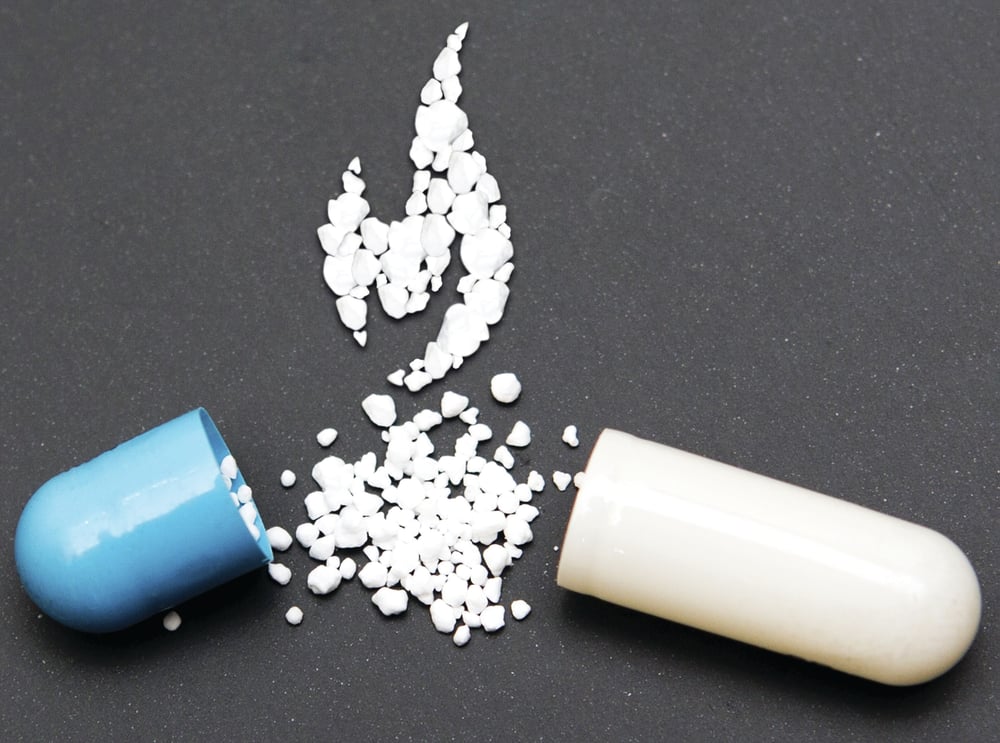
How many fighters get a little help? Well, nearly one in five said they already used supplements. No surprises there, because just about every UFC fighter has their own supplement sponsor. The worrying bit was about who was dishing out these. Most of the time, it was the coach running the pad sessions or the doctor icing the swollen knees who got these supplements into fighters’ hands. These are the support crew who everyone trusts, so there’s almost an unspoken agreement based on faith. Why were these being dished out? Money is always a significant factor because purses don’t come easy, and any advantage counts. And while this research focused on African athletes, the blind spot highlighted remains a global issue. That bottle of all-natural herbs that promises ultra-fast recovery may well be the nutritional equivalent of wrapping your hands in barbed wire. It looks like an edge, but a single contaminated capsule is all it takes to receive a suspension notice that is suddenly hot off the press.
LABELS DON’T EQUAL SAFETY
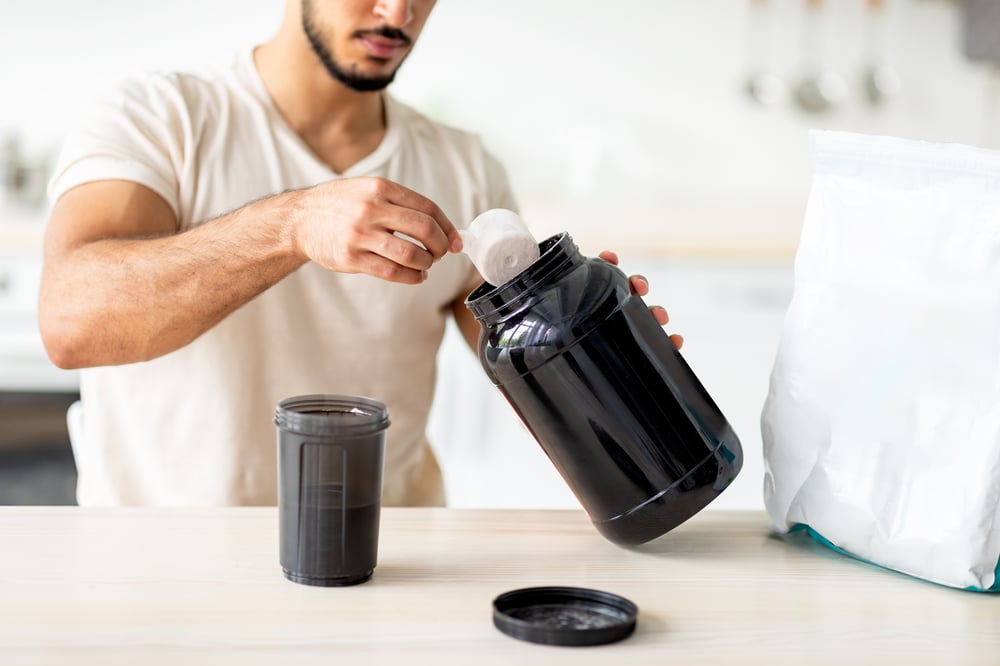
This kind of thing is becoming increasingly common, especially in MMA hotspots like Australia. Sport Integrity Australiarecently tested 200 sports supplements that researchers anonymously purchased online, and the results showed that more than a third of them contained a banned substance. Worse still, over half of those products didn’t list the extra ingredients on the label. Not that you would, if you added a potent, semi-legal compound to make your supplement work better than the competitors. The worst offenders? It wasn’t obscure powders that were for ‘research purposes only’, but they were everyday guff fighters' grab off the shelves. Fat burners. Muscle gainers. Pre-workouts. Some of these were laced with synthetic stimulants, and others that ‘natural’ compounds add to them. Take these, and the outcomes will always be the same: a failed drug test. This is how a harmless-looking protein scoop becomes a suspension headline. Just ask Khalil Rountree, who got suspended for taking a contaminated DHEA supplement prior to UFC 303. Luckily, the supplement owner claimed full responsibility for the misstep, and Roundtree was the one who notified the UFC as soon as he realized. This worked in his favor, which is why he was able to compete so soon after.
WHY NATURAL IS DANGEROUS
Supplements embody a tale as old as time. Says one thing. Does another. What’s on the label isn’t always in the tub. The trick is in the labelling, especially anything with the word ‘natural’ stamped in bold. It makes you think it’s kale in a mason jar, but it’s far from it. A 2024 review in the Microchemical Journal showed how far from reality that truly is. They found that these ‘natural products’ were very far removed from their roots and berries. Instead, many were spiked with undeclared drugs, some of which were very clear performance enhancers. Others had what people in the industry call ‘chemical cousins’ of a banned compound, which are the same as an illegal substance, except for one molecule, allowing them to slip past regulators while delivering that kick. It’s a bit like Walter White wearing a hemp t-shirt. To anti-doping agencies, it doesn’t matter whether the stimulant came from a root or reactor. Banned is banned. Often, these weren’t sloppy workmanship, but more like deliberate additions where they’ve dressed products up in earthy packaging so that fighters believe they’re buying wellness. In reality, it’s little more than a dodgy Rolex. For supplement makers chasing quick sales, those who take the falsely labelled products will get results, but it will be thanks to nefarious means.
THE GREY AREA TRAP
If herbs wrapped in flashy green packaging are one side of the supplement jar, something like BPC-157 is on the other. This is a synthetic peptide dressed up as the next miracle recovery, a fact probably lighting up your social media feeds. Does it work? Yes, well, sort of says a 2025 systematic review in the HSS Journal that found it might help heal tendons, ligaments, and muscles. However, most of the data comes from rat studies, not fighters in camp. Despite this, BPC-157 still appears online as a ‘research chemical’ or in supplements labeled as a wellness tonic. The problem is that it sits squarely on WADA’s Prohibited List (category S0), so it is banned in the UFC and even in the military. The FDA has been super clear that it is not a legal drug or dietary ingredient, yet it’s marketed like it’s fair game. For many fighters, this can be confusing because it looks legit, and so it’s easy to think it must be safe. Like the African study on traditional herbs and the Australian study showing 35% of supplements tainted, BPC-157 proves that grey-area compounds are just as risky.
THE FINAL ROUND
So, where does all of this leave the average fighter who is now probably scared to take a supplement? The warning signs are clear: if you don’t know exactly what’s in it, then don’t take it. For this to happen, you probably need to take a supplement from a brand with a well-established reputation rather than the cheapest option online. Under the liability rules, excuses don’t cut it. WADA doesn’t care if your pre-workout was bought from GNC. The only shield is not taking supplements or taking those that are independently batch-tested by a reputable third party. To find these, you’ll usually see seals on the front of supplements, and these will seldom appear on the ones with leafy labels and cryptic numbers. Recovery and punching power might count, but staying clean and in the game matters more. Protect your career the same way you protect your chin: Keep your guard up and don’t fall for fakes.
...