

Issue 221
September 2025
Ray Klerck unpacks new Russian science that’s bringing out the win streaks in fighters thanks to a strength training blueprint so effective it makes Western workouts look like burpee cosplay.
Russian fighters have been unfairly typecast as villains ever since Rocky’s Ivan Drago sneered his way into our cultural bloodstream. MMA has its real versions, starting with the indomitable Fedor Emelianenko and now with the champion Magomed Ankaleev. They have a mystique that makes us believe they do things differently behind the Iron Curtain, probably in labs without safety goggles. Now, a Russian study has only been freely available to the West via the Russian Centre for Science Information. This may offer the strength training playbook behind that reputation, which is not just folklore about Siberian toughness. These researchers put 24 professional fighters through a combined heavy off-season lifting regimen and a series of in-camp plyometrics and sprint work. Then they compared the results to those of a control group. These lucky fighters’ gains were far from subtle. Their strength endurance jumped by nearly 20%. Max strength increased by 12%. Their measurements for tactical effectiveness climbed by 27%. While the latter measurement is probably uniquely Russian, the end result was that these fighters went on to win 83% of their fights. That’s the kind of success metric robust enough to put hair on Putin’s chest.
FROM RUSSIA WITH LOVE
This paper wasn’t written for you, me, or Google Translate. It was buried in Russian Cyrillic and dribbled to the West after they’d used it to create champions. So, unless you plan on learning your babushka from your sambooshka, we decoded it to reveal a fix for one of MMA’s oldest problems of how to balance brute strength with fight-night explosiveness. The researchers ran a 12-week split via two varied training cycles. The first block was done in the off-season block to buil strength and muscle gains using heavy barbell lifts and isometric work that fired up their raw horsepower. Once the fighter’s camp hit, they trained plyometric jumps, sprints, and resistance band power moves. If you are an informed muscle head, you’d notice this was classic Soviet-era periodisation that brought so many gold medals in lifting. It’s what the Russians have always done, and they’ve applied it to MMA to make fighters stronger in the gym, so they were faster and shaper when the gloves are laced.
THE BREAKDOWN
This wasn’t a mad scientist with a clipboard and a grudge, but a well-thought-out labor of efficiency. The fighters received a 12% strength increase, which is the kind of number you can get when a supplement company forgets to disclose an ingredient. The scaffolding phase of this workout was the same Russian methodology that once churned out Olympic lifters who looked like they could squat a Sherman tank. The training blocks used were adapted to be MMA-specific. Eccentric lifts, where the weight is lowered very slowly, were used to mimic the grind of grappling. Isometric holds, where a weight is held at the point in a lift that places the muscles under maximum tension, were used to promote wall control and power in the clinch. Concentric bursts were included to amplify the power needed for strikes and takedowns. When in camp, plyometrics and sprints were performed with incomplete rest periods to train the fighters to operate explosively, even when they were exhausted and drowning in lactic acid. This wasn’t a CrossFit-style puke-and-pray approach, but was precision formulated to deliver KO power deep into the third round.
THE KREMLIN FIGHT CAMP BLUEPRINT
Straight out of St. Petersburg muscle labs, here’s the exact 12-week program Russian researchers used on 24 pro fighters. Do it three days a week, take a rest day in between, and keep your heart rate between 130–150 bpm during the sets.
Off-Season (Weeks 1–4: Building the Tank)
Focus: Max strength + hypertrophy through three mesocycles
Eccentric block:
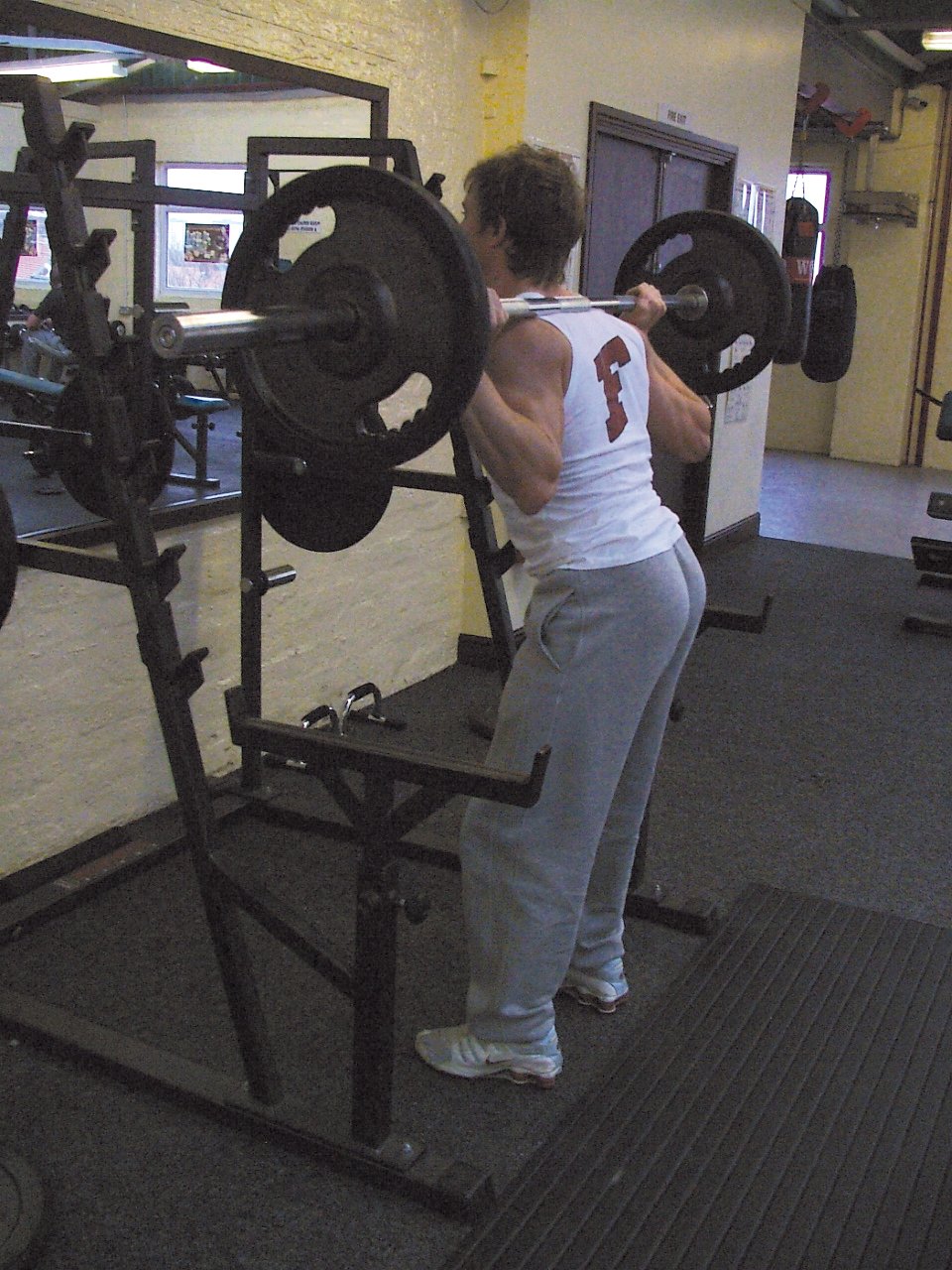
Barbell lifts (squat, deadlift, bench press) lowered for 5–6 seconds
4–6 sets × 5–6 reps
Isometric block:
Paused squats, static wall sits, mid-range barbell holds, floor presses held at sticking point
20–30s holds × 3–4 sets
Concentric block:
Explosive lifts from a dead stop (box squat, floor press, concentric-only pulls)
4–6 sets × 3–5 reps
Accessory lifts: Rows, pull-ups, lunges, overhead presses (3–4 ×.8–12)
Aerobic support: Steady-state running or cycling, 20–30 minutes, twice weekly (HR 130–150 bpm)
Weeks 5–6: Speed + Power Base
Focus: Fast movement + foundational strength
Single-Leg Jumps (vertical/long/lateral) – 2 × 10
Goblet Squats – 4 × 8 (6-second negative)
Narrow-Grip Bench Press – 3 × 12
Farmer’s Carry – 4 × 90s
Plank – 3 × 45s
Weeks 7–8: Strength Endurance
Focus: Sustained power output under fatigue
Triple Jump (same leg) – 4 × 1
Box Jumps – 6 × 1
Side-to-Side Jumps – 5 × 10
Front.Squat – 4 × 6
Bent-Over Barbell Row – 9 × 8
Dumbbell Run – 4 × 90s
Weeks 9–10: Explosive Power
Focus: Maximal force production with incomplete rest
Side-to-Side Jumps – 6 × 2
Zercher Squat – 2 × 1 (tempo 1.0.1)
Barrier Jumps – 2 × 4
Vertical Band Jumps – 2 × 3
Floor Press – 2 × 2 (tempo 1.0.1)
Med Ball Wall Throws – 2 × 3
Explosive Push-Ups (with band) – 2 × 3
Sled Push – 3 × 10 m
Weeks 11–12: The Russian Circuit
Focus: Fight-specific endurance and finishing power
Perform each station for 60 seconds, rest 60 seconds, repeat 3 rounds:
Sled Push
Heavy Load Drag
Kicks on Heavy Bag
Med Ball Slams
Barrier Jumps
Load Toss
WHY YOU SHOULD TRY IT
Why this approach looks so different is because of its unique periodised structure. In the West, strength and conditioning can often be smashed together into a soup of random circuits, tire flips, or battle ropes until your shoulders file for divorce. When you do the latter, it feels hard and you’re definitely puffed out, but it’s the kind of conditioning that may not make you better when you’re fighting. The Russians are less sympathetic to weakness and build their systems block by block with a purpose in mind so that each phase organically feeds the next. The heavy lifts lay the foundation. The isometrics harden the frame. The explosive camp drills turn the raw iron into offense. This isn’t about creating a workout that you struggle to survive. It’s more about sharpening the qualities you need to win fights, thanks to power that lasts and defense that holds. If you’re serious about winning, then this isn’t just some sort of program to sweat yourself through. It’s a weapon you can take with you every time you fight.
...