
Issue 222
October 2025
Ray Klerck looks at the studies proving that charisma, timing, and a little verbal cruelty can tilt an entire bout before a single punch is thrown.
Like unspoken hieroglyphics, trash talk is almost becoming MMA’s lost dialect. Part theatre. Part therapy. All heart. We grew to love this raw stand-up comedy that sometimes gave us the biggest hits before the first punch. The square-off used to be with microphones, but these days, beef has gone viral, replaced by carefully crafted tweets typed at a safe distance, with half-sentences masquerading as menace. “We’ll see.” “Keep that energy.” This digital foreplay might get the views, but it’s a sanitized substitute the fans have learned to accept, perhaps because they’re craving the real thing. To this end, not all smack talk lands equally, says a New York University study released in October 2025. The researchers specifically examined UFC fighters and suggest there may be an unspoken method behind the mouth. We unpack how and why these linguistic fight styles can turn charisma into crowd control, or confidence into cringe.
LINGUISTICS OF THE LEFT HOOK
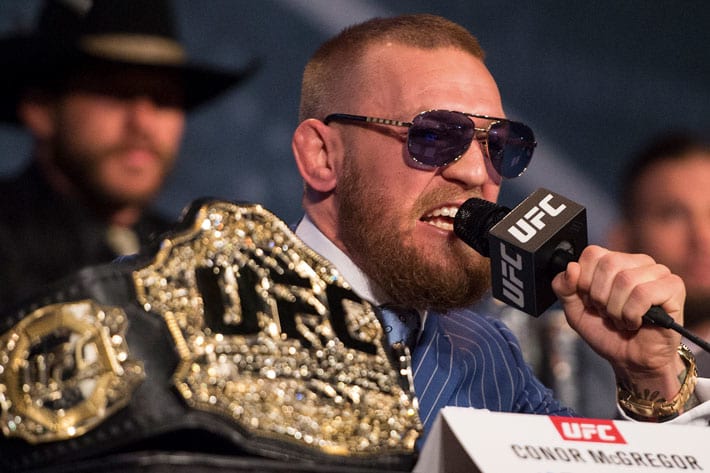
Love him or hate him, it’s hard to argue that Conor McGregor is our sport's undisputed mouthpiece. He sold fights and catch phrases wrapped in swagger, timing, and theatre. Rhonda Rousey, by contrast, spoke with conviction. She talked about destiny and dominance. Sometimes they made her sound like a champ. Often, they made her lose the room. This contrast caught the attention of researcher Jill Brooks, who took the time to turn these two fighters' press conferences into data. She found that McGregor leaned into “other-lowering” attacks with jabs that belittled and mocked his opponent's image. He went a step further and invited the crowd to join in, almost making them co-conspirators to his charisma, which might explain the root of his popularity. Rousey, by comparison, used “self-elevating” language where she built herself up rather than tearing others down. This wasn’t something that seemed to endear her to the crowd. These findings hint at how engendered expectations around pre-fight confidence are received. When McGregor strutted, it was swagger. When Rousey did it, it was ego. The syntax was the same, but the applause was very different.
MOTIVATION OR MANIPULATION?
Anyone who has copped a slick roast in group chat can appreciate that it can suddenly leave you training like someone with something to prove. This is an effect that science agrees on. Researchers Jeremy Yip and Maurice Schweitzer found that a few choice words can light a psychological fire that drives competitors' motivations. They discovered that competitors who were trash-talked and told things like “You’re going down” or “You’re dumb as a rock” didn’t sulk - they surged. The negative talk pushed them harder and made them move faster, so they became obsessed not just with winning but with watching their rival lose. They took the insults and turned them into fuel, which is possibly why you don’t see as much trash talk anymore. With this rationale, you could almost argue that complimenting your opponent is the ultimate dark psychological advantage because it deprives them of this motivational force. It's not all gravy, though. The researchers found that this motivation was accompanied by a degree of moral leakage. The more they got fired up, the more likely they were to disregard the rules. They might even have been prompted to cheat to make sure their trash talker got what they deserved. So, while this practice does build rivalry, it may also manufacture villainy. Could this be the driver behind the eye pokes, fence grabs, and groin kicks that sometimes make an appearance in MMA? Sure, these anomalies are written off as accidents, but they could be the product of an unbridled will to win. Words can easily turn into weapons, but this will always be on show beneath the bright lights.
Research published in the Organizational Behavior and Human Decision Processes journal helps explain why. They found that when competitors trash-talk, they want to achieve more than just winning. They want revenge on their opponent. Think of it as a psychological overclock that sharpens performance. Still, it may also cloud someone’s morality, where they rationalize the irrational to the point where the rulebook becomes collateral damage. Competition can turn into payback and come with a price. This study found that trash talk can, in some cases, narrow someone’s focus, pulling attention away from the task and locking it onto their rival. That’s the kind of tunnel vision that fuels aggression and dull judgment. The danger is that what starts as talk for motivation can end as justification for foul play.
THE DIGITAL ARENA
While MMA seems to be cleaning up its pre-fight hype, other competitions are ramping it up. Esports have turned trash-talking into a performance art, perhaps to psychologically establish their connection to physical sports. Research from CQUniversity found that many digital competitors do more than accept smack talk; they see it as part of the game and a spectacle. When developers tried to sanitize this aspect by replacing post-match comments with cheerful phrases, the players rebelled. They felt this banter was essential to the competition. These insights apply very neatly to MMA’s modern ecosystem, where many fighters log on to social media to stir up their next fight. Online insults feed the algorithm octopus in an attempt to manufacture a rivalry into existence. It’s the game within the game where blurred lines exist between hype and hostility. That said, it does raise questions about when these pre-fight barbs go online, around who is really in control, the athletes or the audience.
UNSPOKEN CODE
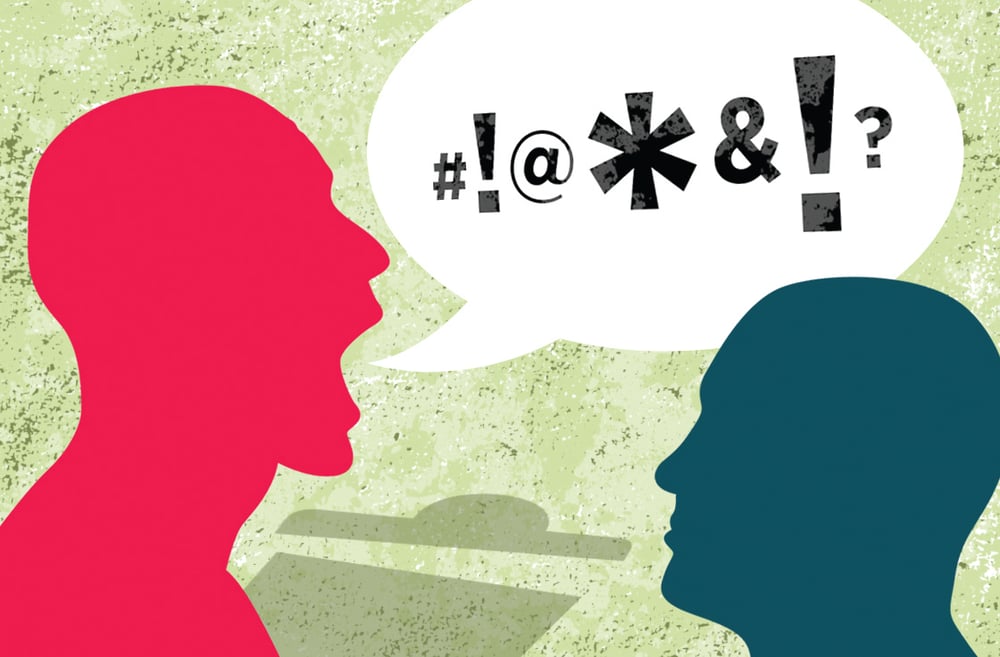
Before you imagine this is the no-holds-barred verbal attack, smack talk does have an unspoken etiquette. A paper in the Journal of Sport Behavior showed there are rules to be followed. When more than 400 athletes were surveyed, they admitted they traded insults in about a third of their competitions and said the goal was never to create hatred. It was only ever performance. They used the insults to spark themselves up, destabilize their opponents, and rattle the other team's collective concentration. They were never used to humiliate. When they did this, the rules were always very clear. Keep it about the game, never the person. Swearing and name-calling were fair, but not bringing up family, race, or past trauma broke the code. This is precisely what Sean O’Malley did in his comments to Sean Strickland during a press conference, and it wasn’t well-received by many fans. In the research, most of the athletes learned to walk that line from their own teammates and rivals, not their coaches. The trick is knowing where the edge is, especially when millions are watching and the mic is always hot.
THE LAST WORD
The all-time greats in every sport know that smack talk is a type of athletic rhythm you have to step into if you want to be great. Larry Bird once walked into the 1986 NBA All-Star locker room ahead of a three-point competition and asked, “Which one of you guys is going to finish second?” He later won it, but perhaps he achieved this victory by winning the locker room first. That’s the secret every fighter knows almost instinctively: smack talk works when it blends confidence with craft. It’s not about shouting loudest, but more about making the other person’s silence feel like a pre-fight defeat. Sure, the rules are constantly changing, but timing will always beat volume. Delivery will always beat dominance, especially when it's laced with a healthy dose of truth. When the words hit right, they remind us that fighting is a performance meant to entertain, and that the sharpest weapon may still be a sentence.
...