

Issue 222
October 2025
A new study backs what Jiří Procházka told Fighters Only’s Paul Browne about how the best fighters don’t control chaos; they become it.
Some fight with their bodies, but Jiří Procházka seems to throw from the soul, where each strike is a form of self-expression. This approach may be down to his training, suggests findings from a September 2025 study published in the journal Health Technologies. The researchers tracked 42 MMA athletes and divided them into three fighting archetypes: power, tempo, and game style. They then got them to work with training plans that matched their fighting personalities. The fighters who trained in rhythm with their natural style performed much better than those who tried to conform to what they felt was expected of them. Think of it as the square-peg-round-hole resistance or lack thereof. This is a discovery that reads right into the Jiří Procházka playbook, especially after his most recent victory. He’s repeatedly proven that he doesn’t fight against disorder but instead draws a seemingly indomitable strength from it.
“Because when you are in the movement, in the motion, in the chaos, then you can find the balance in that,” Procházka told Fighters Only ahead of his fight with Roundtree. “And I am especially that guy who's not going from the balance to the chaos as others do, but who's finding the balance in the chaos.”
Okay, so the science might speak in data points, but Jiří is the one who turns them into a visual art fight fans can enjoy. His unique approach may be evidence that sometimes the best way to gain control is to stop looking for it.
WHAT’S NEXT
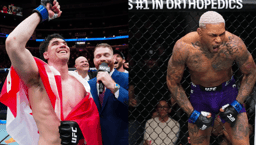
Jiří’s randomness is what often endears fans to him. For evidence, just take a look at how UFC 320 played out because no amount of planning can domesticate his brand of disorder. Procházka dropped the first two rounds to the ever-powerful Khalil Rountree Jr, but went on to give the crowd a third-round knockout that looked like it was always there for the taking. His post-fight celebrations involved inexplicably standing up to shed tears of joy as Pereira dethroned Ankaleav. And just a few weeks later, Procházka announced his next surprise.
“I said to my team when I will move to middleweight, just when I have won the (light heavyweight) title,” he told Bloody Elbow. “In that possibility, I will move to middleweight to fight the champion. But this is, I don’t like to speak about ‘When I win this, I will fight this and do this,’ no, right now I’m fully focused, 100% focused, just for the (light heavyweight) title, that’s all I can do. Maybe then, after my next fight.”
Standing 6’3, he’d be a frightening middleweight, one who may be in the orbit of former champion Dricus Du Plessis, who is another chaos merchant. Facing each other would be to watch two philosophies collide, but that’s still a crazy pipe dream at this stage. Fighters like these might be the perfect embodiment of what science is finally starting to accept: that predictability, even in training —let alone in a fight —is mostly an illusion. A July 2025 study in the International Journal of Sports Science and Coaching asked over a hundred trainers how often they could accurately forecast an athlete’s progress through a carefully constructed training plan. Only 13% said “often.” Nearly half admitted they’re constantly adjusting plans because the human body refuses to slot into neat little spreadsheet-like boxes. In other words, fighters like Procházka aren’t breaking the system. They are the system that is evolving and redefining what readiness means.
EXCELLING IN UNPREDICTABILITY
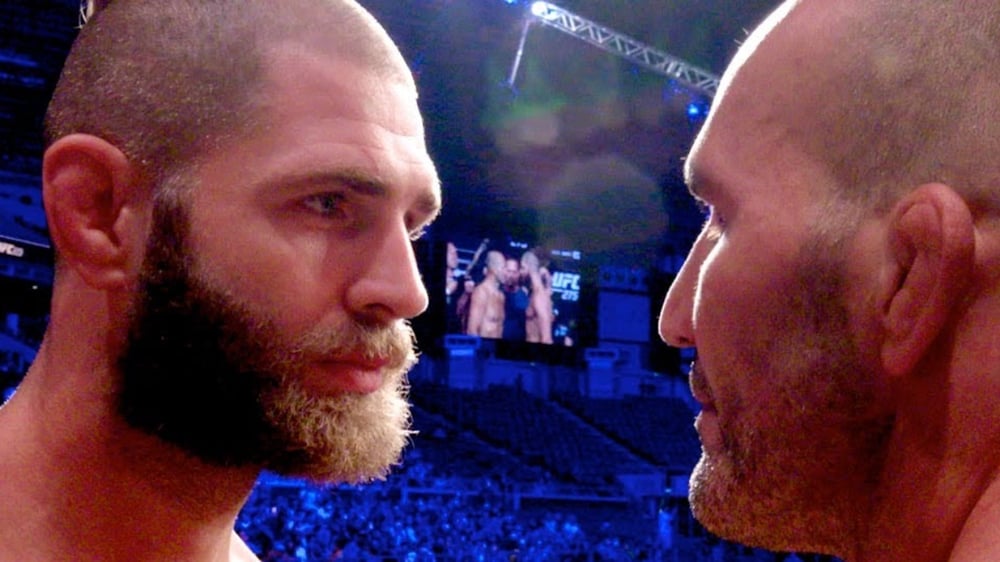
The status quo is to build your training camp around control. There are game plans, structures, and endless repetition that aim to tame the unpredictability in MMA. Procházka doesn’t play that game, and it’s why he’s so adored. This concept, described by the Ukrainian researchers, is individual adaptation: the most effective athletes were those who could regulate their intensity and decision-making on the fly rather than rigidly program them. It’s one of the attributes that make Jiří stand out because he’s well-versed in adaptation.
“Yeah, that's right, you said it right,” he says with a smile when Fighters Only asks him about his unpredictability. “Because I need a little movement, something up and down, up and down, and then I find myself. But I'm still working on that, and maybe that's my life challenge: to find the peace first and then go to my full power. This is something that I have been working on for a long time now.”
With 31 knockout wins in his pro career, he is must-watch TV. The Czech giant hasn’t gone to a decision in his last 16 fights - a run stretching back to September 2016. Aside from a pair of defeats at the hands of Alex Pereira, he has overcome every challenge the UFC matchmakers have offered, and his impressive form has put him on the verge of another shot at championship gold.
PHILOSOPHY IN MOTION
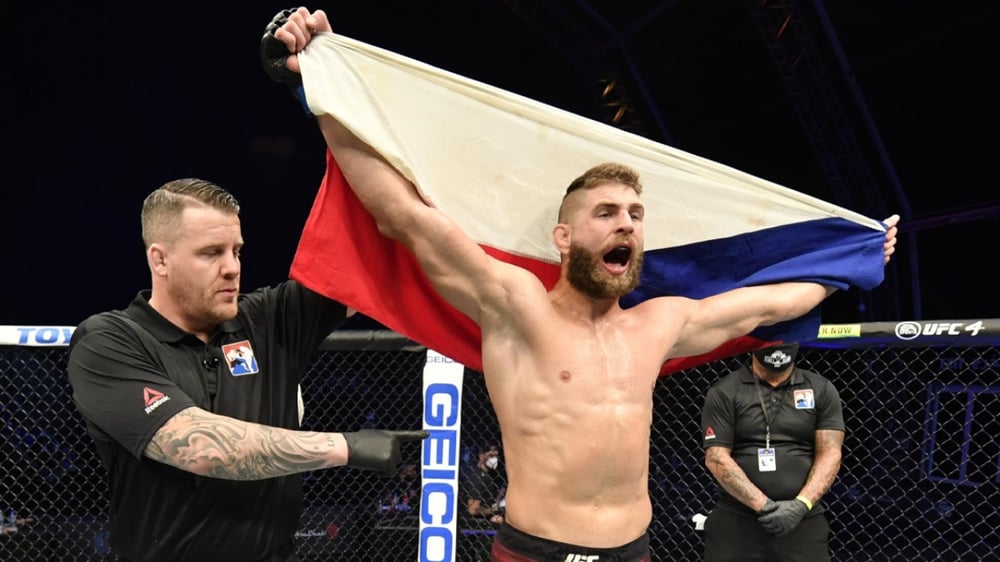
The research noted that the secret to peak fighting performance wasn’t about more reps or sessions, but about better training alignment. The fighters who synced their training to their natural instincts, using both their heart rate data and self-assessed readiness, outperformed those fighters who followed one-size-fits-all routines. They had statistically significant gains in reaction and endurance, proving that if you’re working towards a better version of yourself, not some ideal version of someone else, then you’re more than likely going to have more success. While Procházka is undoubtedly one of the UFC’s most exciting fighters, his unconventional demeanor has also helped him stand out. Rather than viewing his unique fight style and his distinct personality outside the cage as strange bedfellows, he sees them as a unified expression of who he is.
“Yeah, that's right, and that's maybe the point,” he told us when we brought it up. “I don't look at things in the same way as other people, whether that’s inside the Octagon, or even in a simple conversation. In both situations, I'm just seeing through things. If you ask me a question, I will look at you carefully, and first, I want to know why you ask me that question. I want to see if this will be just a personal conversation. I'm just looking past the obvious, and I'm looking forward every time to see what is the essence of the conversation. If it's really meaningful. If it has the real value for me, for you, for all of us. Because I don't like to speak and do things that are not necessary.”
He has built a career on embracing the unexpected, turning moments of uncertainty into opportunities for brilliance, and proving that mastery comes not from control, but from movement, instinct, and self-expression.
THE WARRIOR CODE
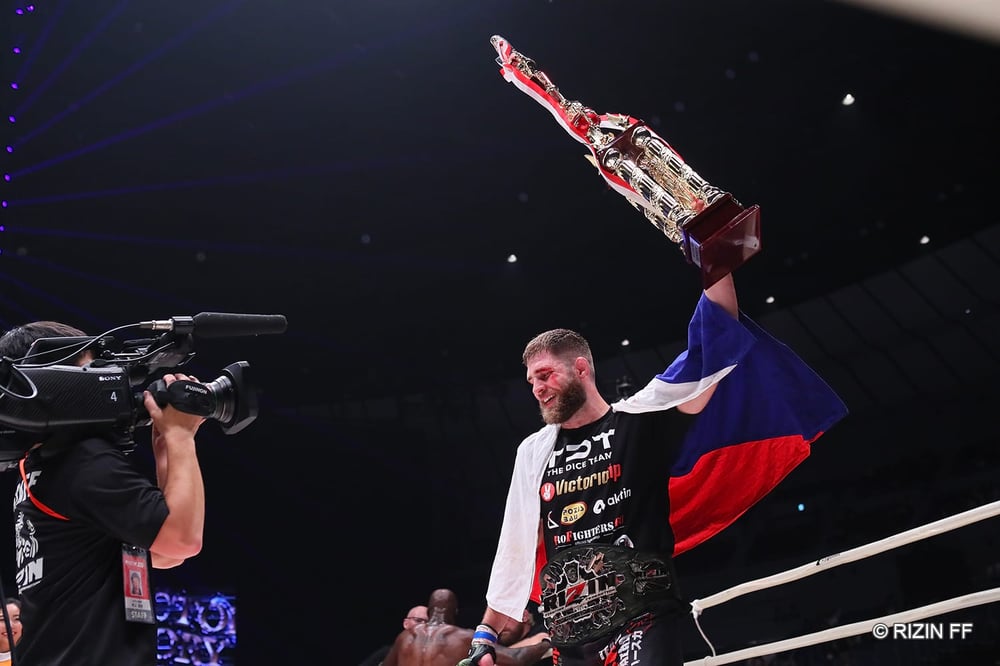
For all the talk of unpredictability, there’s an innate discipline to him that’s almost invisible unless you pay attention. This structure lies in his spirit because he follows a moral architecture that’s way older than MMA.
“For me, to be a samurai, for me it’s about attitude,” Prochazka said when speaking on the MMA hour. “What you have in your life. About the paradigm in your life. How to see some situation. Sometimes you don’t need to be a samurai, because this attitude, this role, is not effective in every piece of your life. That’s why I’m not just using that for fight, but like I said many times, we all need to follow something. We need to understand our lives — our brain, our minds need to understand our lives and what we’re doing, why we are doing that, by some theory, some ideas. These ideas about bushido moral code help me to be honest to the way that I’m following. That’s all. You have to find something that resonates with you, and samurai ideas resonate with me.
In the world, there are not just samurais, there are other warriors like knights. But everywhere there are some rules, and I respect these rules because they helped me in really dark moments of my life to overcome these moments and be strong, be more human, and live fully. Totally fully, without fears, without trying to be better than someone or trying to be richer than someone. No thinking, because that’s fear. There is no place for these things. That’s why it helps me to live fully.
I don’t know what to give to my coach to pay him for these lessons, especially for that book, because that’s something that resonated with me so deeply that I can’t fight or do this show or whatever without speaking about that. To let the people know about these things, because I think, especially in this age, there are too many people trying to understand their lives, trying to understand why to wake up and find their way. And that gave me meaning in my life.”
THE SCIENCE OF SELF
The Ukrainian researchers slapped a full stop at the end of their study by suggesting that individuality should become a core principle in combat sports programming. It should never be an afterthought. They suggest that the fighters who regulate their workload through self-perception develop greater adaptability under pressure. That’s the niche where Procházka seems to thrive. For him, every strike, slip, and surge reflects a calibration where his body and mind are in sync. The data may have confirmed it in numbers, but Jiří shows it on your screens. When the fight unravels and others lose their structure, he finds his. And maybe that’s the point the researchers couldn’t quantify because the truest form of training isn’t about control at all. It’s about learning how to stay true to yourself when everything around you falls apart, and Procházka might be the first fighter to be fluent in this mindset.