

issue 223
November 2025
Raj Ghosalkar tracks how Islam Makhachev’s dominance is turning Dagestan into the world’s new capital of submission tourism.
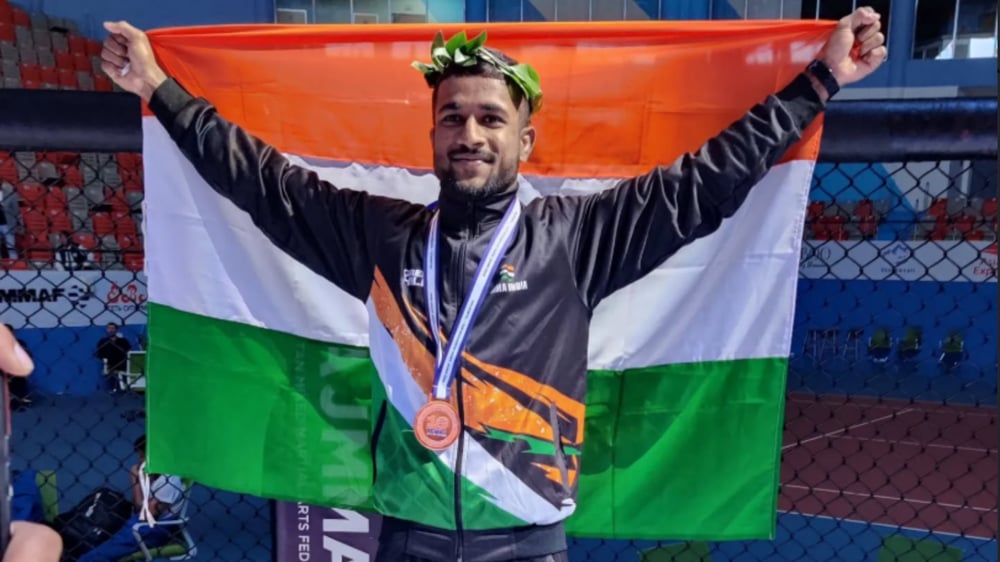
Islam Makhachev's latest belt and 17-fight win streak have got everyone’s eyes on the UFC's most competitive weight class. His dominance has created a landscape shift that’s reminded the world which mountain range runs the art of grappling. And just as people have gone to Thailand to learn striking, Dagestan seems to have overtaken Brazil as the high-water mark where you learn to find a submission. As fighters try to close the widening gap, the message is that if you want fundamental wrestling literacy, go to the source of the mountain spring. It may be shaping Dagestan’s $250 million tourism industry, which has experienced record growth. There are already MMA gyms offering a two-week training camp with meals and accommodation for under $2000 USD. It’s precisely where fighters like India’s Mahboob Khan have set their sights. He is known as the first and only Indian to win an International Gold Medal at the IMMAF (International Mixed Martial Arts Federation) World Championships, and he now has a 2-0 start to his pro career. India’s approach to MMA offers an insightful look into the kind of training structures that may fuel Dagestan’s wrestling tourism boom.
FIGHTING A BROKEN SYSTEM
Khan doesn’t shy from the problems that plague professional MMA in India and may drive people to Dagestan.
“In India, every fighter has to be their own manager, coach, and dietician,” Khan says. “There are so many good athletes here, but most come from middle-class families. They have to think about training, diet, and also how to support their families. It’s impossible for one person to handle everything alone.”
Beyond finances, Khan believes India’s MMA culture still lacks unity.
“Coaches here have ego issues,” he explains. “If a fighter trains in another gym, they feel betrayed. In countries like Thailand or Russia, fighters train wherever they get good partners. Coaches there support their fighters to grow. In India, you leave one gym and suddenly you’re treated like an outsider.”
This fragmented coaching culture, he believes, has slowed the sport’s evolution.
“In Russia, the wrestling coach, boxing coach, and BJJ coach are all different. Here, one person tries to do everything. How can a fighter improve like that?”
Khan has experienced the contrast firsthand. His time training with Brave Combat Federation in Bahrain opened his eyes to the world-class standards of coaching and structure outside India.
“For the first time, I trained under international coaches from Russia and Bahrain,” he recalls. “The difference was huge. They had a plan for everything from diet and training to rest and recovery. It made me realize how far behind we are.”
WHY DAGESTAN?
Khan plans to train in Dagestan, the birthplace of the most dominant fighters.
“In MMA, seventy per cent is wrestling,” he says. “In India, we punch and kick well, but we can’t match their grappling. Those guys have been wrestling since childhood. It’s in their blood. I want to train there, live there, and learn that system.”
For Khan, Dagestan represents the mental and physical discipline Indian fighters need to adopt.
“When I trained in Thailand and Bahrain, I saw how disciplined everyone was,” he says. “They followed strict diet plans, recovery schedules, and mental preparation. In India, we still take things emotionally. We eat whatever’s available, and our focus breaks easily. Discipline is what separates them from us.”
LEARNING THROUGH LOSS
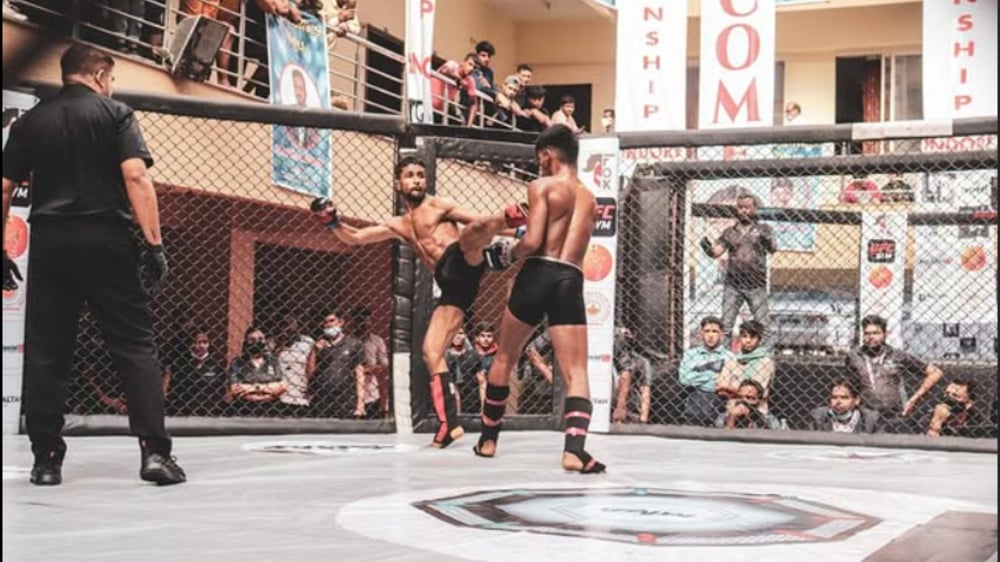
Despite his many accomplishments, Khan has faced his share of losses to elite fighters from Kazakhstan and Russia, lessons that have taught him a lot about himself and his country.
“I used to think I was untouchable until I faced those guys,” he admits. “Their pressure, technique, and composure were on another level. Losing to them made me realize that I needed better training partners and more international experience.”
Those lessons now fuel his mission to elevate the next generation. “I’ve started training young fighters near my home,” he says. “I tell them, if I don’t push you hard today, the world will push you harder tomorrow. I want them to feel the pressure here, so they don’t break later.”
BUILDING THE FUTURE
Khan believes that the future of Indian MMA depends on mental conditioning.
“Foreign fighters stay calm even when they take a punch. Indian fighters get emotional. They want to hit back immediately. That’s not strategy, that’s impulse. We have to learn to stay composed under pressure.”
Despite the challenges, Mahboob Khan remains optimistic. With two professional wins and a plan to train in Dagestan, he continues to chase the dream.
“I’m not in a hurry,” he says. “I want to build my record the right way. My goal is to represent India on the world stage, not just to be selected, but to win. The sport will grow. The next five years will be different. We’re still behind, but we’re learning. Once the system improves, India will produce world champions.”
In a country that has 1.46 billion people, there are two Indian fighters in the UFC with a collective 2 wins and 3 losses, so it’s clear something has to change. The mountains of Dagestan might be the promised land, offering a billion reasons to steer that record in a more positive direction. You can