


issue 223
November 2025
Paul Browne sits down with Tracy Cortez to explore the wider issue shaping the experience of women fighting their way through a beauty-obsessed sport.
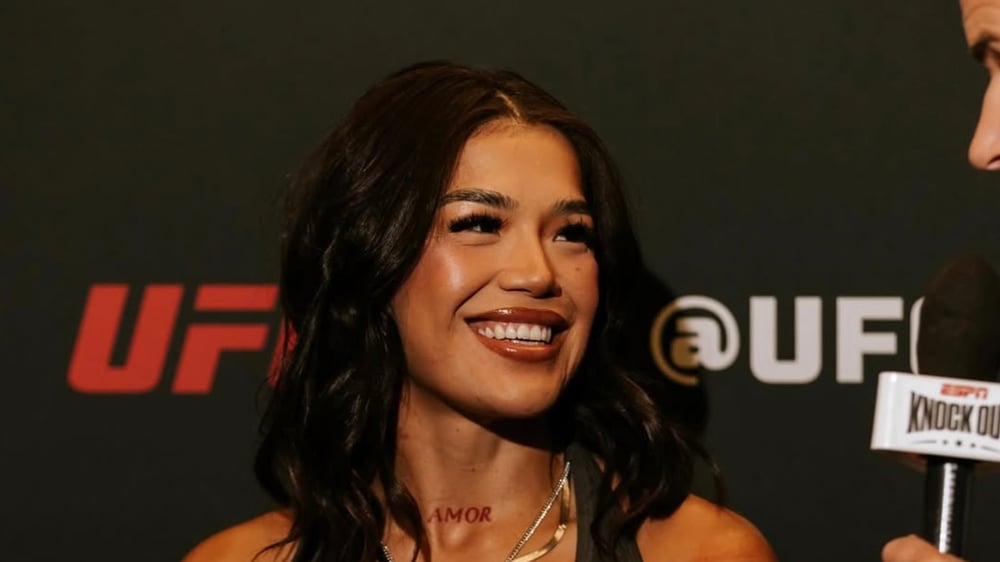
On fight week, Tracy Cortez occupies two realities. Fans recognize the sleek hair, lashes, and effortless poise that look almost impossible for a professional fighter. Then there’s the other version only she can feel: the exhaustion settling under her skin, the adrenaline simmering just out of reach, the pressure that could break someone less composed. While it may seem that attractiveness is all glory, research suggests that the societal pressure always to be attractive can negatively impact your well-being. Attractiveness creates a halo effect, leading people to perceive beautiful people as more trustworthy, intelligent, and competent. That’s pressure that isn’t always welcome in the weeks leading up to a fight.
“During fight week, there are times where I’m struggling,” she says. “My energy is a lot lower, and I have to be very strategic with how I use it. When fans are there, sometimes I have to respectfully tell them, ‘I need my space right now.’ But any other day? I’m a hundred percent. I would greet a fan. I would take photos. That’s me. I’m not pretending.”
That insistence—this is me—isn’t a slogan for Cortez. It’s a conviction. And it’s one she has had to defend at nearly every step of her climb up the UFC rankings. In a sport where most athletes try to silence their nerves, Cortez is one of the rare few who want to feel every part of them.
A VERSION THE WORLD INVENTS
Long before she cracked the rankings, Cortez realized that being a woman in MMA means being judged twice: once for your fight skills, and once for everything else. Your hairline. Your lashes. Your voice. The way you walk through an airport on fight week when you’re dehydrated. For her, appearance has always been a point of contention.
“I get judged a lot for my looks,” she says. “People want me to look more like a man, act more tough, not wear lashes or lip liner. They think I look too girly to be in the position I’m in.”
She pauses. Not defeated, but matter-of-fact.
“To me, that’s just an insecure human being projecting whatever they have going on. Some people hate to see women succeed, especially insecure men. Some of the male fans are my biggest haters, and I’m okay with that.”
Her tone sharpens.
“I have people who love me and appreciate me and respect my craft. And they understand that this is my job. But I’m still Tracy. I’m a daughter. I’m a sister. I’m a loving person. I’m a woman. And none of that makes me less of a competitor or not worthy of where I’m going.”
The paradox means the world wants to celebrate her beauty while questioning its place in a violent sport. For her, femininity and toughness are not opposites; they are two parts of the same identity.
AUTHENTICITY ARMOR
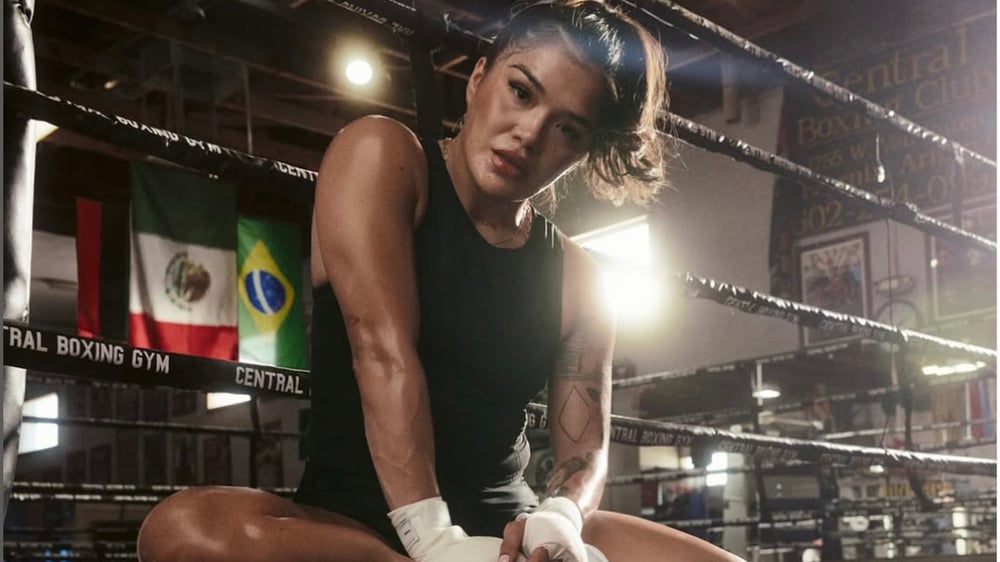
Cortez insists that what fans see online or during fight week isn’t a persona, it’s the version of herself she’s willing to share.
“You know, I either get loved for being me or people really just fucking hate me,” she says. “It’s one or the other. And I’m not for everyone. I don’t have a persona. This is genuinely me. I show up as myself.”
If that sounds bold, it’s because Cortez learned young that pretending to be someone else doesn’t protect you from pain. It just adds new layers of it. When I was younger, negativity used to get to me. But after going through so much tragedy in my personal life, I learned misery loves company.”
She doesn’t elaborate on specifics, but her history is well documented: losing her brother José, her own battles with grief, the weight of trying to honor him through the sport they both loved.
“As I’m moving up the ladder, I’m trying to do it respectfully,” she says. “I want to honor myself, honor my family. I want to honor my dad. I’m trying to do things right; with the morals he taught me. So, the world can say whatever they want. I don’t give two sh**s. As long as my father is proud of me, that’s all I care for.”
THE MAGNIFYING GLASS
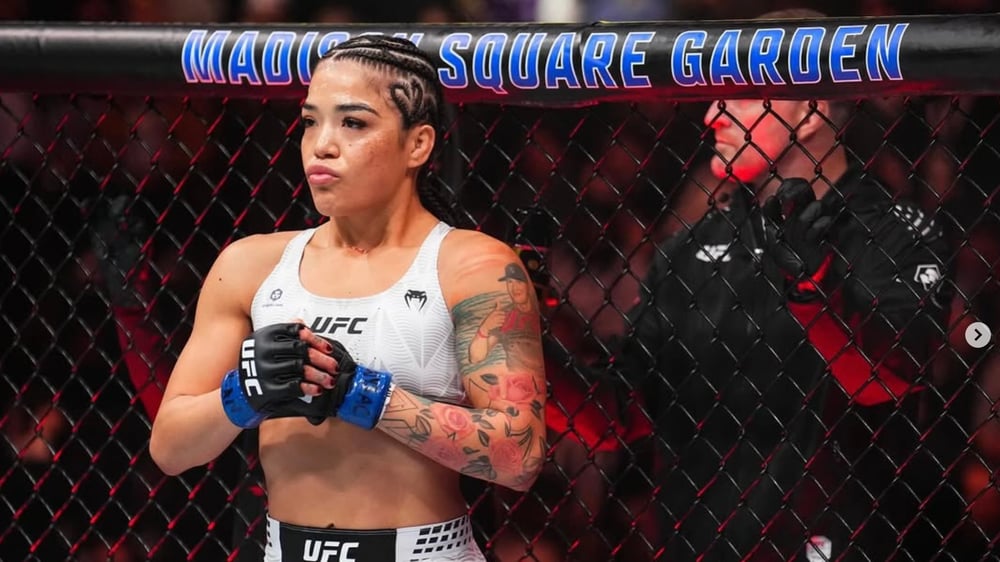
The scrutiny has become greater as her profile has risen. Social media, she says, has a talent for turning admiration into hostility.
“Social media can build you up and tear you down in the same week,” she says. “But with negativity? I don’t pay attention to it. Not anymore.” I want to make my family proud. I want to make myself proud. Everything else? It’s noise.”
But even with a thick skin, some criticisms reveal the unresolved biases still embedded in MMA culture, particularly around beauty and legitimacy.
“They say I look too girly, or I shouldn’t wear lashes, or I should act tougher,” she says. “Why? Why do I have to look like a man to be respected as a fighter?”
She shakes her head.
“I’m a woman. A strong one. That should be enough.”

BECOMING THE EXAMPLE SHE NEVER HAD
The girl who once didn’t want to be anyone’s role model found herself, unexpectedly, stepping into the role with intention.
“I’m so happy you asked this,” she says when the topic arises. “It’s important to me, and I haven’t been asked about it a lot. When I was younger, I didn’t want to be an example because I was confused about how I should move. I didn’t know who I was yet. But now? I know who I am. I know what I want to be. I know the angle.”
And that angle is integrity.
“I’ve learned there’s really power in being a woman,” she says. “Real power. And having integrity and moving correctly and respectfully. That’s hugely important to me.”
She worries about what young girls absorb from social media, with its artificially curated perfection.
“We’re so used to fakeness,” she says. “And when people see someone real, they want to break them down.”
Then she brings up her niece, who is 21 now but was once the little girl Cortez quietly lived her life for.
“I moved the way I moved because I wanted to be a good example for her,” Cortez says. “And thank God she’s becoming an incredible woman. She’s cried and thanked me. She said, ‘I’ve seen how the world tries to tear you down, and you’ve stayed true to yourself. That’s all I wanted for her. But now I see the bigger picture. There are so many young girls watching me. I’m not perfect. I make mistakes. I’m human. But I’m trying. I’m trying so hard.”
REDEFINING STRENGTH
Cortez’s rise signals something larger happening in women’s MMA: a shift in how femininity and toughness coexist. She’s the evolution of a fighter who refuses to choose between lashes and leg kicks because she forces the sport to expand its definition of strength. In a space that judges women on sight, Tracy Cortez is carving out a different path, defined by self-ownership rather than reaction to others.
“I’m still Tracy,” she says. “And I show up as myself every time.”
And in a sport built on brutality, that might be her most beautiful rebellion.