

issue 223
November 2025
Paul Browne reveals how Sean Brady is turning introversion into a competitive weapon in a sport built on noise.
MMA rewards the noise. Some fighters, like Sean Brady, might have loud body art, but have a rep for being quiet in the swirling ecosystem of callouts, viral clips, and online personas engineered for engagement. Spectacle might create entertaining match-ups, but is there room for the introvert, and what do they bring to the table? Modern sports now operate as a society of the spectacle where consumption is driven by drama, persona, and entertainment, not just competition, says a paper in the Journal of Strategic Marketing. An athlete’s public persona and brand capital are driving sports like MMA toward an experience economy that rewards narratives that are driven by the fighter. But what if there is no facade or rivalries that grab the fans' attention? A guy like Brady is calm, inwardly focused, and almost monk-like in fight week. He’s the noise-cancelling headphone in a sport of car alarms. Where does that leave him after he broke his win streak last month? We spoke with him before the fight to understand his mental approach and to understand if there is room for the introvert in MMA.
A DIFFERENT KIND OF CLIMB
Welterweight is the UFC’s most stacked division, where a well-timed callout can rewrite a career overnight, but does that mean anything?
“You’re not the loudest guy in the room – is there a part of you that thinks you might continue to be overlooked for a title shot unless you come out of your shell?” I ask him.
“No,” he answers simply. “Because I think that winning solves everything, and eventually I'm going to have to get it. Yeah, I might have to fight again a few more times, but I'm completely fine with that. Eventually, I'll get to the title shot. It doesn't have to be the next fight. I'm not in a rush.”
Many fighters chase the title like it’s slipping through their fingers; Brady treats it like something inevitable. Something earned, not shouted into existence. He’s climbing Everest while everyone else is vaping on the chairlift, talking about manifesting it.
FINDING STILLNESS INSIDE THE STORM
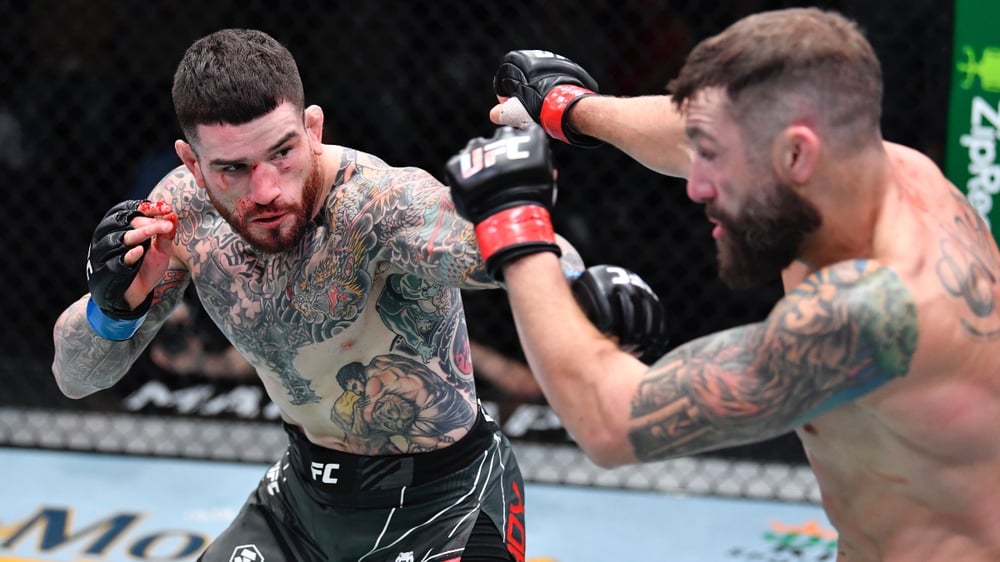
Media obligations, bright lights, and the pressure can overwhelm even the most seasoned competitors. For introverts, the ones who draw strength from calm rather than chaos, that pressure can be welcome. Introverts are more internally driven and can focus on tasks longer because they are good at tolerating repetitive practice, according to research in the International Journal of Management and Economics Invention. They prefer the deep strategic thinking that comes from chasing mastery. So, while Brady isn’t built for fight week fanfare, he remains unbothered by it all.
“No, cause listen, man, it's part of the job,” he says. “I'm here to promote the fight. And I'm a professional, and I'm going to do what the UFC asked me to do.”
Where many fighters see the media as a circus, Brady sees it as another discipline. Another responsibility. Another part of the grind. But he never lets it alter who he is and won’t perform for cameras.
“I’ll never sell my soul to get something,” Brady says. “If I have to take the longer, harder road, I'm fine with that. I'll put my head down, I'll grind, and I'll make it happen.”
There’s something old-school about that mindset, from a time before clicks determined relevance.
BALANCING AUTHENTICITY AND VISIBILITY
Despite his natural introversion, Brady has dipped into content creation with The BradyBagz Show. But even here, he moves carefully, refusing to let visibility eclipse authenticity.
“I'm a fan too,” he says. “I love to listen to podcasts. I watch people's YouTubes. I know I have a lot to offer people, and I wanna try to put out more stuff because I know people will enjoy it.”
But then comes the qualifier that separates him from the fighters addicted to engagement metrics.
“I try to do it, but not to the point where it consumes me. I just try to stay in my bubble. I'm not out here making videos and getting into all the drama.”
With the influencer fighters and social-first athletes, Brady’s resistance feels almost rebellious. And as he explains what true rivalry means to him, you understand why he keeps his distance.
“None of these guys have real beef with each other,” Brady says. “Real beef is, if I see you in the streets, I punch you in the face. None of these guys have that. It's all fabricated.”
He’s not condemning the showmanship, he’s just uninterested in joining the pantomime.
THE SWITCH THAT NEVER BREAKS
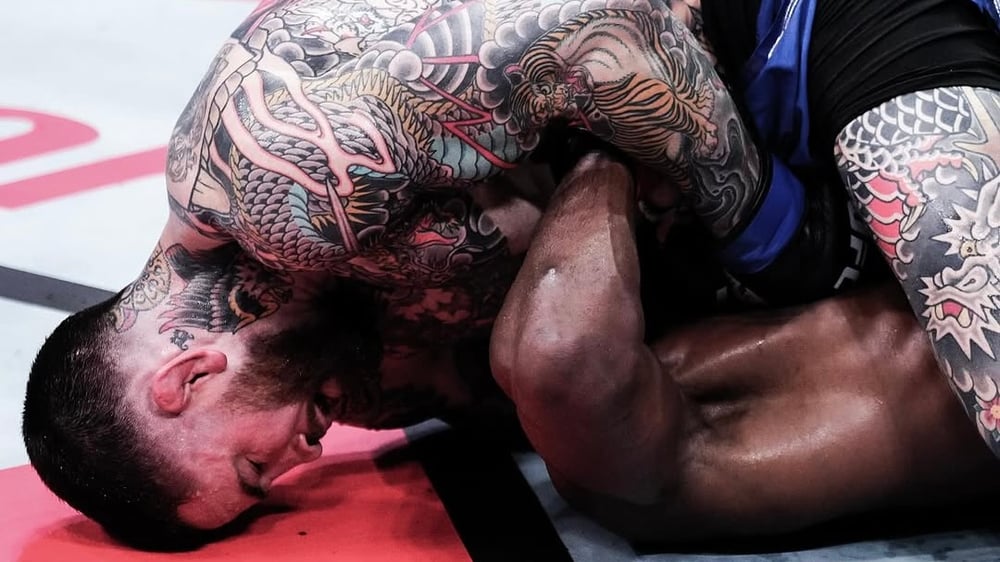
When it comes to competition, it’s easy to understand why Brady chose MMA. People with extroverted personalities tend to gravitate toward team sports, according to research in Perceptual and Motor Skills. People whose energy and personality are naturally geared towards a team setting tend to enjoy that more, so they stick with it because they’re naturally social. And while MMA competitors fight alone, they train as a team, creating a unique juxtaposition for professionals because every fighter has a switch that turns them from athlete to adversary.
“I love my training partners, but when it's time to train, we try to fucking kill each other,” he says. “I don't need to hate somebody or wanna hurt somebody. I'm gonna compete. I wanna win. I wanna hurt you once it's time.”
It’s wholesome psychopath energy, and possibly the most MMA sentence ever spoken. As MMA evolves, fighters like Brady may be redefining what it means to be a contender. It is increasingly shaped by discipline, by long-term thinking, by internal stability rather than outward performance. Brady is a symbol of that quiet shift. A quiet storm in a sport that worships the megaphone. Fighters like Brady are just living as their true selves because they’re the storm you don’t see coming. With former champions like GSP and current belt holders like Makhachev and Chimaev fitting that description, they’re becoming a force that’s gathering in silence. And when it breaks, everyone will still applaud, as loud or as quietly as they want.