

Issue 224
December 2025
Ray Klerck uses new research to expose why MMA often steps in as the father figure life forgot to send.
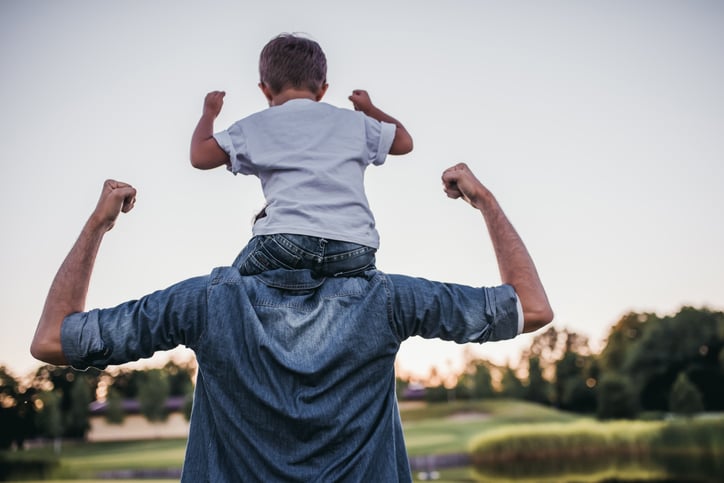
When you place the microscope on enough of the back stories of MMA’s most formidable fighters, as we have over the decades, you begin to notice recurring patterns you’d expect from a single-celled bacterium, not a childhood. Again and again, we’ve seen how boys raised without a father figure live a life of hardship until MMA finally sterilized the mess into something positive. You don’t need a PhD to see it. Take a boy. Remove the dad. Add frustration and misfiring impulse control, and you brew a Molotov starter kit for many of MMA’s top contenders. The wild part is how quickly MMA steps up as a father figure, not because the research says it does, but fighters themselves keep telling us that’s where they learned discipline, boundaries, and how not to implode. It means these boys will either end up in gyms or courtrooms. A new 2025 study on aggression among elite combat and non-combat athletes might help explain why. It found that combat sports athletes show higher levels of controlled, instrumental aggression that are closely tied to trait anger, impulsivity, and emotional regulation challenges. In plain terms, it is looking at the same cluster of psychological debris you would expect in boys who grew up without a steady male role model. The study does not mention broken homes, but it maps the physiological terrain that many fighters start with and explains why the sport becomes the stable force they can rely on. What follows is a breakdown of how and why MMA is so good at filling this vacancy and should be considered a worthy father figure.
STATISTICS OF A STOLEN CHILDHOOD
Let’s start with the basics. Boys without dads really seldom excel, and children from broken homes are nine times more likely to commit crimes than those from stable families. Decades of research, compiled by fatherhood scholars, paint a bleak picture. Kids who grow up without their biological fathers are two to three times more likely to struggle with behavioral problems, school exclusion, substance use, and other forms of trouble before they’re out of their teens. Psychologists call this ‘externalizing behavior,’ where emotions smolder like a loose wire after a storm in a Final Destination movie. The studies don’t mention MMA, but they do list the core deficits these kids face: poor impulse control, heightened aggression, drifting identity, a lack of structure, and no reliable male role models. Those are precisely the traits MMA gyms channel in their budding fighters. Former Bantamweight champion Alexandre Pantoja is a testament to this when he revealed how he grew up when he spoke to the UFC about living without a dad.
“My mom is a warrior,” he said. “She's a single mother who had three kids, and every time in my life, I saw my mom fight for me and my brothers. So I'm enjoying it every time. In the house, it's six weeks, a lot of coaches, and the best guy will be the champion of the world. I love my sport. I've been fighting professionally for nine years, and I love this. I fight because it's in my bones.”
Living in a household without a father, Pantoja found success and a sense of purpose by dedicating himself to MMA, and that’s what has kept him on the straight and narrow. It does work both ways, the evidence of which is in this month's interview with Modestas Bukauskas who explains how his father, who was a Soviet Union no-holds-barred heavyweight champion, passed on his love of the fight game.
THE FIGHTING FIX
If you’re looking for fighters with absent father figures, Mike Tyson is a shining example of how his boxing trainer filled the void left by his dad's departure. So how does MMA do it differently? This is where the 2025 paper earns its cage-side seat. It showed that combat athletes are not less aggressive than footballers or basketball players. Instead, they just hold onto their aggression and use it strategically. They tend to have more controlled aggression that’s tied to performance demands rather than mood swings or bad days on the sports pitch. Non-combat athletes in the study saw their aggression spike reactively when their stress started to get the better of them. The same traits that make a fatherless boy a nightmare in a classroom are something that gets repurposed on the mats into timing, pressure, and calculated violence. Coaches, whether they know the names of these core psychological theories or not, run live experiments in the General Aggression Model and Social Learning Theory every time they hold pads. These are the practices that can change a person’s personality. In the right hands, aggression in MMA is an incredible asset rather than something to be avoided. MMA creates an environment that channels these perceived negative traits and reshapes them into advantages. It’s a system built on mentorship, accountability, and emotional containment, which is why even its leaders understand the gravity of fatherhood, as we learned when Piers Morgan interviewed Dana White.
“You see, my father taught me what it feels like to not have a father there at the house,” said White. “What it’s like to not have that person around all the time when you need them, and I would never do that to my kids.”
We see this as a top-down approach that Dana has knowingly or unknowingly crafted, and it has spread across almost every MMA gym in the world. It’s a mutual respect between the teacher and student which changes mindsets for the good.
MMA AS CULTURE
It seems even MMA fandom may help some young people keep their heads in check. The University of Southern California found that more than half of teenagers enjoy watching MMA, and just being a fan was linked to slightly lower depression and anxiety scores, even if they never threw a punch. But what about those who slipped on the gloves? Well, when at-risk youths step onto the mats, life can change for the better. A major study at UCLA took at-risk boys who’d usually be pushed out of classrooms and put them through 6 months of structured martial arts twice per week. It was like something out of a Cobra Kai redemption arc. They showed significant improvements in inhibition, cognitive shifting, and processing speed, meaning their brains got better at pumping the brakes, thinking under pressure, and not blowing up at things that pissed them off. Not everyone magically got less aggressive, but those whose oxytocin, the hormone linked to cuddling, spiked during the early training sessions were the ones who later were less aggressive and had the fastest cognitive gains. If their biology clicked with the MMA training, they changed. If it hadn’t, the aggression would stay put. MMA will never turn broken souls into saints. However, it does give those who are ready for it a neurological foothold out of the downward spiral, in a way that no lecture or academic suspension ever could. It's something echoed by UFC prospect who told Fighters Only what MMA meant to him when he was faced with difficult times.
"I can only speak for me, when I lost my dad, I was a happy kid," Elliott told us. "It affected me a lot when my dad died. For me, training was the only time when where the pain was put on ice for a couple hours. It was the ultimate motivation to honor him and my family's name. Fighting was a way to honor him. He loved fighting. He loved martial arts. Training in MMA makes you a man quickly. The sport made me a man. You realise nobody's coming to save you. That's when the boy becomes the man. That's what MMA has given me. There are so many roads you can go dow, but I turned to fighting. It's provided me with other strong role models and given me something to stick at, but it's helped me learn to stand on my own two feet."
THE FINAL WORD
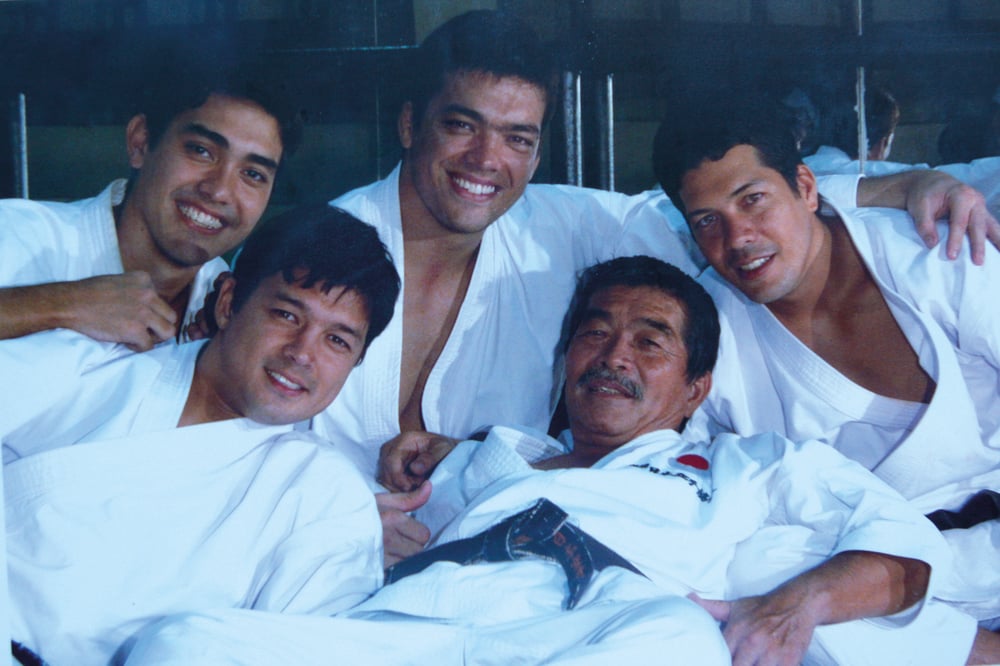
Not every fighter comes from a fatherless home. Some of the greatest ever had dads so solid that they became the foundation of their careers. Khabib’s entire fight game was built under the watchful eye of Abdulmanap. Jon Jones had a father who was present, demanding, and allergic to excuses. Chael Sonnen had an almost mythological relationship with his dad, whom he idolized. This isn’t proof that MMA replaces a father figure, because nothing beats having one. However, for those boys who never had someone to look up to, the coaches, the family atmosphere of an MMA gym, and the discipline it all demands are worthy substitutes. It’s a sport that demands structure, hierarchy, and respect. Sometimes all a young man needs is a room full of rules enforced by dangerous men, a coach who always shows up and tells the truth, and a place where fighting teaches them how not to fight.
...