

Issue 225
January 2026
Ray Klerck blends injury analysis and sports science to reveal the knee injuries MMA fighters train through and why rehab needs to change.
The fight game is nature’s unapologetic physics lab where the skeletal system is asked to do things that would make a structural engineer weep. Yet a fighter’s joints have a strange superpower that lets them survive things most civilian joints couldn’t. We’re trained to spot the obvious disasters like Aspinall’s MCL blowout when he fought Curtis Blaydes. We zero in on the slow-motion collapse and scrutinize the replay you wish you hadn’t watched. But most damage doesn’t arrive like that, at least not in MMA anyway. It sneaks into the fray through ordinary positions, like a pedestrian scramble or standard jab evasion. It’s why many fighters keep training and sometimes keep winning, while quietly cooking up a knee problem that they cannot quite put their finger on. At the time, the fans adore the grit. Corners see heart, but adrenaline fills in the gaps where pain should be doing its job to tell you something is amiss. A 2026 study looked at exactly this type of moment, which was captured via fight footage. At the time, there was no dramatic freak accident or highlight reel explosion. Instead, it was a vanilla sequence that exposed a blind spot in how many knee injuries happen in MMA and why they’re so easy to miss. The scary part is not that the fighter finished the fight. It’s how often this scenario probably plays out without anyone realizing the severity of what just happened.
MECHANICS OF A MUGGING
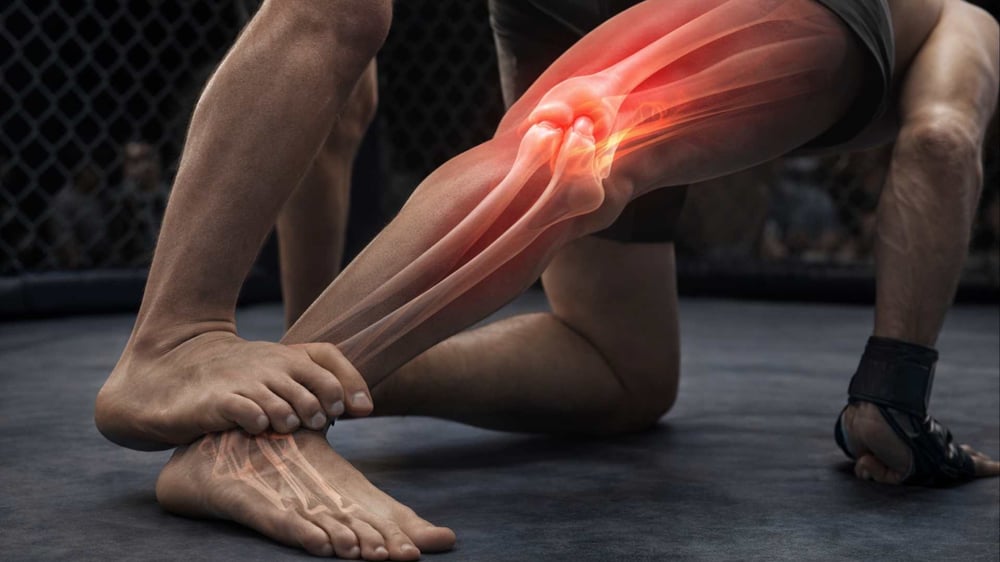
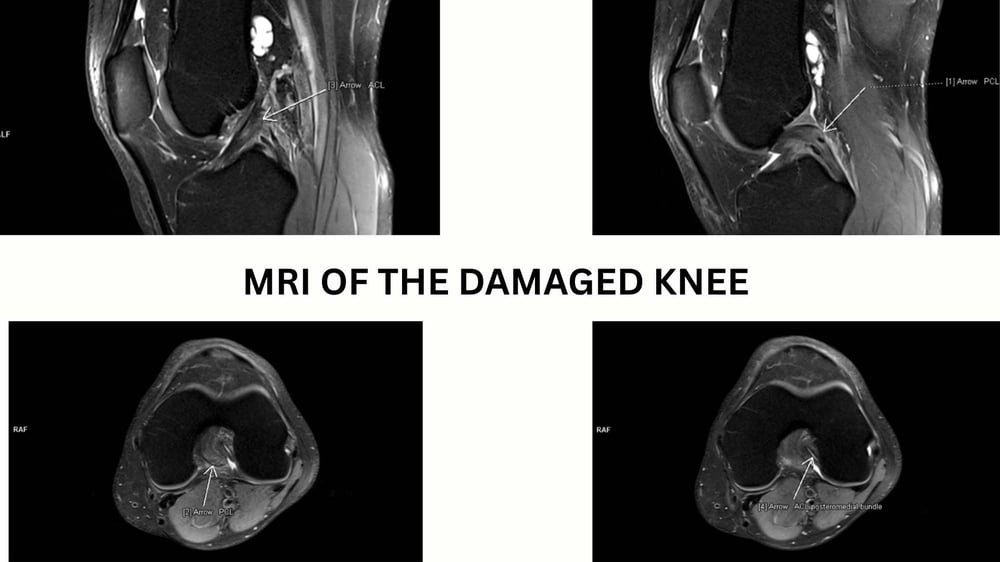
Standing up while a sweaty human backpack is trying to pretzel your leg might seem like a knee injury hotspot. However, what makes this new analysis stand out is how unremarkable the injury looks. The researchers observed a competitive MMA bout in which the injury was not caused by a kick, sprawl, or takedown. It was a textbook cage get-up. One knee was down while the other foot was planted. The opponent stepped on the lower leg to kill the stand-up, which was not illegal. That locked the ankle while the knee rotated under load, creating a tug-of-war within the joint. The fighter felt a sharp jolt. He ignored it, probably thanks to the fog of adrenaline, promptly won the fight like a hero everyone wants to be, and hours later, the knee stiffened to the point where he couldn’t walk. The imaging showed that both the ACL and PCL were overstretched, not torn, or snapped, just stressed enough to be damaged but intact enough to keep going. This is the grey zone that damaged knees tend to inhabit, and over time, they can create the catalyst for much more serious injuries.
CAREER RUINING GREY ZONE
What makes this notable is that this type of injury is not because it looks or feels dramatic, but because the athlete has a very powerful adrenaline alibi, where his internal chemistry was radioactive with excitement. Despite the injury, the knee just carries on out of professional courtesy. Nothing pops. Nothing gives in. Overstretched ligaments still look functional and even pass strength tests, where stability feels fine once the initial sting fades. Often, the pain arrives late, long after the damage has negotiated itself a new home in the joint. Meanwhile, the knee has lost its margin for error. When the fighter keeps training on it and demanding it rotate under load, that margin gets thinner with every session. It won’t stop a fighter, but it may reroute force in subtly destructive ways. What follows are slightly altered movement patterns, lost confidence, and often a ligament tear further down the line. This new type of research, done specifically on MMA athletes, documents how fighters are rewarded for finishing fights, while quietly taxing joints like their knees long after the ref raises their hands.
STANDARD REHAB MIGHT BE STALLING YOUR RETURN
Everyone loves the warrior spirit narrative, but the standard physical therapy protocols are about as valuable as a participation trophy. This can only happen once a fighter finally admits something, no matter how small, might be wrong, and that’s when rehab can be applied. A separate long term rehabilitation study was published in December 2025. They looked at 24 elite MMA fighters and found that the biggest collapse in their physical capacity doesn’t happen at the moment of injury, but in the months that follow. In the first 8 weeks of rehab, they had their biggest drop in what the researchers called functional reserves. This means their muscle mass fell. Energy systems got softer. The biomarkers linked to strength and resilience flatlined. Despite being elite fighters with years of training behind them, their bodies became worse at handling loads, not better. Of course, a lot of this will be mental due to the feelings of not being able to compete, which will impact rehab dramatically. Putting that aside, the lack of intense, specific movement during the first five months turned these high-performance engines into wobbling, punch-drunk fighters on a molecular level. When they gave them the standard rehab protocols, which are the kind that keep the joints safe, while making sure movement was limited, they barely reversed the slide. For almost 5 months, most fighters only partially got back their ability to absorb stress, despite doing everything they were told. What this tells us is that rest made everything worse.
THE COMBACK TRAIL
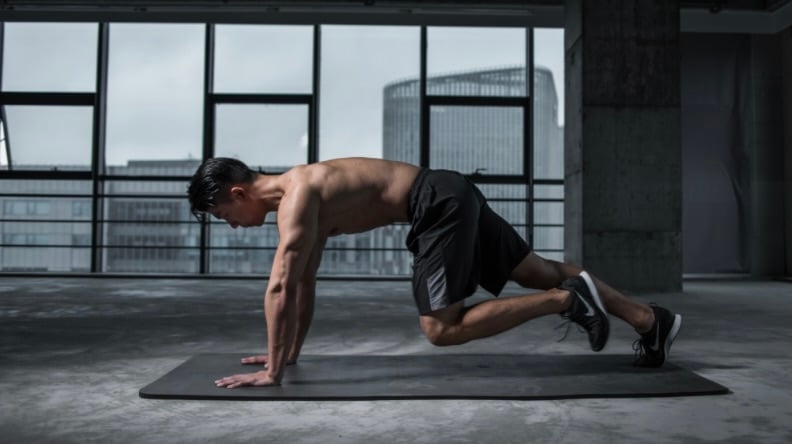
The rehabilitative breakthrough didn't come from taking it easy, but from slapping on the high-vis and getting back to work with specialized MMA drills. During the final eight weeks of the rehabilitation study, the kinesiologists completely redesigned the rehabilitation protocols that are standardized across the industry. They introduced exercises that were 85-90% similar to the actual technical skills used in MMA. These fighters were no longer just vegging out on a leg extension machine. Instead, they were performing combat simulations at a very slow tempo, using isometric holds to target their formerly mothballed muscles. This shift finally sparked a readaptation of their functional reserves. This triggered a marked increase in cortisol, the body’s primary stress hormone, indicating that they were adapting to the new training stimulus. And you can bet their mental state got a serious recharge from being able to do what they love. By the end of the seventh month, these fighters had restored their resistance to roughly 75-80% of their pre-injury training intensity. It turns out, if you want to get back to your former glory, your rehab needs to look like a fight, not a pity party in a sterile clinic.
BUILT DIFFERENT
Athletes from all sports love to flex that they’re built different, but MMA fighters truly are. Whether that comes from the mental or physical side of things, we’re only just uncovering the unique protocols needed to stay in the fight game. The lesson is not that fighters should stop fighting in the face of pain. That instinct will never leave. The lesson is that limb-based injuries should be assessed earlier and trained smarter the moment something feels off. Fighters and their teams may need to focus on this during the post-fight video footage to link any kind of cause and effect with pain or limited mobility. The research tells us that this needs to happen early, before the limp becomes the storyline. Early post-fight evaluation matters because the adrenaline hangover lies to everyone, especially when you consider that fighters need knee strength that holds up under rotation. Ankles need mobility, so torque doesn’t get dumped into the knee when the foot is trapped. None of this requires bubble wrap. It just needs fighters to realize that the most dangerous knee injuries in MMA might be the ones that feel survivable because they will probably show up two camps later, but with a pop that makes onlookers pull faces of disgust.
WHY FIGHTERS NEED DIFFERENT RULES
Fighters are not your everyday, and don’t seem to act like rehab textbooks with legs. Their joints are conditioned to do some weird stuff other athletes can’t even get near. The level and frequency of rotation mixed with fatigue means their rehabilitation cannot be built around avoiding those forces. Standard rehab treats the knee like a fragile object that needs to be cuddled back to health until it purrs like a kitten drinking hot milk. MMA demands the opposite. Fighters need controlled exposure to the stresses that broke them in the first place, or their bodies forget how to handle those stresses altogether. These two new bodies of research make it clear that resting too long and moving too cautiously will never preserve a fighter. It will do nothing but erode them. MMA forces a person to adapt differently, recover differently, and break differently. The rehab needs to reflect the reality of how they fight, not how a clinic prefers things to look. The goal is not merely to heal a knee, but to return it to a sport that will immediately try to snap it again, so it needs to come back stronger.
...