


Issue 225
January 2026
Ray Klerck cuts through the hype to reveal the supplements tested on MMA fighters that actually help survive fatigue, protect output, and win the ugly minutes.
In MMA, the devil doesn’t come with horns. He offers comforting words that urge you to rest before the work is done. If you hear this internal voice and recognize the trickery, supplements are a common counterbalance, but they, too, rely on half-truths masked as confidence. Many end up being little more than an antenna short of a cockroach because MMA doesn’t reward comfort. It is bound by repeatability that holds together when fatigue asks the hard questions, because it inhabits a space where strength, endurance, and fight IQ are all taxed at once. Fortunately, science is finally catching up and doing trials on real MMA fighters to test what actually works without wrecking weight or timing. This roundup collects the last 5 years of hard data on what supplements should genuinely earn their place in every fighter’s kitchen.
CREATINE
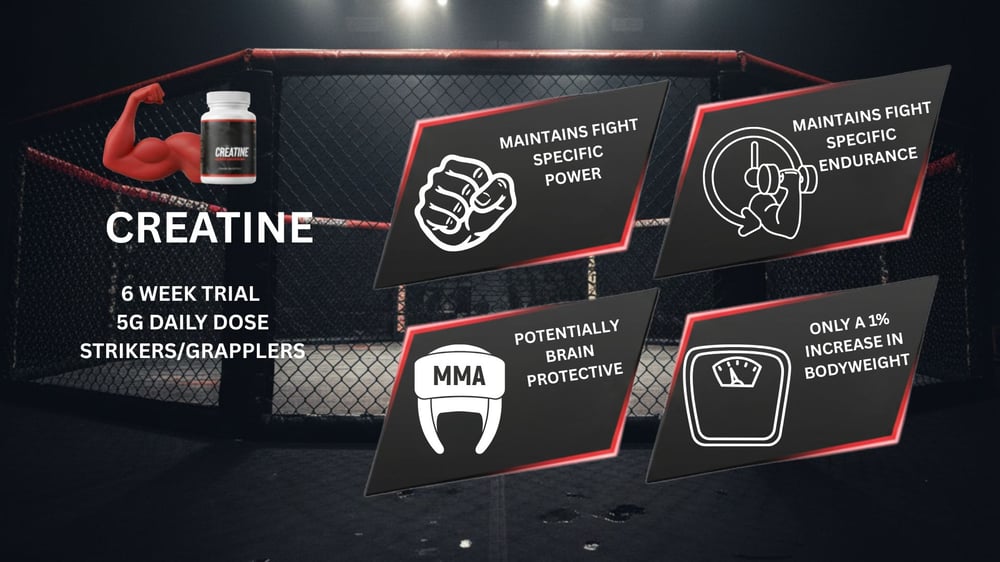
Everyone thinks they understand creatine, which is why it's so misunderstood. It often gets blamed for phantom water weight, slow feet, and oversized muscles. This disconnect was put to rest in 2025 by a review in the Journal of Dietary Supplements that followed 20 active MMA fighters for 6 weeks while they trained and competed. They took a modest 5 grams of creatine monohydrate per day, which is relatively low by many standards, given that some research suggests someone can take up to 20g per day to improve brain function. Creatine users were able to maintain their performance far better as fatigue set in. Where the placebo group saw drops in their repeated bouts of high-intensity exercise, the creatine group maintained 90-95% of their initial power, while the placebo group dipped to around 80%. Yes, it’s a small gap, but it could be the difference between finishing scrambles clean or getting stuck underneath in later rounds. The myth that was debunked was that bodyweight didn’t change by more than 1%, which is important for weight-class athletes. As a side hustle, the research on brain function found that creatine might help improve outcomes relating to concussion in children. While you’re probably not a kid, it may prove to be a protective aid in the future.
USE CREATINE THE MMA WAY
Both the 2025 paper and a 2020 review reach the same conclusion: creatine is most effective when used as a background system upgrade. It’s not a last-minute performance hack. Fighters will reap the rewards if it’s taken well before the peak pressures of a fight camp, so roughly 8-12 weeks out. This lets the muscle creatine stores rise gradually without weight changes. Daily dosing in the 3-5g range can improve your repeat-effort power, and if you take it after training, especially with carbs, it can help restore your phosphocreatine and glycogen stores. If creatine is stopped late in the camp, the performance benefits don’t vanish overnight. It takes weeks for the muscle creatine levels to decline. You can take more and not get results that differ much, which means taking 20g per day, which is what research suggests improves brain function, doesn’t mean you’ll get four times the weight gain, but it may help you think clearly. Quality is a big issue here, so usually look for brands you trust and use only third-party-certified supplements. If you experience side effects such as gastric bloating, then switch brands. Generally, products formulated from high-quality, reputable sources like Creapure are less likely to cause side effects. Creatine doesn’t win fights for you, but it makes sure fatigue doesn’t steal them.
ASTAXATHIN
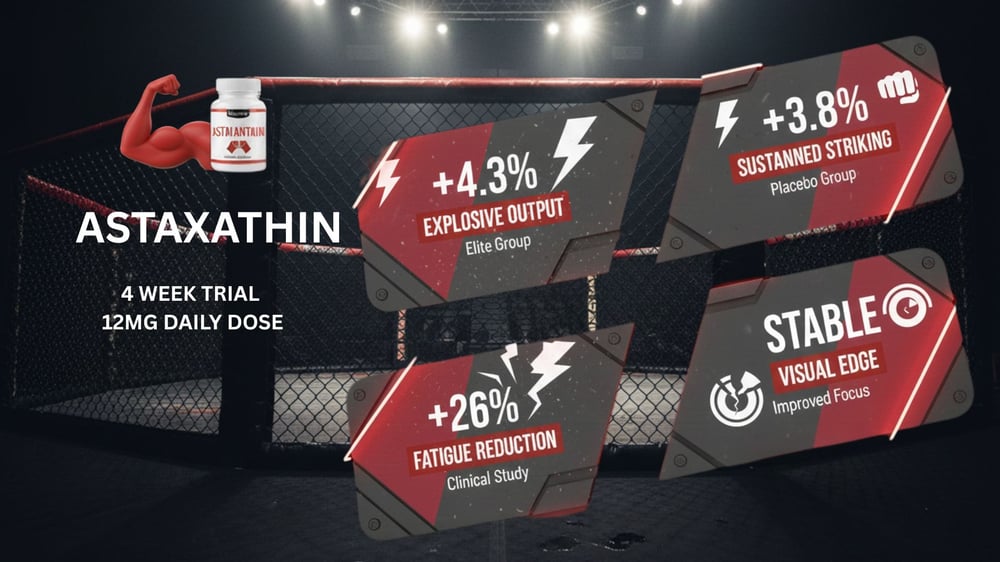
If creatine is the explosive device, astaxanthin is the biological riot gear protecting a fighter’s system from being torn apart by its own training intensity. You’re not just battling an opponent, you’re fighting internal oxidation, which turns those fast-twitch KO blows into wet cardboard. Antioxidants are often one-hit wonders, neutralizing one type of free radical, pat themselves on the back, and retire. Astaxanthin is different because it stays in the pocket trades, like a molecular Max Holloway, protecting your cell membranes from the inside and out. When taekwondo athletes took 12mg per day for 4 weeks, they had greater improvements in their kicking volume. Their double jump kick increased by 4.3% during a 20-second sprint, and their roundhouse kick volume increased by 3.8% over 60 seconds. Being able to throw nearly 5% more in the final seconds might be a massive tactical advantage. Some of this might be due to its protective nature, which blunts creatine kinase (CK), which is not the same as the creatine above. CK is a chemical snitch that tells your brain you’re overtrained. When people took a higher dose of astaxanthin (28 mg per day) for just four days before tackling a brutal endurance cycling test, they had an 18% increase in time to exhaustion, which is a big jump for something that isn’t a stimulant. The same study also found lower rises in creatine kinase and oxidative stress after the ride, suggesting astaxanthin helped protect muscle tissue when fatigue and damage were part of the challenge.
USE ASTAXATHIN THE MMA WAY
This isn’t a pre-workout you chug in the car park to amp up for a sparring session. It’s a pure recovery aid that enjoys a long-term contract with your muscles. Made from the deep-red pigment that gives salmon and crustaceans their color, this antioxidant is fat-soluble, so taking it on an empty stomach will make for some expensive urine. To get it into your cells, take it with fatty foods like eggs, avocado, and steaks. The research indicates that the sweet spot seems to be about 12mg per day to see those double-digit shifts in eye health and muscle protection. The benefits will probably only show up after a 2–4-week mark, so start your cycle at least a month before your hardest sparring block is scheduled.
BETA-ALANINE
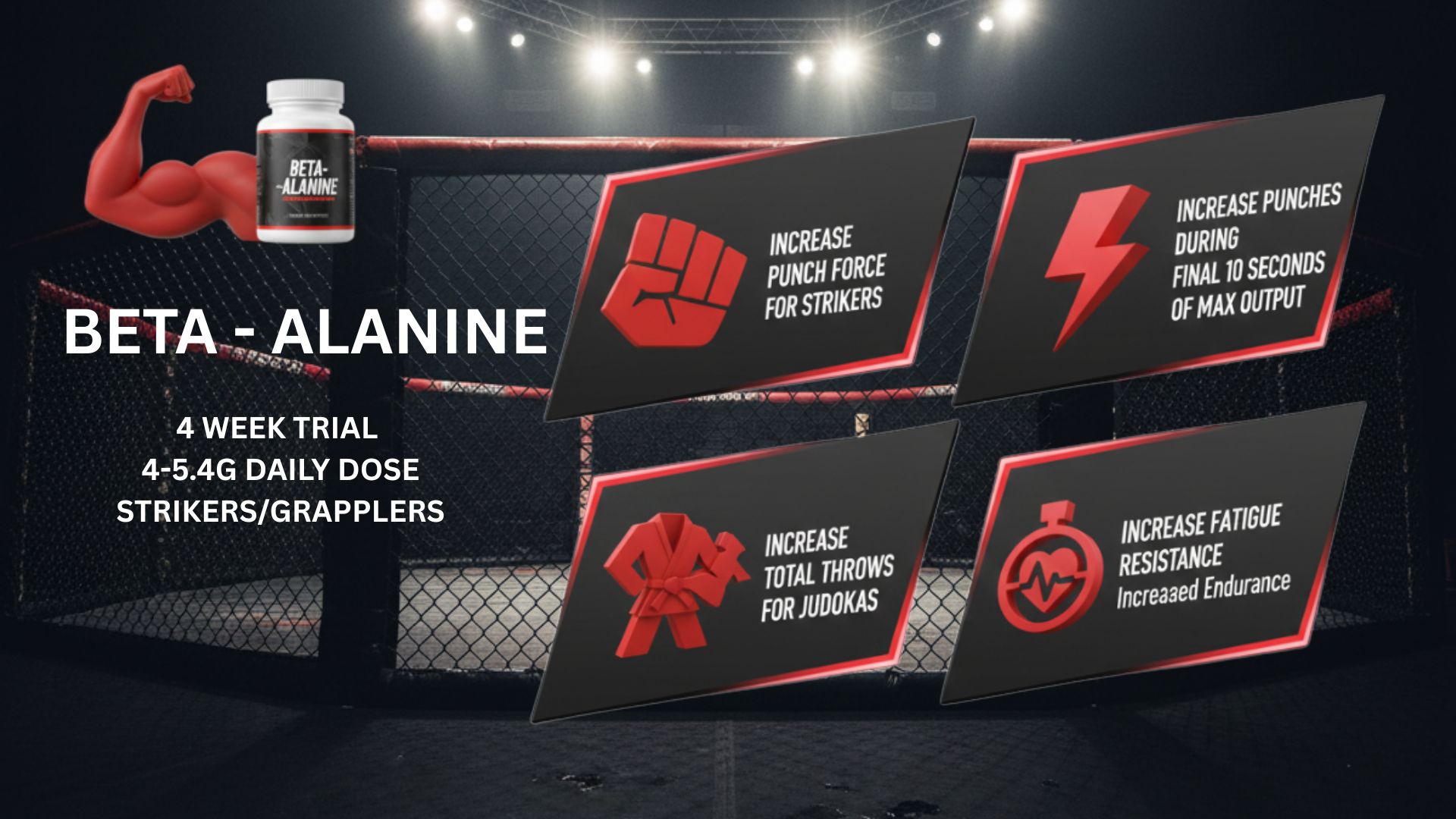
To maintain the intellectual honesty of this guide, beta-alanine isn’t for you if you’re a heavyweight who ends things in thirty seconds, or if your training volume is low. It’ll be little more than an expensive skin tingles. For strength or short bursts, beta-alanine is best left on the shelf because it’s a waste management crew that only punches in when the work goes longer than a minute. If you’re one and done, keep your money, but if you stick around long enough to feel the muscle burn, then this puppy will take the sting out of it. Only in 2023 did researchers look at how it might impact combat athletes, and they found that for strikers, 4 weeks of use increased the final-round punch power and frequency during the final seconds of intense all-out effort. For grapplers, they could do more work and increase the number of successful throws per session. It might be the difference between having that dog in you to finish a takedown at the end of the third or just hanging on for dear life.
USE BETA-ALANINE THE MMA WAY
Beta-alanine is known for the pins-and-needles sensation that people may feel, which is said to invigorate their training, but that’s not always the MMA way. It's like a long-term contract with your muscles: build up your carnosine stores by taking 4-7g per day for 4-10 weeks, so you can enjoy real performance gains. It’s worth taking it with your main high-carb meal, if you don’t mind the tingles. If you don’t want them, then you can split your doses into 1.5-2g doses across your day or by using a sustained-release formula that’ll drip-feed you everything you need. As a bonus, some research suggests it may support lean mass gains while reducing fat mass. Despite the tingles urging you to get going, this isn’t a pop-and-play pill and is more of a slow burner that’ll mop up the acid that turns your jabs into anchors.
CAFFEINE
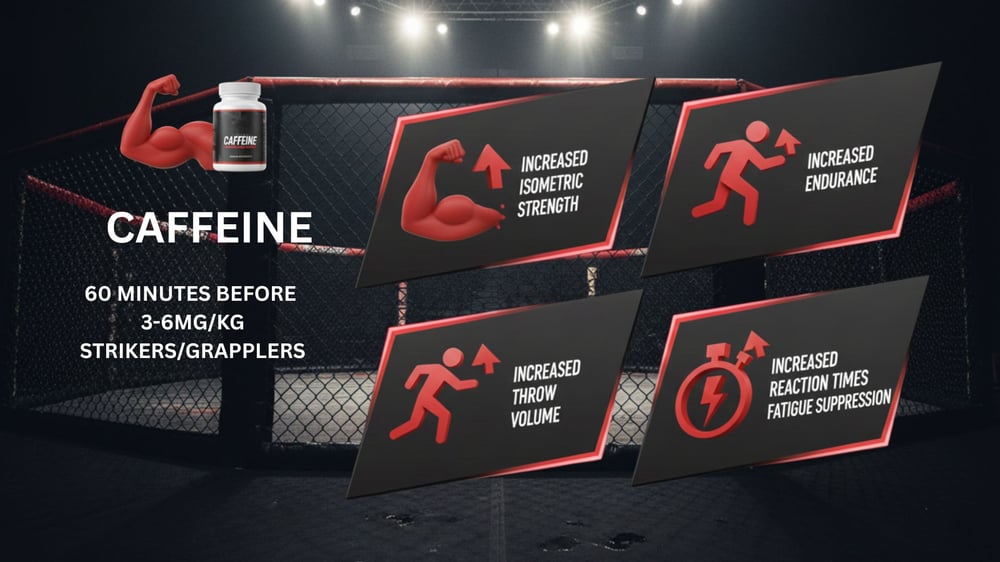
Sometimes you don’t need to reinvent the wheel. The old stuff is the good stuff, but you don’t need a coffee-stained grill anymore to enjoy the benefits. In a 2025 comprehensive review, the researchers looked at how caffeine impacted fighters and found its real value lies in its ability to force your body to burn fuel faster and more efficiently during a scrap. It has an incredible ability to improve strength, endurance, and reaction times across various combat sports, with higher doses being more effective for elite combat athletes. Even in modest doses, it increased max hand grip strength by 7% and improved strength endurance by 5%. This isn’t about getting that pre-workout buzz that fizzles out because these force-production benefits stick around for the entire duration of live combat. In the deep waters of a taekwondo match, it’s been shown to help maintain high-intensity output for consecutive rounds, delaying the moment your body tries to call it quits.
USE CAFFEINE THE MMA WAY
You can definitely get too much of a good thing here because the less you have, the harder caffeine hits. If you’re drinking coffee daily, you may not be reaping the benefits. Equally, if you don’t ever have caffeine, then you may suffer from anxiety, an increased heart rate, and insomnia. The trick is to have small doses every now and then but save the big doses for when you need them, like a serious sparing session or before a fight. The sweet spot for combat sports seems to be about 3-6mg per kg of body weight, which you can take about 60 minutes before a fight to ensure peak blood concentrations when you touch gloves. If you refuse to give up the coffee habit, some research suggests that you can go as high as 9mg of caffeine per kg of bodyweight, but that can really roll with side effects. You can cook up a tolerance to it in as little as 1-3 days, so think about stopping the caffeine habit before a fight to reset your sensitivity.
SODIUM BICARBONATE
If creatine is the long-term contract with your muscles, sodium bicarbonate is the emergency roadside assistance for your blood. While it sounds fancy, it’s the simple baking soda you find in your kitchen cupboard and probably in your favorite wellness influencer’s feed. During high-intensity training, your muscles accumulate metabolic acids that can cause the burn that stops you from going all out. Bicarbonate is alkaline and helps to restore balance and neutralize the rapid acid production. A 2022 systematic review on combat athletes confirms this kitchen hack does have a serious impact on a fighter’s blood lactate, which means the biological mop is working hard to pull performance-killing acid out of the working muscles and into the blood to be neutralized. The catch is that this doesn’t always translate neatly into higher power numbers or prettier test scores. What it does buy you is time. Better buffering means fatigue arrives later, not sooner. In fight terms, bicarbonate doesn’t make you explosive out of nowhere, but it can help you survive the ugly minutes when exchanges pile up, breathing gets heavy, and acidosis becomes the real opponent.
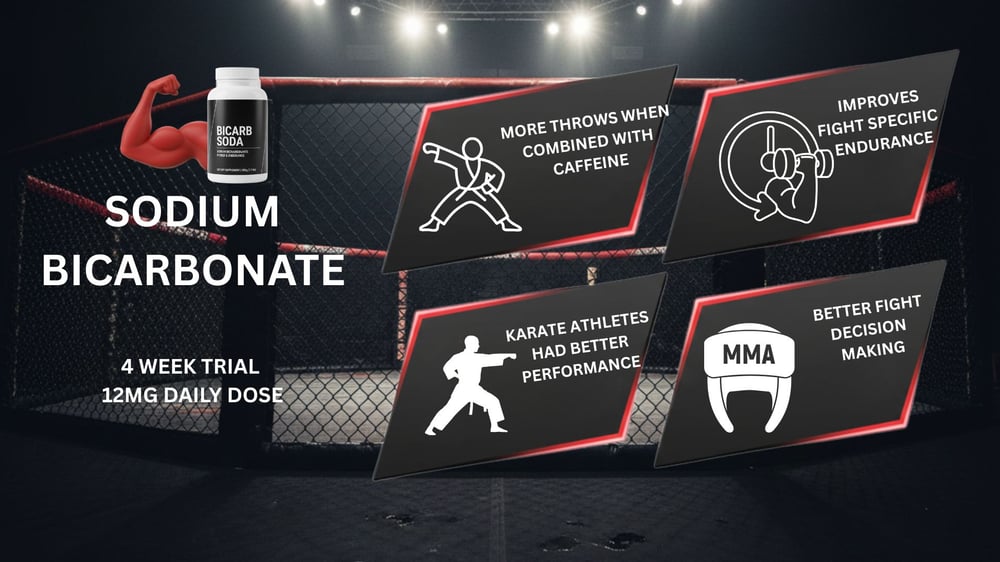
USE SODIUM BICARBONATE THE MMA WAY
This can be a high-risk, high-reward supplement. Get the protocols wrong, and you might be fighting for the bathroom stall instead of getting your hand raised. To use it the right way, the research suggests taking 0.3g per kg of body weight. For an 80kg fighter, that’s a seriously hectic 24g of baking soda, where peak blood levels and alkalosis hit around 60-90 minutes after taking it. That is at the extreme end, and most people just take 5-10g mixed into a big glass of water, followed by a chaser to wash out the taste. Taking that 24g can almost certainly lead to gastric urgency, to put it politely. It’s best to take it on an empty stomach because it is alkaline, which can lower your stomach acids, so taking it with foods can give you even more digestive discomfort. Many athletes take it first thing in the morning on an empty stomach with a big glass of water, then hit that early endurance session. Just remember, there is a thin line between "becoming an elite endurance machine" and "becoming a human pressure cooker." Use it wisely, or you'll find out the hard way that the only thing worse than a rear-naked choke is having to defend one while your digestive system is attempting a tactical exit.
CHOOSE WISELY
In the end, you don’t need any of these. They’re just nice to have, and your kitchen shouldn’t be a graveyard for expensive, half-baked promises. Whether it’s the background armor of creatine and astaxanthin, the mid-round waste-management of beta-alanine and bicarbonate, or the tactical overclocking of caffeine, every gram should have a specific job to do. Combat is the ultimate stress test for any substance. If it doesn't help you bite down on the mouthpiece and maintain your output as oxygen runs out, it’s just clutter. Stick to the data, respect the protocols, and let the science handle the biology so you can focus on the fight.
...