

Issue 225
January 2026
Ray Klerck explores why MMA judging now decides more fights than fists do, and whether that’s a flaw or the sport’s new reality.
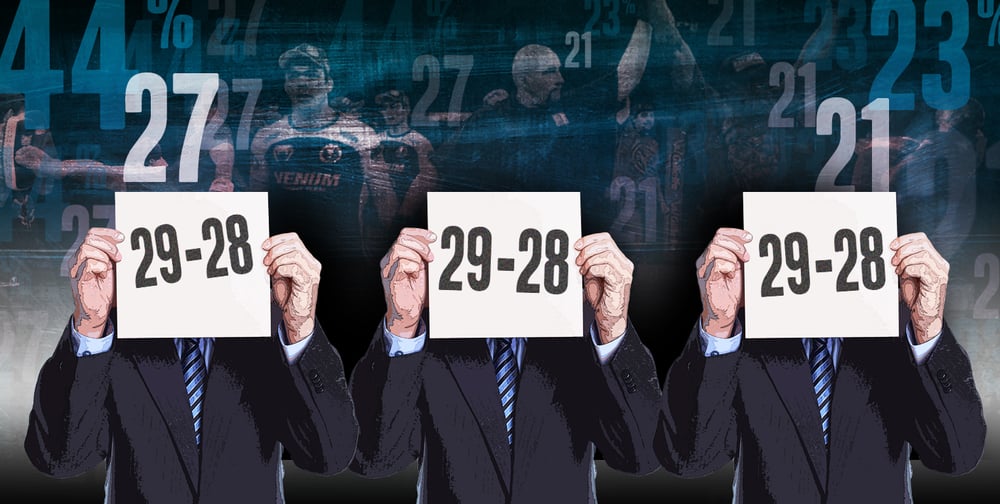
Everyone judges everything. You’re doing it right now as you read this. And you suck at it. We all suck at it. We judge coffee by the cup, movies by the trailer, and your old friend’s new friend by his limp handshake. We judge because thinking is difficult, and nothing makes that thinking more difficult than a close fight you’re emotionally invested in. That’s because nothing in this world is truly subjective, even when the stakes are life and death. As much as 75% of medical errors are thanks to bias, and favorable legal judgments drop by 65% based on time because as the professional judges got closer to lunch, they handed out harsher penalties. So, what hope does MMA have when Dana White has repeatedly gone on record criticizing the judging? He did after Paddy Pimblett won by decision over Jared Gordon. He did it again when Sean O’Malley got a favorable decision over Petr Yan, then again for all of the UFC 307 card. Perhaps his comments spark the fan debates, and while none of these fights are robberies in isolation, together they form a pattern in which elite MMA is decided by criteria that fans, fighters, coaches, and even the big boss struggle to interpret consistently. That tension is why judging is no longer background noise. It’s part of the story that nobody wants to tell.
MORE FIGHTS FEWER FINISHES
This would matter less if judges were a rare part of the night, but they’re now deciding more fights than ever. The sport has changed in a way that makes judging unavoidable. Out of 2025’s 21 title fights, 13 went to a decision, which is roughly 62%. While many, such as Khamzat Chimaev’s and Islam Makhachev’s victories, were undoubtedly impressive and unanimous, they do present a shift that we’re all taking note of. A 2026 analysis of 1735 UFC fights across three eras makes the trend impossible to ignore. Modern fights are lasting longer and landing on the judges’ hands more often. Average bout duration has climbed from 495 seconds in 2003-04 to 650 seconds in 2023-24, while the average number of rounds has increased from 1.97 to 2.41. One of the biggest changes is in how these fights end. In the early 2000s, 45.5% of bouts ended by knockout or technical knockout. It’s probably why fans grew to love the sport, because a stone-cold knockout was only a coin flip away. Today, that figure sits closer to 34%, while unanimous decisions have risen from 24.7% to 37.1%. More notably, this isn’t because there are more five-round fights. When the researchers isolated the standard three-round bouts, the move toward decisions became even stronger. It’s clear that modern MMA is geared toward longer, closer, and more tactical fights, which means judging is no longer an occasional tiebreaker. Judging is now the machinery that’s deciding an ever-growing number of outcomes, whether we like it or not, which might be why we’ve always celebrated finishers like Pereira when they step onto the biggest stage. We’ll find out what this shift to judging will mean to the casual fan who sees five rounds of wrestling and can’t pick a top from a bottom.
CAN AI GET IT RIGHT
How can we fix this, and do we even want to, because knowing who the judges will pick is a quiet celebration of a fan’s fight IQ? For the most part, it feels like an almost impossible task, especially for any normal human. That said, it turns out that non-humans struggle too. A 2025 machine-learning study analyzed 52 rounds across UFC 317 through to UFC 319, using six independent models trained to score rounds strictly by the Unified Rules. The goal was not to predict the judges’ outcomes, but to apply the judging criteria exactly as written in the rulebook. Call it by the book judging, if you will. Even then, 13.5% of rounds were flagged as inconsistent with the rule-based scoring, with 7.4% of individual rounds’ decisions said to be wrong under the rule book’s written criteria. That’s an error rate that persisted despite the models having no crowd noise, no fighter popularity, and no emotional investment. Most of the time, the AI cooked up scorecards that were technically justifiable but wildly at odds with the official results. Emotions and human bias were removed, and the software still got it wrong. The takeaway isn’t that our machine overlords should be judging fights like some sort of script from the next Terminator 7 movie. Instead, it tells you that even rule-trained computer systems can struggle to make things binary when fights get super close. It means that expecting perfect consistency from three flawed human beings who are probably the best we’ve got might be an unrealistic standard for any sport.
WHAT IS THE UPSIDE?
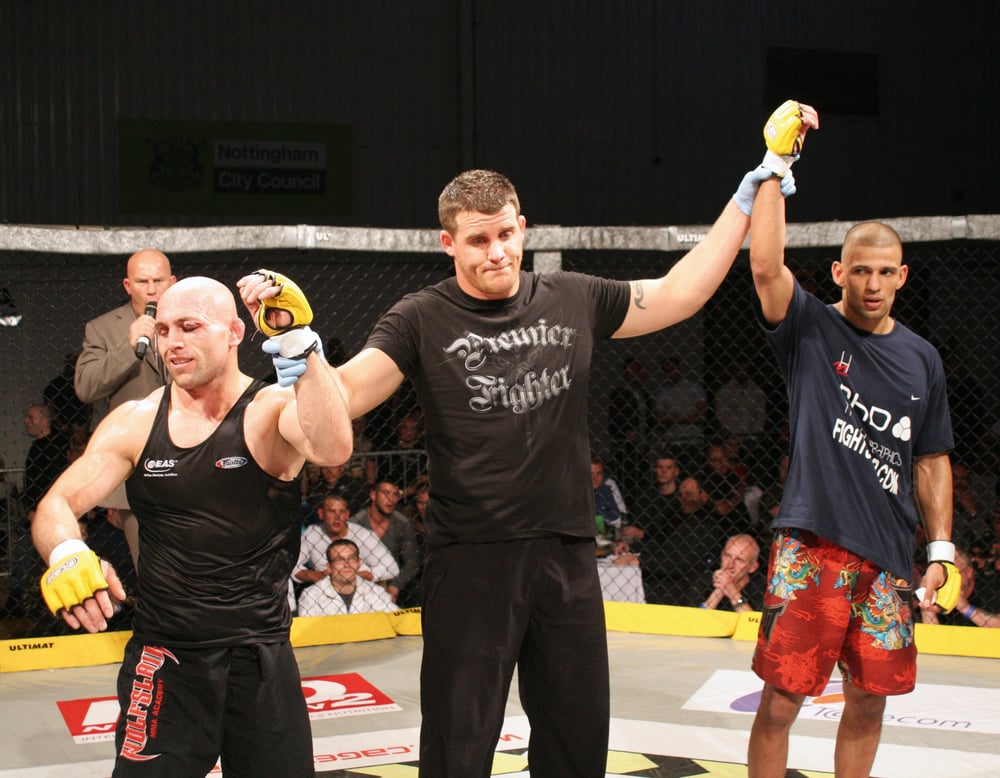
Close fights and the anticipation of a decision are one of MMA’s finest moments as we wait with bated breath for a fighter’s hand to be raised. The corners are quiet. Fighters stare blankly at the canvas as they chew their mouthguards to dust, and the crowd does a collective breath hold. It’s a beautiful edge set to a theater of anticipation. Regardless of the final decision, the outcome almost always drives chatter and engagement, creating even more emotional investment. When judges are involved, we typically find the birthplace of MMA’s best rematches and fight trilogies. Holloway and Volkanovski. Shevchenko and Grasso. Usman and Edwards. So, if we get what we believe is a bad decision, we almost always get a shot at a redemption story, which feels good. Sure, it’s painful in the moment, but satisfying in the long term. This is a reward you can look forward to at the end of a good and bad decision. Truth is, since everything is so transparently on the big screen, there is no room for a single error that isn’t blatantly obvious, and we’re in the age of judging professionalism. One such human, Marc Goddard, who is arguably one of the best in the business, laid out his opinion on the matter in the Overdog Podcast.
“Despite what people think, judging now and MMA officiating now is better than it's ever been. Yes, you're going to get contentious decisions, and yes, you're gonna get — but one of the biggest problems we have with MMA judging is misconception. People hear things in certain ways, and they just dive into a rabbit hole with them. They take no time to understand. And that's what frustrates me and my colleagues.”
The irony is that judges clearly suffer through the most judging, and they’re desperately aware of it because when they get it wrong, they also suffer at the pointy end of the pineapple.
WHAT NEXT
So, where does that leave the situation? The boring answer is that there’s no silver bullet. Replays could help the situation, just as they’ve transformed so many professional sports leagues from tennis to soccer. The tricky part with judging is that slow-mo replays often change the meaning of an exchange. Ask any rugby fan, and they’ll tell you how a tackle that looks intentionally dangerous in slow motion often looks completely tame in real time. Sometimes this can have far-reaching consequences for the game’s outcome if that player then gets sent off, and a similar fate may befall MMA fighters. Computer scoring might sound like a viable alternative until you realize it would need to understand intent, fatigue, fear, and the subtle difference between surviving and winning. We don’t want a binary octagon where a motherboard decides our post-fight moods. We want the drama. These are the redemption arcs that only a 29-28 card can bring. The safe bet is to know that the judging improves at the margins, not through a wide-ranging revolution. As training, education, and transparency evolve at a breakneck pace, judging has shown greater consistency year after year. Perhaps a little humility from the fans can help us realize that we all get it wrong sometimes, but the honest truth is that MMA judging is not broken. It’s actually at its peak. Besides, a little bit of controversy is the secret sauce that keeps us all screaming at our TVs and coming back each week.
...