

Issue 225
January 2026
Paul Browne sits down with Mario Bautista to discuss his quiet win streak and how to fight the modern UFC algorithm, where one loss did more for his rep than years of winning.
For most of his UFC career, Mario Bautista has done the one thing fighters are always told will take care of everything else. He’s won. Not loudly. Not spectacularly. Not in ways that light up highlight reels or dominate social feeds for days at a time. He’s won steadily, methodically, and often without fanfare, building an eight-fight winning streak in the UFC’s most unforgiving division. Then, with one loss, a competitive, high-level fight against Umar Nurmagomedov at UFC 321, the conversation around him seemed to reset overnight. That reset is familiar to anyone paying attention to how modern MMA actually works.
“I think I got more respect in my loss than I did in my last three wins,” Bautista says.
It’s not self-pity. It’s an observation. In a sport increasingly driven by optics, not all wins carry equal weight, and not all losses are treated the same.
THE LOSS THAT PROVED HE BELONGED
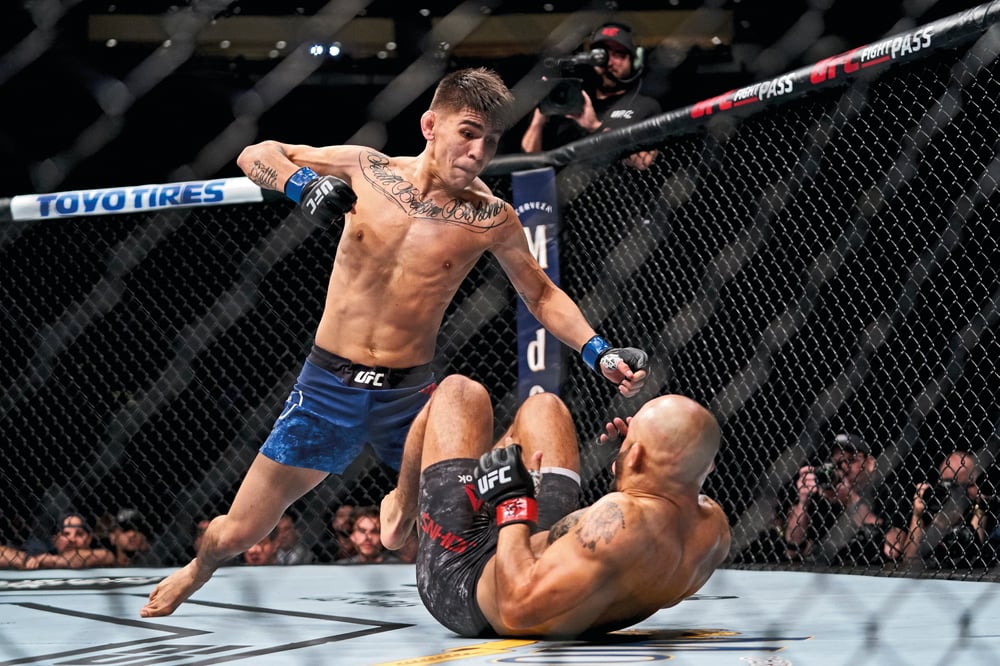
The irony of the Nurmagomedov fight is that it did more to validate Bautista as an elite bantamweight than many of his victories. He pushed a blue-chip prospect to the margins, nearly finished him early, dropped him later, and forced adjustments in real time. The gap wasn’t talent. It was inches.
“At that level, it’s a game of inches,” Bautista says. “Sleep, diet, film, little adjustments. That’s what it comes down to.”
Those inches showed up immediately. In the first round, Bautista locked up a vicious toe hold, not a crowd-pleasing submission, but an ugly, painful one designed to end fights.
“I didn’t really care if he tapped,” he says. “I wanted to break his foot.”
He didn’t get the finish, but the message was clear: he wasn’t there to survive.
Later, he dropped Nurmagomedov with a knee he’d been hunting all camp, based on a tendency he’d spotted on film. It worked. What didn’t work was time. He chose not to rush, knowing a scramble favored the grappler. It was the correct decision and the kind that rarely makes highlight packages. That’s where the disconnect lives.
THE COST OF FIGHTING SMART
Bautista’s career is built on decisions like that. Smart ones. Conservative ones. Team-first ones. He fights out of a gym that emphasizes preparation and control, not chaos. And in today’s UFC economy, that approach often comes with a visibility tax. After his win over José Aldo, Bautista found himself on the wrong side of the fanbase almost instantly. Influencers framed the fight as an offense rather than an outcome. One prominent personality publicly joked about putting a bounty on him. The backlash wasn’t about whether he won; it was about how he won.
“That stuff has a real effect,” Bautista says. “Those guys influence a lot of fans.”
It followed him. It shaped how his fights were received. And it reinforced a lesson fighters are learning earlier in their careers now: winning quietly doesn’t move the needle the way it used to.
“Sometimes it feels like fighters are judged more by how they lose than how often they win,” Bautista says.
SKILL VS. SPECTACLE
In bantamweight, a division overflowing with talent, the distinction matters. Risk-heavy fighters who create chaos are often fast-tracked, even when that chaos backfires. System-built fighters are labeled “boring” until they produce something undeniable, and sometimes even then. Bautista doesn’t pretend not to notice. He just refuses to panic.
“If you’re young and athletic and have good eyes, that wild style can take you far,” he says. “But when it fades, when injuries pile up, when you get tired, it catches up to you.”
His approach is built for longevity. That may be why the UFC still trusts him. Despite coming off a loss, Bautista was booked into a main event in his next outing, a quiet vote of confidence. But even that opportunity comes with an unspoken condition: there is no margin for error.
“When you don’t come in with hype, every fight feels like a test,” he says.
FIGHTING WITHOUT THE BENEFIT OF ASSUMPTION
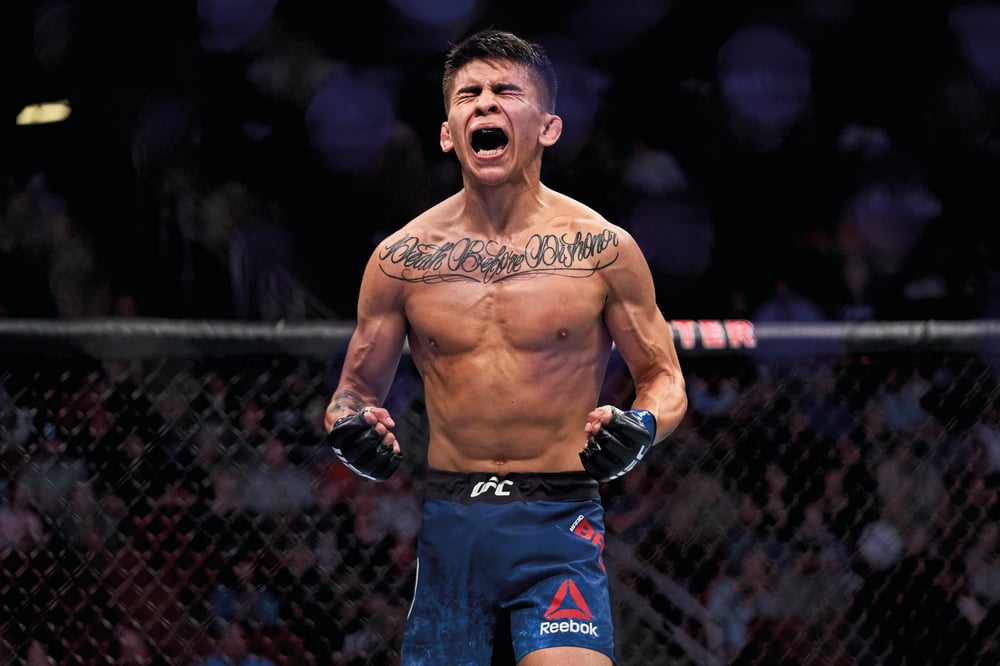
He’s also realistic about how narratives work. Fighters with famous surnames or built-in followings often start fights with assumptions working in their favor. Others have to earn that same credibility repeatedly, often against opponents who benefit more from beating them than they do from winning. That dynamic doesn’t frustrate Bautista so much as clarify the assignment. After the Nurmagomedov fight, he refined his process, adjusted his camp and with it his mentality, his preparation.
“Every time I’ve lost, I’ve come back better,” he says.
His record supports the claim, but winning alone isn’t enough. Belonging isn’t enough. The fans demand moments that separate fighters from the pack in ways that don’t require explanation. Bautista knows that. He also knows chasing those moments recklessly can shorten a career.
“I needed a statement,” he says of that last fight.
Looking ahead, he speaks less about opponents and more about positioning. Win the main event. Fight into the top five. Let the division cycle through its rematches and narratives until the math becomes unavoidable. And it raises a bigger question than Bautista himself: in a sport increasingly shaped by algorithms, what happens to fighters whose value compounds slowly? Mario Bautista is still answering that question. Not with noise. With work. And whether the system ultimately rewards that says more about the sport than it ever will about him.