

Issue 225
January 2026
Paul Browne examines how Jason Parillo’s boxing discipline reshaped Mackenzie Dern’s jiu-jitsu dominance into a championship-winning MMA system.
When Mackenzie Dern raised the UFC strawweight title above her head last October, it wasn’t just the culmination of a beautiful career arc. It was the closing of a long, uneven gap between two worlds that don’t always speak the same language. On one side was Dern, a prodigy. A multi-time Brazilian jiu-jitsu world champion who had been competing since she was a toddler, collecting gold medals while most kids her age were worried about lunch periods and homework. On the other side was Jason Parillo, a coach forged in boxing gyms, where footwork, posture, distance, and discipline are non-negotiable, and where talent means very little without structure.
Their partnership didn’t begin with a clean slate. It began with friction, false starts, and a fighter who was, by Parillo’s own description, “almost the opposite of a blank canvas.”
“She had unbelievable coordination,” Parillo says. “Gifted. Brilliant athlete. But there were bad habits. A lot of wildness. Not a lot of direction.”
That wildness defined Dern’s early MMA career. Her jiu-jitsu was transcendent, but everything else came in waves. Moments of aggression, moments of chaos, moments where instinct overruled control. She bounced between coaches. She won fights, but not always convincingly. She lost momentum, then regained it, then lost it again.
When Parillo and Dern first started working together, the relationship wasn’t linear. They trained. They split. They reconnected. Before her loss to Jessica Andrade at UFC 295 in 2023, they parted ways again. Those two fights without him - fights Dern fell short in - would later become inflection points.
“She reached out,” Parillo recalls. “Just asked if she could come down and train. No promises. Just try.”
She joined him in the middle of a camp, weeks before a fight with Loopy Godinez. There wasn’t time to rebuild anything. Parillo worked her corner, then committed to something bigger: a long-term project.
What he saw wasn’t a finished product. It wasn’t even close.
“She wasn’t lost,” he says, carefully. “But she was searching.”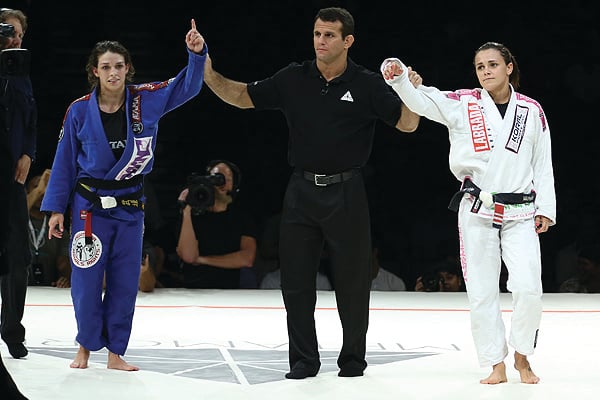
BEING TOO GREAT TOO EARLY
Dern’s story is unusual even by elite standards. She wasn’t just good at jiu-jitsu; she was generational. A child competitor who grew up inside the pressure of constant tournaments, constant expectations, and constant success. That kind of upbringing builds champions, but it can also distort development.
“When you’ve been competing since you’re three years old, at a high level, you get used to getting away with things,” Parillo says. “You don’t always have to train full-time to win.”
In MMA, that margin disappears. Parillo believes Dern’s early struggles weren’t about effort, but about context. She was an elite specialist entering a sport that demands integration. Being a black belt in one discipline doesn’t make you a black belt in fighting.
“In MMA, nobody’s a black belt in fighting,” he says. “You earn inches.”
For years, Dern tried to graft her grappling dominance onto a striking game that lacked foundation. She fought emotionally. Aggressively. Sometimes recklessly. That aggression was her greatest weapon but also her greatest liability.
“She’s got that moxie,” Parillo says. “That willingness to bite down and give one back. That’s rare. But it’s also dangerous if you don’t control it.”
Parillo’s job wasn’t to dull that edge. It was to give it rails.
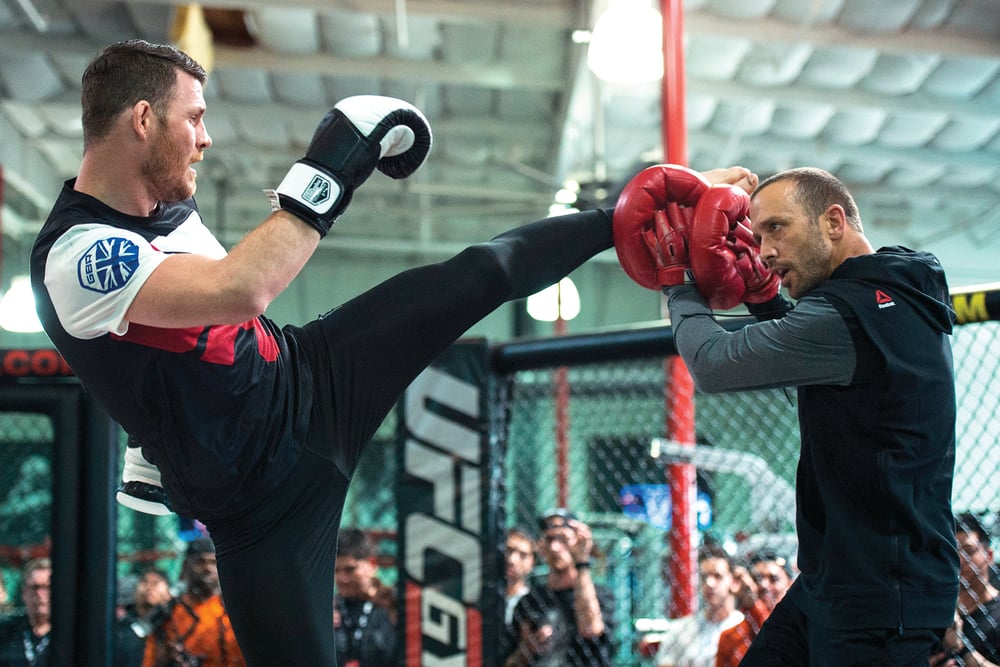
TEACHING A WORLD CHAMPION TO BE A BEGINNER
Coaching an athlete who has already reached the top of one sport requires a delicate balance. Respect their intelligence. Challenge their assumptions. Eliminate the noise.
“Athletes like that have a good radar for bullshit,” Parillo says. “And there’s a lot of bullshit in this game.”
Dern didn’t need motivation. She needed discipline, not as punishment, but as structure. Parillo believes elite athletes crave boundaries once they trust the system behind them.
“I like my fighters in the gym year-round,” he says. “This is your job.”
Consistency became the breakthrough. Staying in the gym full-time. Owning fundamentals. Understanding distance. Building a base. Learning when not to attack. Parillo describes Dern’s development on the feet in belts, the same way jiu-jitsu does. Early on, she wasn’t even a white belt striker. Now?
“She’s not a black belt on her feet yet,” he says. “But she’s moved up. Purple. Brown.”
At UFC 321, that growth showed. Dern didn’t win the title with a submission. She won it with movement. With patience. With composure. She judged distance better. She didn’t turn her back under pressure. She stayed balanced. She trusted her base.
“She won the fight on her feet,” Parillo says. “That matters.”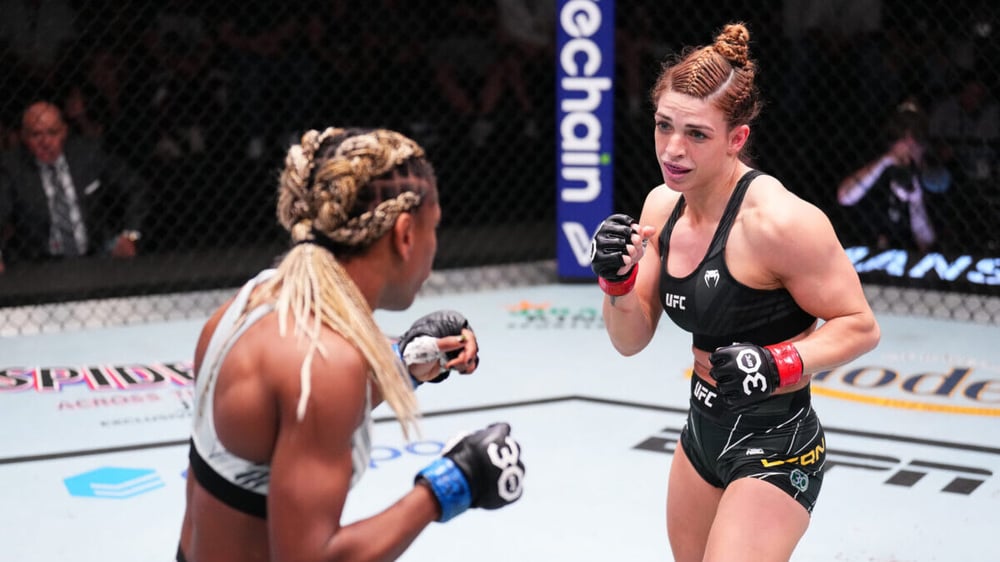
AGGRESSION, REFINED
Dern will never be a passive fighter. Parillo doesn’t want her to be. “I’d rather have a fighter I have to pull back than push forward,” he says. But emotional control, especially in championship fights, is survival. Parillo believes Dern’s biggest leaps came when she learned to recognize her own chaos in real time.
“Every time we had a break, she backpedaled a little,” he says. “That’s why consistency matters so much.”
For the title fight, there was no ambiguity. Dern understood what was required. “She locked in,” Parillo says. “She knew what it was.”
That mental shift, the acceptance of year-round commitment, is what Parillo believes separates contenders from champions. “She hasn’t hit her ceiling yet,” he says. “Not even close.”
DOES ELITE GRAPPLING ALLOW RISK?
There’s a common assumption that Dern’s world-class grappling allows her to strike more freely, knowing she’s always safe on the ground. Parillo rejects that framing.
“I want to stop takedowns,” he says flatly.
In MMA, surrendering position, even with elite grappling, carries risk. Damage accumulates. Judges score control. Momentum shifts.
“Yes, if we end up there, we want to be active,” Parillo says. “Elbows. Damage. Constant work.”
But the goal is never to rely on jiu-jitsu as a safety net. The goal is to fight everywhere and win everywhere.
“She’s learning to own those spaces,” he says.
That ownership is what transforms specialists into champions.

WHAT COMES NEXT
Parillo speaks about Dern’s future with cautious confidence. Defenses. Longevity. Continued discipline.
“She doesn’t need to suffer more,” he says. “She just needs to stay disciplined.”
He sees a champion still in development. Dangerous now, terrifying later.
“The better she gets on her feet, the better her entire MMA game becomes,” he says. “Takedowns. Defense. Control. Everything.”
Dern already fights wherever the fight goes. Now, she’s learning to decide where it goes. That distinction is everything.
THE COACH’S PERSPECTIVE
Parillo has worked with world-class boxers and elite MMA fighters. He’s seen talent squandered and rebuilt. He knows how rare this moment is.
“This isn’t about changing who she is,” he says. “It’s about putting it together.”
Dern’s title win wasn’t an arrival. It was alignment of discipline and talent, of aggression and structure, of a lifelong grappler finally becoming a complete fighter. Jason Parillo didn’t teach Mackenzie Dern how to fight. He taught her how to become a real fighter.