

Issue 226
February 2026
When Paddy Pimblett joked that Justin Gaethje made his face look different, the internet fixated on swelling and bruising. What most fans miss is what facial trauma in fighting actually looks like beneath the surface, how it heals, and when it needs real medical attention.
For a fighter, your face is both your billboard and battleground. Walk away from a fight fresh-faced, and you’re already winning a silent war. It’s part of the Khabib Nurmagomedov mythology, who famously never bled in a fight. “I see a lot of blood, but I never see my blood,” is something he said that feels somehow villainously terrifying. Adesanya, Anderson Silva, and even GSP all looked box-fresh after a victory, looking more like they’d gone for a light jog post-fight. While this often goes weirdly unnoticed, if you involuntarily end up on the opposite end of the spectrum, you’ll become a Paddy Pimblett meme. Screenshots froze on his worst moment, and people speculated whether his face had permanently changed shape, but weeks later, he resurfaced with a pair of black eyes and the same trademark scouser grin he walked in with. That disconnect between what people see and what is actually happening under the skin is where facial trauma gets misunderstood. A face that looks like a bucket of smashed crabs 24 hours after a fight can look normal a week later. To understand why and know when they’re routine and when they’re serious, we consulted the science and medical experts who deal with this reality long after the memes stop circulating
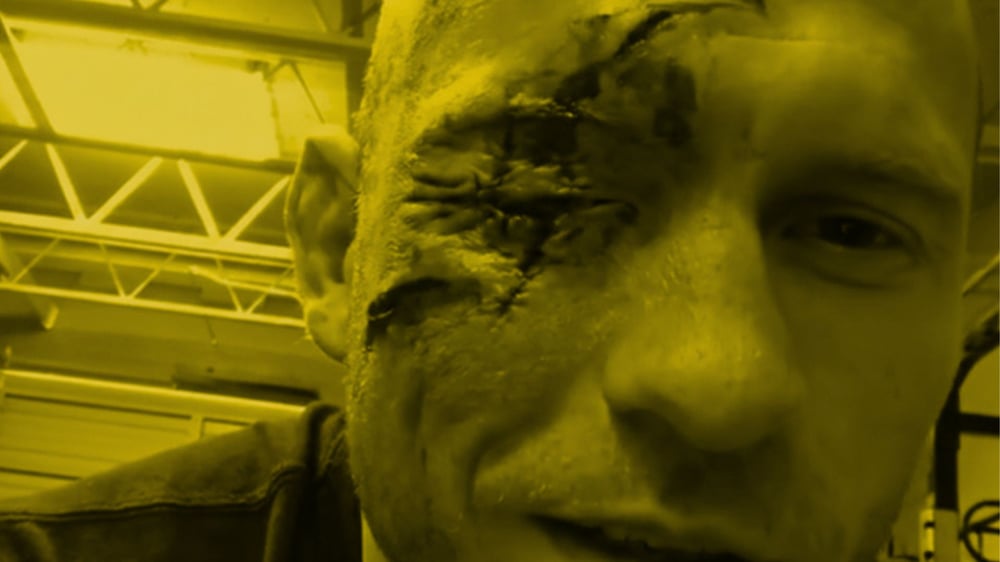
ALL THAT SPACE BUT ONE TARGET
The average compound human offers a pretty broad target. Why do we keep aiming for the face when it only makes up 3-5% of the total ‘punchable’ options? There are coffee-table-sized torsos and legs on offer, but instinctively we always chase the same real estate because a swollen eye tells a more dramatic story than a broken rib. The face is someone’s identity, and behind it sits the most important thing of all: the brain. Disrupt the vision, balance, or cognition, and everything else falls apart. In professional MMA, roughly 15% of fighters sustain a facial injury during a fight. The head and face account for between 38 and over 70% of all recorded trauma. The losing fighter is at a significantly higher risk, as they’re twice as likely to suffer facial injuries compared to the winner. And MMA fighters get more hits to the face than boxers or kickboxers, which is widely believed to be thanks to the smaller 4oz gloves, open fingers, and elbow strikes. That 3-5% patch of skin carries a disproportionate amount of responsibility. Fists hunt the face, not because it’s fragile, but because it’s efficient when you consider the most expressive part of the body protects the ticket to victory.
WHEN THE FACE BECOMES THE JOB
Faces are popular targets so it’s worth understanding facial trauma and how it should be managed when the lights go down and swelling comes up.
“Facial trauma is an occupational hazard for many fighters, both in training and in the actual fight,” explains Dr. Asoka Wijayawickrama, who is a cage-side medic and jiu-jitsu black belt who contributes to the medical charity Safe MMA. “These injuries can often occur in combination. Although rarely life-threatening, it is important they are assessed by a medical professional as treatment can be complex and may have a significant impact going forward on facial function and aesthetics.”
You need only look at Dricus du Plessis, who had 92% nasal obstruction due to severe deviation, which led to his title run shortly after. MMA’s list of facial injuries and subsequent reconstructions is long. Wanderlei Silva. Michael Bisping. Nate Diaz. But why do some fighters blow up while others seem to metabolise the hits? It’s not always down to the power behind the punches.
“The face is a very vascular structure with a good blood supply,” explains Dr. Wijayawickrama. “The good thing about this is that damaged tissue on the face has a lower chance of infection due to the blood supply. The good blood supply means there can be significant bleeding and, hence, facial swelling when injured. Because of the good blood supply, swelling will occur early after an injury. Some people are more vascular than others, hence the different amount of swelling (and quickness) of swelling between different patients.”
The drivers of these differences in facial blood supply are biological, behavioural, and circumstantial. So, the fighters who swell up like a balloon sausage dog tend to be more vascular. On the flip side, that also makes them heal faster. Things like training status and fitness can also be factors, as can dehydration, because a rapid weight cut can exaggerate a black eye. What’s more, sodium levels can also affect fluid retention, especially around the eyes. Put simply, the face is a high-traffic vascular zone sitting at the intersection of identity, physiology, and stress. When it gets hit, some people’s biology hits the panic button faster than others, and the result is worn in places the whole world can see.
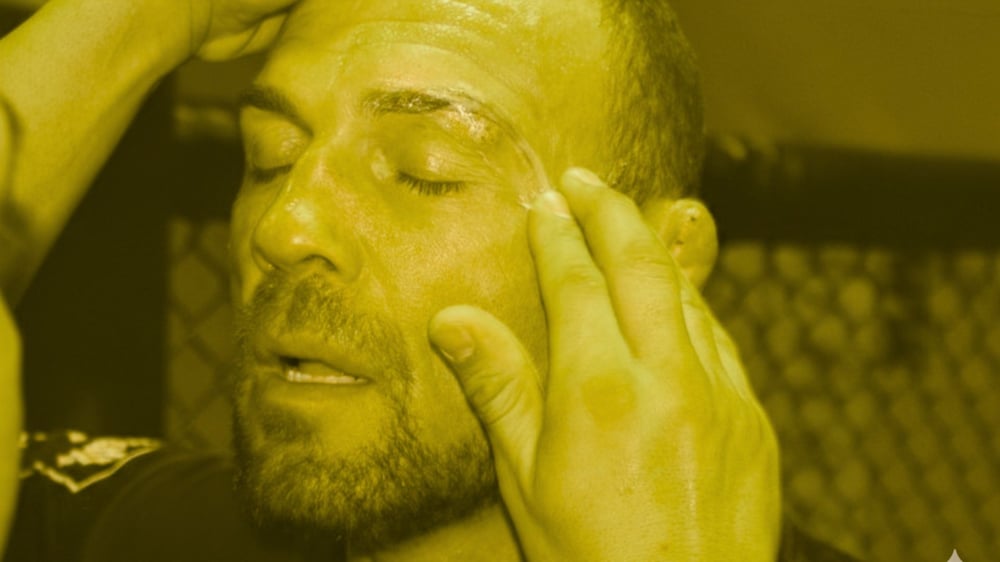
HOW LONG TILL I’M HANDSOME AGAIN?
Once the adrenaline fades and memes move on, facial injuries settle into a far less dramatic but more important phase. It’s a time when toughness stops being relevant, and patience gets a seat at the table. Swelling that looks life-changing on Sunday normally behaves predictably by the following week.
“Most bruising and swelling associated with soft tissue facial injuries will take 2 to 3 weeks to settle down, at which point your facial features will begin to look more normal,” explains Dr. Wijayawickrama. “Initially, management involves avoiding returning to training during this initial period, ice packs, and over-the-counter pain relief such as paracetamol. If you have any facial injuries associated with a laceration, it would be advisable to get them assessed by a medical professional to ensure there is no structural damage to the underlying structures, such as the nerves that help your facial muscles move. In general, most lacerations will be able to be closed directly in the emergency department.
Even if there is no structural damage to any nerves in your face, it is common to feel numbness or odd sensations after a facial injury. This happens because, even though the nerves are not torn, the small facial nerves may be bruised or stretched during the injury. Sensation usually returns in weeks or months. Very occasionally, only partial or no recovery occurs.”
This is a general part of the equation, but the face is not built equally. It has a mixed bag of structures that all heal differently.
“Facial fractures can be associated with soft tissue injuries, and they may be associated with even more facial swelling. A facial fracture is defined as a break in either of the bones of the nose, cheekbones (zygoma), bones around the eyes (orbit), upper jaw (maxilla), or lower jaw (mandible). Common symptoms may include inability to open your jaw, nasal blockage, and pinpoint tenderness along the facial bones. Orbital injuries can cause visual impairment due to parts of the fracture trapping the muscles that help your eyes move. The vast majority of facial fractures have normal alignment (the two parts of the fracture are in a straight line) and require no treatment; they generally heal on their own within 3–6 weeks. If the bones are not aligned properly, surgery will be required to realign the bones, and then plates, screws, or wires will be needed to stabilise the fracture.”
And if you need any advice for a fighter after a beating, the good doctor says to let it run.
“The big thing to advise is to avoid blowing your nose for ten days after your cheekbone is fractured,” he suggests. “This is important to prevent air from your sinuses escaping into the skin, which may cause temporary swelling around your eyes. If this does happen, the swelling will go away on its own. To allow proper healing, avoid any bumps or knocks to your face for at least 6–8 weeks, as any impact could shift the fractured bone.”
THE FACE ALWAYS RECOVERS, THE INTERNET DOESN’T
Nobody has a vision board featuring a dream of having their face temporarily resculpted for public mockery, but that’s the fine print. Faces swell. Screenshots circulate. Armchair surgeons diagnose careers from a single frame. Pimblett lived it in real time, just as Bisping, Silva, and half the UFC roster before him did. Then quietly and inconveniently, biology does its thing. Swelling drops and the grins return. The lesson isn’t that facial trauma is nothing, or that fighters should tough it out. It’s that life’s ugliest moments are rarely the most important ones. The face might take a beating, but patience wins the recovery, even when the internet hangs onto the receipts.