

Issue 226
February 2026
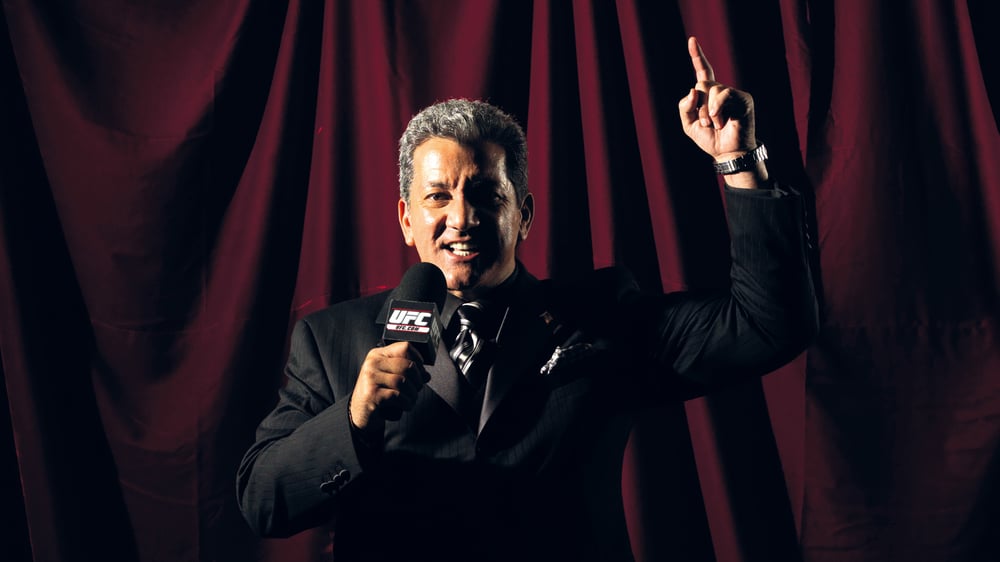
Paul Browne catches up with Bruce Buffer to reflect on 30 years inside the Octagon, revealing the discipline, adrenaline, and emotion behind the voice that grew alongside the UFC itself.
When the tribute video began to roll on the big screen in Houston’s Toyota Center, Bruce Buffer wasn’t prepared. The first image hit hardest. A childhood photo. His mother, his father, his brother Brian, and a much younger version of the man who would one day become the voice of mixed martial arts. For three decades, Buffer has controlled moments measured in decibels and anticipation. He has stared into cameras with unblinking intensity. Projected through arenas packed with thousands of fans and millions more watching at home. And delivered introductions that feel less like announcements and more like detonations. But that night in Houston, the voice cracked.
“I was completely surprised,” Buffer says. “As soon as the first picture came up, I started to get gutted right there.”
Thirty years after first stepping into the Octagon, the UFC paused to celebrate the man who has become as synonymous with fight night as the cage itself. In a sport defined by evolution, Buffer has been the one constant, standing in the center as the organization grew from a curiosity into a global sports juggernaut. And through it all, he has treated every walk to the middle like it’s his first.
GROWING UP WITH THE SPORT
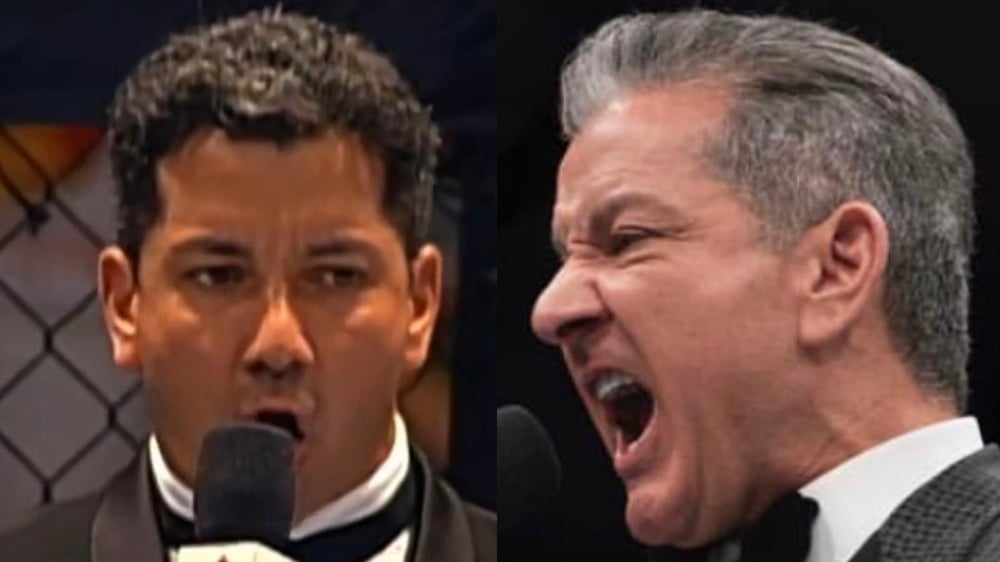
The UFC didn’t just expand over the past three decades, it transformed. What began in the early 1990s as a spectacle marketed on style-versus-style intrigue evolved into a fully regulated, mainstream sport broadcast across major networks and streaming platforms. And Bruce Buffer didn’t just witness that transformation. He lived it from the epicenter.
“To be part of the UFC from the point where it began as a spectacle to a sport, to a mainstream sport, and to say I’ve been part of that history, it’s phenomenal,” he says.
He often frames the UFC’s ascent in generational terms. How many people, he asks, get to watch a sport created in their lifetime rise into the cultural mainstream? Mixed martial arts didn’t inherit decades of structure. It built them. Rules unified. Weight classes stabilized. Athletic commissions sanctioned. Television deals multiplied. From the Spike TV era (which Buffer credits as foundational) to network exposure on Fox, to the ESPN partnership that cemented the UFC’s mainstream footprint, and now into an era of massive streaming distribution, each leap brought broader audiences and higher stakes. Yet with every leap, Buffer’s voice went with it.
He has announced thousands of fights across continents and cultures, absorbing the energy of packed arenas in North America, Europe, South America, and Asia. He has stood cage-side as legends were born and as dynasties crumbled. If the UFC has chapters, Buffer is the narrator who has read them all aloud.
“EVERY NIGHT IS MY FIRST NIGHT”
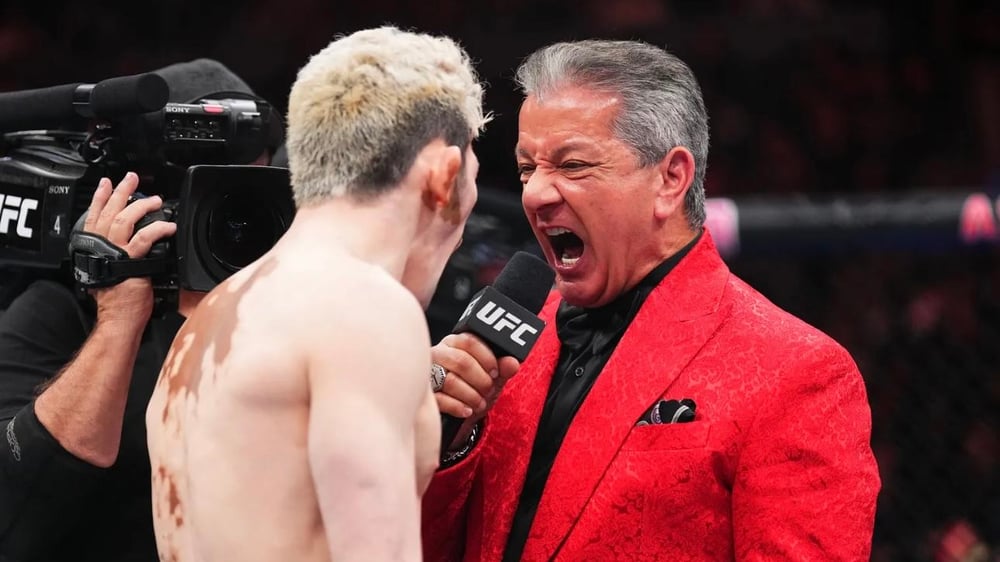
Longevity in sports is rarely accidental. In Buffer’s case, it is intentional. “Every night I walk in that Octagon, it’s my very first night,” he says.
That philosophy isn’t a sound bite; it’s an operational doctrine. Complacency, he believes, is the fastest way to dull an edge. So he resets. Every card. Every introduction. Every main event.
The physicality of his job is often underestimated. A UFC broadcast can run six to eight hours. Buffer must sustain focus, vocal strength, and emotional intensity across preliminary bouts and championship fights alike. He builds the night like a performance artist, starting at a calibrated level early on, then escalating in measured increments until the main event introduction lands with maximum force. “I start at a certain level,” he explains, “and it crescendos.”
There is no rehearsal. The delivery is instinctive, reactive, fueled by the live moment. He speaks often about entering his “Buffer zone,” a state of total immersion. Before stepping into the cage, he loosens his body, elevates his heart rate, and mentally locks in.
Buffer has trained in martial arts since he was 12. He has competed. He understands the physiological cocktail of adrenaline, cortisol, and anticipation flooding a fighter’s system in those final seconds before the door shuts. When he stands inches away from two athletes about to trade violence, he isn’t guessing at their emotional state. “They’re ready to go,” he says. “They’re at this level already. I have to take them to the next level.”
THE FIGHTER’S MOMENT
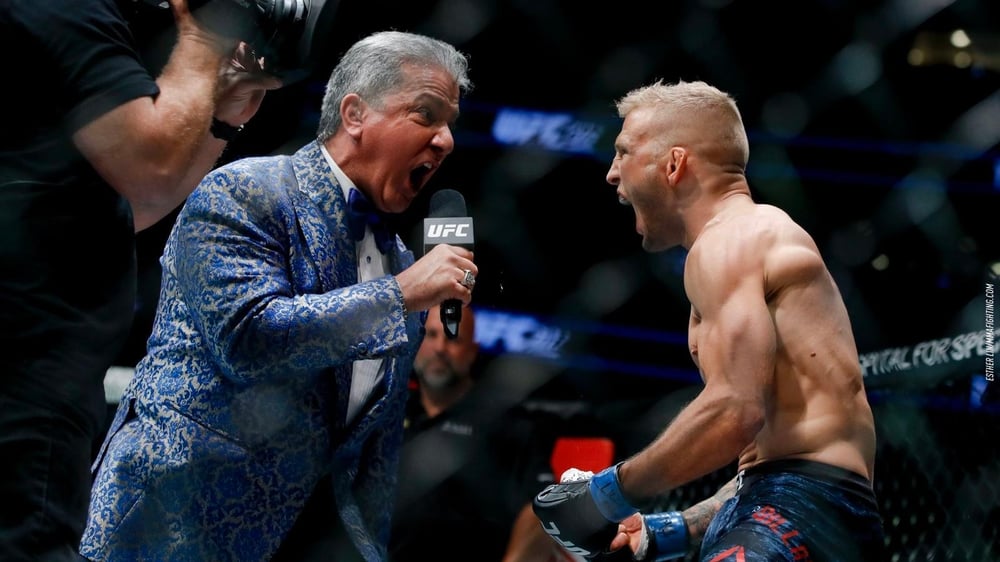
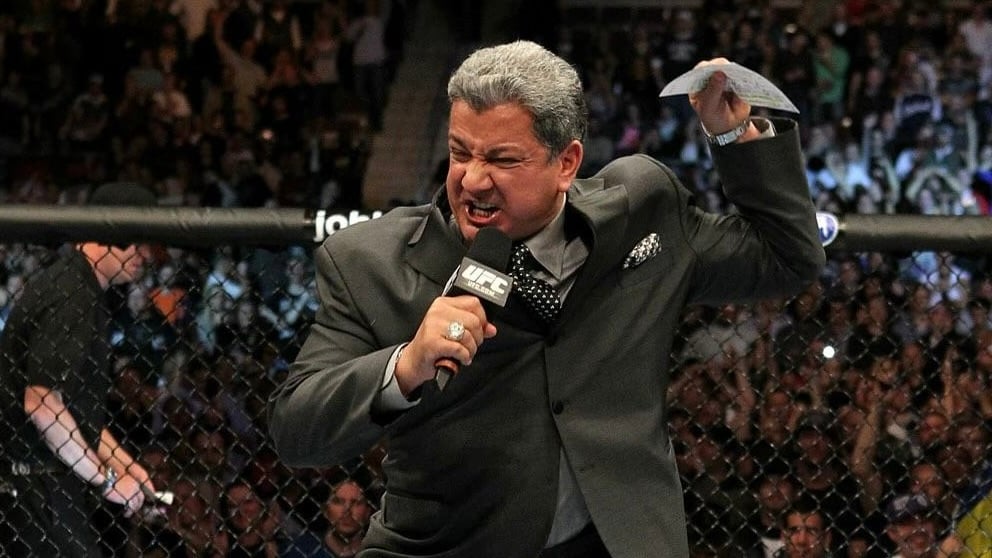
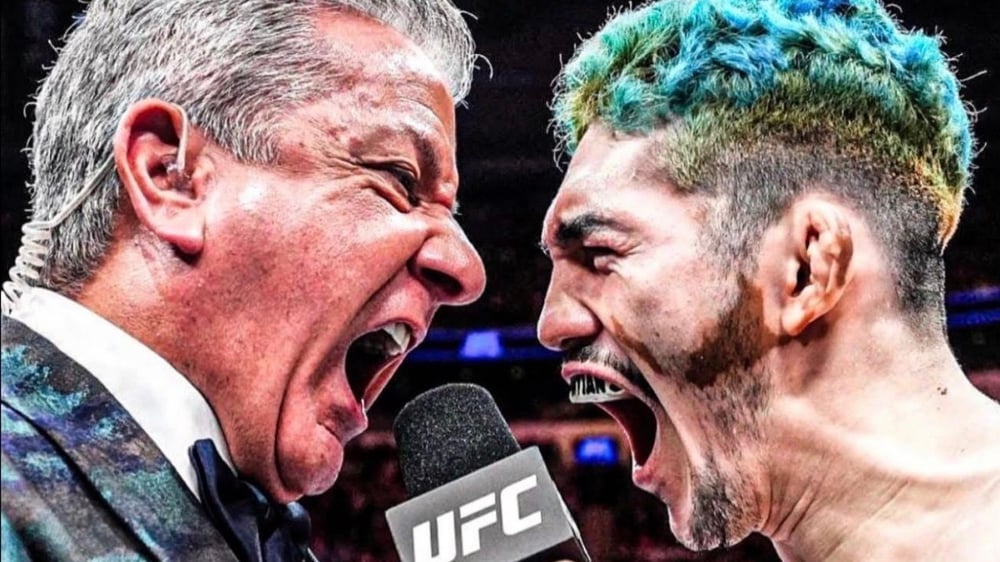
Watch closely during introductions, and you’ll notice something subtle: the interaction. A fighter initiates a fist bump. Another pulls Buffer close, forehead to forehead. Some lock eyes, feeding off the roar. Others remain still, laser-focused, absorbing the energy without breaking their trance. Buffer never initiates those exchanges. They come from the fighters.
“It’s the ultimate compliment,” he says. “It makes for great entertainment, but it’s organic.”
The key word is service. Buffer sees himself as there to serve the athletes. If a fighter wants that final spark…that split-second surge of shared intensity…he provides it. If they want space, he gives it.
“The show’s not about me,” he insists. “It’s about the fighters.”
That humility is notable given how recognizable he has become. In an era where announcers can trend on social media as easily as athletes, Buffer has maintained a singular focus: amplify the competitor without overshadowing them. His delivery may be theatrical, but his mission is functional: elevate the moment, then step aside.
THE ADRENALINE CYCLE
Fight night doesn’t end when the broadcast fades to black. For Buffer, the adrenaline surge lingers. The rush of standing in front of 20,000 fans…of projecting into a live arena and into millions of homes, doesn’t dissipate immediately. It hums through him.
“There’s no question there’s an adrenaline rush,” he says. “And then there’s an adrenaline dump.”
The crash is real. So is the toll. Over 30 years, he has worked through laryngitis. Through fevers over 102 degrees. Through a blown ACL that forced him to announce three consecutive events on one leg in a brace. Through back injuries and personal distractions.
“You’ll never know,” he says. “They’re fighting. There’s no reason I can’t do my job.”
He approaches his voice the way a fighter approaches conditioning. He doesn’t abuse it. He trains. He prioritizes sleep and nutrition. He maintains overall fitness to ensure that when the red light comes on, he can deliver at full capacity. As he ages, that discipline becomes more deliberate. Recovery matters. Hydration matters. Rest matters. But so does perspective.
“As long as I’m mentally and physically able to do it the way I do it,” he says, “I’m not going anywhere.”
OWNING THE HUMAN MOMENTS
Three decades of live broadcasting guarantee mistakes. Buffer doesn’t deny that. He once misstated a height. He once announced the wrong referee in Brazil. In another instance, he declared the incorrect winner before correcting himself mid-sentence. The variables in live production, last-second changes, communication in an earpiece, and rapid transitions create narrow margins for error. But Buffer refuses to deflect.
“I take full responsibility,” he says. “I’m only human.”
It’s a stance consistent with the sport he represents. Fighters own their losses publicly. Buffer applies the same accountability to his craft. There are no excuses, only corrections and forward momentum. That mindset has allowed him to navigate the rare missteps without diminishing the larger body of work. And the body of work is enormous.
RECOGNIZING GREATNESS
Ask Buffer about career trajectories that surprised him, and he pauses. After thousands of introductions, patterns emerge: what he calls the “it factor.” Some fighters carry an unmistakable conviction from day one. Others grind their way upward through incremental growth. He remembers meeting a young Irish prospect before his ascent to superstardom, a fighter who confidently predicted championship success long before it materialized. He recalls the unmistakable aura of competitors who seemed destined for greatness from the outset. He has also seen promising careers detour, sometimes due to decisions inside the cage, sometimes outside of it.
“It’s the loneliest sport in the world,” he says. “When that cage closes, your team’s on the other side.”
From his vantage point, he has seen belief become reality and potential evaporate. He has announced champions at their peak and former champions searching for one more run. He has stood yards away from heartbreak and triumph alike. Through it all, his role remains constant: articulate the stakes, then let the fight unfold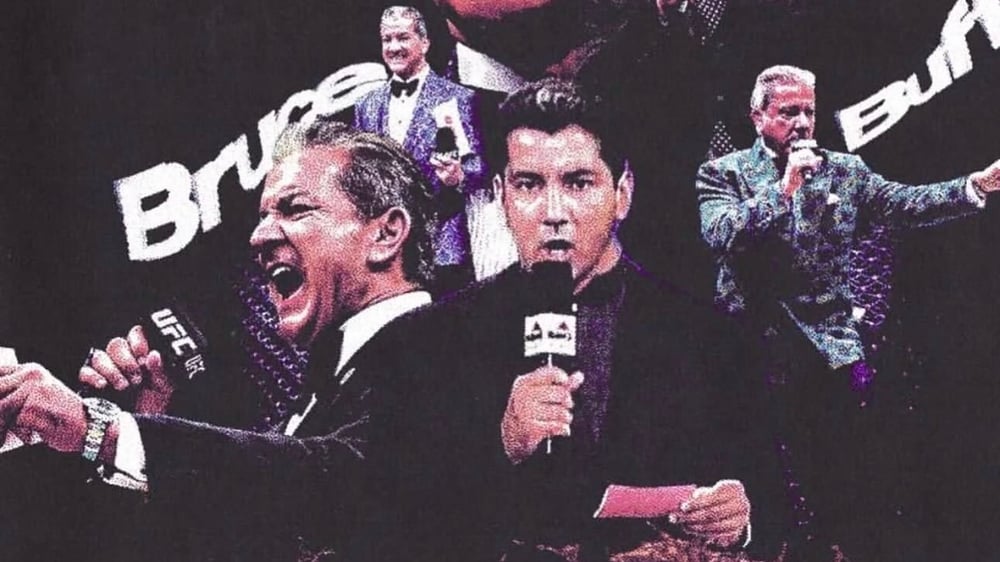
THE ROAD AHEAD
Milestones matter in a sport that measures itself in numbered events. For Buffer, one number looms large: UFC 400. It’s not a retirement date. It’s a target: a symbolic marker that would carry him deep into a fourth decade at center cage.
“Another 10 years seems completely realistic to me,” he says.
There is enthusiasm in his voice when he talks about the future. About blockbuster events, global stages, and the possibility of cards that eclipse previous viewership records. Fighters jockey for position on historic lineups. Speculation swirls about super fights and legacy matchups.
Buffer greets it all the same way he greeted his first event: with readiness.
“As long as they’ll have me,” he says. “As long as I can do it the way I love it.”
GIVING IT ALL
For all the spectacle, the cadence, the crescendos, the signature intensity, Buffer circles back to a simple hope that when his time eventually does end, people remember the effort.
“Whether you like what I do or don’t like what I do,” he says, “I gave it my all.”
In a sport built on maximal commitment, that sentiment resonates. Fighters risk everything under the lights. Buffer, in his own lane, does the same, pouring energy into every introduction, every syllable, every climactic pause. The UFC’s 30-year arc is filled with champions, rivalries, and unforgettable finishes. It is also underscored by a voice that has framed those moments for a generation of fans. When the music hits, and the camera finds him in the center, shoulders squared and eyes locked in, there is a familiarity that borders on ritual. It signals that something consequential is about to happen. Thirty years in, Bruce Buffer still treats that signal like sacred ground. And if he has his way, the sound of fight night will echo for many years to come.