

Issue 226
February 2026
Ray Klerck unpacks the real percentages behind longshots, weight cuts, age curves, and divisional trends so you do not mistake vibes for betting value.
Ever since we discovered we could punch each other for sport, those who watched found ways to wager on it, and a third group quietly found ways to guarantee that the wager was profitable. Fixed and fights have also always gone together like odds and opportunity.
It’s something that sinks its claws into every sport, and MMA is no exception. On January 25, 2026, that tension resurfaced under the bright lights of UFC 324 in Las Vegas. The lightweight bout between Alexander Hernandez and Michael Johnson was abruptly pulled from the card after U.S. Integrity, the UFC’s betting monitor, flagged suspicious wagering patterns in offshore sportsbooks. The market limits were slashed. Rumors circulated that Hernandez was compromised, with parlays stacking Johnson by knockout. And before a punch was even thrown, the fight was gone. Dana White’s response was perfect and what we all want.
“I’m not doing this s**t again,” he said, referencing the November 1, 2025, featherweight controversy involving Isaac Dulgarian, where odds swung violently hours before a first-round submission loss. That incident reportedly drew FBI attention. Dulgarian was suspended pending investigation, and the UFC insists it will go guns blazing at any sign of manipulation. But in a sport with a foundation built on boxing and thin margins, betting markets now move almost as fast as the punches. Fortunately, you can bet the honest way, using science to pick a winner.
THE MYTH OF THE LONGSHOT
The idea of a long shot strokes the pleasure centers of our cerebral cortex. It speaks to the underdog story that we embrace, but the UFC matchmakers are hardly asleep at the wheel. They almost always make fights that could swing either way. If you’re betting, it’s worth knowing that a February 2026 analysis found the UFC market to be one of the most efficient in sports. Forget that romantic idea that the longshot has a puncher’s chance, because you’re armed with two podcast insights and a Reddit sub-thread. Instead, MMA odds generally reflect the true probability of winning. There are very few clear favorites, or the matchmakers wouldn’t book the bout. Sometimes there are little crevices where the market might undervalue a bout. So have a look at what you think a fighter’s travel fatigue and striking differentials might look like. You can get a lot of this from their social media, figuring out how far in advance of a fight they’ve arrived at the location and who they might train with, so that they might be acclimatized. There’s no clear winning metric, but a Dagestani surname still moves public money, even when cardio numbers quietly suggest round three might get interesting. It’s not that underdogs never win. They do, but are seldom pitted against sure things. The myth is that you’re smarter than a global betting market just because you felt a vibe. In the betting game, vibes are expensive.

THE 35-YEAR-OLD MYTH
Father Time is someone who makes weight every year, and never pulls out with injury. Performance data across combat sports consistently show a gradual decline with age. There is a popular belief in fight analytics that age 35 is the danger zone, but something magical isn’t going to happen at midnight when this birthday ticks over. Just look at Sean Strickland’s latest victory, where he looked to be in his prime at 35, however accumulation is a real thing thanks to the camps, cuts, and micro-concussions. In the lighter divisions, where reaction time is currency, sometimes those age gaps matter. Of course, all that goes out the window when it comes to guys like Volkanovski, who is several years older than Diego Lopez who he has beaten twice. That said, he couldn’t best a fast-throwing stud in his 20’s like Ilia Topuria. There’s a risk of betting on sentimental value when the legend is still fresh in the mind, because research shows a performance decline in speed-based sports after an athlete turns 30. The lighter divisions are more sensitive to this, but the heavyweights age differently, like a well seasoned George Foreman grill. The betting markets are in tune with these shifts, but when you’re picking a winner, don’t always bet against age. Rather bet against declining performance patterns. If they’re long in the tooth and on a slide, that might be something to factor in.
THE HIDDEN MATH OF A BAD CUT
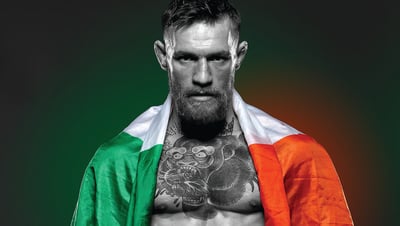
There are a multitude of reasons why the betting odds change in the days before a fight, but much of this speaks to that thousand-yard stare at the weigh-in where the cheekbones are sharp enough to cut glass. Just think of the skeletal Conor McGregor before his Jose Aldo fight. A study tracking 75 MMA fighters found that the athletes who won, cut an average of 8.6% of their body mass, while those who lost, cut 10.6%. By that metric, Conor shouldn’t have won, but he did, and exceptions should always prove the rules. That 2% weight-loss differential may not sound dramatic, but for the average fighter, it can have a big impact because for every additional 1% of body mass cut, the odds of winning drop by roughly 11%. It’s something that catches up with everyone over a long enough timeline, even Paddy Pimblett. Every extra slice off your walking weight quietly tilts the math against you. And here’s the surprising bit: regaining the weight did not fix it. Winners put back about 6.8% of their weight, while losers regained 7.4%. There was no meaningful difference because a big regain doesn’t seem to offer an advantage. So, even though we like to think a massive weight cut looks like commitment, but it behaves more like a stamina tax that shows up in the later rounds, which is a place we rarely found Conor at that weight.
UNDERSTAND THE DIVISION DIVIDE
Treating every weight division the same is like betting on chess and rugby with identical logic. Divisions behave differently. According to historical UFC data compiled by FightMatrix, Heavyweight fights end in KO or TKO 48.3% of the time. That makes early stoppage a statistically rational starting point before you even factor in contrasting fight styles that may or may not include eye pokes. Now swing down to Women’s Strawweight, where 66.9% of fights go to decision and only 13.3% end by knockout. Backing a strawweight for a KO is risky because it’s like betting you’re going to roll a six on a die, only slightly worse. So, imagine the dice was being thrown on a pebbled surface. If your bets are arguing with twenty years of probability, you may not fare as well as you think, because smart bettors pick ecosystems before they pick fighters. While the belts may change hands, the percentages barely do.
GET AN ACCURACY EDGE
We all love Max Holloway-level output with Gaethje-like forward pressure. The judges even love the fighter who looks like he’s doing more, but the numbers around these traits aren’t so sentimental. A study analyzing elite MMA bouts found that technical efficiency variables, particularly striking accuracy and effective grappling execution, were among the strongest predictors of victory. They were able to classify fight outcomes with more than 70% accuracy, largely based on these efficiency markers. In other words, it is not how much you know or throw, but how much you land clean and then convert. This matters for betting because it's easy to get hypnotized by activity. A fighter who marches forward and throws 110 strikes looks like the boss. But if he is landing inefficiently while absorbing clean counters, the efficiency gap quietly tilts in his opponent's favor. The study suggests that when you strip the sport down to measurable variables, technical precision carries more predictive weight than just throwing punches like Hank the Tank. Efficiency might be boring, but efficiency also wins fights. If you look at Islam Makhachev, he holds the UFC record for the highest significant-strike accuracy at 59.5%. He absorbs just 1.53 significant strikes per minute, and this is the ultimate safety metric for a bettor. While some fighters lock themselves up in phone-booth-style punch wars, Makhachev’s defensive efficiency means he rarely leaves his fate in the hands of the judges.
LET THE FIGHT BE THE GAMBLE
The deeper you dig into the numbers, the more you realize this sport is already ultra unpredictable enough without adding a betting slip to the mix. The markets are well-oiled machines, the percentages can be stubborn, and a fighter’s biology does not care about your parlay. You can study the age curves, the weight cuts, the divisional trends, and the efficiency metrics until your phone battery dies, but two people are still going to lock horns and try to solve each other in unpredictable ways. That’s the purity of it because the beauty of MMA is that it resists full control. So, if you bet, do it with your eyes open and your ego in check. And if you don’t, you might just enjoy the sport the way it was meant to be enjoyed: uncertain, violent, brilliant, and gloriously untethered to your betting app balance.
...