

Issue 227
March 2026
The real fight doesn’t always finish at the end of the night because it continues in the bloodstream, where every adrenaline spike leaves a hormonal debt that can quietly unravel a champion’s career.
Back in 2024, at 5 am in Manchester, England, Belal Muhammad did the unthinkable. He dismantled Leon Edwards for twenty-five minutes using a whirlwind of high-amp wrestling and relentless pressure. He looked like a man who had conquered biology itself. Fast forward to 2026, and the script for both men has found some plot holes. Muhammad, after a historic run to the title, has since suffered a string of losses, most recently a definitive defeat that saw his once-bottomless gas tank appear human for the first time. Edwards, meanwhile, has become a ghost of the fighter who once sat at the upper end of the pound-for-pound rankings. Since that night in Manchester, ‘Rocky’ has not won a single fight.
The armchair analysts call it age, lost hunger, or simply getting caught. But the truth might be more clinical. While it’s easy to fixate on the visible damage, like the swelling and the cuts, the real story of a fighter’s decline is often written in their blood. Behind every world-class performance is a delicate hormonal symphony, and behind every crash is a biological debt that must be paid. To understand what happens when the lights go down and the adrenaline becomes a memory, we spoke with Dr. Asoka Wijayawickrama, a ringside medic, BJJ black belt, and doctor who contributes to the medical charity Safe MMA. He sees the reality of the post-fight blues long before the public does.
THE DUEL OF THE DUAL WORLDS
MMA athletes are often described as the most well-rounded athletes, but that versatility comes at a steep metabolic price.
“MMA athletes are some of the most well-conditioned athletes in the world needing the 'best of both worlds,'” explains Dr. Wijayawickrama. “As well as mastering the martial arts such as Thai boxing, wrestling, and BJJ, they need to engage in aerobic activities such as sparring, cardio workouts, as well as lifting. Unlike many other athletes, combat sports athletes need to compete at a specific weight. All of the above, especially when combined with overtraining and a calorie deficit, can have adverse effects on the hormonal system. The main hormones involved are testosterone, cortisol, adrenaline, and insulin.”
This perfect storm of masteries is needed, combining the explosive power of a weightlifter with the endurance of a marathon runner. This places a unique stress on the endocrine system. When you add a caloric deficit to make weight, the body can sometimes stop seeing all the daily sessions as training and start seeing them as something to be survived.
THE 5 AM SHUT-DOWN
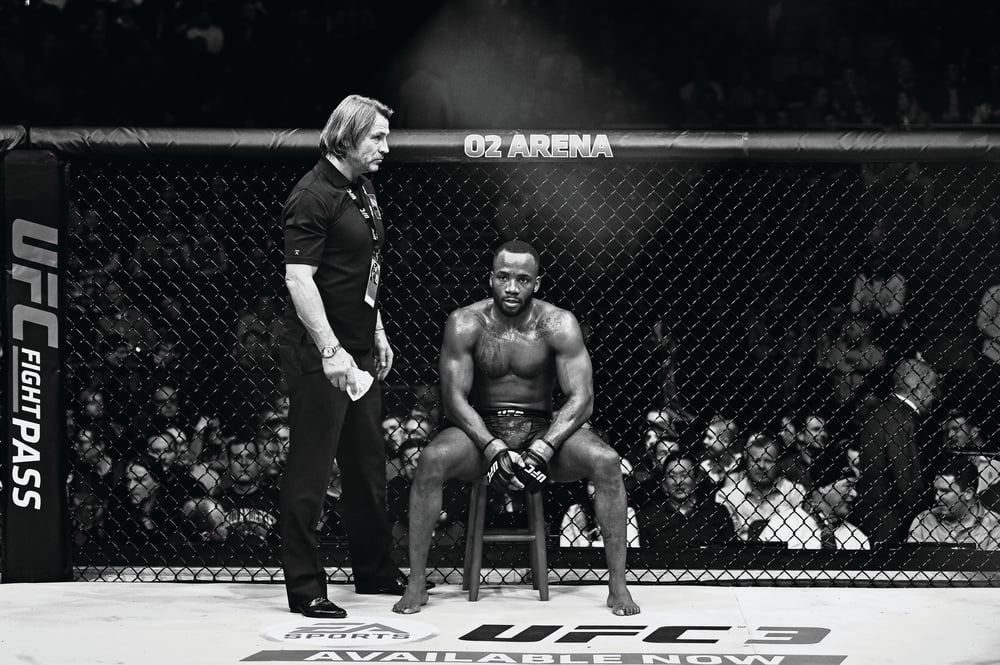
The Edwards-Muhammad rematch was a unique experiment in human biology. Since the UFC is set to air on American TV, the main event began as the sun was rising in England. Edwards later admitted that he felt flat and tired to the point where his body simply felt dead from the first round. This may have been more than fatigue. It may have acted as a systemic hormonal rebellion. Humans are governed by our circadian rhythms that dictate when cortisol (the wake-up hormone) and melatonin (the sleep hormone) are released. Research at Stanford University Medical Centre found that hormones called glucocorticoids are synchronised with your body clock and play an important role in regulating your blood sugar. While blood sugar isn’t the only thing determining an athlete’s energy levels, it is a major player that is likely to show at the start of your workout or fight. By forcing a 100% adrenaline spike at 5 am, a time when the body is biologically programmed for deep repair, Edwards was fighting a war on two fronts: one against Muhammad and one against his own pituitary gland and hormonal system.
THE HORMONAL PILLARS OF THE FIGHT
According to Dr. Wijayawickrama, the internal battle is governed by four primary hormonal pillars: testosterone, cortisol, adrenaline, and insulin.
Testosterone. The king of recovery.
“In adulthood, it has functions of maintaining our muscle mass, bone strength, as well as affects on our libido,” says Dr. Wijayawickrama. “While heavy lifting and HIIT training can signal the body to produce more, there is a breaking point. Overtraining can put stress on the body, causing levels to drop. You might recognize these as symptoms such as irritability, low mood, reduced erectile function, and not being able to maintain muscle mass.”
Cortisol. This is often called the stress hormone, but it is the double-edged sword of MMA.
“Produced in the adrenal gland, it handles a fighter’s protein synthesis and releases glucose from the liver for fuel during a fight or training sessions. Overproduction can be caused by mental stress—a fight camp, the fight itself, and other chronic stresses an athlete may be having outside of their MMA career—and poor sleep. Overproduction can have adverse effects such as on your immune system, leading to be recurrently ill.”
Adrenaline and Insulin: These are a fighter’s NOW hormones.
“Adrenaline is the fight or flight trigger that keeps a fighter standing after a head kick, while Insulin acts as the fuel manager. Insulin is a hormone produced by our pancreas, which has functions such as releasing glucose from the body's stores to fuel us.”
THE ANATOMY OF THE CRASH
The most jarring revelation from Dr. Wijayawickrama is the sheer scale of the shift that occurs within the octagon. We see the physical output, but the internal numbers are staggering.
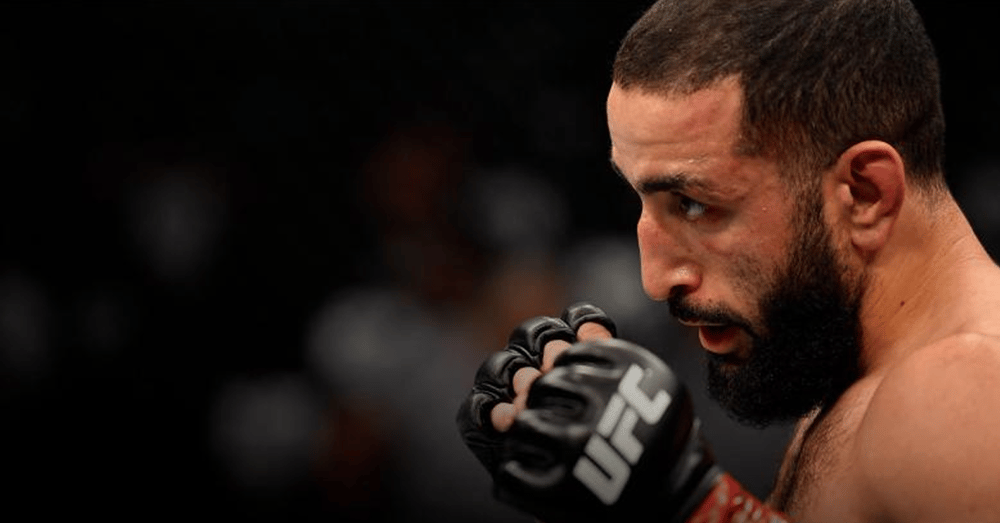
“The crash after a fight involves changes in the above hormones,” he explains. “During the fight and immediately after, your cortisol levels can rise by up to 50%. Slowly, after this stress has gone away, the rapid drop can lead to fatigue and mood instability. Again, your adrenaline levels can spike to 100% of normal during a fight; the crash contributes to the post-fight blues.”
This explains why Edwards, after the adrenaline spike of his 13-fight unbeaten streak was snapped, has looked like a different athlete in 2025 and 2026. Once that aura of invincibility is broken, the body’s hormonal response to competitive MMA can change. The chemical and hormonal superpowers that may have once masked his injuries and fatigue may be harder to access. Sure, this may happen in the hours and days after a fight, but it can be longer-term, especially if a fighter analyses footage of their losses or ruminates over the poor outcomes, which can force the body to relive those stressful memories.
THE VOLKANOVSKI MOMENT
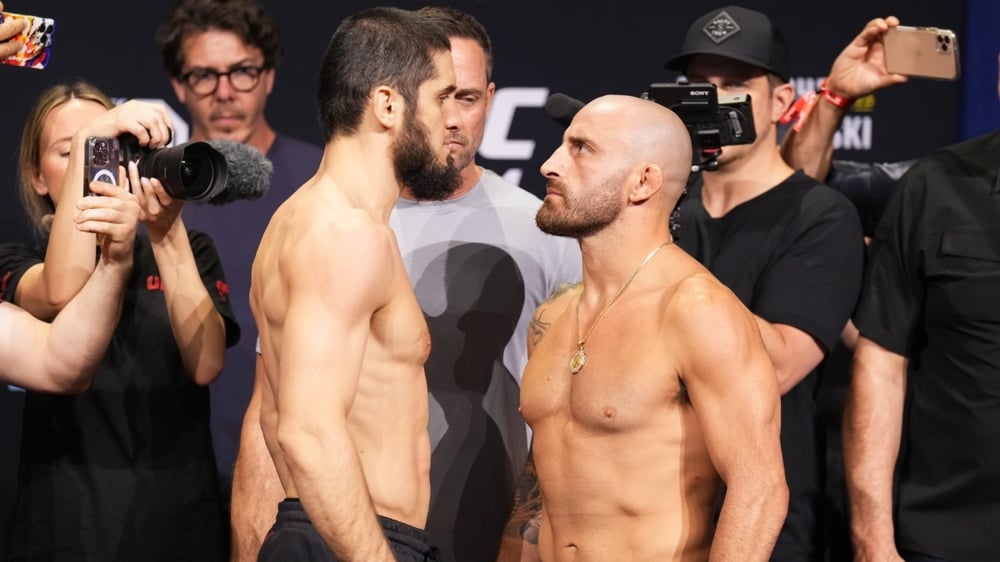
If you want to see the hormonal crash in its rawest form, take a look at Alexander Volkanovski’s post-fight press conference at UFC 294. Volkanovski, a fighter widely considered one of the most mentally unflappable champs in history, sat before the media with tears in his voice. He had just been knocked out by Islam Makhachev after taking the fight on 12 days' notice. His distress wasn't just about the loss. It was about the dark place he found himself in during his time away from fighting.
“I was doing my head in,” Volkanovski admitted. “I needed a fight. I think you just need to keep busy. I need to be in camp; otherwise, I’m going to do my head in.”
To the casual observer, this might look like a workaholic struggling with a holiday. But through the lens of Dr. Wijayawickrama’s expertise, it’s a textbook description of a hormonal system that has become addicted to the red zone. When a fighter like Volkanovski operates at a 100% adrenaline spike, their baseline for normal gets fundamentally shifted. When the camp ends, the resulting void is a physiological withdrawal. By jumping into a fight while already in a place that wasn’t the best mentally, it’s possible that Volkanovski was trying to cure the hormonal crash with another massive spike.
THE WEIGHT CUT AND THE SKID
The more you cut, the worse the hormonal imbalances can get. When MMA fighters lose a lot of weight during a cut, it can trigger a severe catabolic crash. We see a 63% plunge in serum testosterone and a 176% spike in cortisol at the time of weigh-in. These hormonal shifts, which worsen exponentially when the magnitude of the cut exceeds 8–10% of body mass, are accompanied by a 44% increase in muscle damage markers, creating a state of systemic stress that fails to return to baseline even after a 24-hour rehydration period. Consequently, fighters often enter a fight with suppressed explosive power and a hormonal profile mimicking clinical endocrine dysfunction. Dr. Wijayawickrama agrees that the severity of the rebound is tied to the scale.
“As mentioned above, the physical activity of the fight leads to a spike in testosterone, which then will drop, leading to some of the side effects of low testosterone,” he says. “The levels returning to normal can take longer, especially if the fighter was over-trained or had a hard weight cut. Again, insulin levels can spike to 100% due to its effects on glucose metabolism; this can lead to massive energy turnover, which will require careful nutritional replenishment.”
When we look at the minor skid that both Edwards and Muhammad are currently experiencing, we might be seeing an exhaustion of the Hypothalamic-Pituitary-Adrenal (HPA) axis. After years of chasing the belt, the body essentially enters a state of hormonal bankruptcy. As Dr. Wijayawickrama points out, "The losers of the fight will usually experience a worse hormonal drop."
For Edwards, losing the belt wasn't just a setback; it may have been a biological landslide that he has yet to climb out of.
THE PITUITARY GUARD
Perhaps the most overlooked aspect of fighter health is the link between the chin and the brain’s Master Gland. Tucked in at the base of the brain is the pituitary gland, which regulates growth, metabolism, and stress responses.
“The crash can be worsened by factors such as repeated head trauma, which can damage one of the main hormonal glands in the brain, the pituitary gland,” says Dr. Wijayawickrama.
This is the hidden danger of fighting through a slump. If a fighter’s pituitary gland is damaged by repeated trauma, they lose the ability to signal the production of the very hormones (like testosterone) needed to repair the damage. It is a vicious cycle. It’s plausible to suggest that when a former champion like Edwards gets knocked out by a rising contender like Carlos Prates, the damage isn't just to his chin. It's to the control centre of his entire physical engine.
REFRAMING THE RECOVERY
The solution isn't to be found in toughing it out. Instead, it lies in the mental reframe. Dr. Wijayawickrama emphasizes that the first 24 hours are critical, but the recovery window is much wider.
“The best ways to recover from this post-fight crash involve adequate nutrition—not just protein, but not forgetting healthy fats such as omega-3,” he suggests. “You should have at least 24 hours off after the fight to allow your body's hormonal system to reset itself. For the fighter, it’s best to mentally reframe. This involves doing activities away from fighting/MMA. If symptoms persist, you should consult your doctor, who may need to run some blood tests or refer you to a specialist.”
The modern MMA fan is becoming more knowledgeable about technical nuances such as calf kicks and sprawling. But the next frontier of the sport is understanding the Endocrine Octagon. Whether it’s Belal Muhammad’s recent struggles or Leon Edwards’ tired performance at UFC 304 and his subsequent losing streak aren't mysteries when viewed through the lens of hormonal health. They are the natural results of a body that has been pushed to a 100% adrenaline spike and left to deal with the wreckage. As the sport continues to evolve, the toughest fighters won't just be the ones who can take a punch to the face; they will be the ones who respect the invisible bruises on their hormones. Because while a broken nose heals in weeks, a broken endocrine system can take a career.