


issue 230
June 2026
Your environment is a silent coach, and science says it could be influencing every round you train.
Doesn’t matter if you’re bodybuilding or training in MMA, there’s always been a romanticizing about a grim, windowless sweatbox that gets the job done. It’s believed that when the air is thick with the smell of stagnant humidity and the gritty Dagestani cave aesthetic, men get turned into warriors, but modern science suggests that everything you felt in your gut might be right, that these old school layouts may secretly handbrake your athletic potential. Sure, not everyone has the luxury of choosing the gym where they train. Most of us just go to the closest one to work or home, but if you are choosing between competing gyms, then it’s worth knowing that this space isn’t a passive backdrop. Instead, it can be a performance ecosystem that may influence your MMA skills in wacky ways you might not expect. Here are the seven scientifically backed boxes every serious MMA gym should tick.
1. YOUR GYM SHOULD HAVE ROOM TO BREATHE
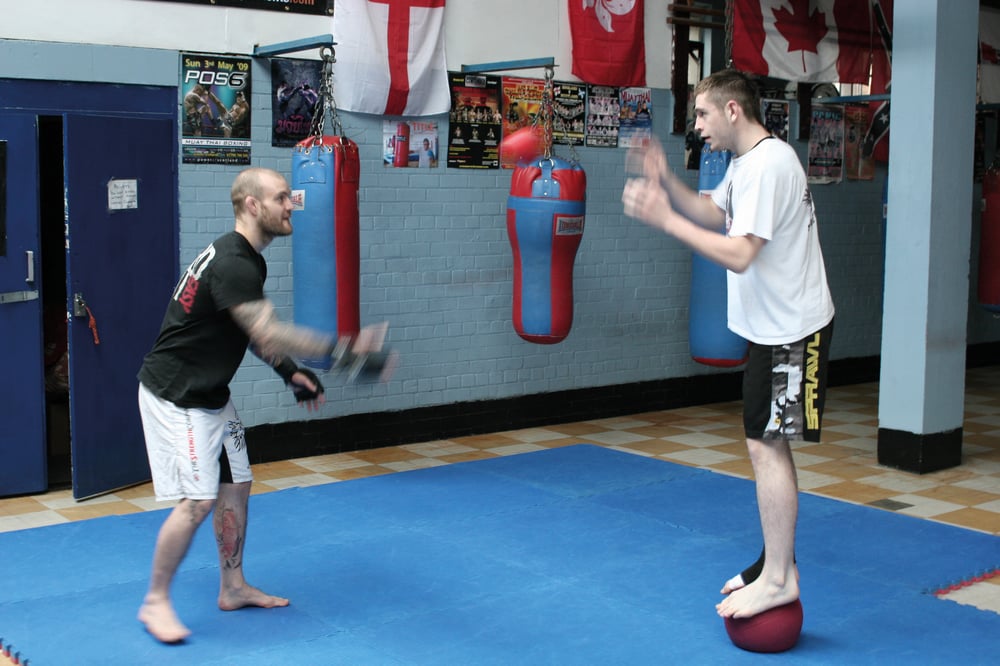
The rust marks on your rash vest that a dungeon gym leaves behind might make you feel hardcore, but that cramped feeling rolls with a hidden cost, suggests a March 2026 editorial. They found that fighters who trained in facilities with ceilings above four meters had roughly 12 degrees more hip flexibility than those training under lower ceilings. The researchers couldn’t explain why this happened, and greater hip flexibility doesn’t necessarily mean you’ll kick higher. However, extra mobility can show up in odd places, such as a little more flexibility around your knees in a clinch. This means rather than forcing movement to come via the lower back, the hips can create the range needed to generate power while staying compact. Nobody wins belts because their gym has a higher ceiling. But in a sport built around kicking and sprawling, having another 12 degrees up your sleeve could be the difference between kicking your opponent in the ribs like DC or smoking him in the head like Edson Barboza.
2. THE FLOORING SHOULD GIVE SOMETHING BACK
What’s really underneath those stinky mats? If it’s concrete, that lack of ‘give’ may influence your strengths and weaknesses over time. The same 2026 editorial found that specialized wooden flooring was linked to better cardiovascular efficiency while rigid synthetic surfaces were linked to faster execution speed. This creates a tension point where you’re effectively trading endurance for explosiveness based on the flooring. Concrete makes your joints absorb the brunt of every sprawl, so your muscles have to work harder to bounce back, which means you drain your energy bar over a long training session. Sprung wooden floors, on the other hand, give you just the right amount of stiffness for that bump in spring in your step without punishing you for those thousands of reps you’ll bank in training. Nobody will ever remember what flooring was installed at American Top Team of City Kickboxing, but years of training on it will influence how every MMA fighter competes.
3. YOUR GYM NEEDS TO BREATHE, SO DO YOU
Everybody has trained in one. The old-school sweatbox where the windows are sealed shut, the mirrors fog up after two rounds, and the smell suggests someone has been marinating in shin guards since the WEC days.
For a steer on how this impacts you, health clubs are a solid place to start. Researchers studying eight health clubs found that people exercising in these indoor environments increased airborne particle levels by up to 4.7 times. These are objectively bad for your breathing, and the busiest training areas contained up to twice the particulate load of quieter rooms. Gyms with big windows had the lowest carbon dioxide levels, which is what you want if you’re puffing and panting. In this space, location matters too. A gym near a busy road, under a shopping mall, or next to restaurants can be flush with outside pollutants, so factor that in when you’re choosing where you spend your MMA dollars. Check out the aircon and ask if they’ve got pollen and HEPA filters. You’re training to be good at stopping another human being from breathing, and the last thing you need is a gym that's making that harder for you.
4. YOUR GYM SHOULD HAVE A CHILL SPOT
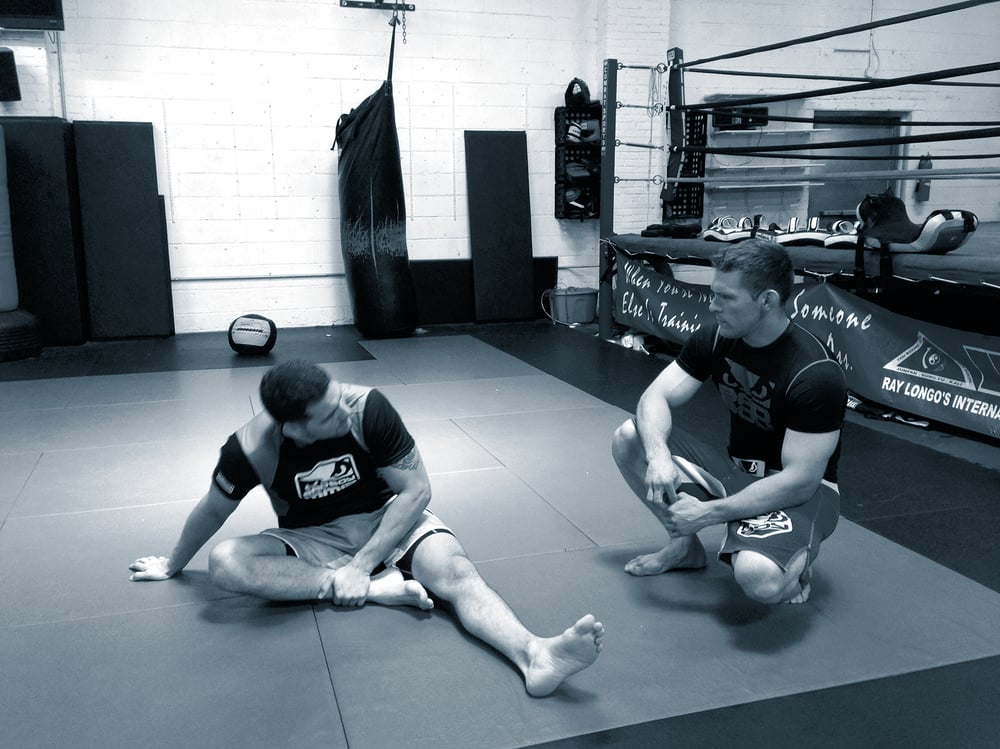
If the only place to recover between sessions involves sitting on a medicine ball next to a guy strapping his ankle, then you may be short-changing your gains. A recent BMJ viewpoint argues that gyms should be built around the needs of the athlete, which includes recovery spaces, comfy seating, and somewhere to talk fight tactics. It doesn’t mean herbal teas and feeling-talks, but research suggests athletes generally enjoy exercise more when they have access to natural surroundings, and that enjoyment might be enough to keep them coming back for another session. Training is stressful enough. Sometimes the most valuable square meter in the building is the one where you can sit down, get your breathing under control, and neck your protein shake without being hit by a swinging heavy bag.
5. IT SHOULDN'T FEEL LIKE A HOSTAGE SITUATION
Fight gyms have traditionally been decorated with the same interior design philosophy used by abandoned warehouses and Soviet submarines. Grey walls. Fluorescent lighting. A television that's somehow still showing UFC 92. However, the research, which included more than 200 physical education students, found that athletes who trained in facilities with natural light, plants, views, and nature-inspired materials reported greater exercise immersion. And the more immersed they felt, the stronger their intention to keep exercising. Nobody becomes a better fighter because their gym has a Ficus in the corner. But if your surroundings make six days a week feel less like solitary confinement and more like somewhere you actually want to spend your time, those extra years of accumulated rounds may be where the real advantage lies.
6. YOU NEED AIR UNDER YOUR FEET
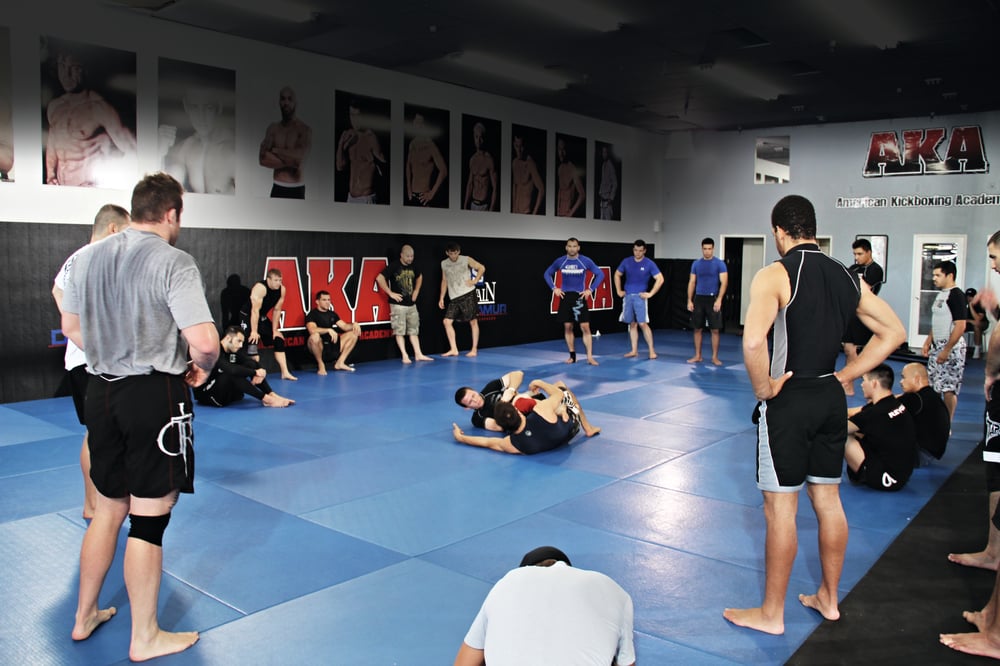
It’s tempting to judge an MMA gym by what they do have, but you might want to think about what it doesn’t have because that gives you room to move. The ability to produce the force you need to win starts with what’s below your feet. A 2025 study on MMA fighters found that those with higher countermovement jump performance (i.e., a simple vertical jump after a quarter squat with your hands on your hips) also produced greater average and peak power, suggesting that those who could spring the highest also generated the most horsepower when the fight needed it. Every explosive moment in MMA starts with the floor, but this isn’t just for stand-up work. The researchers also found that lower-body power predicts up to 73% of performance in BJJ and a staggering 90% in judo, while jump height was a better predictor of front-kick force than 1-rep max squat strength. Fighters might compete in a tight space, but you need open space to jump, spring, throw, and practice all your explosive movements, which demand plenty of spare real estate to train.
7. PEOPLE ARE ALWAYS THE MOST IMPORTANT
Your gym will only be as good as the people you train against. All martial arts are based on repetition, and there’s a place for throwing the same jab a thousand times. It cooks up discipline, but there is a philosophy that it may teach you to solve problems that don’t exist. A 2024 paper that applied ecological dynamics to MMA argues that skill isn’t always built via repetition but by repeatedly solving imperfect problems. They called it repetition without repetition, where each exchange is unique because your opponent is always unpredictable. You should be exposed to all varieties of people. Tall. Short. Wrestlers. Southpaws. Pressure fighters. The paper suggests you should start rounds in uncomfortable situations, such as working from a bad position, and even challenges the sacred cow of MMA, by saying drilling pad work isn’t as valuable as live partner interactions. Just ask Sean Strickland, who claims to spar every day, and the only equipment needed for that to happen is a willing person to get a beatdown. They suggest finding a gym that will give you more games, situational sparring, and more shark tanks with fresh training partners cycling in to keep your misery levels high and progress even higher.
YOUR ENVIRONMENT IS YOUR SILENT COACH
None of this means you should walk away from the gym that's made you the fighter you are, because the ceilings are low or because there aren’t any couches. MMA has always been built on people, not paint colors. Plenty of champs like Khabib Nurmagomedov became one of the greatest fighters in history by training in rooms that looked like abandoned garages. But if you're weighing up where to spend the next five or ten years of your life, you’ll be spending plenty of time in that building. Tiny advantages repeated thousands of times have a funny way of becoming big ones. Nobody knows whether Jon Jones would have won one more bout if Jackson Wink had bigger windows or a better air conditioner. But science suggests the environment around you isn't just background scenery. It's another training partner. And unlike the dude trying to heel hook you on Tuesday night, this one is tirelessly working for you every single session.
...