

Issue 231
July 2026
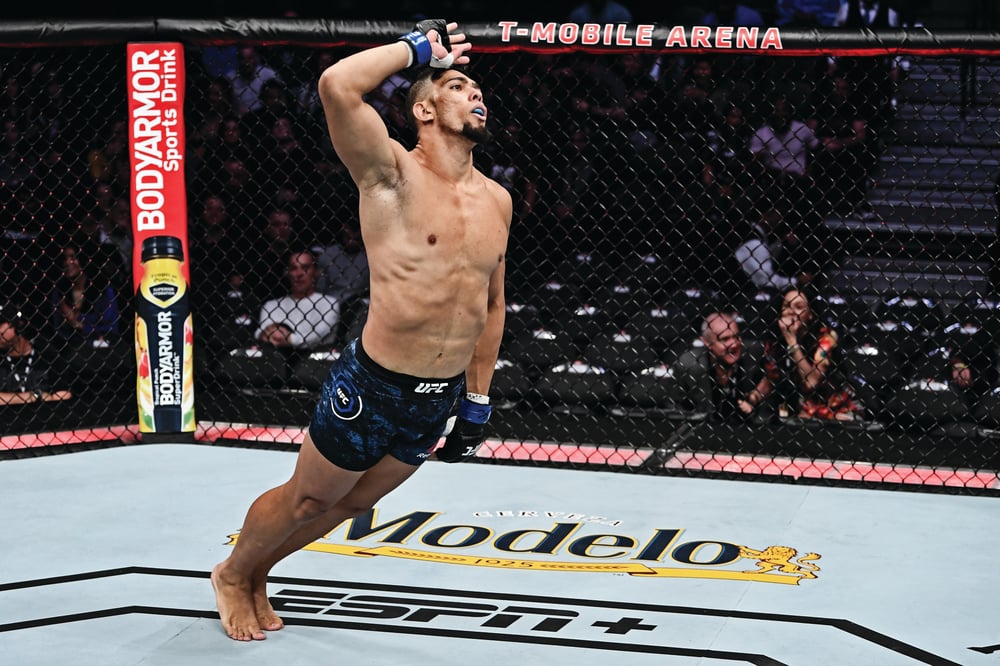
JOHNNY WALKER – THE FAITHFUL
Johnny Walker was born Walker Johnny da Silva Barra de Souza on March 30, 1992, in Belford Roxo, a working-class municipality on the outskirts of Rio de Janeiro. Long before he was born, a freak accident almost erased his family's future, and Walker reflected on the unlikely chain of events that eventually led to his own birth on the Behind The Mic podcast.
“I always been very strong and faithful in the plan of God that have in my life because I’m supposed to be dead long time ago. No, like since before my mom have me when she was young, her grandpa. No, her dad shot her mom when she was holding him like it was an accident, you know, and the bullet didn't cut her, you know. I believe that something in me is special. Because I’m supposed to be dead. I’m not supposed to even be here today, you know.”
His early years brought more challenges. Walker's childhood was dominated by serious illnesses that would leave lasting effects on his health.
“And when I was growing up, I had meningitis. It's like an infection that you have in the brain. It's very ‘damageful.’ And when you survive, you have like side effects. Bad ones. I have this, and then I have like something on my heart fabric. Rheumatic fever. And I did the treatment. I supposed to have a heart surgery when I was 18.”
Growing up without a father left another void. Walker has often spoken about searching for someone to emulate and the need for a mentor during his teenage years. Instead of finding that person at home, he found guidance through his local church. The teachings of Jesus became less about religion and more about building a moral compass in an environment where positive role models were often difficult to find. As his health improved and his towering 6’5 frame developed, Walker began doing whatever he could find to help support his family. He worked in construction, collected bus fares, and even worked as a security guard while still a teenager. Behind the imposing physique was someone constantly asking why he had survived so many close calls. Speaking to UFC.com, Walker reflected on this.
“I started training to find out why I came to this world. Beyond a championship or money, my motivation is family. That's the most important thing to me.”
Ironically, the man now famous for one of MMA's most unpredictable fighting styles didn't begin his athletic journey in combat sports. At 19, Walker first enrolled in dance classes, hoping to improve his coordination and movement. It was there that a Muay Thai coach noticed the lanky young Brazilian’s natural athleticism and encouraged him to try fighting. Around the same time, Walker enrolled in Chemical Engineering at university in Rio de Janeiro, balancing lectures with BJJ and Muay Thai training. Within months, he realized engineering wasn't the path that would lift his family out of poverty. After only three months of formal martial arts training, Walker made the decision to chase fighting full-time. He relocated to Curitiba before taking an even bigger gamble by moving to Scotland and later England with no guarantees of success. He slept on gym floors, battled panic attacks brought on by unfamiliar winters, and survived on little more than oats and water while pursuing a UFC contract. It was a journey that made very little sense on paper. Yet for the boy from the downtrodden streets of Belford Roxo who had already survived poverty, illness, abandonment, and more close brushes with death than most experience in a lifetime, betting everything on himself probably seemed like the safest gamble he'd ever made.
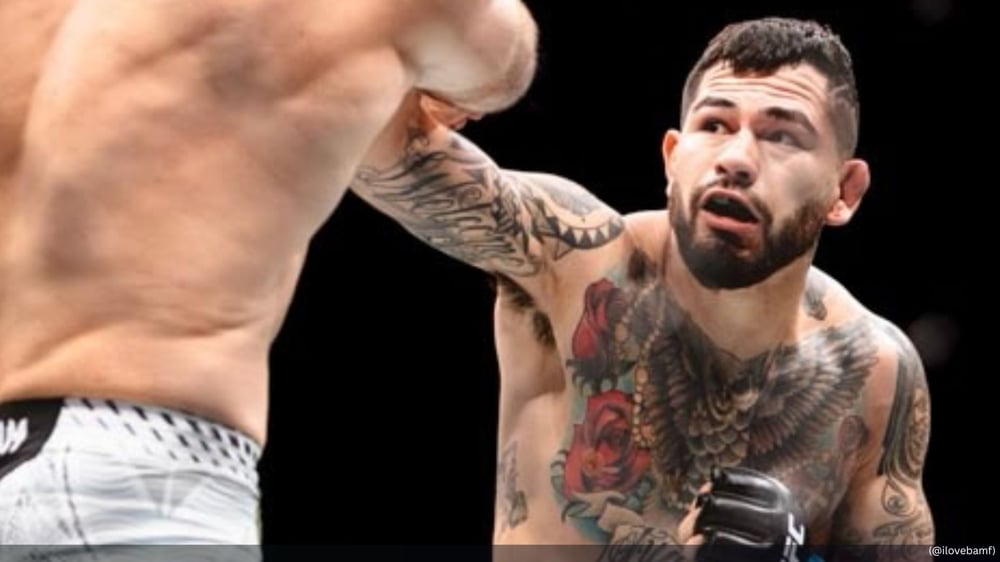
ANTHONY HERNANDEZ – THE UNFILTERED MACHINE
Anthony ‘Fluffy’ Hernandez was born on October 18, 1993, in Dunnigan, California, a small farming town north of Sacramento. Raised in a close-knit Mexican-American family, he had a childhood defined by hard work. His father, Hugo, was a diesel mechanic and expected Anthony to spend his weekends and school holidays beside him, learning the value of physical labor. Hernandez has often credited those years with shaping both his work ethic. Speaking to Fighters Only, he reflected on the childhood that forged him.
“I tell my kids all the time: we didn't get to just go have fun. We had to work a lot. A lot of my childhood was working with my dad, and it taught me how to be a man. I want that for my kids, but at the same time, I don't want that. I'd rather they learn about themselves through sports and have an actual childhood.”
The nickname ‘Fluffy’ arrived early after family and friends joked that he naturally put on weight whenever he wasn't constantly active. Fortunately for Hernandez, sitting still was never an option. Whether helping his father or working around the family property, there was always another job to be done. School, however, was a different story. Hernandez struggled to connect with the classroom and found himself far more interested in wrestling than textbooks. When poor grades eventually ruled him ineligible to compete for his high school team, he lost the one structured outlet that had kept him focused. Rather than letting that competitive fire disappear, his father introduced him to local smoker fights, where a teenage Hernandez found himself sharing the ring with fully grown men, he told the Believe You Me podcast.
“When I was 15, 16, I was fighting local pros and s*** at smoker events and stuff, fighting heavyweight, fighting just grown-ass men my entire life. So, I don't give a f*** who I fight. You know what I mean? It's helped a lot. It's just like, since I was a kid, I've been taking on grown men. It is what it is. It's just a fight.”
After high school, Hernandez briefly enrolled in college but quickly realized the traditional path wasn't for him.
“I went to college for like a quarter and then I was like, f*** this, I'm going to fight. I didn't care about school. I didn't care about none of that s***. I was just like, I know what I want to do. I'm just going to go do it. School just wasn't for me, man. I hated being told what to do by people who didn't know me.”
Choosing fighting also meant accepting years of financial hardship. Hernandez lived out of a 26-foot trailer, accepted regional fights while carrying injuries, and often competed simply because he needed the money. Through it all, the lessons his father had taught him about resilience never left him. One conversation, in particular, stayed with him for life.
“And my dad told me, he almost died when I was a kid once. And he always told me, if I'm going to be vegetable, you have to pull the plug. You don't let me just die. And I'm like, respect. I don't want the same thing. I'd shoot myself if I was stuck in a bed. You know what I mean?”
Those early years explain much of the fighter fans see today. Hernandez competes with a relentless pace that seems to wear opponents down as much mentally as physically. It isn't built on flashy techniques or theatrics, but on the work ethic forged in a small California farming town, repairing engines with his dad, leaving school behind to chase a dream, and learning long before the UFC that life rarely gives you an easy day's work.
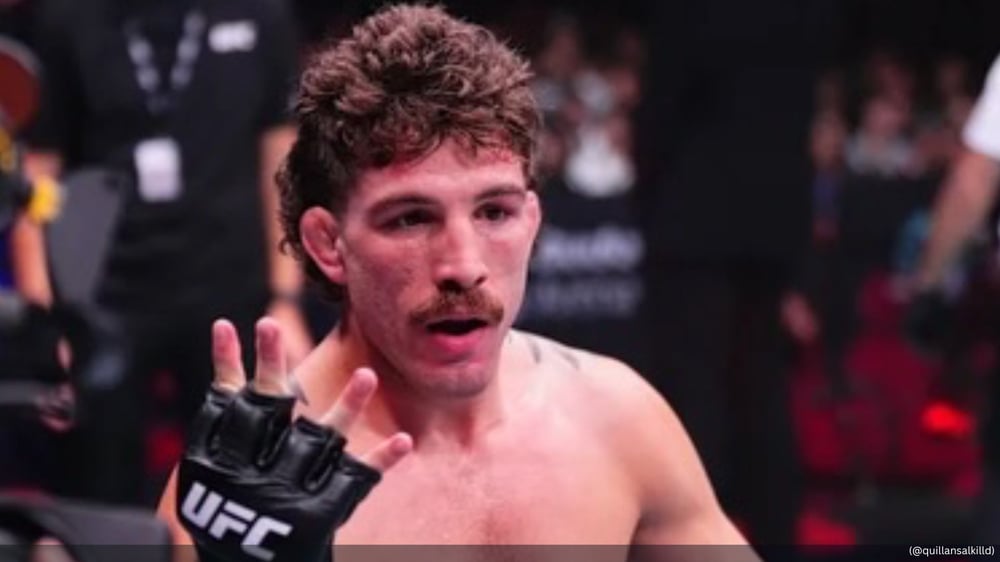
QUILLAN SALKILLD – THE MAN OF MYSTERY
Quillan Zane Salkilld was born on December 28, 1999, in a town south of Perth, Western Australia, before spending much of his childhood in the remote coastal landscapes of Broome. Long before MMA entered his life, he was a kid with an all-in personality, and for a while that involved four small wheels, as he told the UFC.
“Growing up, I was a very un-sporty person, always outdoors. I always interested in having fun. I was always ambitious. I always wanted to do well in things. As a young kid, I picked up skating. One of my mates introduced us to skateboarding. And I got hell into it. And I just wanted to skate. I've been that kind of person to go all in on everything I did. And I remember just being at the front of my house practicing the kick flip for hours every night. I swear it took me like 3 months to finally land it... To land a trick and to land it consistently takes a hell of a lot of time, patience, and practice. That's what I liked about it ‘cuz it was so challenging.”
His father, sensing his energy needed somewhere to go, tricked him into attending a local Australian rules football practice. And one session was enough to spark a new obsession. Salkilld became a standout player in Broome and eventually earned a tryout with the Claremont Colts.
“And then after that one session, I kind of sparked the flame. I played for a squad in Broome, and I got chosen to try out for the Claremont Colts. And just like that, I wanted to become an AFL player.”
Football seemed like the path until Salkilld decided he needed to learn how to defend himself on the field. In 2018, at 18 years old, he walked into an MMA gym intending to use it as extra training. Instead, the sport took over completely, and football was a memory.
“And then within a span of like 3 months, footy was out the window. Didn't care about that anymore. And uh I just wanted to do MMA. I remember getting my ass handed to me a couple times and just thinking, what do I do next to stop that from happening again? Always back of my mind to try it out. What it be like to have the crowd watching and roaring as you're getting blooded, getting hit, and having a good fight. I was like dreaming of that before even actually doing it.”
From there, Salkilld’s rise was fast but far from effortless. His amateur career brought wins, losses, and lessons, but once he stopped fighting the moment and started trusting his aggressive, high-paced style, everything clicked. He captured the Eternal MMA Lightweight Championship, earned his shot on Dana White’s Contender Series, and fought his way into the UFC with the same appetite for challenge that once kept him on the driveway chasing a kickflip.
“I don't have some deep meaningful reason behind why I fight. I just love the challenge. I love the competition. I love fighting another trained killer in front of thousands of people under bright lights. I just love everything about it. I've never been into something for this long. This eight years has been head over heels in love with MMA. I just want to continue this momentum that I've got going. I'm looking to like speedrun my way to the top. I'm taking her all the way.”
Sometimes, you don’t need a lifelong MMA background. You just need a kid who learned patience on a driveway, found courage on a football field, and discovered that the adrenaline of MMA was the one obsession he never wanted to outgrow.
...