

Issue 231
July 2026
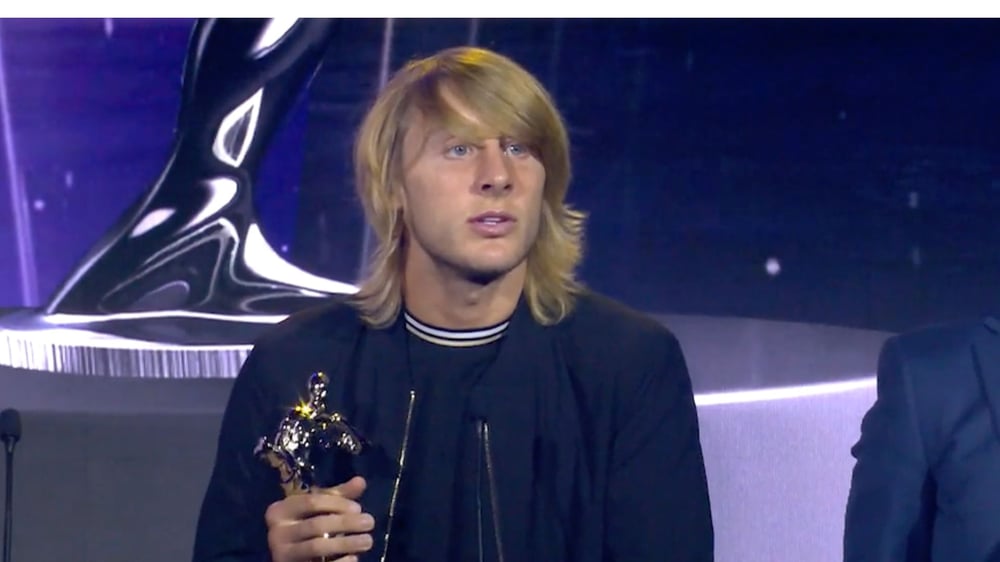
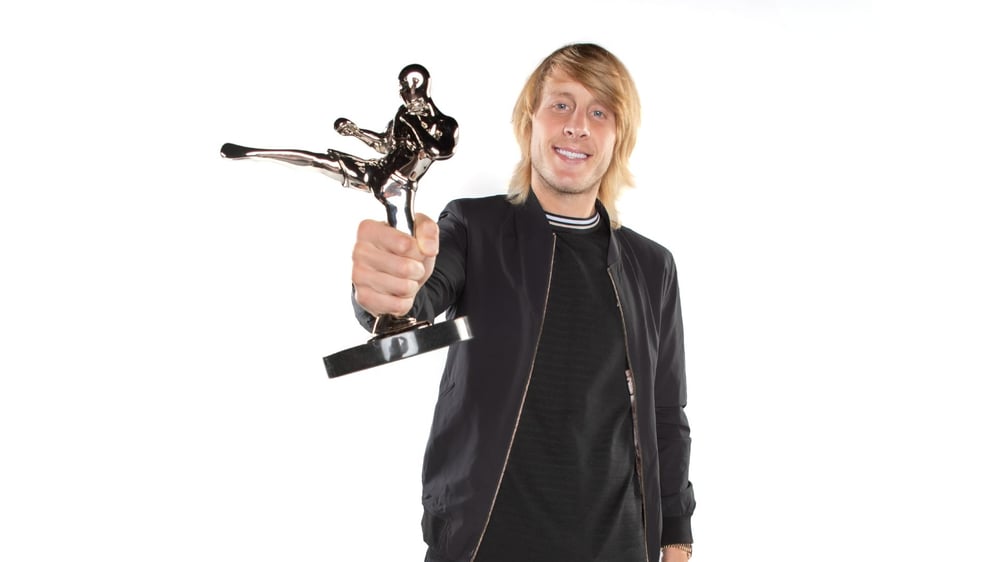
Fresh from collecting International Fighter of the Year at the World MMA Awards, Paddy Pimblett left Las Vegas with a trophy and looked every bit like a man ready to inherit one of the biggest stages in sport.
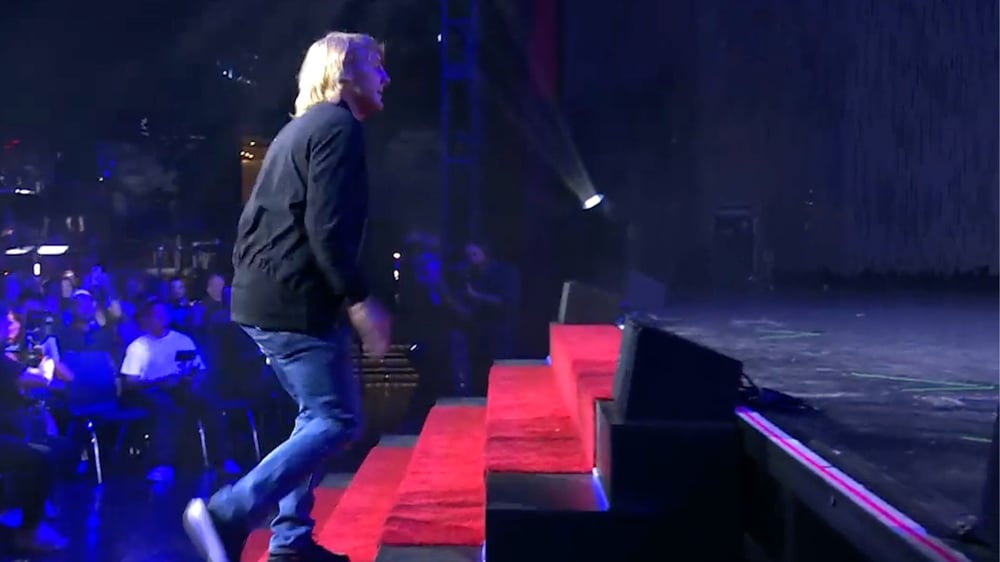
Paddy Pimblett has spent years telling anyone willing to listen that he was destined to become a UFC champion. Despite this, when Fighters Only informed him he would be in the running for an award at the 17th Annual World MMA Awards, his mind didn't leap to career milestones; it wandered to a far humbler place. As his name was announced and he walked to the podium, he understandably looked svelte and depleted compared to what we’re used to seeing, but he always carried his trademark humor and accepted his trophy with genuine surprise.
“I didn't expect this, to be honest,” said Pimblett. “When I got told I was getting an award, thought it was going to be a charity one or something. I only got my head punched in January. But yeah, I want to thank everyone who voted, all the fans that support me, all me loyal fans worldwide. Wouldn't be here without me wife, me family, me gym, all me teammates and me friends. So yeah, everyone that supported me this whole way, this is for you.”
The room applauded because the speech sounded exactly like Paddy. No polished script. No rehearsed soundbites. Just a family man from Liverpool standing on stage looking slightly confused that thousands of people around the world had voted him their favorite international fighter. That level of authenticity has become one of the most valuable commodities in modern MMA. Because while championship belts are decided inside the Octagon, popularity is decided everywhere else.
THE POPULARITY CONTEST THAT MATTERS
The World MMA Awards don't manufacture stars. Instead, we just give the fans the chance to reveal who their favorites are each year. International Fighter of the Year isn't decided by judges sitting cage side or executives in boardrooms. It's decided by the people who pay money to watch their favorites, fill the arenas, wear the T-shirts, and somehow convince themselves that staying awake until five in the morning for a UFC card is a perfectly healthy life choice. All those fans chose Paddy. That matters. After collecting the award backstage, Pimblett admitted it carried extra significance precisely because the fans were the ones casting the votes, and he echoed his on-stage thanks.
“I was shocked. When I got told I was going to get an award, I thought it was going to be like a charity award or something like that, but to get International Fighter of the Year voted by the fans means a lot. I've got a loyal fan base, and I can't thank everyone who voted enough.”
There's an important distinction between followers and fans. Followers are interested, but a true fan is invested. The followers might double-tap your latest Instagram post, then forget about you five seconds later. Fans queue for photographs, travel across countries to watch you fight and continue backing you after you've had your face rearranged by another elite lightweight. Paddy has cultivated the second group. That isn't an accident. It's the result of years spent refusing to become a carefully managed corporate athlete. Pimblett remains the rare UFC star who still feels like the same person whether he's sitting in front of television cameras or explaining why he demolished a burger on YouTube. He's never seemed particularly interested in becoming polished, which is probably why people find him so refreshing. The irony, of course, is that authenticity has become one of the most marketable qualities in the sport.
CALLING HIS SHOT
Earlier this year, Fighters Only sat down with Pimblett as his collision course with lightweight champion Ilia Topuria continued to gather momentum. Throughout that conversation, his confidence stood out above everything else.
“Nothing shocks me because I always said, ‘I’m gonna be a UFC champion.’ It's bosh. It's great. But I always said I was gonna be the face of UK MMA. It doesn't faze me because I always said it was going to happen. When things happen, it doesn't shock me. It doesn't surprise me. I just take it all in stride because I knew it was coming.”
At the time, it sounded like overconfidence, but standing on stage in Las Vegas holding International Fighter of the Year, those words suddenly feel more like a progress report. Pimblett has built his career on speaking in certainties long before everyone else catches up. He predicted UFC success before he signed with the organization. He predicted championship contention before many believed he belonged in the rankings. He predicted he would become the face of British MMA. One by one, those predictions have stopped sounding outrageous. Whether you believe he'll become lightweight champion almost becomes secondary. The remarkable part is how often reality keeps drifting in his direction.
FROM HYPE TO HEAVYWEIGHT CONVERSATION
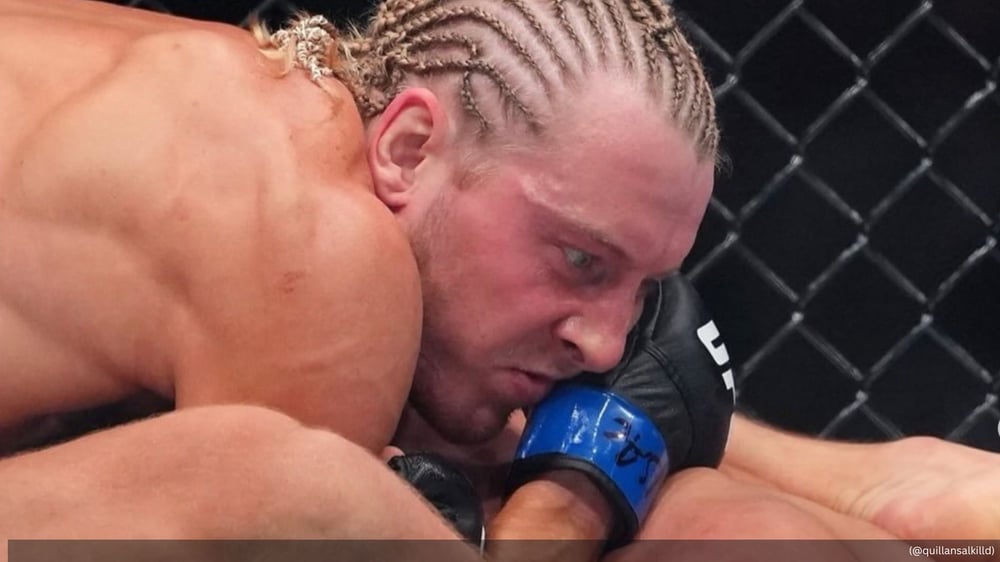
There comes a point in every fighter's career when people stop asking whether they're legitimate and start debating who they should fight next. Paddy has crossed that line. Not long ago, discussions around Pimblett centered on whether he was being protected. Now the conversations revolve around championship opportunities, stadium shows and whether he presents stylistic problems for the very best lightweight in the world. That's a dramatic shift. His dominant stoppage of Michael Chandler earlier this year forced plenty of critics to reassess what they were watching. Chandler had shared the Octagon with Charles Oliveira, Dustin Poirier, Justin Gaethje and others without anyone handing him quite the beating Pimblett produced. Then came UFC 329. Against the relentlessly aggressive Benoît Saint Denis, Pimblett needed just 52 seconds to produce arguably the most impressive submission of his UFC career. Even he looked slightly surprised afterward.
“I've never done that before. I haven't, I've never done that before. I just did that on the fly... that's just how good my jiu-jitsu is. I can link things together like that flawlessly.”
It wasn't simply the speed of the finish, but what it says about his composure. Saint Denis clearly had a mind to drag him into exactly the type of chaotic grappling exchange where the Frenchman normally thrives. Instead, Pimblett calmly threaded together a submission that blurred the line between a D'Arce choke and a Peruvian necktie, finishing an opponent who had never previously been submitted in what Paddy jokingly called the Pad-Thai.
LOSING WITHOUT SHRINKING
Modern combat sports are often obsessed with perfection. One defeat can transform an unstoppable contender into yesterday's news, but Pimblett somehow ignored the script. Earlier this year he came out second best against Justin Gaethje in an interim lightweight title fight. Instead of diminishing his profile, the loss appeared to inflate it, and Dana White noticed.
“He gained so much respect in that last fight,” explained White. “My social team was telling me after that last loss he gained, like, two million followers on social media from that night to the next morning. The way he came in tonight, it felt like he was the world champion.”
That's a fascinating statement because White may have been talking about social media, but the meaning inferred more about presence. Some fighters carry belts, while others carry energy, and sometimes these two very cool things overlap. Walking into UFC 329, Pimblett already felt like one of the biggest attractions on the card despite not wearing gold around his waist. That's an increasingly rare achievement in a sport overflowing with exceptional athletes in the lightweight division that currently resembles a Dubai traffic jam filled with supercars. Everyone believes they should be first, nobody intends to reverse, and somebody's probably leaning on the horn. Despite his loss to Justin Gaethje, Ilia Topuria sits on top of the mountain after one of the most destructive championship runs in recent memory. Earlier this year, Pimblett told Fighters Only exactly why he believed a fight with Topuria represented the biggest contest the UFC could make.
“There's history. There's bad blood, and you haven't got any other fight like that to make in the UFC at the minute. It'd be the biggest fight they've been able to make in years. The biggest fight they can make is me versus Ilia.”
It’s increasingly difficult to dismiss that argument after another statement performance.
PASSING THE TORCH?
Awards ceremonies can sometimes feel like punctuation marks, but this one felt more like a chapter heading. When the applause from winning his statue and fight had faded, Pimblett was back doing what he does best: speaking with confidence. Following his victory at UFC 329, he was being filmed backstage directly after McGregor’s fight and had the fortitude to hit the nail on the head when he’d learned what had happened.
“Oh my God, is McGregor done yet? He's finished, the new guy's here. I can be the face of the organization now.”
A few years ago, that statement would have sounded wildly premature. Today? It's at least a conversation. For almost a decade, every discussion about the UFC's biggest star inevitably circled back to Conor McGregor. Even during long periods of inactivity, his shadow stretched across the sport. Now the UFC is searching for the next generation of personalities capable of transcending championships and becoming genuine attractions. Paddy Pimblett has entered that discussion. The Fighters Only trophy he collected in Las Vegas won't move him up the rankings. It won't earn him a title shot or improve his takedown defense. It does, however, capture a moment in history. Paddy’s immense contribution to the 17th Annual World MMA Awards may ultimately be remembered as the night fans publicly acknowledged something the UFC has been watching develop for years. Paddy Pimblett isn't chasing stardom anymore. He already has it. Now he's holding something much heavier than a trophy.
...