

Issue 231
July 2026
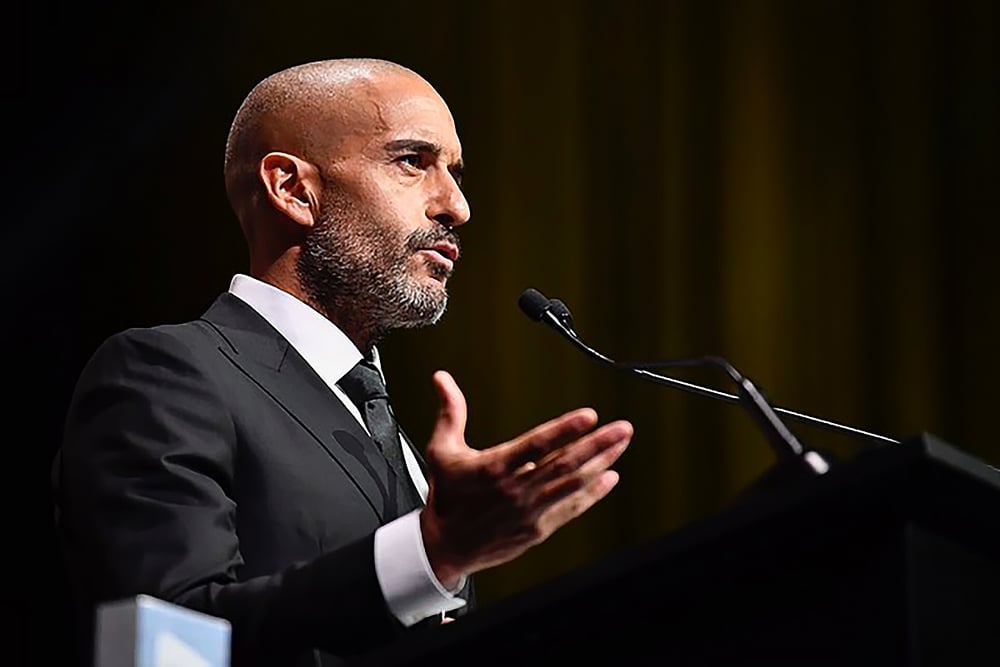
Jon Anik has narrated the biggest moments in modern MMA. Winning another World MMA Award wasn't just recognition for one great year. It was a standing ovation for more than a decade of making everyone else sound bigger than himself.
Sure, Jon Anik might speak for a living, but some of his best work risks going completely unnoticed. Okay, so that probably sounds ridiculous considering millions of people hear his voice every month. But the greatest play-by-play commentators have always shared one peculiar superpower. They know exactly when not to speak. They're conductors, not soloists, and help to make sure every instrument arrives exactly when it should. Think about Leon Edwards' head kick against Kamaru Usman or McGregor’s failed comeback. The commentators have been there for the good times and the bad because you probably remember these moments perfectly. The soundtrack may echo around your head too. Yet very few fans stop to think about the person delivering it. This is exactly why watching Jon Anik walk onto the stage at the 17th Annual World MMA Awards to collect yet another Commentator of the Year trophy felt strangely appropriate. It wasn't simply recognition for another excellent twelve months. It felt like the sport quietly acknowledging the man who has helped preserve its greatest moments. And true to form, he still looked slightly surprised to be there.
“I don't know why I'm nervous,” he admitted with a laugh before accepting the award for The Commentator Of The Year. “I'll be nervous doing the Hall of Fame tomorrow. I'm nervous in front of you guys. This happens, of course, because of all of you. The fans are the lifeblood of the sport, and to win any sort of popular vote because of the fans just hits me right here.”
After all these years and all the awards, he’s still nervous, and that might be why he keeps winning.
THE ART OF DISAPPEARING
Great commentary is a bit like the plumbing in your house, because you don’t notice it until it stops working. We've all watched sports where the commentary somehow manages to turn the main event into the verbal equivalent of someone reading microwave instructions. Then there are broadcasters who mistake every exchange for Shakespearean monologue. Anik strikes the perfect balance between these two approaches because he understands that the fight is the star, and years ago we asked him how he approached his role.
“I'm constantly trying to script up my own work, assess my own work, become a better play-by-play man,” he told us. “Trying to be as listenable as possible over 80 hours... not get in the way of the live sporting event. When people think we enhance it, bro, that's all we're looking for. It's the ultimate compliment.”
That's a surprisingly rare philosophy in an era where everyone seems convinced every microphone is secretly a podcast.
EVERY EVENT IS AN AUDITION
It's easy to assume that once you've become the lead voice of the UFC, you've made it. However, Jon Anik doesn't seem interested in that idea and almost rejects it. During our previous conversation, he described what motivates him in a way that explains almost everything about his career.
“Dana White's my boss. You got to earn that lead play-by-play seat with every pay-per-view. I need to earn that seat for Dana and for the fans.”
There's something wonderfully old-school about that mentality, because over the years, some broadcasters have reached the top and tried to protect their positions. Anik is that rare beast who behaves as though he's still interviewing for it. Perhaps that's why his preparation borders on obsessive. Before each event, he's researching up to thirty fighters. Memorizing introductions. Writing the pay-per-view open. Running several miles simply to clear his head before going live. Somewhere inside a hotel room every fight week is a grown man repeatedly practicing Polish surnames. When asked which names still cause problems, he laughed before nominating Mateusz Rębecki and explaining that he keeps audio recordings of every fighter pronouncing their own name correctly.
“I have audio of every single fighter saying their own name on my phone.”
That level of detail might seem excessive until you realize millions of people are listening.
THE SOUNDTRACK OF AN ERA
Modern MMA has changed almost beyond recognition during Jon Anik's tenure behind the microphone. He's called fights in empty arenas during a global pandemic. He narrated the surreal Fight Island era. He's watched Conor McGregor become the biggest star combat sports has produced this century. Through all of it, one constant has remained. His voice. During our earlier interview, Anik reflected on the moments that still stand above the rest.
“Leon Edwards' knockout of Kamaru Usman will probably be the most memorable moment. We just want to make sure that every time there's a championship moment, we're making those moments count because that's the soundtrack that has to withstand the test of time.”
That's a beautiful way to describe commentary because every generation will remember iconic sporting moments through pictures and videos, but just as many will remember them through the voice they heard.
THE MAN WHO NEVER THINKS HE'S ARRIVED
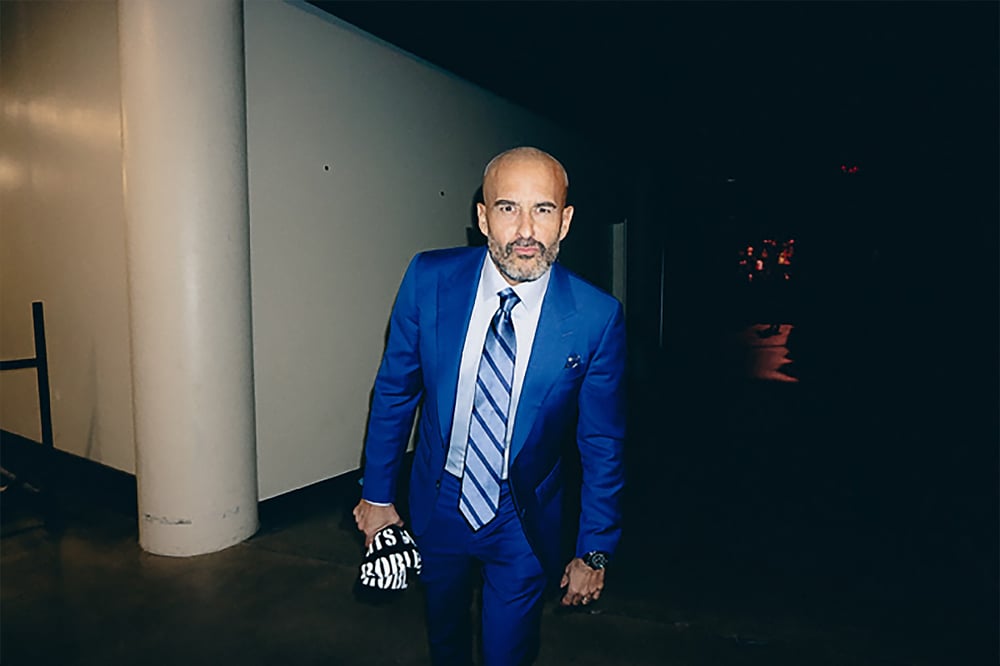
One of the more fascinating things about speaking with Jon Anik is how remarkably consistent he is. In the past, he’s told us that he wasn't interested in ever feeling like he'd arrived.
“I don't know that I'll ever think that I've made it,” he said. “I want to lead the league in preparation until my last show. I want to create a gap between me and the next best guy.”
Fast forward to the Las Vegas award ceremony, and thanks to this mentality, he grabs yet another award and a standing ovation from a room packed with fighters, coaches, and executives. When we caught up with him backstage, he was just as humbled.
“My man, great to be here. Welcome to Las Vegas to you. And yeah, we're glad to be inside out of the heat. But Conor McGregor's back, hugely honored to be acknowledged by fighters only at the World MMA Awards. And yeah, the fans, as I said in my acceptance speech, are the lifeblood of this sport. And I appreciate the support more than you could possibly know.”
Years earlier he'd said something remarkably similar when discussing the Fighters Only World MMA Awards.
“It's a huge initiative. It means so much to the athletes and to the people in the sport because largely the most basic human need is to feel appreciated. It's the only show of its kind. It's just a nice way for the entire sport to gather together.”
These might have been two different interviews years apart, but they reflect the same philosophy of appreciation and recognition. Perhaps that's why this particular award feels different. The World MMA Awards aren't decided by executives or television networks. They're voted on by the fans who actually watch. When the applause finally settled inside the awards ballroom, Anik thanked his twin brother, his children, and the sport that has given him a career.
“I love this sport. I'll be here as long as you'll have me.”
Judging by another Commentator of the Year trophy sitting on the shelf, that might be quite a while yet. And if that's the case, MMA fans should probably consider themselves lucky. Because long after individual champions have retired, rivalries have faded and title belts have changed hands, there will still be someone calmly sitting cage side, making sure the biggest moments sound exactly as unforgettable as they deserve to be.
...