

Issue 231
July 2026
Fresh off claiming an astonishing 16th World MMA Award as Journalist of the Year, Ariel Helwani reflects on the journey from covering MMA's biggest stories to becoming one himself.
When MMA first began, the journalists covering it lived in the shadows. They asked the questions, wrote the stories, and quietly moved on to the next event. Like the refs, if they did their jobs well enough, nobody even noticed them. The spotlight belonged to the fighters who were putting their skin on the line. The reporters simply connected the dots, but then Ariel Helwani happened. Over the next decades, he has broken some of MMA’s biggest stories, sat across from virtually every champion the sport has produced, and built a platform so influential that fighters now measure the success of a media tour by whether they appeared on his show. Somewhere along the way, the storyteller became part of the story. Sure, not everyone agrees with how he does it. Some see him as the sport's greatest journalist. He's traded barbs with Dana White, been banned from events, fallen out with champs, and become as polarizing as the athletes he covers. That's an unusual place for a journalist to find himself. Journalists are supposed to ask the questions, not become one. Yet through every controversy, one thing has remained remarkably consistent. The people whose opinion ultimately matters most have continued to back him. For the 16th time, fans voted Ariel Helwani the World MMA Awards Journalist of the Year. Sixteen. In a profession where credibility can disappear with a single bad story, that's not just longevity. It's sheer dominance thanks to sustained excellence. Because whether you love him, loathe him, or occasionally shout at your phone when one of his interviews goes viral, Ariel Helwani has achieved something few journalists in any sport ever do. He hasn't simply documented the history of MMA. He's become part of it.
THE FIRST QUESTION
Long before podcasts became studios and YouTube clips became breaking news, Helwani understood something many journalists didn't. Fans didn't just want to know who won. They wanted to know why. They wanted to hear directly from the people living the MMA dream, not simply read someone else's interpretation. So, while others focused on results and painfully predictable post-fight soundbites, Helwani focused on conversations. He’s built a rep for nosing around the uncomfortable questions and giving fighters the time to reveal something of themselves beyond the rehearsed clichés. It wasn't always about being first, although he often was. It was about being thorough. Whether he was interviewing a debutant hoping for a UFC contract or a champion headliner, his prep has always been obvious. Fighters quickly realized they weren't sitting down with someone reading questions from a cue card. They were talking to someone who knew their career almost as well as they did. Sometimes, well enough to remind them of moments they'd almost forgotten themselves. That combination of curiosity and homework transformed interviews into events of their own and helped redefine what MMA journalism could be. Plenty of journalists ask good questions. Very few ask the one that changes the entire interview.
THE COST OF ASKING
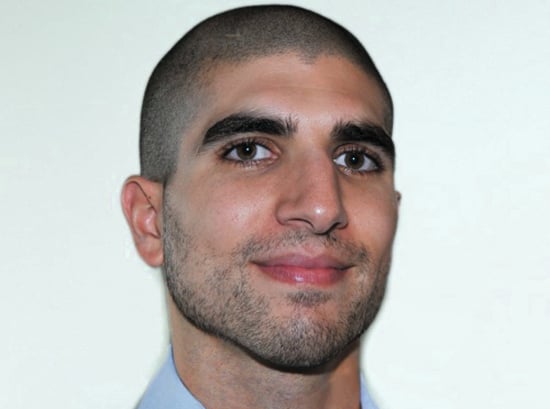
Success has a funny habit of changing the rules. A breaking story from Ariel didn't just report the news anymore. It became the news. Fighters responded to it. Promoters reacted to it. Entire press conferences were shaped by it. Somewhere along the way, the microphone became almost as powerful as a punch. With that influence came scrutiny. It comes with the territory when you're no longer reporting on the biggest names in the sport but sometimes sharing the same headlines as them. Helwani has never pretended that's a comfortable place to live. Yet sixteen World MMA Awards suggest something worth remembering. Popularity fades. Access comes and goes. Credibility is much harder to earn. For nearly two decades, fans have continued to reward a journalist who built his reputation not by telling people what they wanted to hear, but by chasing the stories they wanted to know. That, more than any viral interview or headline-grabbing scoop, may be the real reason the storyteller became the story.
FIGHTER FIRST
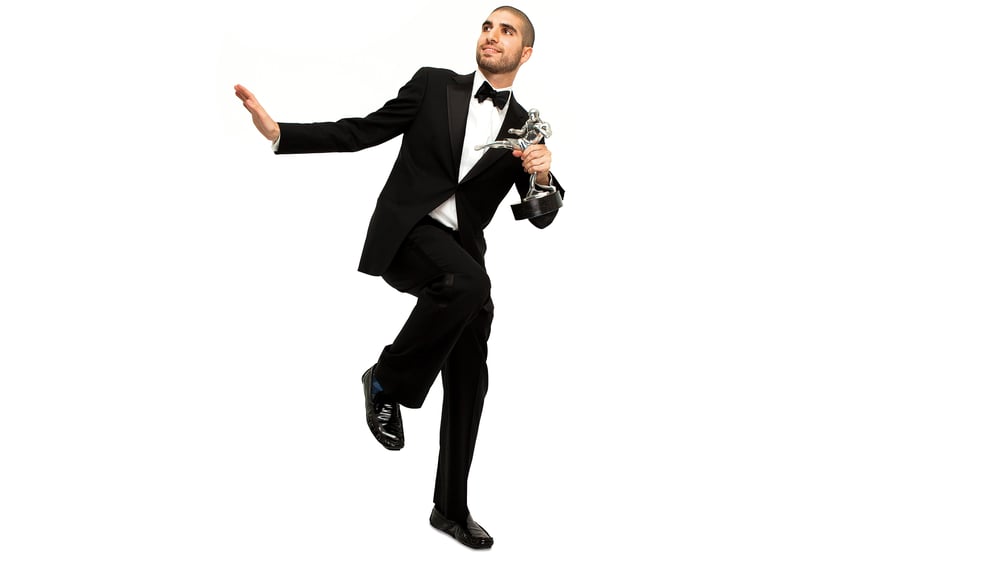
Black ties, polished shoes and tailored tuxedos filled the room as the biggest names in MMA gathered to celebrate another year in the sport. Unlike previous years, Ariel Helwani walked to the microphone looking exactly like someone who'd spent the evening working instead of networking.
“Sorry I'm not dressed as nicely as all of you, but I was working, so I guess I have a good excuse,” he laughed, drawing one of the night's biggest laughs before immediately reminding everyone why he'd been called to the stage in the first place. “It broke the ice instantly. Then came the statistic that almost sounded surreal.
“This is actually my 16th award in a row,” he said. “I've won these for the last 16 years, and I don't take it for granted. It means the world to me because it's voted on by the fans who have stood by me through so many ups and downs over the course of the last few years, so I appreciate you all so very much.”
There were lighter moments too. He joked that it was the first time he'd won the award with the New York Knicks as NBA champions, the first time he'd collected one on his birthday and, perhaps most importantly, the first time he'd been able to celebrate alongside his entire team.
“Connor, Rick, Jordan, Andy, Frank, Petey. They're all here, and I can't thank them enough because without them, there is no me, there is no show, there is no Uncrowned. I'm so happy that my best friends are here to be with me on my birthday, winning this award.”
Yet the most revealing part of the speech came right at the end. After thanking Fighters Only and acknowledging the other journalists nominated alongside him, Helwani made one final request.
“A lot of people could say a lot of things about me, call me whatever you want, take shots at me, I don't care. But please, when you talk about me, say one thing most importantly. Say that I'm fighter first.”
He continued, “I will always try to advocate for the fighters. I will always try to tell the fighter's story. I will always try to spotlight the fighters. They deserve more. They deserve to get paid more. They deserve more attention and love from all the fans, all the promoters, everyone involved in this sport.”
For someone who has spent much of his career accused of becoming the story, it was a fitting way to end the night. Beneath the headlines, the exclusives and the controversies remains the same motivation that first drew him to a niche sport few mainstream journalists cared about. Tell the fighters' stories, fight for the people inside the cage, and let everything else take care of itself. Sixteen straight World MMA Awards suggest plenty of fans still believe he's doing exactly that.
...