
Issue 231
July 2026
A veteran cage-side doctor reveals how the humble calf kick attacks one of the body's most exposed nerves and literally teaches a leg to forget how to work.
Fighters have spent years looking for the human body’s warranty loopholes, and the unassuming calf kick may deserve a prize for its contribution to proving God built the nerves in the calf with a no-return policy. The goal used to be to kick the upper thigh until it looked like a Christmas ham, but fighters like Benson Henderson saw some alternative lower-level real estate on offer, especially during his battles with Frankie Edgar. At the start, the calf kick was clever, awkward to defend, and barely anyone noticed it. It was something that sat in most fighters’ toolkit but was more like that weird attachment you get with a vacuum cleaner. Everyone owned one, but nobody knew what to do with it. Then Dustin Poirier showed what it could do on the biggest stage. At UFC 257, Poirier relentlessly targeted Conor McGregor’s right lead leg with calf kicks until his mobility was on the wobble. With Conor moving like a drunk pirate on a stormy deck, Poirier closed the distance and gifted McGregor with the first KO loss of his career. In his next bout, Conor broke his left leg, then injured his right knee against Holloway. It was a lower body downfall that you could argue started in part thanks to the humble calf kick. And while it might be a calf kick by name, doctors know there is another culprit hiding beneath the skin because the calf isn't just muscle. Running down the outside of the lower leg lies one of the most exposed nerves in the human body, and in modern MMA it has become the sporting equivalent of pressing the off switch. So, what actually happens when a calf kick shuts down a fighter's leg? Is it the unbearable pain? Muscle failure? Or does the leg stop listening to the brain? According to veteran cage-side doctor, Brazilian jiu-jitsu black belt and Safe MMA medical adviser Dr Asoka Wijayawickrama, the answer is far more fascinating than most fans realize.
THE OFF SWITCH
If Poirier showed the world what repeated calf kicks could do, Marlon Vera gave us a taste for what one perfectly placed kick was capable of at UFC 252. During their first exchange, he landed a single kick to Sean O'Malley's lead leg, which caused a foot drop from the nerve injury that may have forced his ankle to roll. And the fight was over moments later. Fans argued about whether it was the ankle giving way or the kick itself that caused the collapse. Doctors were looking entirely at the peroneal nerve.
“The common peroneal nerve is a walking target,” explains Dr Asoka Wijayawickrama. “Unlike the quadriceps, which are thick muscles that protect the nerves underneath, the muscles on the outside of the calf are much thinner. That leaves the common peroneal nerve relatively exposed to direct impact.”
In other words, the calf kick isn't really trying to damage the muscle. It's trying to interrupt the wiring hidden beneath it.
“The common peroneal nerve plays a pivotal role in lifting the foot,” he explains. “Repeated impacts cause a temporary nerve injury known as neuropraxia. The nerve isn't cut, but it stops conducting signals properly. The brain is still sending the messages. The problem is the nerve isn't passing those messages on efficiently.”
Suddenly, what looks like a fighter with poor balance is actually something far stranger. Their brain is telling the foot to move. The foot just isn't getting the instructions.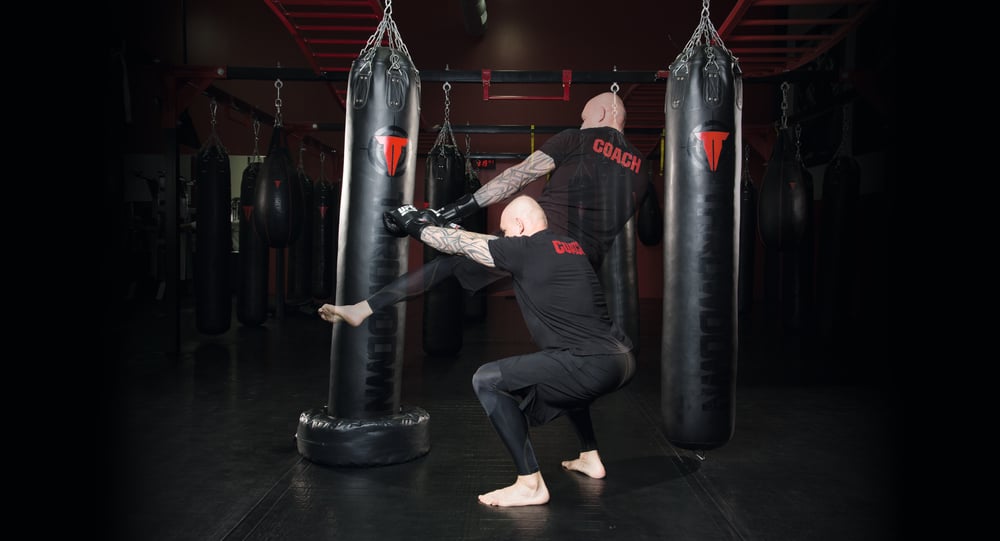
BORN TO TAKE A KICK
Of course, if shutting down the common peroneal nerve were as simple as flicking a light switch, every calf kick would be a fight stopper. Instead, we've watched Justin Gaethje and Alex Pereira happily chew through calf kicks that would have most of us searching for mobility scooter finance. Others lose the use of a leg after a handful of clean connections; much of which is down to your disposition.
“Some of the ability to absorb calf-kick injuries is genetic,” explains Dr Wijayawickrama. “Fighters with larger bones and naturally thicker calves have more protection around the nerve. The amount of muscle covering the common peroneal nerve varies from person to person.”
Not every fighter wants calves that belong in a bodybuilding magazine. Kamaru Usman has openly admitted he's never chased tree-trunk lower legs because the weight training caused him joint pain rather than bulk. The trade-off is that Mother Nature leaves a little less cushioning around the common peroneal nerve. Sometimes the body rewards efficiency. Sometimes it rewards mutant lower legs.
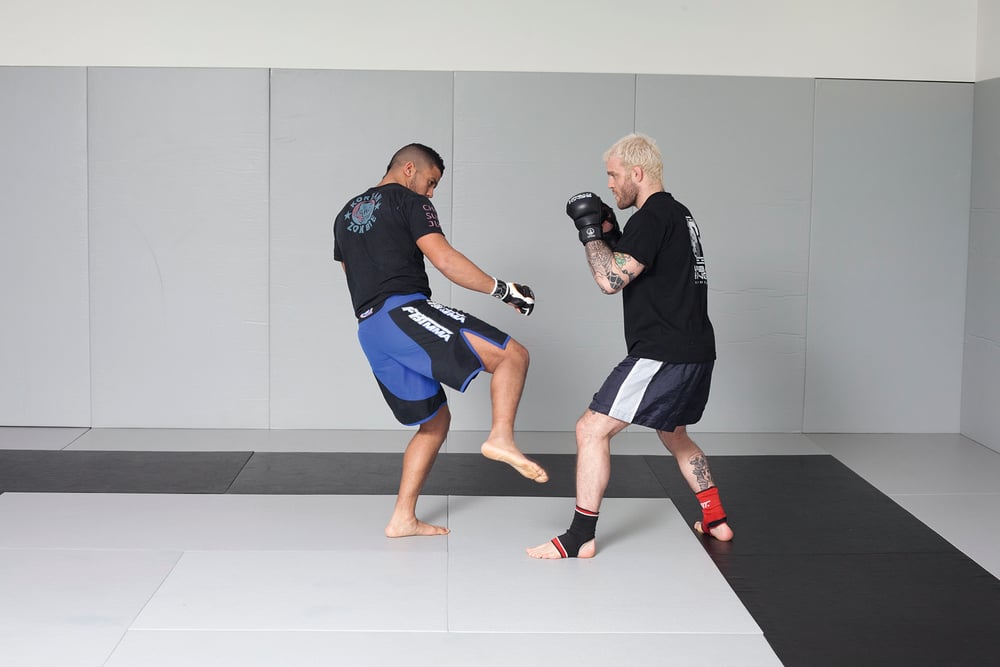
“Building stronger calf muscles through resistance exercises such as calf raises may offer some additional protection,” explains Dr Wijayawickrama. “More importantly, working with your coaches to improve your stance and your ability to check calf kicks will reduce the chances of the nerve being repeatedly struck.”
Technique, it turns out, still beats toughness. The best defense isn't having heart-shaped calves carved from granite. It's making sure your opponent never gets a clean crack at the target in the first place.
THE BODY DOESN'T NEGOTIATE
One of the stranger things is that fighters rarely stop punching just because one of their limbs has decided to resign. Michael Chandler famously kept trying to compete against Brent Primus despite looking like he'd left one of his legs in the dressing room. The heat of the moment has a funny way of convincing fighters they're perfectly fine right up until the moment they try to negotiate a few stairs afterward.
“Adrenaline can temporarily mask some of the damage,” explains Dr Wijayawickrama. “A fighter may not immediately appreciate how badly the common peroneal nerve has been affected because they're still in fight mode.”
Unfortunately, the nervous system isn't interested in courage.
“If a fighter continues competing after significant injury to the nerve, their mobility becomes progressively worse,” he says. “Shooting for takedowns becomes much harder because lifting and planting the foot is compromised. Their striking power also falls because they can't generate force properly through the affected leg. Essentially, they become a sitting duck for their opponent.”
That's why calf kick mastery has become one of the most dividend-rich investments. They don't just hurt. They quietly dismantle everything that makes opposition dangerous. The takedowns disappear. The footwork slows. The power leaks. Before long, the opponent isn't fighting the same athlete they were standing across from two minutes earlier. They're fighting someone whose body has started ignoring its own instructions.
WHEN THE KICKER GETS HURT
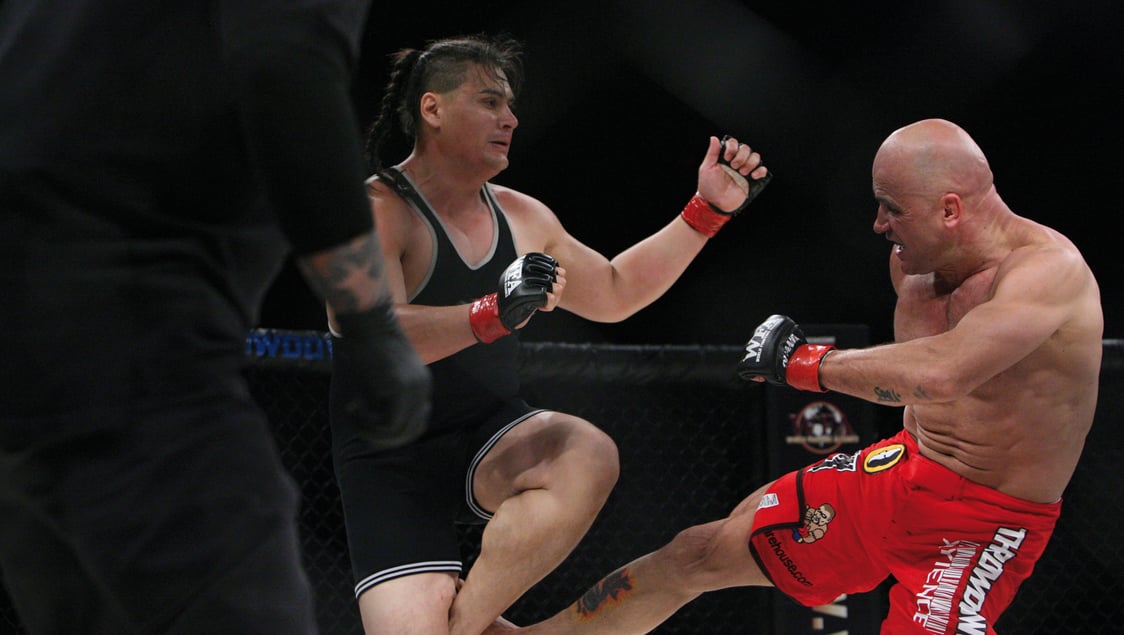
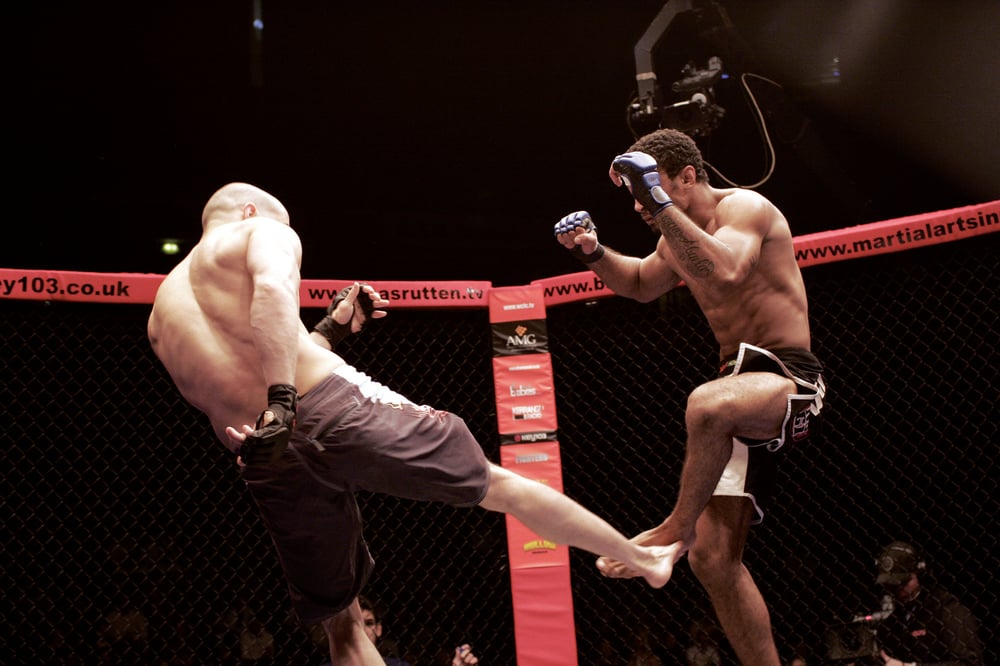
The cruel irony of the calf kick is that the person throwing it can also sometimes come off second best thanks to a perfectly timed check. That said, the calf kick generally stacks the odds a little more in the attacker's favor.
“Because the calf kick is lower on the leg and more difficult to check than a traditional thigh kick, the person throwing the kick is generally less likely to injure themselves than the receiver,” explains Dr Wijayawickrama.
That doesn't mean it's risk-free. Elite fighters such as Alex Pereira have made an art form of checking calf kicks by subtly lifting and turning the shin into the incoming strike, possibly thanks to his kickboxing background. Instead of smashing into soft muscle, the attack collides with one of the hardest bones in the body. It's a painful lesson that usually only needs to be learned once. Like every weapon, timing still beats power. Throw a calf kick at the wrong moment, and you'll spend the next few minutes wondering why your own leg suddenly feels like it's been introduced to a baseball bat.
THE ROAD BACK
Fortunately, the common peroneal nerve is remarkably forgiving. Unlike a nerve that's been severed, neuropraxia is usually fleeting. In most cases, the wiring hasn't been permanently damaged. It's simply stopped passing messages efficiently until the inflammation settles.
“If a fighter has taken significant calf-kick damage, ice packs should be applied to reduce swelling,” says Dr Wijayawickrama. “Paracetamol can be used for pain relief, but I generally advise avoiding anti-inflammatory medication such as ibuprofen during the first 48 hours after a significant soft tissue injury.”
The bigger concern comes if the foot refuses to wake up.
“If someone develops a foot drop, where they're unable to lift the foot properly, it's important to seek medical assessment. Fortunately, because the nerve has usually been bruised rather than cut, function often returns over time without permanent damage.”
Which brings us back to the original question. Do calf kicks end fights because they're unbelievably painful? Or because they literally stop the leg from working?
“The answer is both,” says Dr Wijayawickrama. “Pain is certainly a factor, but the real problem is that the nerve stops functioning properly. Once that happens, the fighter loses the ability to move the foot normally, making it much harder to strike, defend or wrestle effectively.”
So, the next time you watch a fighter suddenly stumble across the Octagon, don't assume they've simply got weak legs or a low pain threshold. Chances are you're watching one of the smallest targets in MMA quietly disconnect one of the body's most important pieces of wiring. Modern fighters didn't invent the calf kick, but they may have perfected one of the cleverest ways ever discovered to make a perfectly healthy leg forget how to be a leg.
...