

Issue 232
August 2026
Dakota Ditcheva tells Fighters Only’s Harry Williams how a world-champion mum, a former childhood sparring partner and one brutally honest family built the PFL’s unbeaten star.
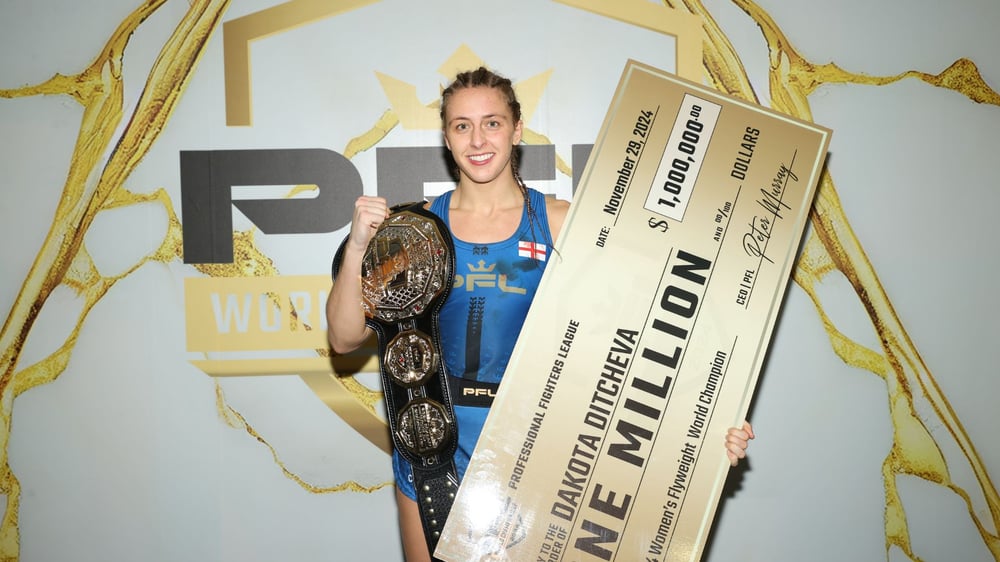
Dakota Ditcheva has reached the stage where perfection looks almost suspiciously routine. The PFL women’s flyweight champion is now 16-0 after beating Denise Kielholtz by unanimous decision in New York, with all three judges handing her every round. She did it while breaking both hands just to add a little spice to the victory. That victory followed a 2024 season in which she stopped four opponents, finished former UFC title challenger Taila Santos to win the PFL championship and collected the million-dollar prize. The results have made Ditcheva one of the most valuable names in women’s MMA, but the machinery behind them was assembled long before the cameras, contracts and call-outs arrived. It began with a mother who already knew how unforgiving combat sport could be, and who was smart enough not to force her daughter anywhere near it. There is nothing unusual about a second-generation fighter following a parent into the family trade. What is unusual is a parent possessing the patience to let the future world champion wander off and play football first. Ditcheva’s mother, Lisa Howarth, won six world championships across Muay Thai, kickboxing and karate during a remarkable ten-year run. Dakota’s earliest memories include running around her mother’s gym, although she initially treated the actual fighting with the enthusiasm most children reserve for tidying their bedrooms.
“I’ve been in the world of fighting,” smiled Ditcheva when she spoke with Fighters Only. “It wasn’t foreign to me as it is to others outside of this world. As I grew, it was something I stopped doing. I didn’t want to do it as a little kid. I just wanted to be a kid for a few years. I didn’t do any sort of martial arts or anything. It just wasn’t something that interested me when I was little, and luckily my mum understood that and didn’t push me to do it. I came back to the gym when I was 13. At that point, it all began to feel natural. I didn’t have visions of being this big fighter. I was just enjoying it at the time.”
At 13, the switch finally flicked. There was no thunderbolt, no solemn promise to become champion and no training montage involving a rain-soaked Manchester staircase. She simply found something that felt right and, once it did, every sensible alternative began losing by unanimous decision.
“I never thought I’d do anything else once I got into it,” she admitted. “Even in high school and college, the only job I worked was part-time at a cafe with a friend who owned it. I’m not a 9-to-5 person. I’ve always had this feeling for fighting that I can’t let go of. It’s just made for me.”
Fight fans can probably be grateful she never embraced the role she has since built a career where 13 of her 16 professional wins have ended inside the distance.
THROUGH THICK AND THIN
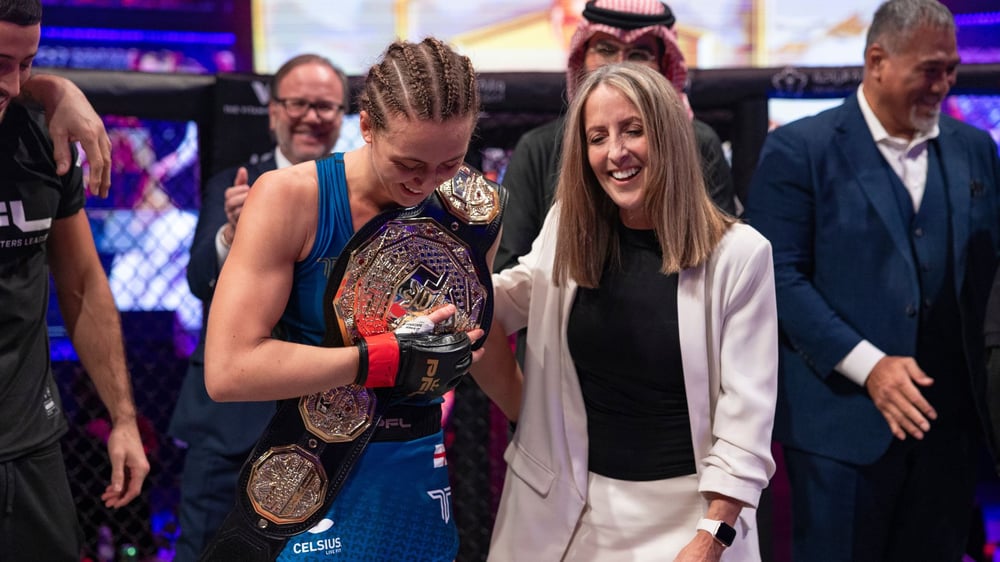
Having a world champion for a mother sounds like the sort of advantage promoters would put in capital letters. As a teenager, it can also mean living with somebody who has already made the mistakes you are preparing to make and can spot them warming up from across the room. Advice is useful. Advice from your mum, delivered while you are convinced you know everything, can feel unwelcome. Over time, Ditcheva came to understand that the strictness was not intended to control her career. It was there to stop talent being mugged by avoidable decisions.
“My mum and I would clash when I was younger, a lot,” she smiles. “I wasn’t always this good child! We had our fallings out, mostly because of how strict our parents were on us. I was always being cheeky. I think being the middle child makes you a little cheeky. I’ve been very lucky to have my mum. She’s taught me so much. Having been through the same sport and emotions, she’s guided me along the way. She’s saved me from a lot of bad decisions from her own experience. The one thing she’s always taught me is to be myself, and I think I’ve always done that. I feel like a lot of fighters come into this sport and want to be somebody that they’re not outside of it. I think that bites them on the bum in the end. She’s always made sure I am the person that I am 24/7.”
That final lesson may be Howarth’s most valuable contribution. Ditcheva has never needed to manufacture menace for fight week or borrow a personality from whichever champion is currently doing the biggest numbers online. The confidence looks natural because it is.
BROTHERLY LOVE
The family influence did not disappear when Ditcheva left the UK to sharpen her game at American Top Team in Florida. If anything, distance made it louder. Life abroad gives a fighter world-class coaching, elite training partners and weather that rarely requires a coat, but it also turns an ordinary English accent into an emotional support animal.
“Living in America, I’m the only English person in the gym, and I’m only ever going to and from the gym, so I don’t really go anywhere else to see any other English people either,” she says. “I live in Florida and was out driving one day when the most random thing ever occurred. I was sitting outside a coffee shop on the side of the road in Key West when this car pulled up at the crossing. These English people stopped and started yelling, ‘Dakota! Dakota!’ I just loved the fact they were English. Hearing it made me so happy.”
It is a small moment, but it reveals the less glamorous side of becoming a global fighter. The airport photographs and palm trees look excellent online. The reality is a loop of home, gym and recovery, with much of the adventure spent too tired to enjoy the location. This means the best part of camp comes when her brother, Cody, arrives. His job description may include practical help, company and the occasional reminder that she existed before strangers began debating her career on social media.
“It’s so hard being out here away from my family most of the time,” she says. “I’m on my own all the time here, which I don’t like. Having my brother here changes my mood. The number one thing I’m always grateful for is having my family, for sure. Cody and I have been fighting since we were little, man. At the start, it was on sight, but then we got to this age where we just became best friends as teenagers. I can’t remember how it happened. I think it was the sport that made us click, and we’ve all been very close and a very tight-knit family ever since. Having him out here as part of this journey puts me at ease much more. He helps me out so much.”
Plenty of fighters say their team is a family. Ditcheva has taken the more literal route and imported hers into camp. Cody does not need the polished version of events, and he is unlikely to be impressed by a highlight reel he has already seen from three feet away. That makes him valuable in a career where a growing number of people are paid to say yes.
FAMILY VALUES
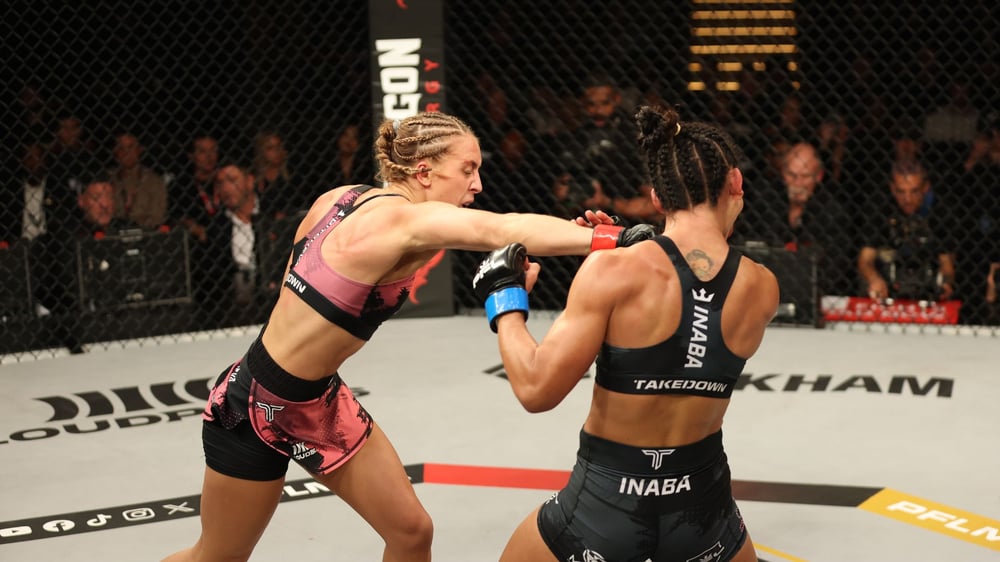
Success changes the volume around a fighter. At 16-0, Ditcheva now has supporters calling her name, opponents calling her out and an industry trying to decide how quickly it can turn her momentum into its own. Every win creates more opportunities, more opinions and more strangers with extremely firm beliefs about what she should do next. Her recent victory over Kielholtz offered a useful glimpse of the family-built foundations. Coming on the heels of a hard-fought decision against Sumiko Inaba in 2025, it marked the first time Ditcheva had gone the distance in consecutive MMA fights. The performance came without the explosive finish many expected. She still won every round on every card. When the spectacular ending refused to arrive, and both hands were damaged, she adjusted, banked the victory and left the noise outside the decision-making process.
“Everyone’s always calling me out and speaking on me, but I just keep to myself,” she says. “People can have opinions on decisions I’ve made along the way, but I think myself and my family have done well building me and my career. I think I’ve done pretty well too. People’s opinions don’t matter to me. I’m not interested. That’s why I’ve had so much success. But my family have kept me level-headed. We are all on the same page. We don’t care for drama. It’s all business here.”
That may be the real family inheritance. The striking pedigree is obvious, but the more important hand-me-down is a sturdy internal filter for nonsense. Howarth supplied experience, Cody brings calm, and the wider family keeps the unbeaten champion attached to the person she was before a million-dollar cheque and a PFL belt arrived. Ditcheva is now famous enough for people to recognize her on the street in a foreign country, dangerous enough for contenders to build interviews around her name, and successful enough for every career choice to become public property. At home, however, she remains the cheeky middle child whose brother once considered their disagreements an on-sight matter. It is difficult to disappear into your own hype when the people closest to you remember all the earlier versions. Dangerous may be the nickname, but family is the operating system.
...