

Issue 232
August 2026
Ray Klerck discovers why the most important technique in MMA might be the bit that happens between techniques.
Khamzat Chimaev can wrestle, Alex Pereira can strike, and Mackenzie Dern can submit you from what seems like any position, but little of that is particularly surprising. As a fan, MMA lights up the pleasure centers of your cerebral cortex when those specialties stop behaving like separate sports. Punches become takedowns, which become submission attempts like a Swiss Army knife. Somewhere in those micro gaps, MMA stops being a martial arts melting pot and starts to speak its own fluent language. Few illustrated this better than Georges St-Pierre. By seamlessly blending his jab with reactive level changes, GSP achieved an all-time UFC record 77.7% takedown accuracy. It is a stat built not on raw force, but on perfect transitional timing. That connective tissue has now attracted the attention of sports scientists. A new 2026 study recruited 50 elite male MMA fighters aged 18–20, all with at least 5 years of systematic MMA training, and tested what happened when they added structured integration of Judo, Brazilian Jiu-Jitsu, and Muay Thai to their MMA training for 15 weeks. The researchers weren't simply interested in stuffing more techniques into an already crowded toolbox. Their program was designed to test whether fighters who were taught to combine attacks and move between striking, clinch, and ground fighting could execute those integrated skills under competitive pressure. What they found suggests there may be plenty of gold hiding in the cracks within the MMA skill set.
THE 15-WEEK STITCH-UP
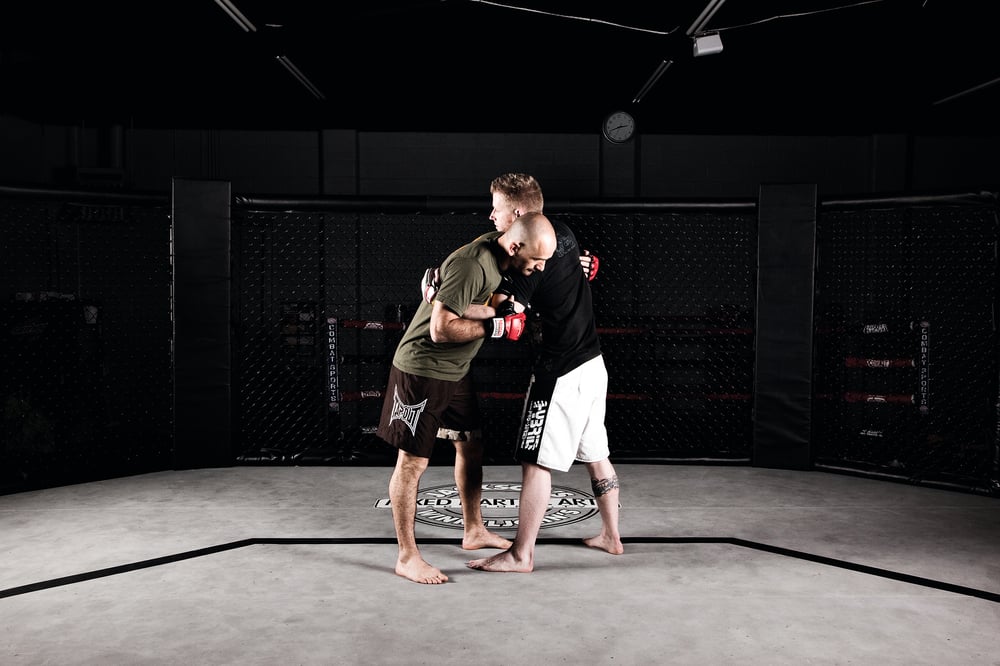
To find out whether MMA’s secret sauce might be hiding between the dead spaces, the researchers needed to mess with the recipe. All 50 fighters trained five times a week, but two of the experimental group's weekly sessions were specifically dedicated to offensive techniques drawn from Judo, BJJ and Muay Thai. The control group plugged away with the standard MMA program without that targeted integration. Training volume, intensity, and recovery were controlled to keep the groups comparable, and the researchers divided their 15-week experiment into three five-week blocks. Weeks 1–5 were the adaptation phase. Fighters worked on the building blocks: Judo throws and clinch grips, basic BJJ joint locks and chokes, and fundamental Muay Thai punches and kicks. The emphasis was on getting the movements right rather than turning every session into an audition for a Fight Of The Night bonus. Weeks 6–10 were where things became much more MMA. Combination attacks were introduced alongside Judo throw-to-takedown combinations, BJJ submission chains, Muay Thai striking combinations, and clinch attacks. Crucially for our purposes, the researchers targeted transitions between striking, clinch, and ground fighting, including what they describe as the development of “strike-grapple transitions.” The final five weeks removed the bubble wrap. Fighters had to apply their integrated attacks during high-intensity sparring, make tactical decisions, and execute their offense while fatigued. By this point in the study, the punch, throw, and submission weren't supposed to live in separate boxes anymore. They had to play nicely together.
THE NUMBERS BETWEEN THE MOVES
Before and after the program, the fighters completed three five-minute MMA sparring rounds at roughly 80–90% of maximal effort. They were matched by weight and experience, filmed from two angles, and assessed by two independent MMA coaches with more than 10 years of coaching experience. The researchers counted successful throws and takedowns, clinch control, joint locks, chokes, effective punches, and effective kicks. And this is where the experiment gets interesting. Successful throws jumped from an average of 2.0 to 5.2. Clinch holds rose from 4.2 to 7.5. Joint locks went from 1.5 to 3.1, while successful chokes climbed from 1.0 to 2.5. The improvement wasn't confined to grappling either. Effective punches increased from 20.5 to 28.5, while kicks rose from 10.2 to 15.4. Calculated from those reported averages, that's roughly 160% more throws, 79% more clinch holds, 107% more joint locks, 150% more chokes, 39% more effective punches and 51% more effective kicks. Meanwhile, the control group's changes weren't anything to write home about. The researchers believe that integrating elements of Judo, BJJ and Muay Thai cooked up some serious improvements across the attacking actions they measured. There is an important asterisk before we crown the transition as a freshly discovered cheat code. The researchers didn't measure transition ability independently, so we can't claim that smoother transitions are the driving force for every one of those improvements. The program also gave fighters targeted practice in the individual techniques themselves. What we can say is that transitions and combination attacks were deliberately trained as part of the intervention, and the fighters subsequently became significantly more effective across every offensive category measured. Still, look at where some of the biggest gains got locked in. Throws rose 160%, joint locks more than doubled, and chokes climbed 150%. The study's own discussion suggests improved Judo throwing created more opportunities for holds and submissions, while targeted BJJ practice contributed to roughly twice as many successful submissions. The interesting possibility isn't merely that these fighters got their hands and heads on better ammunition. They may have become better at creating the space to use them.
THE BIT MOST DON'T SEE
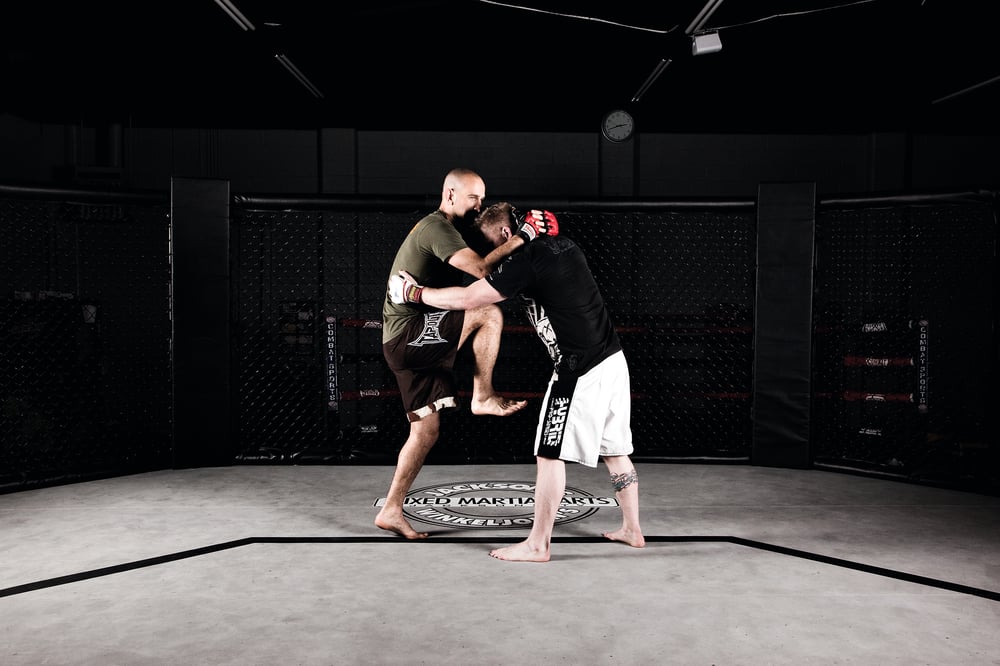
All martial arts naturally encourage specialization. Boxers spend thousands of hours boxing because boxing rewards being extraordinarily good at boxing. Judoka throw people. Wrestlers wrestle. MMA steals all of it, then introduces a different problem. Knowing six excellent techniques isn't necessarily the same as owning a six-technique sequence. The researchers themselves argue that MMA repeatedly shifts between standing and ground exchanges, placing complex demands on decision-making, tempo, and action selection. They created this study to improve a fighter's ability to attack by enhancing their precision and chaining sequences such as strike-to-clinch, clinch-to-takedown, and takedown-to-submission. That's a pretty important line in the sand. A beautiful takedown that requires you to stop striking, reset your feet, announce your intentions, and then shoot isn't necessarily an MMA takedown. Neither is a devastating Muay Thai combination, and it’s not particularly useful if finishing it leaves you standing somewhere a wrestler desperately wants you to be. The transition is where one discipline can camouflage the next. A punch doesn't always need to land if it makes someone raise their hands. A takedown doesn't necessarily need to succeed if defending it exposes the neck. It means a fighter doesn’t need to be the boss of more techniques. It just means they could have more success if they remove the subtle punctuation points between them.
TRAIN THE FULL SENTENCE
The practical lesson from this study isn't that every MMA gym should immediately bin its existing program and spend 15 weeks pretending to be three different martial arts schools. The researchers tested one specific intervention on 50 young, highly trained male fighters. That's a decent sample size that’s giving you some pretty useful evidence, but it is not a universal training commandment. What it may offer coaches is an interesting reason to examine where techniques begin and end in their own sessions. Drilling the punch matters. So does drilling the takedown and the choke. But there may also be value in deliberately training the journey between them, then forcing those connections to survive resistance, decision-making and fatigue. That's exactly how the experimental program progressed. The key takeaway is to learn the pieces, connect the pieces, then make the connections work when you're knackered, and somebody is actively trying to break them.
...