

Issue 232
September 2026
A veteran cage-side doctor reveals why one small joint controls a fighter’s kicks, takedowns and movement, and how ignoring an injured toe can damage the entire body.
The human body has handed an absurd amount of responsibility to appendages most of us only notice after stubbing a coffee table in the dark. A damaged toe forced Conor McGregor out of UFC 303. Alex Pereira carried one into his knockout victory at UFC 300. Then there’s Jon Jones, who once finished Chael Sonnen before looking down to discover his big toe was attempting to escape from the side of his foot. Yet toes are rarely discussed with the same solemn concern reserved for knees, shoulders and anything requiring an MRI. The bigger the toe, the bigger the issue, and none hold more weight than those protruding from the inside of your feet. Cook your big toe, and you risk spoiling an entire athletic recipe. Every time a fighter pivots into a kick or drives an opponent backward, an enormous amount of force travels through that tiny joint. It is less a decorative balance aid and more the accelerator pedal for the entire body. According to veteran cage-side doctor, Brazilian jiu-jitsu black belt and Safe MMA medical adviser Dr Asoka Wijayawickrama, damaging it can steal a fighter’s power and movement before sending the consequences creeping north through the ankle, knee, hip and back.
BAREFOOT COMES AT A PRICE
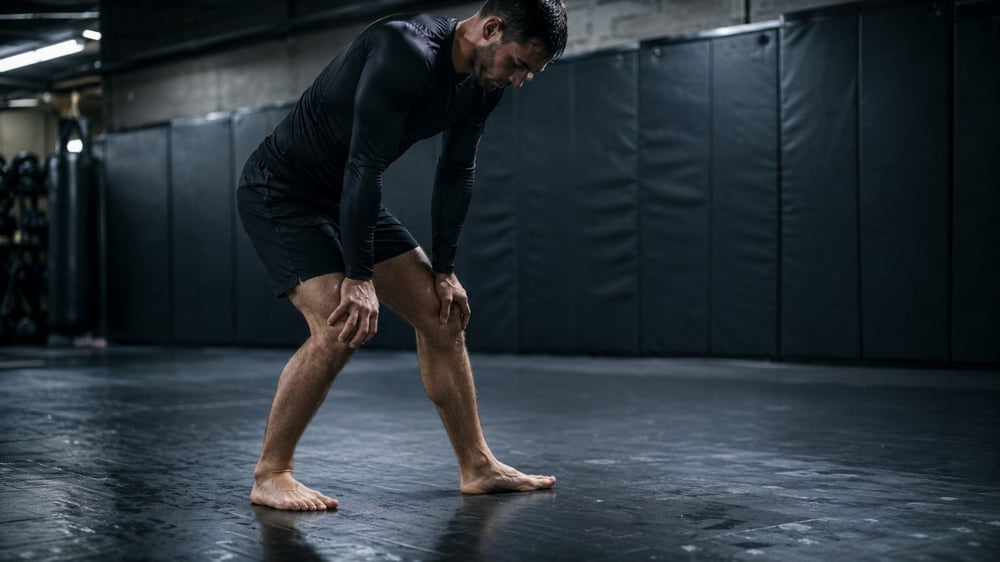
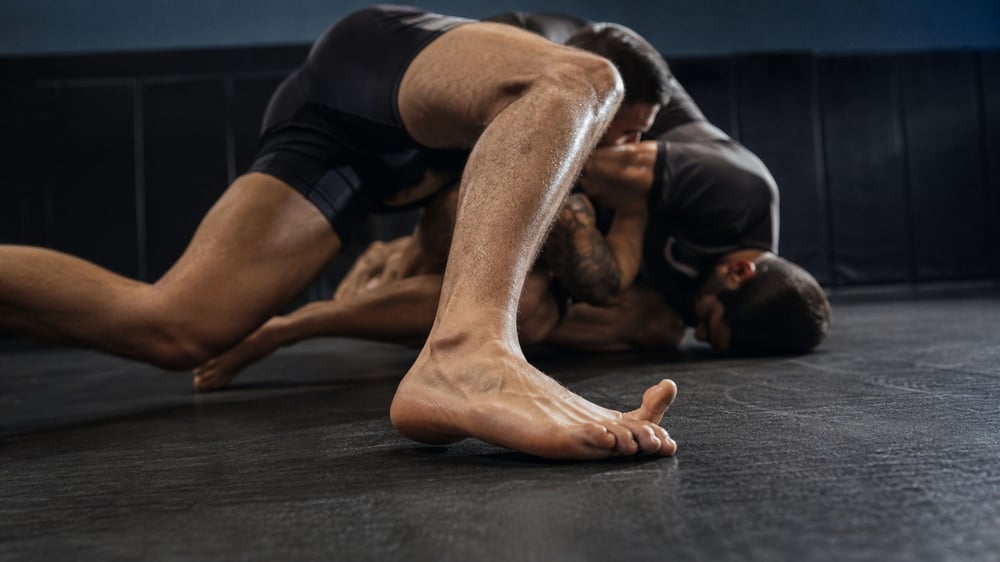
Shoes are generally an unwanted guest in MMA. This does help condition the feet, but it also means every pivot and poorly aimed kick is delivered with little cushioning around the important machinery.
“MMA athletes, BJJ competitors, judokas and other traditional martial artists do a lot of their training and competing barefoot,” explains Dr Wijayawickrama. “While this has the ability to build up strength in the intrinsic muscles of the foot, the athletes lose the cushioning and protection on the sole and sides of the foot which training shoes would provide.”
That exchange becomes particularly important when you consider how often fighters load their feet. Strikers rotate through them to generate power. Wrestlers drive through them to change levels. Grapplers trap them beneath several hundred pounds of enthusiastic opposition. The foot may become stronger through this work, but stronger does not necessarily mean indestructible.
“Repetitive barefoot training puts pressure on the metatarsal heads, which are the ends of the long bones in our feet, and the sesamoid bones located under the great toe, which act as protection,” says Dr Wijayawickrama.
The sesamoids are two tiny bones sitting beneath the big-toe joint, roughly where the foot meets the floor. Their job is to help absorb pressure and allow the tendons around the great toe to work more efficiently. This is an impressive workload for something about the size of a couple of beans. When those bones become irritated, inflamed or fractured, every attempt to push through the front of the foot can become painful. The problem is that MMA rarely allows the big toe to enjoy a quiet shift. Even when it is not being stamped on or bent backward, it is helping produce the movement that makes fighting possible. Barefoot training may build a tougher foot, but it also leaves the smallest workers in the room clocking in without a hard hat.
THE MOST EXPENSIVE SPRAIN IN MMA
The big toe earns its keep whenever a fighter needs to move with urgency. Take away that push-off point and the rest of the body has to start improvising, which is rarely ideal when somebody is trying to render you unconscious.
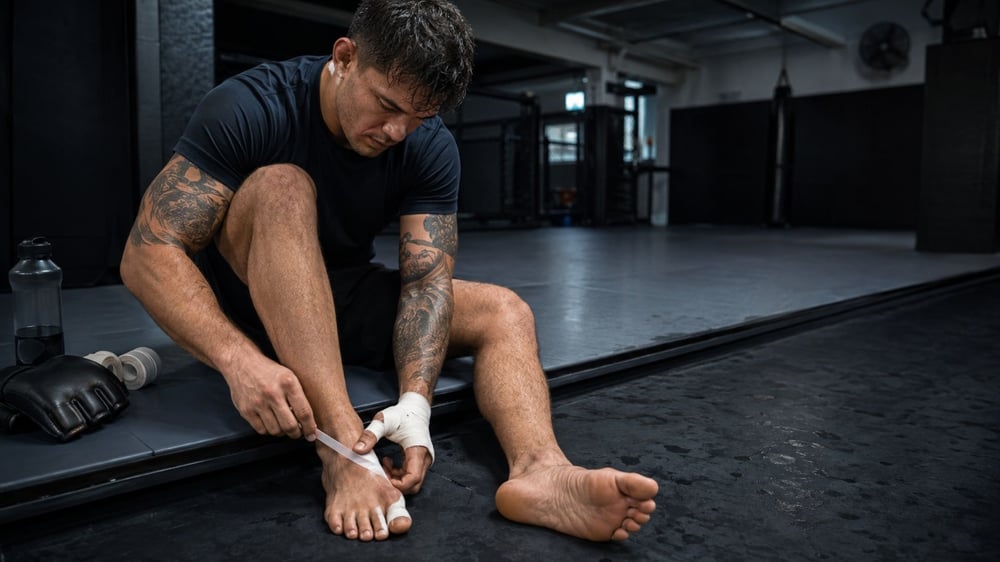
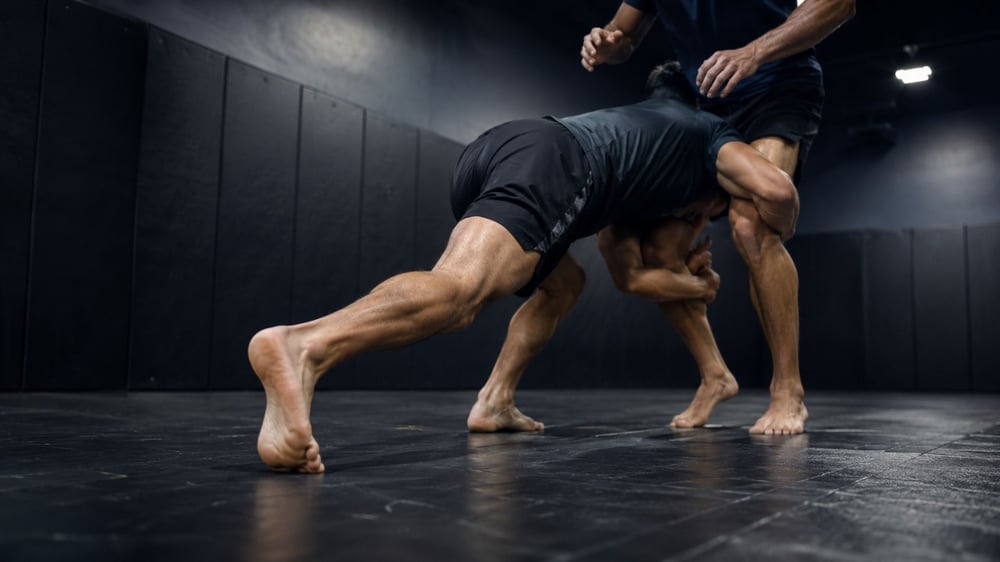
“The great toe, or hallux, is pivotal in all our daily movements, especially as a martial artist,” explains Dr Wijayawickrama. “When we throw kicks, we are taught to come up on the ball of our foot and pivot. This puts a lot of pressure on the first metatarsophalangeal joint, or great toe. To ‘blast off a double leg’, again our toe is in a pointed-up position. The great toe can also be put under strain in BJJ. Think of your foot positions in butterfly guard.”
That joint, commonly shortened to the first MTP, is a surprisingly busy piece of engineering. A 2023 medical review of turf-toe injuries explains that it contains four bones, nine ligaments and three muscular attachments. However, the fit between the bones provides relatively little stability, leaving the surrounding ligaments and soft tissues to prevent the big toe from folding backward like a deckchair. This is exactly how turf toe tends to happen. The classic mechanism involves planting the front of the foot while the heel is raised, with the body’s weight driving the great toe upwards beyond its normal range.
“Turf toe, originally described in footballers playing on astroturf, is a common MMA injury,” says Dr Wijayawickrama. “This is when your great toe is bent so it points upwards or hyperextends. It can be divided into grades, with grade one being a mild sprain and grade three being a complete tear of the structures.”
The word “sprain” makes it sound like something that can be cured with a bag of frozen peas and a quiet weekend. At its mildest, that may not be far wrong. The 2023 review found that athletes with a grade-one injury can sometimes return within three to five days once they can bear weight without significant pain. A partial tear can keep them out of training or competition for two to four weeks, while a complete disruption may require at least four to six weeks, and sometimes considerably longer. Fewer than 2% of turf-toe injuries require surgery, but when the joint is unstable, the bone is damaged, or the supporting structures are completely torn, this small injury can produce a very large medical bill.
WHEN THE DAMAGE TRAVELS NORTH
Turf toe can mean a small joint can cause a heavyweight problem. The kick that catches an elbow, or thousands of barefoot repetitions, can slowly irritate the bones and surrounding tissue without providing a single obvious moment to blame. Sometimes the toe breaks during a fight. Sometimes it simply submits after years of unpaid overtime.
“Other common injuries to the great toe include fractures, which usually present with pain, swelling and sometimes bruising of the toe after trauma,” explains Dr Wijayawickrama. “Repeated chronic trauma can also cause a stress fracture. Another common injury to the great toe would be a sesamoid fracture or sesamoiditis.”
Sesamoiditis is an irritation of the small bones beneath the great toe and the tendons surrounding them. Unlike the spectacular Jon Jones variety of injury, it may arrive gradually, beginning as an ache beneath the ball of the foot before making every push-off, pivot and kick increasingly unpleasant. Fighters are particularly well placed to ignore this kind of warning. Pain is part of the job, and nobody wants to explain that the hardest opponent in the room is currently a bone the size of a jelly bean.
“The sesamoid bones are small bones under the great toe which provide protection to it,” says Dr Wijayawickrama. “Trauma from kicking and training in bare feet can predispose a martial artist to a wide range of different injuries to the great toe. This is why it is important to seek medical advice in the event of a great-toe injury and get an assessment from a professional to prevent long-term complications.”
Those complications can spread well beyond an ugly toe. The 2023 medical review warns that severe, neglected or incorrectly diagnosed turf-toe injuries can lead to reduced push-off strength, poorer athletic performance, joint stiffness, chronic pain, arthritis and deformity. The body will usually find another way to complete the movement, but its solution often involves shifting the workload elsewhere.
“If you continue to train on a fractured toe, it can lead to long-term deformity, causing simple issues such as cosmetic deformity and difficulty putting shoes on,” explains Dr Wijayawickrama. “Longer-term issues from fractures or turf toe can include developing osteoarthritis of the great-toe joint. The medical term is hallux rigidus.”
Hallux rigidus causes pain and progressively reduces movement through the big-toe joint. To avoid loading the injured area, an athlete may begin walking or pushing off through the outside of the foot. That small adjustment can alter how force travels through the entire lower body.
“Problems with one joint can put pressure on the supporting joints, such as the ankle and knee, and even as far as the hip and back, leading to arthritis or chronic pain in these,” says Dr Wijayawickrama.
This is how a damaged toe begins recruiting innocent body parts into its orbit. The ankle changes position, the knee absorbs force differently and the hip attempts to keep everything moving in roughly the correct direction. What begins at the end of the foot can eventually become a problem that stretches halfway up the body, proving once again that MMA injuries are rarely considerate enough to remain where they started.
STOP TRYING TO WALK IT OFF
The sensible solution is also the one everyone will be the least enthusiastic about: stop loading the toe and find out what has actually happened. Pain, swelling and bruising may indicate a fracture, but stress fractures and soft-tissue damage are not always generous enough to announce themselves with one spectacular moment. Continuing to kick, wrestle and scramble through the problem can turn something manageable into a permanent change in how the joint moves.
“Simple injuries can be treated with rest and strapping, while more complicated injuries could mean surgery,” explains Dr Wijayawickrama. “It is important to seek medical advice in the event of a great-toe injury and get an assessment from a professional to prevent long-term complications.”
The 2023 medical review supports this cautious approach. Grade-one turf toe may require little more than symptom management and taping before returning to training. Partial tears may require several weeks in a walking boot, while complete tears, fractures, or an unstable joint may require lengthy immobilization or surgical reconstruction. The important detail is not how much pain a fighter can tolerate. It is whether the toe can bear weight, move normally and provide a stable platform without forcing the rest of the foot to compensate. Fighters are trained to ignore discomfort, but the big toe is a poor place to stage a toughness contest. It powers the movements that allow them to kick, shoot, scramble and escape, while carrying enough responsibility to cause trouble all the way up to the back when it stops doing its job. Knees will always receive more sympathy, shoulders will always produce more impressive scans, and broken legs will continue stealing the slow-motion replays. Yet the big toe quietly helps make almost every technique possible. Treat it like a minor appendage, and it may eventually remind the entire body who has really been running the fight.