

issue 223
September 2026
Before championship belts were on the line, the world's greatest fighters were locked in their own battles. We delve into the gritty and inspiring MMA origin stories that forged these warriors into the legends they are today.
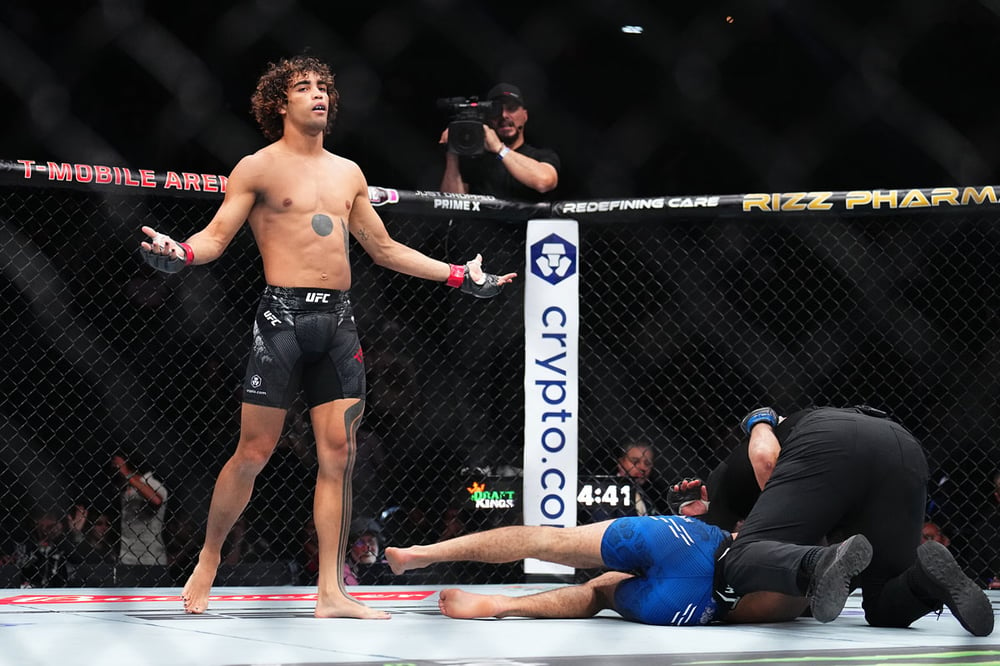
PAYTON TALBOTT – A POETIC PREDATOR
Payton Anthony Talbott was born on September 9, 1998, in Las Vegas, Nevada, and grew up in Reno alongside one sister and three brothers. He played football, skateboarded, and eventually found his way onto the wrestling mats. But his first fights weren’t confined to organized sport. He grew up with a tight crew, where roughhousing was part of the friendship, and it created friendships that have kept the UFC fighter's ego in check to this day.
“I've always just enjoyed fighting, like with my brothers, with my friends,” Talbott told A Fighter’s Story podcast. “Like we've always just been like a really rough group of kids. I've always had this, like, a weird side to me that, like, I always say when I tell people about fighting, like my skill is not my accuracy. It's not my knockout power. It's just the fact that I can just get clocked and keep walking forward. One of my friends, who actually is one of my best friends, and he's the only guy to ever knock me out. And we, like, got in a street fight one time when we were in high school. But it's funny, like anytime I get too cocky, he always kind of reminds me like, hey, you know, I'm the only one to ever knock you out.”
Talbott’s life became considerably more complicated after high school. His parents' divorce coincided with a difficult period for him, during which his next move hardly seemed like something a pro fighter would choose. He enrolled at the University of Nevada to remain close to his mother, studying psychology with a minor in music. He sang in the UNR choir, played guitar, and skated, meaning the future UFC fighter probably wasn't the typical UFC prospect. Fighting still wasn't the plan, but after watching Conor McGregor, he decided to give MMA a try. At 19, he walked into the Reno Academy of Combat and discovered something unexpected about himself.
“I went through stress-induced psychosis,” he told A Fighter’s Story. “I don't know if you know exactly what that is, but I was hallucinating, seeing things. I was not myself. I was crazy. But I remember that first day when I went to the gym and got the crap kicked out of me. That cleared my head, and I stopped hearing things for those two hours that I was training, and I wasn't stressed. So, I just think that coming to realize that and realizing that it's not a problem and that I have an outlet for it with MMA, that was a huge help.”
He threw himself into training, built an undefeated amateur record, and eventually captured the A1 Combat Bantamweight Championship. Yet the better he became at fighting, the less interested he seemed in looking like everybody else doing it. Music, fashion, and self-expression remained important, and Talbott began questioning why he had to look and act a certain way.
“I think when I first started getting good at MMA, I felt a need to balance that out,” he said. “The stronger I felt, I also felt like I needed to feminize myself when appropriate. I think it’s just like a subconscious thing. I just think in my head, like, why do I have to be manly? Why does my image and what I wear have anything to do with my fighting? And even if it did, what do you care?”
There is something wonderfully backward about Talbott. The psychology student spends plenty of time examining how his mind works, yet fighting appears to be one of the rare occasions when he can stop doing it.
“I'd say usually when I'm like walking out to the cage, or like right before I get called to staging is when I flip, and I just get like super calm. And like sometimes when I walk out there, it feels like the result’s already been written. Like I'm just a pawn, and like, there's already this story that's been unfolded. And I literally just have to sit there and somebody like grabs the pawn and moves it to where it's supposed to go. Like it's already happened.”
That mindset carried Talbott through Dana White's Contender Series and into the UFC, but perhaps the most interesting part of his rise is how little becoming a professional fighter has changed who he wants to be. The psychology student, musician, and skater are all still there, alongside a bloke who happens to be exceptionally good at MMA.
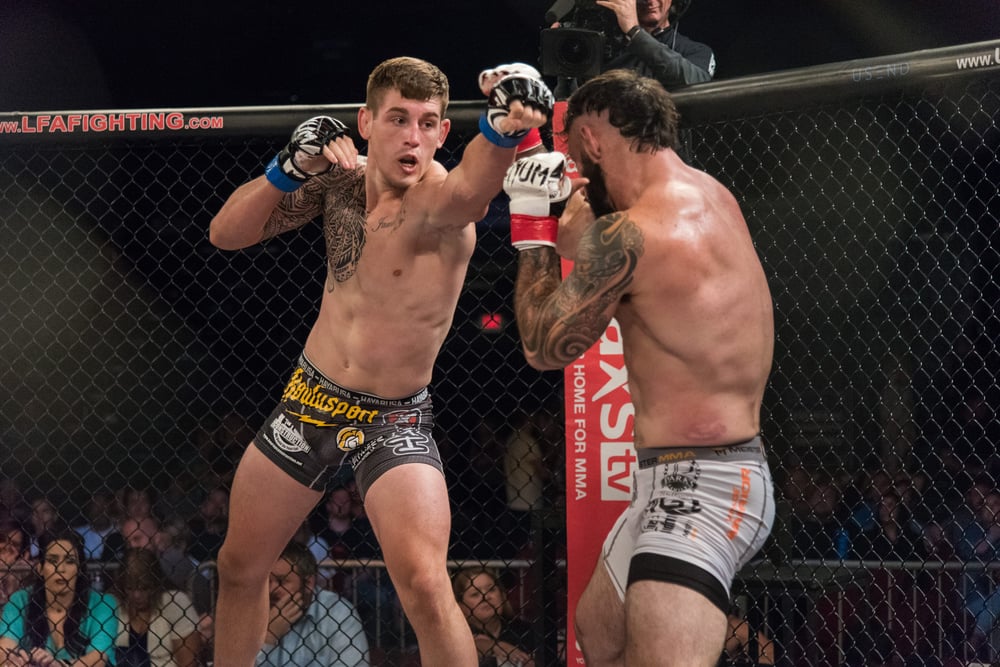
BRENDAN ALLEN - ALL IN
Brendan Cody Allen was born on December 28, 1995, in Beaufort, South Carolina, before his family settled in Slidell, Louisiana. Raised in a household driven by blue-collar grit, he was shaped by his father, a former infantryman who boxed in his youth after learning it from his own World War II veteran grandfather. Growing up alongside an older brother, Allen was a self-described runt who played football and idolized early UFC legends like Randy Couture and Chuck Liddell. Yet, despite watching the sport on weekends, his initial step onto the mats at age 13 was entirely accidental. Allen spoke about his start in MMA on The Joe Rogan Experience.
“I was playing football,” he said. “I love football. And my brother came home because he switched schools, and his friend was like, 'Hey, you want to do jiu-jitsu?’ So, we went there and looked. My dad’s like, ‘You want to try it?’ I was like, I watched the class, and I was like, ‘Dad, I want to do it.’ And he's like, ‘Okay, we'll use the trial gi.’ I was like, ‘Dad, I don't want to borrow a gi. Can you buy me one?’ My parents didn't have much money. My dad was just starting to do okay for himself at that point. He's like, ‘If I buy you this gi, I promise you for the rest of the year, you're coming 3 times a week at least.’ I was like, ‘Yes, sir.’ So started and never looked back.”
While his father initially taught him boxing fundamentals, a 15-year-old Allen sought out full-contact striking at local gyms in Louisiana and Mississippi that lacked beginner classes. In those early years, he was regularly thrown into the deep end against full-grown men who showed no mercy.
“I started striking probably like 15, maybe 15 1/2, somewhere around there,” he said. But it was all grown men back then, especially where I came up at. There's no like beginner’s classes or anything like that. And these guys are 24, 25, 26. I mean, there's been a couple of times, man. I got hit, and I thought my jaw was broken. I start crying. Smack, and it was just like, I couldn't open my mouth. They beat me up.”
By his mid-teens, Allen began training alongside future UFC stars like Dustin Poirier at Tim Credeur's gym. At just 14 or 15 years old, he was already stepping onto the mat to spar full-contact rounds with Poirier, absorbing heavy shots from elite fighters long before he ever registered a professional win.
“I'm only like 14, 15 years old at this time. And then it would start on the ground in your guard. And I go with Dustin because everyone said my jiu-jitsu was good. It was for that time, but I was still just a kid. Dude, he hit me so hard when they said, literally, when they said go, it was like, boom, right in my mouth. And I was like, I guess this is what we're doing.”
As he entered his late teens, Allen balanced his academic studies at Southeastern Louisiana University, where he earned a degree in Criminal Justice, with an undefeated 13-0 amateur run that culminated in a 2015 IMMAF World Championship in Las Vegas. He worked odd jobs and served as an amateur fight promoter, running his own local cards while fighting through severe injuries. Underneath that relentless drive lay a deep-seated mental battle with perfectionism and pre-fight anxiety, which he ultimately overcame by learning to vocalize his vulnerabilities to his team and embrace the dark pressure of live combat.
“I don't mind losing to someone that's better than me,” he said. “I can take it. I haven't found that man yet, but I know it's gonna happen. But to lose to myself, oh man, to look in the mirror, it eats me alive. I love the fight because I know he's coming to fight like he's coming to kill for sure. I love that. That nervousness brings out the best version of me because I'm nervous. Like who's not nervous of another man that's trying to hurt me. That demonic side of me coming out like, ‘Let's see. I'm ready.'”
That mental evolution carried him through a championship run in the LFA and onto the global UFC stage, where he carved out a spot among the world’s elite middleweights.
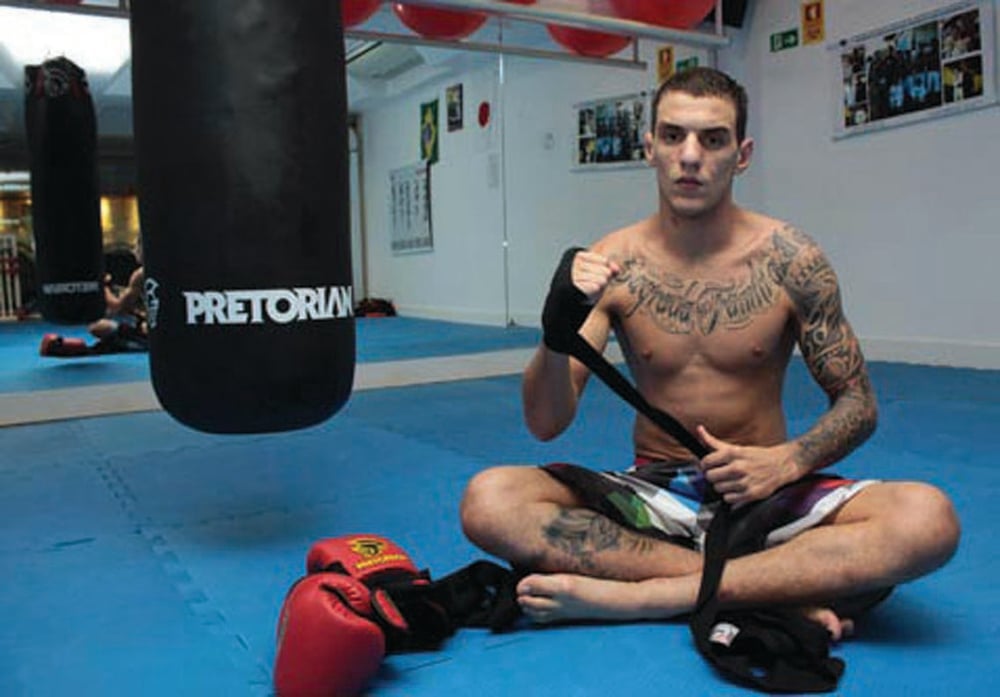
RENATO MOICANO – THE FREESTYLE GRADUATE
Renato Alves Carneiro was born on May 21, 1989, in Brasília, Brazil, and unlike plenty of fighters who appear in these pages, he is quite happy to admit that childhood treated him well. His parents had good jobs, home was stable, and there was no great hardship he needed to punch his way out of. What he did have was a competitive streak and a father who appears to have discovered fairly early that the easiest way to make young Renato do something.
“Yeah, like when I was really young, I think my father, he wants to see if I was like a coward or not,” he said on the Kibbe on Liberty podcast. “And he said, ‘Hey, why don't you cut your hair like a Mohawk, like the Mohawk style? You cannot do it.’ And I said, ‘I can do it. Let’s bet, let's bet.’ And then we went to the barbershop, and the guy did it.”
The haircut survived longer than anyone probably expected. Moicano means mohawk in Portuguese and the nickname followed him from childhood into the gym. It has become so convincing that even the UFC occasionally forgets Renato Moicano isn't actually the name on his passport. The fighting part started early too. His parents encouraged him to stay active, and what began as another childhood sport quickly scratched an itch that football or swimming probably wouldn't have reached.
“I started with judo, and after that I transitioned to jiu-jitsu,” Moicano told the UFC. “I feel like what made me start was that I always like to compete. In MMA, you can compete in every [discipline]. We don’t have limitations. I’ve always loved all martial arts, but if you can put everything together and see who’s the best, I think MMA is by far the best sport in the world.”
By 12, Moicano had already decided where all this was heading.
“I told my father, ‘I want to be a UFC fighter,’ and he laughed at me,” the Brazilian veteran told the UFC. “‘You’re never gonna do it. You don’t have it.’ I took that as a challenge, and everything I did was focused on that.”
Once again, telling Renato he couldn't do something lit a fire in him. The UFC remained a distant fantasy, but martial arts increasingly became the center of his life. His father was more enthusiastic about Renato pursuing a profession that offered qualifications, a regular income, and fewer opportunities for injury.
“I actually did two years in law school in Brazil,” he told journalist Shakiel Mahjouri. “I was going to college every day, studying and learning, but I also training to become an MMA fighter. I got to a point where I had to choose, and I put everything aside just to pursue this dream to become an MMA fighter. This was the best thing that I did in my life. Otherwise, right now I would be living a really bad life. If you don’t do what you want, life is miserable.”
Unfortunately for the Brazilian legal profession, MMA won. Moicano left university, went unbeaten through the early years of his professional career and captured the Interim Jungle Fight Featherweight Championship. Thirteen years after his father laughed at the idea of him becoming a UFC fighter, Renato made his Octagon debut and submitted Tom Niinimaki with a rear-naked choke. The kid from Brasília had made an objectively risky career choice work. With age, however, Moicano has developed a little more sympathy for the man who tried to stop him making it.
“Now that I have a son, I understand (my father) because what are the odds to make a living being a fighter?” he told the UFC. “That's very hard, but when you're young, and you want to pursue your dreams, you don't think about that.”
Moicano's childhood wasn't defined by desperation. His parents gave him stability, introduced him to sport, and tried to steer him towards an education. His father just made one tactical error along the way: he repeatedly challenged a fiercely competitive kid by telling him what he couldn't do. First came the mohawk. Then came the UFC. The young Renato won both arguments.
...