

issue 234
October 2026
Dakota Ditcheva’s latest victory came with two broken hands. Dr. Asoka Wijayawickrama explains how a fighter’s favorite weapons can become their biggest problem.
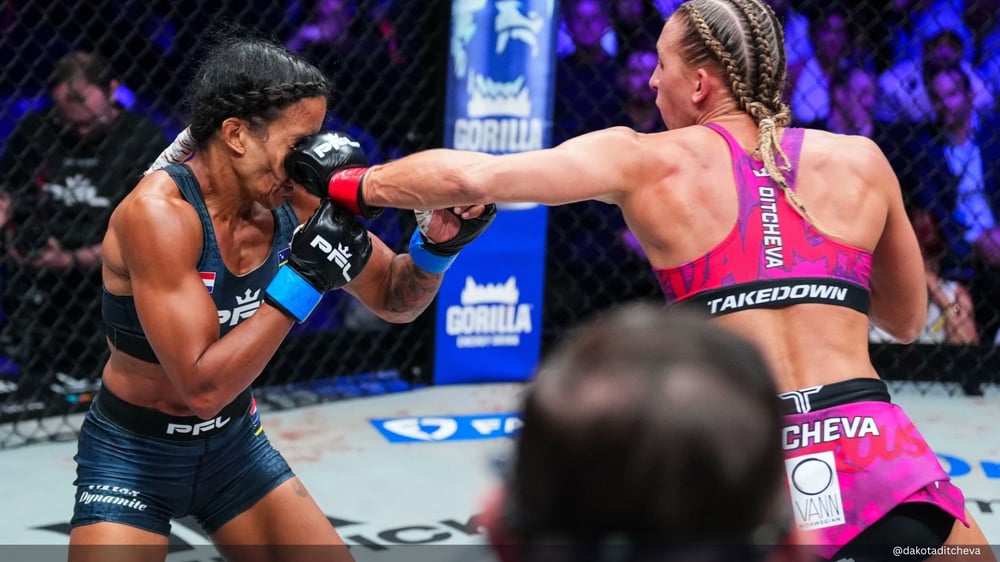
Dakota Ditcheva beat Denise Kielholtz, extended her unbeaten record to 16 fights, and celebrated by wrapping her hands after the fight, this time in bandages. Most fighters would prefer a meal out. Unfortunately, even holding a fork was now a matter for discussion with her surgeon. The British flyweight’s return at PFL New York in August 2026 should have closed a miserable chapter. Hand injuries kept her out of competition for more than a year, and she finally returned to out-strike Kielholtz 102–64 to earn a unanimous decision. But somewhere inside that impressive performance, both hands had stopped doing their thing.
“I broke my hands in the fight. I could feel it from the second I started the second round,” Ditcheva said, as reported by BBC Sport. “I didn't tell my corner. I didn't tell anybody. I didn't show it this time, and I didn't actually tell anybody until I got out of the cage.”
Winning had concealed the damage from everyone except the person carrying it. Afterward, Ditcheva described another week of tears and the prospect of more time away. For all the attention MMA gives to the heads receiving punches, the hands delivering them are surprisingly fragile. Small bones, busy joints and daintily positioned tendons must absorb forces they would probably rather avoid. According to veteran ringside doctor, Brazilian jiu-jitsu black belt and Safe MMA medical adviser Dr Asoka Wijayawickrama, those injuries can leave a fighter with far more than a sore fist. They can affect grip, movement, and the ability to keep earning a living.
THE BREAK BEHIND THE KNUCKLE
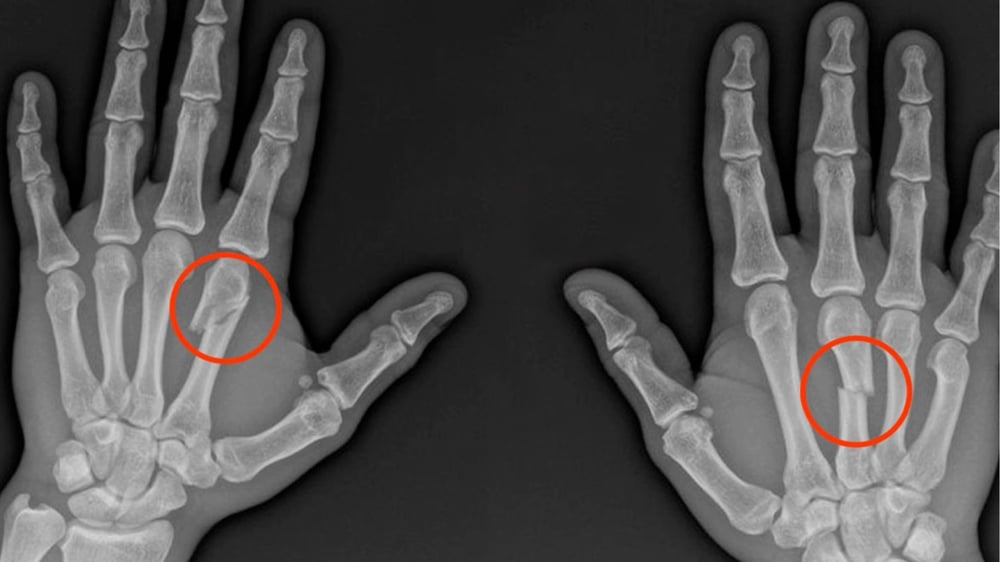
The bones behind your knuckles account for a surprisingly large share of broken hands. Metacarpal fractures make up 40% of all hand fractures, while the classic boxer’s fracture accounts for only 10%. These are general clinical figures rather than MMA statistics, but the pinky finger clearly contributes disproportionately to the waiting room.
“One of the most common hand injuries fighters will encounter is a fractured metacarpal, what is known as the ‘boxer’s fracture’,” explains Dr Wijayawickrama. “The metacarpals are the bones that connect your wrist bones to your finger.”
Punching transfers force through the clenched fist into these bones. Land awkwardly against something hard enough, and the hand delivering the punishment can end up needing far more attention than the head receiving it. Dan Hooker demonstrated that in February 2025. During sparring, he landed a punch to a training partner’s skull to earn a fractured hand, forcing him out of his scheduled UFC 313 fight with Justin Gaethje. Hooker’s preferred treatment appeared to involve fighting anyway.
“So yeah, I obviously still would fight,” he told Sky Sports New Zealand in true Hooker fashion.
A useful attitude when the obstacle is nerves. A less convincing medical strategy when the obstacle is a broken bone. His account shows how quickly a routine training session can remove a fighter from a major card.
“If you get intense pain in these areas after an injury, swelling, or are unable to bend your fingers, these are signs that you need to get yourself checked out by a health professional,” says Dr Wijayawickrama.
The assessment needs to establish where the bone has broken, whether the fragments have moved, and whether the finger has become rotated or unstable. Rotation matters because the affected finger can cross over its neighbor when making a fist. A hand that cannot close properly is a fairly substantial disadvantage in a profession built around closing it with intent.
“Most of these injuries will heal with a period of immobilization in some form of splint,” explains Dr Wijayawickrama.
Some fractures will need surgery, particularly when alignment or stability cannot be maintained without it. Treatment follows the injury’s characteristics, rather than how urgently the fighter wants to get on the earn.
“It is important to get your fingers moving quite quickly so the risk of the numerous tendons being stuck to the injury is less,” says Dr Wijayawickrama.
That means movement should be guided by the treating team, not an experimental round on the heavy bag. The review notes that most fifth-metacarpal fractures heal uneventfully within eight weeks, although complete recovery can take months. A hand ready to hold a coffee is not automatically ready to introduce itself to another forehead. For a fighter, the aim is a hand that can move, grip, and eventually tolerate the demands of competition.
WHEN THE DAMAGE BECOMES PERMANENT
A broken hand gives a fighter an obvious problem to deal with. Eventually, though, the hand may stop warming up and become uncooperative.
“Some long-term consequences of hand injuries include osteoarthritis of the metacarpophalangeal joints, the knuckles of the hands, from constant microtrauma over the years,” explains Dr Wijayawickrama.
Those joints connect the metacarpals to the fingers and let the hand close around everything from an opponent’s wrist to a toothbrush. Repeated damage can make that everyday workload increasingly uncomfortable.
“This can result in pain and reduced grip strength of the knuckles and even bony deformity, osteophytes,” he says. “Think of them as bony growths which the body produces to try and protect the underlying joint.”
Unfortunately, the repair work does not always respect the body's original blueprints. Extra bone around an already damaged joint can restrict the space available for movement. For a fighter, that can interfere with securing grips, controlling wrists, and forming the fist they have spent years learning to throw.
“Enlarged osteophytic and arthritic changes can stop you from making a closed fist and lead to chronic pain,” explains Dr Wijayawickrama.
That is a rather substantial career complication hiding beneath something that started as an aching knuckle. An athlete may adjust by avoiding certain grips or changing how they punch, allowing them to keep training while the hand’s limitations quietly become part of their technique. The concern is not that every sore knuckle is destined for arthritis. It is that persistent pain, declining grip, and difficulty closing the hand deserve attention. Fighters are exceptionally good at working around discomfort. Sometimes they get so good at it that nobody notices how much function has already disappeared.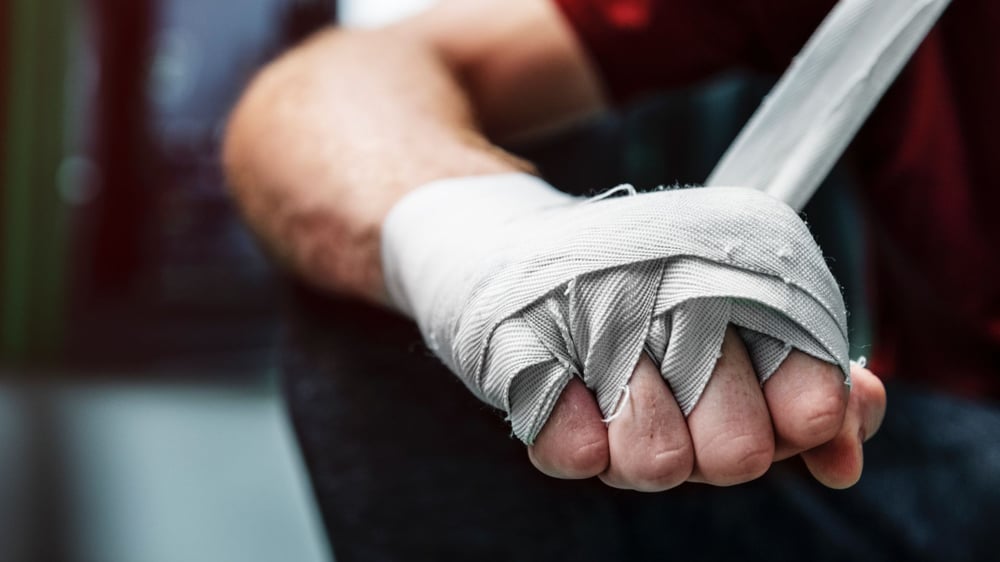
KEEP YOUR HANDS IN BUSINESS
For a fighter, the prognosis about their most precious weapons isn’t all doom and gloom. You just have to give them the TLC they deserve.
“Some of the best ways to protect your hands start with learning the correct technique of punching from your coaches,” says Dr Wijayawickrama.
That makes prevention a coaching job as well as a medical one. Have your coach check your wrist alignment on impact and your wrapping technique. Inspect your gloves too because compressed padding and a loose fit deserve attention before the next hard session.
“Make sure the inside of your glove is not too big so your hand moves around in it,” he advises.
For conditioning, a hand therapist can help you choose exercises that build grip, finger, and wrist strength without aggravating an existing injury. Rice-bucket drills provide resistance as you open, close, and rotate your hands, but there’s not enough evidence to support them as protection against fractures. Treat them as an optional conditioning tool, with resistance suited to your recovery stage, rather than a way to turn your knuckles into concrete. To protect them from the inside out, Asoka also recommends adequate calcium and vitamin D to support bone health, and avoiding smoking, which delays healing. We hope you're reading this, Carlos Prates. Routine annual scans are not an established prevention strategy for otherwise symptom-free hands. A clinician should decide whether imaging is needed based on an examination and injury history. The useful habit is checking your equipment and managing how much punishment your hands take in training. Ditcheva has already shown she can win while they are broken. But for fighters like her, the better outcome is staying available for the next fight.
...