

issue 234
October 2026
While billions pour into Ukraine's war effort, its scientists are investigating what elite MMA training can teach soldiers about surviving physical stress.
Since Russia invaded Ukraine in February 2022, Ukraine has received more than €246 billion ($265 billion) in international military, financial, and humanitarian aid. That's an extraordinary amount of Uncle Sam’s scratch. But what does that have to do with MMA? Well, if you're a keen MMA scholar, there's something rather strange happening away from the battlefield. Search for Ukrainian-affiliated MMA research published between 2022 and 2026, and you'll find an estimated 120 to 180 scientific publications. As far as MMA-specific sports science, that number is unprecedented. You might argue that’s a remarkable amount coming from a country that you’d imagine has more pressing matters to deal with. We'll leave the theories as to why to the conspiracy theorists, although wartime is often boom time for many industries. And MMA research appears to be enjoying a Ukrainian purple. Then again, when you're defending your country, knowing how to defend yourself probably moves up the priority list. Ukraine already has an impressive fighting pedigree, producing UFC veterans like Nikita Krylov and former Bellator welterweight champion Yaroslav Amosov, who put his fighting career on hold to help defend his homeland. As the latest in this artillery of new research, Ukrainian scientists are investigating whether the conditioning that makes elite MMA fighters so hard to break can help people fighting a war. Possibly the most intriguing mid-2026 study put 60 serving military personnel through three months of training modeled on elite MMA fighters. The question is whether three months of training like a pro MMA fighter can prepare a soldier for the demands of war, or whether the biggest battle is teaching the body to cope with stress before the fighting even begins.
THE FIGHTER'S ADVANTAGE
You'd think anyone whose world depends on defending a country under attack would already have a decent handle on stress. But there’s plenty to learn from people who thrive in stressful situations: MMA fighters. The Ukrainian researchers recruited 60 serving military personnel from three very different branches of the armed forces: special operations units, the State Border Guard Service and the Air Force. For comparison, they brought in 20 elite MMA fighters, most of whom had earned the Ukrainian Master of Sport qualification. The soldiers were young, fit, and presumably no strangers to physical discomfort. Yet when researchers examined how their bodies responded to exercise, the differences were enormous. The scientists wanted to know how well each group's nervous system handled physical stress. To do that, they measured heart rate variability (HRV). For perspective, your heart might beat 60 times a minute, but those beats aren't perfectly spaced. The tiny timing differences offer clues about how your body responds to exercise, fatigue, and recovery. Generally, a healthy, adaptable nervous system can adjust quickly when demands change. Think of it as your body's ability to hit the accelerator when things get difficult, then hit the brakes when the hard work is over. Joel Jamieson, a world-renowned strength and conditioning coach to fighters like Demetrious Johnson and author of Ultimate MMA Conditioning, is cautious about putting too much faith in their methods.
“There was a paper on HRV in normal military soldiers compared to elite soldiers done a long time ago, but it was much more comprehensive and done better than this,” he says. “It essentially showed that the elite soldiers were better at turning on the stress response when they needed it to be on and turned it off when they didn’t. That’s not surprising, because that’s key to performing and recovering in stressful conditions, but I wouldn’t expect an average Ukrainian soldier to have the fitness of an MMA athlete or an elite US operator.”
FIGHT MORE STRESS LESS
The first surprise came before any exercise. Using a measurement from the HRV test called the LF/HF ratio, researchers found that the MMA fighters recorded just 0.73 at rest, compared with 1.25 for special operations soldiers, 2.97 for border guards and 3.71 for Air Force personnel. That meant the Air Force group's reading was more than five times higher than the fighters'. Nobody had thrown a punch, fired a weapon, or even worked up a sweat. Yet their nervous systems were producing remarkably different readings. The researchers interpreted those differences as evidence that the fighters were better adapted to physical demands. However, the LF/HF ratio is only an indirect measure of nervous system activity, not a simple stress score. A reading five times higher doesn't mean someone is five times more stressed. What mattered was how differently the groups responded when the researchers put them to work.
“To be honest, LF/HF isn’t worthless, but it’s next to it without a bunch of other HRV data,” says Jamieson. “I have no idea why they would choose that as the metric to use. They used to think LF represented the sympathetic side, but a lot of research has shown that’s not really the case, so the ratio doesn’t really mean what they are saying it means. The ratio itself doesn’t tell you anything about which component changed either, so it’s just not a very good way to understand what happened.”
ADDING IN EXERCISE
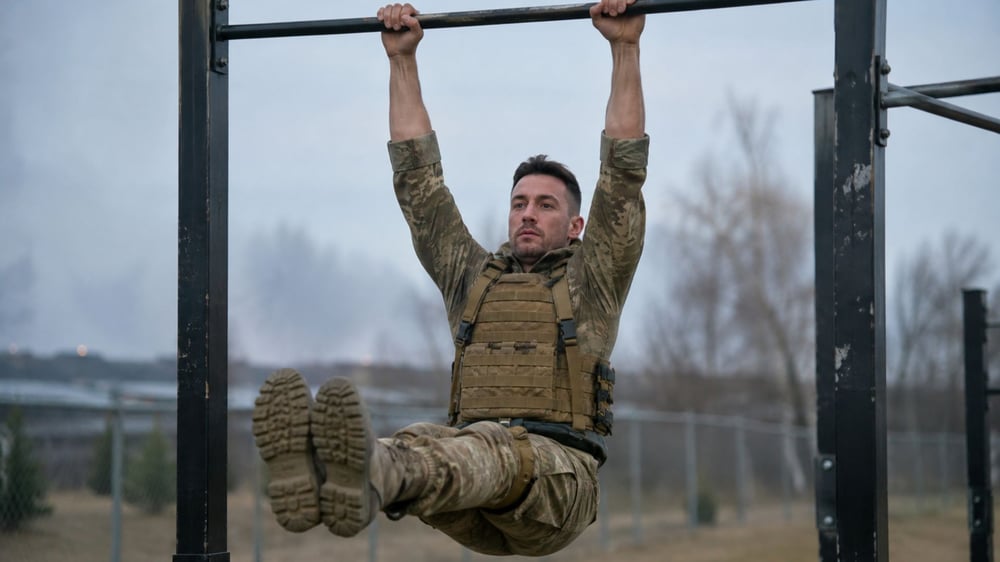
The researchers then made everyone uncomfortable with two exercises. First, participants hung from a pull-up bar with their legs held straight out in front of them, parallel to the floor. If you've ever attempted this, you'll know your stomach muscles start negotiating surrender terms fairly quickly. Next came push-ups, but not the sort you knock out in a hurry to impress someone. Each repetition involved two seconds lowering and four seconds pushing back up. Participants alternated between the exercises for three minutes, continuing until fatigue began to eat away at their technique. It was a short, nasty test designed to see how their bodies responded when the muscles started complaining. Among the MMA fighters, the LF/HF ratio actually dropped by 15.1% after the test. The soldiers went the other way. Special operations personnel recorded a 79.2% increase, border guards 17.8%, and Air Force personnel a whopping 97%. The latter group's reading almost doubled, jumping from 3.71 to 7.31. In simple terms, the fighters' nervous systems appeared to handle this physical challenge with far less disruption to their measured heart-rate patterns.
CAN THEY TRAIN IT?
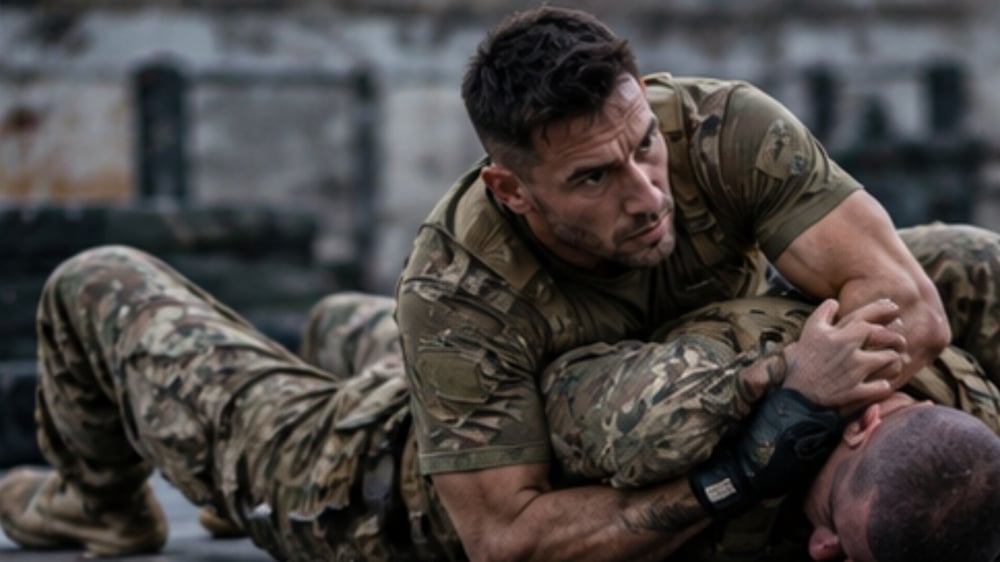
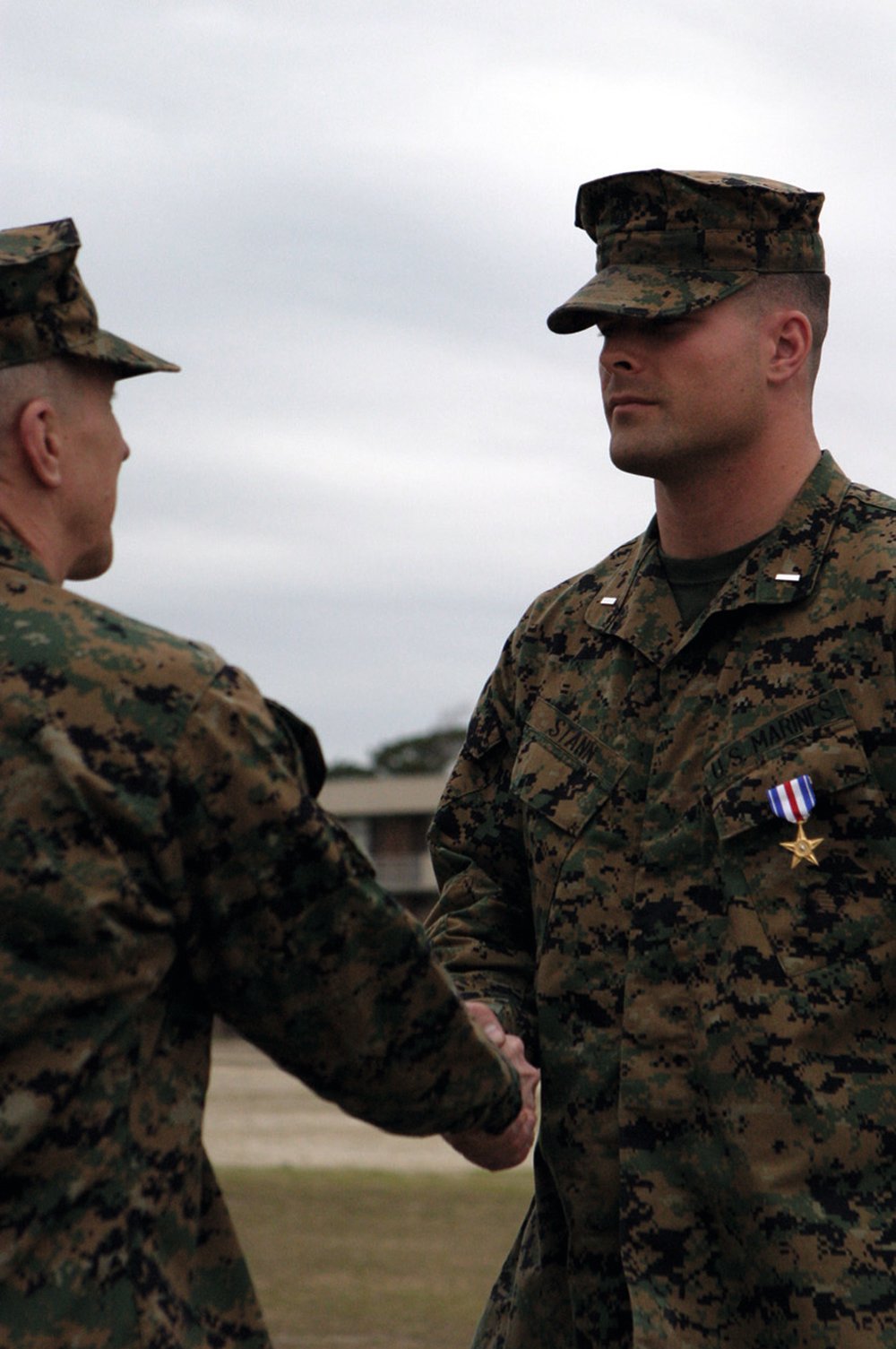
Of course, that doesn't mean a professional fighter would cope better with the realities of war than a trained soldier. A three-minute exercise test and being under fire are two very different experiences. But the researchers had found something worth investigating. The MMA athletes showed a physiological response the military groups didn't. So, they decided to borrow the fighters' training program. For the next three months, all four groups followed a conditioning system based on elite MMA training methods. The first month focused on high-intensity strength work to build the explosive power needed to throw a punch or finish a takedown. The second month shifted to moderate-intensity exercises targeting individual muscle groups and stability muscles. By the third month, intensity dropped further, with a mix of compound and isolation exercises designed to continue building strength and muscular endurance. Throughout the program, participants also worked on MMA techniques, including strikes, throws, and submissions. It wasn't a case of giving soldiers boxing gloves and telling them to sort things out. The researchers combined combat-sport movements with carefully organized strength training, aiming to improve how the body produced force, resisted fatigue, and adapted to repeated physical demands. Former UFC middleweight contender and US Marine captain Brian Stann knows a thing or two about both professions. Years ago he told us that he believes MMA has a place in military training regardless of whether someone's job involves frontline combat.
“MMA helps maintain a martial culture within the military despite a serviceman or woman's job specialty,” he said. “This allows service members whose primary job is not combat arms - but rather support and logistics - to also train their warrior skills daily.”
In other words, you don't have to kick down doors for a living to benefit from knowing what to do when someone tries to kick yours down. And for military personnel whose daily duties don't involve hand-to-hand combat, MMA offers a way to keep those skills sharp.
FIGHTERS INTO MMA
After 90 days, the Ukrainian researchers put everyone through the same tests. This time, the numbers told a different story. The special operations group's resting LF/HF ratio had fallen by 16%. Among the border guards, it dropped by 38.7%, while Air Force personnel recorded a 37% reduction. Those are sizeable changes in just three months, especially since the participants were already serving military personnel rather than people whose previous exercise routine involved walking to the fridge. Even more interesting was what happened when they repeated the unpleasant three-minute exercise test. Initially, the special operations soldiers' LF/HF ratio had jumped by 79.2%. After the training program, that increase was down to 33.3%. The Air Force personnel, who had originally recorded a 97% increase, were now at 55.6%. The soldiers' bodies still responded to the physical demands, but changes in their heart-rate patterns were far less dramatic. Meanwhile, the elite MMA fighters barely moved the needle. Their resting measurements showed no statistically significant changes after three months. The researchers suggested that this was because their bodies were already accustomed to the training. For the fighters, it was essentially another 90 days at the office, albeit an office where colleagues occasionally try to choke you.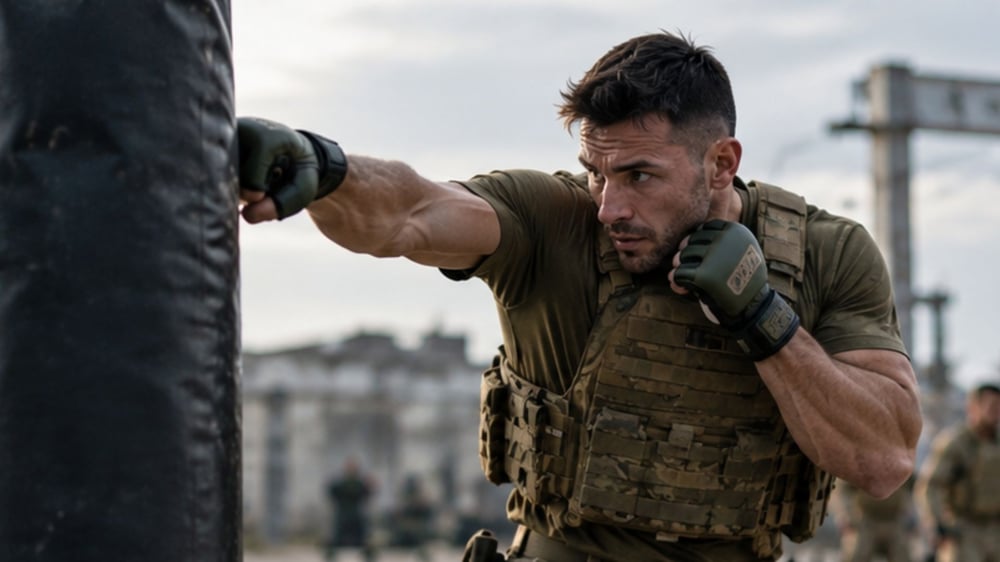
THE OUTLIERS
The Ukrainian study might not prove that MMA training makes better soldiers, especially given independent experts like Jamieson who have reservations about the science, but there's still something worth taking home. Being strong is one thing. Being able to produce that strength repeatedly, recover, and go again is quite another.
“When service members are constantly training, shooting, working out, and doing martial arts, it breeds the combat mindset they need to serve overseas for long periods of time,” Stann once told us. “I served with several Marines that had fights prior to entering the military, so both the military and MMA are a calling.”
Stann's comments allude to the USA's military being ahead of this more than 10 years ago when he told this to Fighters Only. And as for Ukraine's extraordinary appetite for MMA research, don't expect the scientific papers to stop arriving anytime soon. With so many researchers investigating what makes fighters tick, we can probably expect plenty more findings from a country that's already given MMA some formidable talent. Some studies will be more convincing than others, but there's no shortage of interesting questions being asked. For a nation with rather more pressing matters on its hands, Ukraine is certainly giving the rest of the MMA world plenty of homework.
...