

issue 234
October 2026
Fighters prepare surrounded by people, then carry a result that belongs only to them. What happens when that weight follows them home?
You can have a team counting on you, people looking up to you, and still feel like you’re on your own. Few exemplify this feeling better than Dustin Poirier, who alluded to it in 2024 as he prepared to face Islam Makhachev for the title.
“I went through a really down time where I was depressed and not in a good spot at all,” he told CBS Sports when speaking about his loss to Justin Gaethje. “We feel like it's a weakness to admit we're going through something or to seek help because things don't feel right between our ears. It's not [a weakness]. It really isn't.”
He failed in that challenge for the title, but his words carried fresh weight in June 2026 after his retirement and an arrest for public drunkenness at an Atlanta airport. Retirement gives this story an obvious turning point. The next opponent disappears. So does the date around which everything else is arranged. Yet Poirier had already described depression while he was still competing at the highest level. His difficulties didn’t begin when he left MMA. That matters in a sport where almost all the preparation happens as a team, yet so much judgment lands on one person. Coaches shape the game plan. Training partners give their time, bodies, and knowledge. Family members live around the demands of camp. Then one fighter walks into the arena, and the result gets placed next to one name. It’s lonely at the top, and few know it better than MMA fighters. A new study published in October 2026 may have just given us a starting point for examining that responsibility. From the pressure before the opening bell to the quiet after the final one, we explore how loneliness reaches into a fighter’s life and what it takes to build defences against it.
CARRYING THE RESULT ALONE
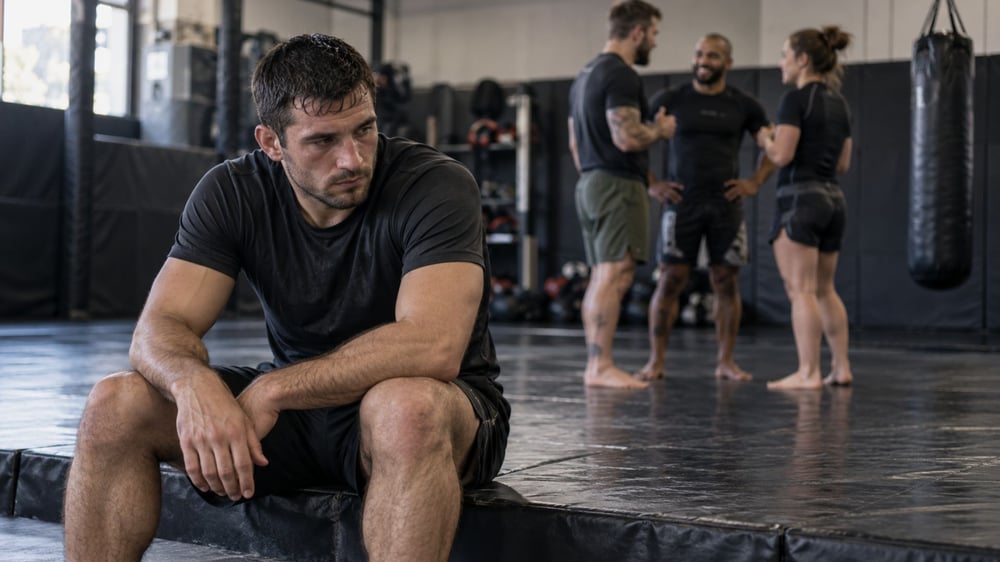
Teams share collective defeats, but fighters have them added to their permanent records. That small difference may explain a finding from recent research on the psychological state and physical performance of 85 sport-science students. They completed questionnaires that covered their anxiety, stress, sleep, and awareness of their body’s internal signals. They also performed tests of grip strength, jumping, flexibility, and balance. To compare sports, researchers examined 44 team-sport players and 32 individual-sport participants, such as MMA. The individual-sport group averaged 48.94 points for state anxiety, compared with 39.20 in the team-sport group. That is a difference of almost 10 points. The researchers suggest that individual responsibility for results and differences in immediate social support could help explain the gap. It gives us a reason to investigate how supported fighters feel, rather than proof that competing alone makes them lonely. For coaches, that means looking beyond the fact that a fighter is turning up every day. It doesn’t necessarily tell you how they’re coping. They suggest that making room for a private, honest conversation is a practical starting point, although this study didn’t test whether those conversations reduce anxiety. Ned Dickeson, a registered clinical psychologist with roughly 20 years of experience in mental health who works with combat sports athletes across MMA, boxing, Muay Thai, BJJ, and Judo, believes results can weigh heavily on a fighter.
“Although a loss occurs specifically to the fighter, the consequences can be wider-reaching,” he says. “The financial impact on family and coaches, the reputation of the fighter’s gym, the disappointment of fans.”
“These aren’t illusions and, in my opinion, fighting is one of the most psychologically demanding professions possible. With that said, fighters, like anyone else who experiences anxiety, also tend to exaggerate and catastrophize the significance of their involvements. Following a lost fight, the world continues to spin, for both the individual and for all those around them.”
SURROUNDED BUT STILL ON YOUR OWN
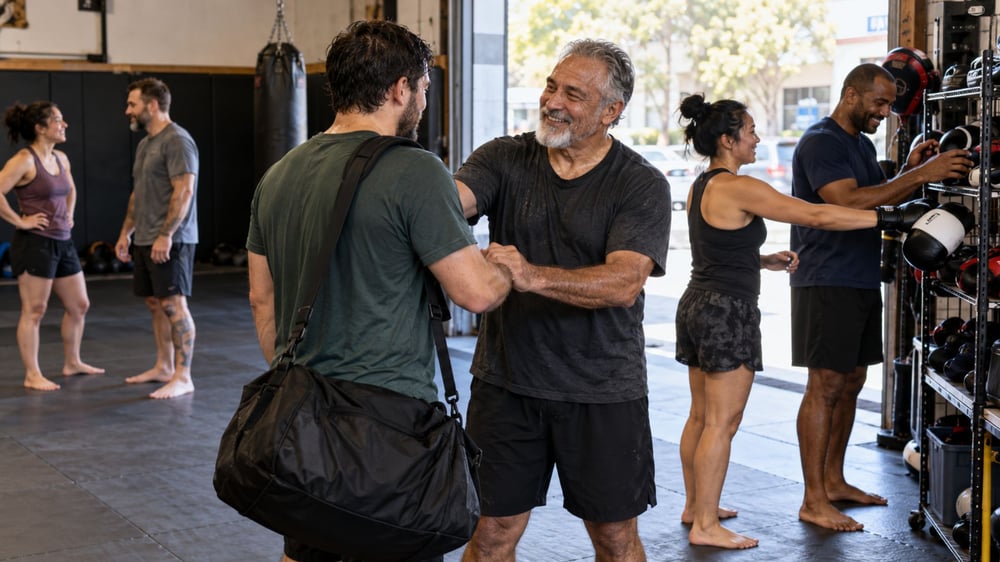
“People are around me but not with me.” That feeling stood out as the link between loneliness and anxiety in some 2023 research. It was linked to nervousness, excessive worry, and fear that something awful might happen. Feeling isolated had the strongest individual connection with excessive worry, although the links between loneliness and anxiety symptoms were small because it was more strongly connected to depression. A separate 2021 study showed how long that association could last. Feeling lonely was linked to more severe depressive symptoms, like the ones Poirier mentioned.
“Typically, if we’ve got people around us but still feel lonely, it’s due to a sense that others don’t understand what we’re going through,” says Dickeson. “Perhaps it’s not possible for them to understand, or perhaps we don’t want them to. A fighter in camp will probably be receiving constant words of optimism and confidence from those around them, which they might have to nod politely to while privately being full of doubt and anxiety. This mismatch between the fighter’s exterior and their internal experience can result in a sense of loneliness, even whilst being surrounded by supporters.”
This puts substance behind that often-talked-about feeling that you can have people or a training team around you and still feel alone. Neither study focused specifically on MMA fighters, but fighters are people too, and they give us a reason to look beyond how busy a fighter’s gym is and consider how connected they feel to the people inside it. A full training schedule can account for someone’s time without telling us much about what’s going on in their head. And if you consider that loneliness can steal 6 years of good health from your person, it is worth taking seriously.
MORE THAN SOMEWHERE TO TRAIN
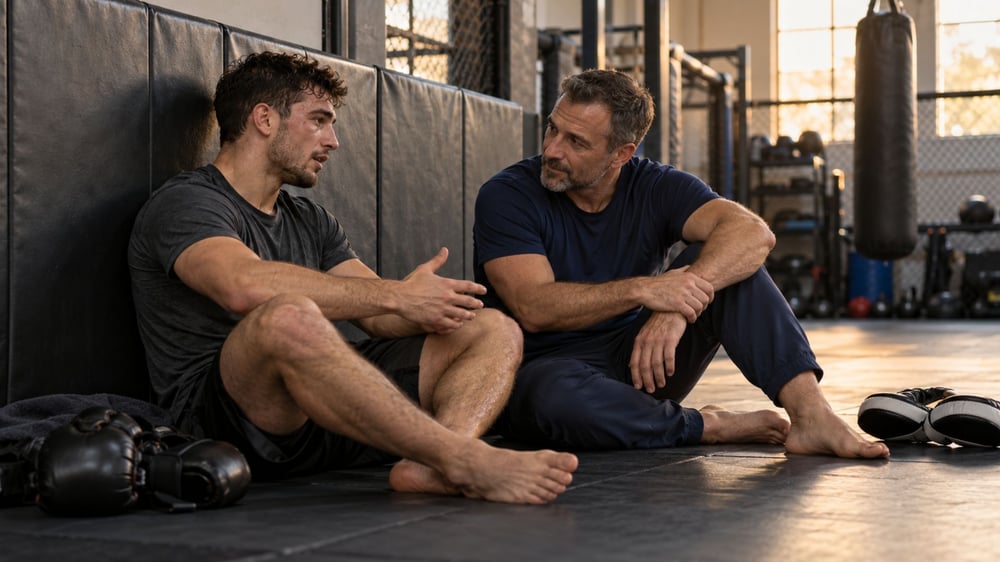
An MMA gym can give you something that never appears on a fight record: a place where you belong. A 2023 review of 29 studies linked sports participation with better mental health, stronger social connections and a greater sense of belonging. Team sports generally had the edge, but individual sports also offered benefits, and combat sports may be the best at beating loneliness. One part of that review included a five-month study of 113 beginners in MMA and Brazilian jiu-jitsu. Both groups improved in self-control and behavior intended to help others. You can learn to handle yourself and look out for someone else on the same mats. Sure, it wasn’t a direct finding about loneliness, and the review cannot promise that training will fix depression or anxiety. It does, however, give us a reason to value what happens around the rounds. Someone notices you’ve been missing. Someone stays for a chat. You’re injured, have nothing booked, and still get asked to come along. You don’t need a fight coming up to feel you count, and that’s the beauty of MMA. Dickeson believes coaches can help protect that connection long before a fighter starts withdrawing.
“Ideally, a coach makes proactive efforts to support team cohesion and fighter mental health,” he says. “If a rupture happens, it will be very hard for a coach to respond if they don’t already have decent rapport with their team members. One proactive thing a coach can do is talk to their fighter about a plan for what everyone will and won’t do if the fight is lost. Almost nobody does this, probably due to a superstition that this could jinx the fight, or undermine the fighter’s winning mentality.”
His reasoning is practical. Fighters already worry about losing, and making the subject taboo can leave them carrying those fears alone. Agreeing beforehand to delay the post-fight analysis until everyone has cooled down could save relationships, while reminding the fighter that the team shares some responsibility for navigating a defeat.
FIGHTING REJECTION
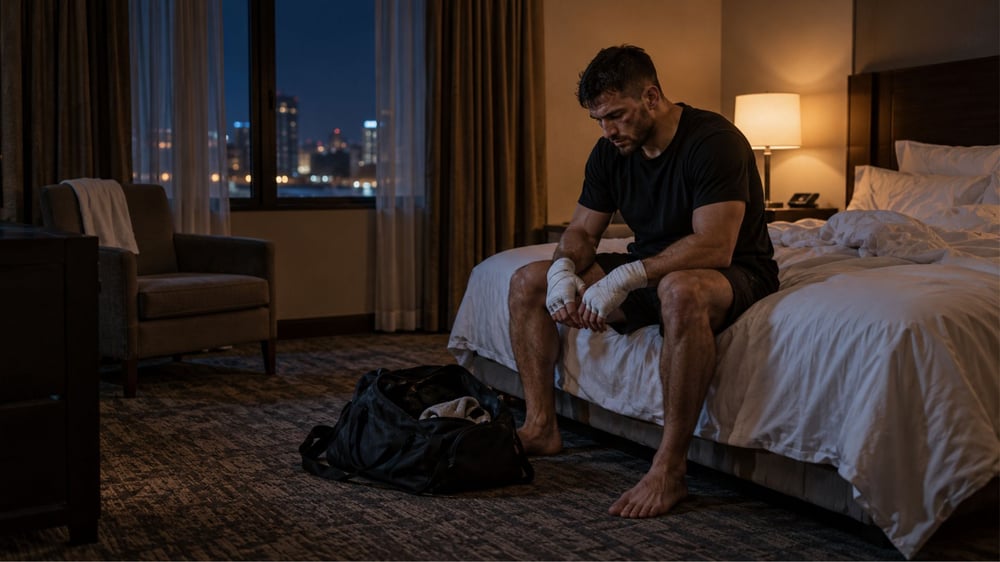
Loneliness can leave you on guard for rejection. A quiet teammate seems unfriendly. You start assuming people don’t want you around, then pull back before they get the chance to prove otherwise. That withdrawal can leave you feeling even more alone. A 2011 analysis of loneliness interventions found that doing things that helped offset negative patterns of thinking about social relationships produced the greatest reductions in loneliness. Cognitive behavioral therapy can help people question automatic interpretations, weigh the evidence, and consider other explanations. Your training partner’s silence might mean they’ve had a difficult day, not that they have a problem with you. That gives a good MMA gym something useful to build on: repeated opportunities to experience trust, cooperation, and being welcomed back. It isn’t a substitute for therapy, and the study didn’t test MMA. A good MMA gym offers repeated opportunities to build trust where someone takes care of you in sparring, respects your tap, and helps you improve. Those everyday interactions may challenge that lonely feeling that nobody cares. Sometimes connection starts with giving someone the chance to show you they’re pumped that you turned up.
ONE FIGHTER DOESN’T MEAN ONE PERSON
The top of MMA can look like a very public place to feel alone. Your name is on the poster, your performance is everyone’s business, and thousands of strangers have decided what you should do next. Being recognized everywhere isn’t the same as feeling understood anywhere. Further down MMA’s sporting hierarchy, though, most fighters strolling into an MMA gym aren’t defending a ranking. They fit training around work, family, and whatever else the week throws at them. For them, an individual sport can feel surprisingly collective. Research consistently shows how almost all forms of martial arts foster personal growth, confidence, and resilience. They found this largely because gyms foster inclusivity, mutual respect, and belonging. If those aren’t the antidotes to loneliness, then what is? But Dickeson cautions against manufacturing that sense of belonging through forced team bonding.
“Beyond setting a basic example of manners and respect, I don’t think an MMA training facility should try and prescriptively create a sense of team unity and belonging,” he says. “These things have to happen organically, and the uniquely intimate nature of sparring will typically allow for this. That said, while coaches can’t necessarily shape a specific culture, they can work to prevent problematic norms from developing in their gym. This might include making a clear distinction between cooperative and competitive sparring and being able to make firm decisions on disinviting members who don’t conduct themselves in a pro-social way.”
The science doesn’t exactly let us declare MMA the best individual sport for beating loneliness, perhaps because those relationships won’t grow in every training facility. They need a culture that makes people feel welcome, including when they’re injured, struggling, or simply not very good yet. Belonging shouldn’t be another thing you have to earn by performing. But the sport can offer something beyond fitness and fighting skills: a regular place to be expected, included, and missed when you don’t show up. For someone feeling alone and disconnected, that matters. You might arrive wanting to learn how to handle yourself. Finding people who will look out for you could be the bigger result.
...