

issue 234
October 2026
Ray Klerck unpacks the new research that explores the surprising adaptations and hidden dangers of one of MMA’s most familiar submissions
Last month, Brendan Allen fought Christian Leroy Duncan, and for almost 25 minutes, it was plenty of the stand-up banging we all cheer for. Duncan outlanded Allen 46-17 in significant strikes and seemed to turn the fight around; then came the closer he wasn’t expecting. At 2:46 of the fifth round, Allen secured a rear-naked choke and forced Duncan to submit. And very quickly at that. After nearly five rounds of punches, kicks, and wrestling, a pair of stealthily moving arms wrapped around the neck settled the argument. It’s a sight we all know, and somewhere in a gym the following Monday, hundreds of fighters practice the same technique on their training partners. The peculiar thing is that a clean choke can render someone unconscious in seconds, yet grapplers routinely expose themselves to these techniques, sometimes several times in a single session. So, what exactly happens inside the skull when the lights start going out? And when the pressure comes off, and everything appears to return to normal, is the brain remarkably as unaffected as we’d like to believe? After the bout, Duncan stood next to Allen and raised his opponent’s hand, not looking at all worse for wear. A growing body of research is beginning to explore those questions. Some of the findings are surprisingly reassuring. Others might make you reconsider how long you're willing to defend that rear-naked choke in training before tapping.
THE TEN-SECOND SHUTDOWN
Christian Leroy Duncan was smart enough to tap when Brendan Allen locked in that choke. It took him roughly 15 seconds from when Allen fully locked it in. Had he gone much longer, he might have woken up wondering why everyone was standing over him. According to a July 2026 systematic review, a well-applied choke can leave someone unconscious in less than ten seconds. After examining 25 studies on chokes in MMA and grappling, the researchers explain that most sporting chokes work by interfering with blood flow rather than simply cutting off someone’s air supply. Pressure on the carotid arteries reduces blood flow to the brain, while compressing the jugular veins makes it harder for blood to return. When the pressure of blood reaching the brain drops too low, consciousness can disappear faster than your training partner can say, “Bro, you should’ve tapped.” Curiously, some MMA academics point to a phenomenon called body callusing, which speaks to how fighters harden themselves to withstand the rigors of the sport. It might be thicker shin bones or knuckles that can withstand punishment normal hands couldn’t. And it may explain the discrepancy between Duncan tapping after 15 seconds versus the research saying that you’ll be out cold after you cross that 10-second threshold.

GRAPPLING IMMUNITY
The science doesn’t necessarily support this, but it's a maybe. Wes Murch, a BJJ Black belt, 14-8 pro MMA vet, TUF 8 competitor, and head coach at Olympians MMA, isn’t convinced the brain can develop the same resilience as your shins.
“Physiologically, I don't think fighters can develop a tolerance to being choked. Chokes are a bit misleading because you are not actually being choked but strangled, and the ability to stay calm and control the blood flow to the brain is a key factor.”
No human is biologically immune to being choked out, even if it looks that way. Volkanovski endured a deep choke from Brian Ortega at UFC 266, but he slightly elevated his hips to relieve the pressure and wait for Ortega’s arms to fatigue. Get choked enough times, and it might seem like you build up a tolerance, but you’re probably making micro-adjustments to fight it off suggests Murch.
“Not panicking and utilizing the smallest of gaps in order to allow blood flow,” says Murch. “Experienced grapplers are also very good at recognizing the threat before it becomes an actual choke/strangle. This gives them the ability to shut it down quicker and prevent a fight-finishing technique.”
Interestingly, going out this way is physiologically closer to fainting than being knocked out by a punch. And that distinction raises a fascinating question: could the brain actually respond differently to being choked than it does to being punched?
THE BRAIN THAT FIGHTS BACK
Here's where things get thought-provoking for anyone who's spent years being strangled by their friends. The same review highlights a study that found elite Brazilian jiu-jitsu athletes had approximately 29% greater blood flow to their brains at rest than a matched control group. The grapplers averaged 741 milliliters per minute, compared with 573 milliliters in the controls. That's a 29.3% difference, but it doesn’t necessarily mean they're smarter, though Charles Olivera may disagree. Over the long term, the researchers reported that the grapplers maintained normal performance on the cognitive tests, despite spending hours being choked throughout their careers. One possible explanation is something called ischemic preconditioning. It's the idea that brief, repeated periods of restricted blood supply might trigger protective responses, potentially making tissues more resilient. This brings us back to the body-callusing idea, which might apply to the brain. That said, you'll struggle to find a neurologist willing to recommend three rounds of rear-naked chokes as a wellness routine. The science only observed these differences. It didn't prove that choking caused them. The athletes' intensive training could also help explain their unusual cerebral circulation, and better resting blood flow doesn't automatically mean better protection against injury. That said, there is a chance elite grapplers' brains may adapt because the host body is too stubborn to stop paying membership to get repeatedly murdered.
THE STROKE NOBODY SAW COMING
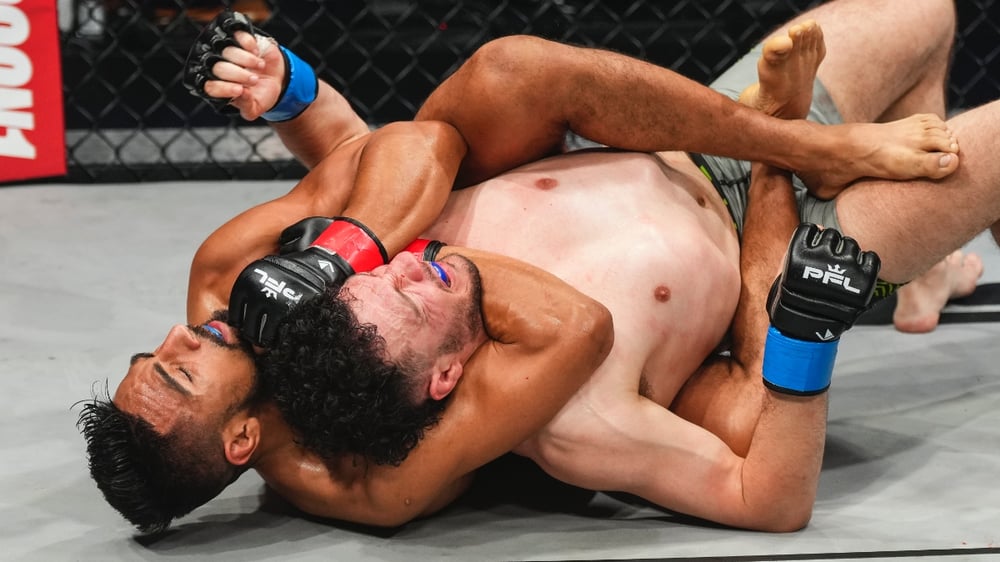
Before we start advertising rear-naked chokes as a brain-boosting nootropic, there's a rather unpleasant catch. The same review that raises the possibility of neurological adaptations also documents cases in which grappling chokes have caused strokes. The problem is something called a cervical artery dissection. Essentially, pressure or twisting forces around the neck can damage the inner lining of an artery supplying blood to the brain. Blood can then enter the artery wall, potentially narrowing the vessel or forming a clot that travels to the brain. Neither outcome is particularly compatible with a productive Tuesday evening at jiu-jitsu. Documented cases involve these kinds of injuries from chokes that sound like skateboarding tricks, such as loop chokes, north-south chokes, bow-and-arrow chokes, and clock chokes. Serious injuries like these can tap in even when a technique doesn't seem especially forceful. So you don't necessarily need a heavyweight squeezing your neck like he's trying to get the last bit of toothpaste out of the tube. Unsettlingly, the consequences aren't always immediate. A fighter might finish training, shower, drive home, and assume everything is fine, only for symptoms to show up later.
THE CHOKE HANGOVER
Everyone knows the feeling of waking up after a hard sparring session and discovering training left you with a collection of aches you didn't order. That said, the new research says that complications from neck compression can emerge hours or even days after the incident. That's particularly concerning with arterial dissections, where an injury to a blood vessel may initially produce little more than a headache or neck pain before more serious neurological symptoms develop. A fighter might feel fine enough to finish their session, only to discover later that something far more sinister has been brewing. Several big-ticket warning signs include sudden or severe headaches, persistent or worsening neck pain, blurred or double vision, difficulty speaking, weakness or numbness, and problems with balance or coordination. Feeling fine immediately afterward is reassuring, but it isn't proof that everything is fine. Murce, who also teaches strangulation courses every day, believes coaches need to appreciate the dangers involved.
“I don't like to tell coaches how to coach,” says Murce. “I just think that coaches should be fully aware of the risks of strangulation. I teach ligature courses and strangulation in my day job, and the importance of understanding how dangerous chokes can be should be emphasized.”
TAP TODAY TRAIN TOMORROW
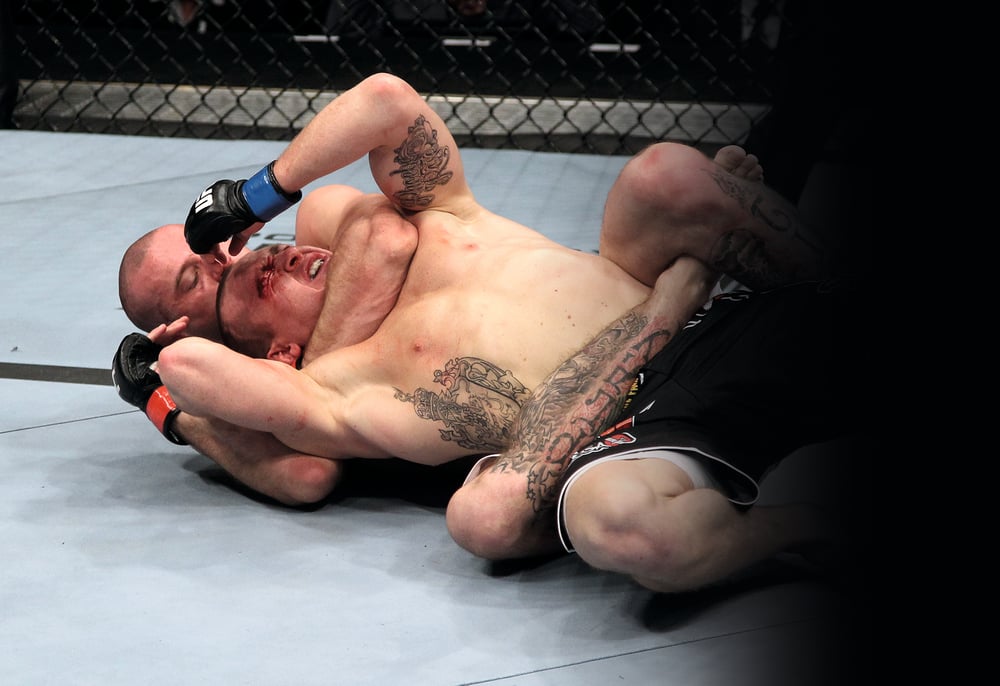
The good news is that you don't need to start treating every rear-naked choke like an attempted murder. You just need to remember that tapping is a safety mechanism. Your ancestors will not be disappointed in you. Murch has watched the culture around chokes change considerably since his early training days.
“It’s way less common now,” he says. “I remember that we used to choke each other unconscious in Judo just so that we knew what it was like. The choke is becoming a much less common submission in training because people understand grappling more and defend it better. I also think that a lot less ego exists generally on the mats and people are willing to tap sooner and continue the roll.”
The review's practical advice starts with releasing pressure immediately when someone taps, stops resisting, or loses consciousness. That last one is particularly important in training, where your partner's safety should rank considerably higher than your desire to win. If someone does lose consciousness, the session is over for them. Even if they wake up quickly and insist they're fine, they still need a medical assessment rather than another round. And if a fighter develops a severe headache, neck pain, or visual disturbances, that's a reason for emergency care, not a reason to Google whether creatine helps.
THE FINAL TAP
For Murch, the best defense begins long before the choke is locked in.
“When I teach, I teach 'Attack the threat,' he says. “This is where people make mistakes. They often have let the threat develop into an actual technique they need to escape from. If you take my back and threaten the choke, I will commit everything to defending that choke, then start to think about escaping the position. You can’t go straight to B without shutting down that initial threat. Attack the threat as hard as the opponent is attacking the choke.”
As for returning to the mats, there's no scientifically established number of minutes, hours, or days that makes another choke safe after someone has been rendered unconscious. Medical clearance should guide that decision. It's also worth remembering that practicing submissions doesn't require repeatedly taking them to the point of a blackout. The research raises the fascinating possibility that grapplers' brains adapt to their sport, but it hasn't established that getting choked makes those brains tougher. Brendan Allen won because Christian Leroy Duncan knew when to tap. Perhaps that's the most useful lesson here. Your brain might be remarkably adaptable, but there's no need to keep switching it off to find out.
...