
issue 235
November 2026
Before championship belts were on the line, the world's greatest fighters were locked in their own battles. We delve into the gritty and inspiring MMA origin stories that forged these warriors into the legends they are today.
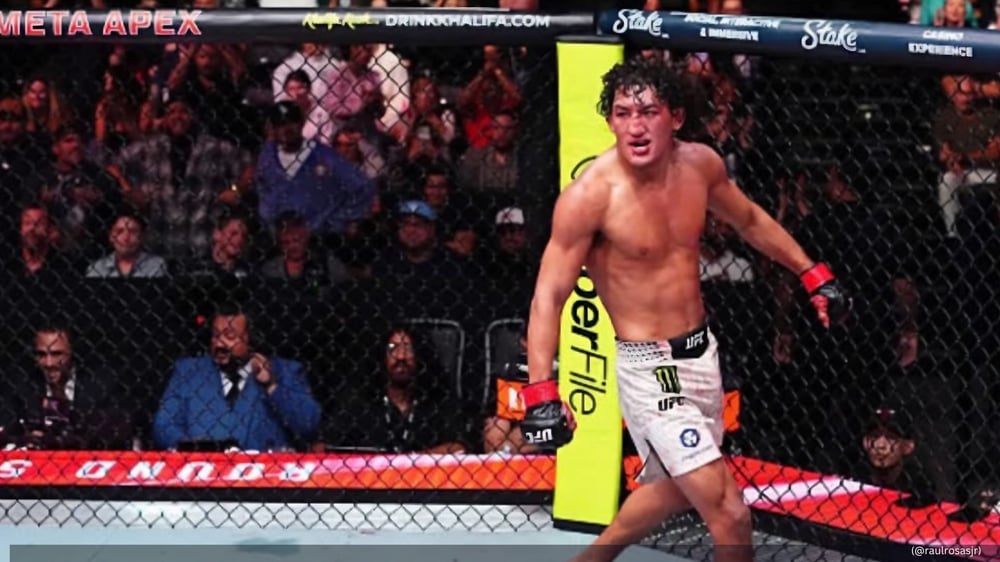
RAUL ROSAS JR – THE ORIGINAL PROBLEM CHILD
This MMA prodigy grew up in Clovis, New Mexico, in a Mexican family where fighting was practically a family business. His father had a boxing background, while his two older brothers and sister also trained in combat sports, creating what must have been a sibling rivalry where you wouldn’t want to steal the last chicken nugget. Raul started martial arts at four, beginning with karate before moving into boxing and Brazilian jiu-jitsu. With four children learning to fight, family disagreements most likely needed a third referee, especially growing up in Clovis, where there wasn’t much else to compete for his attention.
“It was a very small town,” he explained on the Between Rounds podcast. “So, it's like not much to do. So, we would just go to school, train, and that's pretty much it.”
To this end, his parents encouraged their children's ambitions without forcing them into fighting.
“They'll support us on whatever we want to do because I grew up with my brothers,” he told Dominick Cruz on the Love & War podcast. “They also fight, so. But we chose, we chose the sport.”
By eight or nine, Rosas was already grappling with men with mortgages because his gym didn't have enough people to offer children's classes. The size difference created invaluable experience.
“They're like grown man, but they're white belts,” he told Cruz. “They don't know how to control their strength. So, I had like better technique than them, but they have strength over me.”
This meant that by his early teens, fighting grown men felt perfectly normal. Eventually, Clovis became too small for his family’s unique ambitions.
“We were already like becoming the best in the town because it was just so small,” he explained on Between Rounds. “So, they knew there wasn't much growth to do there.”
The family relocated to Santa Rosa, California, where Rosas developed his jiu-jitsu under former UFC fighter Dave Terrell. His wrestling education, however, came from a rather less conventional coach: YouTube.
“I would watch a video over and over and then in practice I would go try it. And if it didn't come out, I would come back and watch it again,” he recalled.
Apparently, even back then the internet offered more than videos of cats being scared of cucumbers. Despite his enthusiasm, Rosas occasionally wondered what he was missing. By 13 or 14, he'd spent most of his childhood training while other teenagers were still tied to interests that didn't involve chokeholds.
“There was a period of time where I was going in the gym, but I didn't want to go to the gym, but I was showing up,” he admitted on Between Rounds. “I was like, damn, I kind of want to go hang out with my friends.”
Fortunately for MMA fans, his siblings helped keep him motivated and fueled his ambition to become a UFC champ. School was a rare chance to kick back with people his age, though his growing commitment to fighting meant missing parties.
“Yeah, I love to party,” he told Cruz. “I’m a very like interactive person. So, I'm always down for anything, you know,” he told Cruz.
His mother wanted him to finish school to have a backup career, but Rosas increasingly saw the classroom as time he could spend training. He eventually switched to homeschooling as his fighting ambitions accelerated. By 17, he was competing professionally in Mexico, taking fights to build the record he needed for Dana White's Contender Series. The strategy was simple: finish opponents quickly and stay healthy enough to fight again.
“So, I would get in, out, and then Monday I was back training for my next fight,” he told ESPN MMA. No offense to the pro fighters, but the 14-year-old me could have been fighting pro already.”
In September 2022, Rosas defeated Mando Gutierrez on Dana White's Contender Series, earning a UFC contract at 17. For somebody who'd been planning his career since childhood, the achievement was hardly a surprise.
“I already knew this since I was 13, that at this age, I would be standing right here talking to you and getting ready for my fight on Saturday,” he told ESPN before his UFC debut.
That debut came in December 2022, when he submitted Jay Perrin in the first round. Rosas was 18, but he’d already spent approximately 14 years learning how to fight. He’d sacrificed much of his childhood preparing for a career most fighters don't begin until adulthood. While other teenagers wondered what to do after high school, Rosas had already found his calling.
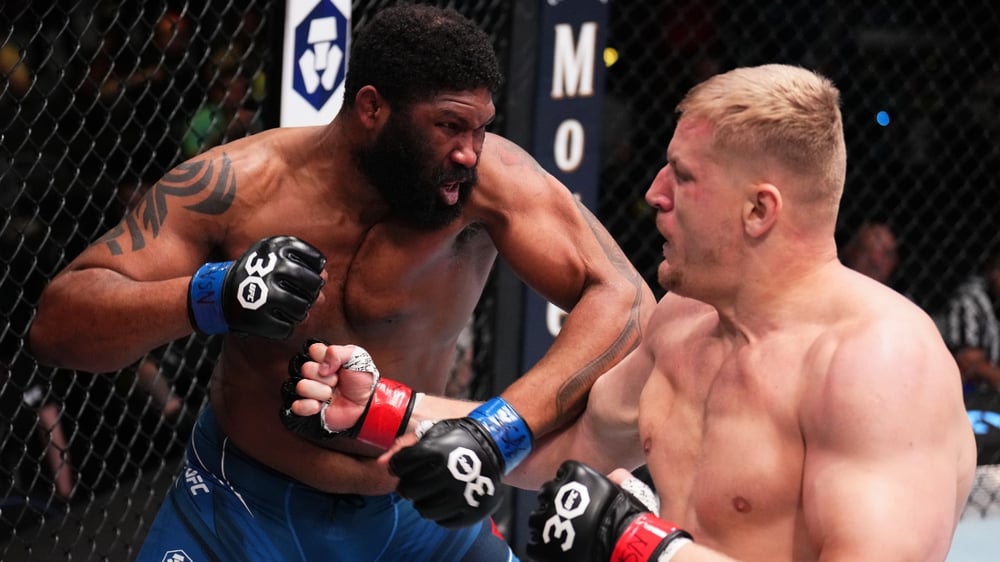
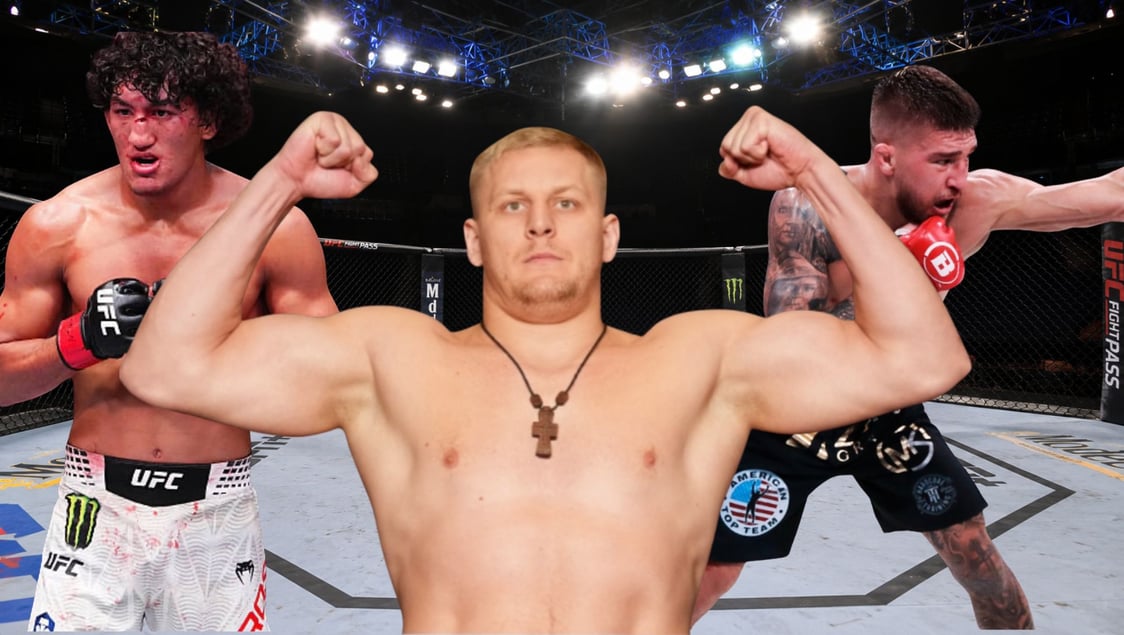
SERGEI PAVLOVICH – BUCKETS TO KO'S
Sergei Vladimirovich Pavlovich was born on May 13, 1992, in Orlovsky, Russia. Growing up alongside an older brother in a family with limited money, he learned that getting what you wanted involved hard work. Sometimes quite a lot of it. For young Pavlovich, that meant chopping firewood, tending the stove, and carrying buckets of water.
“We had the same childhood as all the village kids who lived far from the big cities,” he recalled on the DROZD Podcast.“Our childhood was very interesting and active.”
It also came with rules. Complaining to your parents or older brother about another child was discouraged, and penalties were swift.
“The scariest thing was not being allowed out to play,” he explained. “That was the worst punishment.”
Freedom usually depended on finishing his chores. With no garden hose, Pavlovich remembered carrying two enamel buckets, each holding approximately 18 to 20 liters, from a tap at the front of the property to the garden behind the house. The faster he worked, the sooner he could join his friends for football. Functional fitness before functional fitness became something people paid $200 a month to experience. His older brother was another important influence. Pavlovich followed him everywhere, including to a makeshift basement weight room the older boys used to get stronger. When his brother refused to take him, Sergei waited until the group had walked away, then followed them.
“I was a stubborn little kid,” he remembered. “If I got something into my head.”
The wrestling room was equally primitive, occupying a basement beneath a school.
“Our wrestling gym was also in the basement of the school,” Pavlovich recalled. “There were no windows or doors.”
Greco-Roman wrestling became his foundation, although his finances limited his opportunities. While talented young wrestlers elsewhere traveled to tournaments and training camps, Pavlovich often had to make do with whatever was available locally.
“I came from a poor family, where I could only attend the sports clubs that were free,” he explained.
His first wrestling coach sometimes tried to raise money to send the children to competitions, but trips remained rare. Pavlovich understood that without regular exposure to stronger opponents, progress would be difficult.
“We might go somewhere once a year, and that was something incredible,” he recalled.
Fortunately, another fighting obsession was already developing. When he was around seven or eight, Pavlovich bought a disc featuring early MMA fights and discovered Tank Abbott and Oleg Taktarov. He was immediately hooked.
“I watched it and liked it so much,” he remembered. “I thought, these are real men.”
By the time he’d finished school, Pavlovich was already telling classmates he’d be in the UFC. With little money for university, Pavlovich prepared for military service, training twice daily for roughly six months before joining the Russian armed forces. The experience helped him develop the discipline that would become central to his fighting career.
“Nothing comes easily,” he said. “You have to work hard. But when you have a goal and know where all your efforts are going, sooner or later you'll reach it. You'll break through any wall.”
After leaving the military, Pavlovich needed to earn a living, and mall security was a natural fit. He told a colleague that one day he would compete in the UFC. Years later, that colleague still remembered the prediction. Pavlovich eventually began developing his striking alongside his wrestling and made his professional MMA debut in 2014. His rise through the Russian regional circuit led to the Fight Nights Global heavyweight championship and, in 2018, a UFC contract. For a boy who grew up carrying buckets of water, lifting homemade weights, and watching fights on a disc, it was quite a journey.
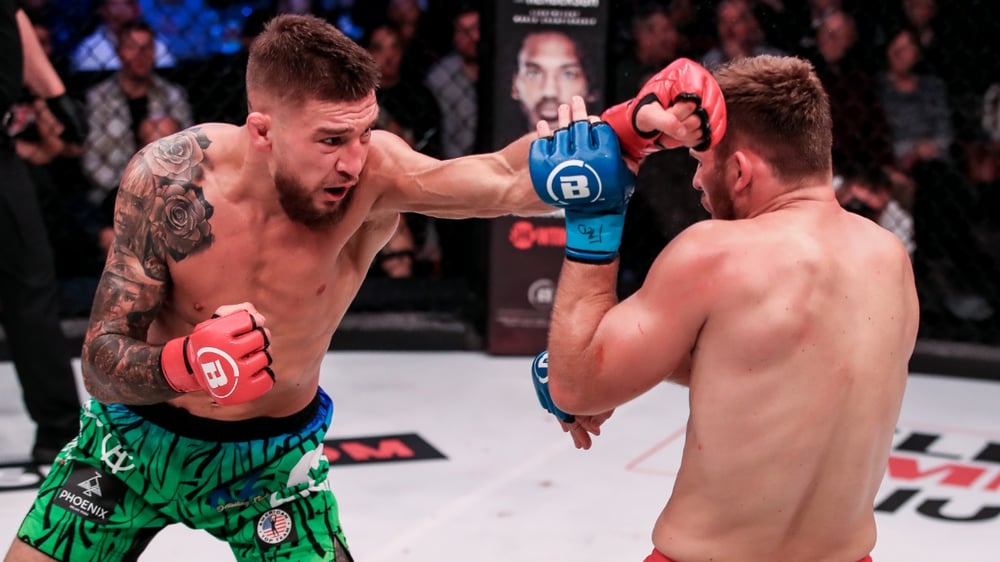
YAROSLAV AMOSOV – LITTLE GUY BIG PLAN
Yaroslav Oleksandrovych Amosov was born on September 9, 1993, in Irpin, Ukraine. He spent his childhood exploring quarries, firing slingshots, and making decisions that occasionally required a rapid exit. Sometimes from animals.
“We’d get into a little mischief, tease someone, run away from dogs, and not always get away,” he recalled in a 2021 interview with Ukrainian publication Na chasi.
Most of his friends were five to ten years older, so the young Yaroslav had to keep up.
“I grew up in their group and was always the smallest,” he explained to Na chasi.
Naturally, being the smallest kid in the group gave him plenty of motivation to get bigger and stronger, but that only came later. For him, BMX, breakdancing, and other interests came and went, sometimes lasting barely a fortnight. Amosov also had a soft spot for superheroes and larger-than-life characters. In a RIOTDIVISION MONOLOGUE interview, he explained how fantasy films inspired children to imagine themselves becoming someone extraordinary. Apparently, some childhood obsessions are harder to shake than a determined wrestler.
“Even though I'm 32, my favorite movie is Pirates of the Caribbean,” he said. “I definitely rewatch all the movies once a year.”
Fortunately, he eventually discovered a pursuit that didn't require a pirate ship, although it occasionally involved someone trying to remove his head. Growing up in Irpin wasn't always easy. Amosov later described a neighborhood troubled by crime and drugs. By his mid-teens, he wanted to escape those influences and learn to defend himself.
“Honestly, what brought me into sport was a strong desire to escape the streets,” he explained to Na chasi.
He told his stepfather he wanted to learn to fight, so he took him to the Hermes combat sambo club in Kyiv.
“My stepfather basically took my hand and led me into a gym where I’m training until now,” Amosov told MMA Fighting in 2021.
For once, the enthusiasm lasted longer than a fortnight. Training meant traveling from Irpin to Kyiv several times a week, sometimes spending 90 minutes to two hours commuting each way. That's an extraordinary investment for a teenager when the reward is having someone repeatedly introduce your spine to a wrestling mat.
At Hermes, he developed his Sambo skills and specialized wrestling training, while Amosov began studying MMA fighters such as Fedor Emelianenko. Amosov wasn't an exceptional talent at first. What separated him was his commitment. He attended training camps, rarely missed sessions without good reason, and studied his defeats rather than making excuses. After finishing school, Amosov enrolled at the tax academy in Irpin to study law. Professional fighting wasn't yet a guaranteed career, and learning how to complete a tax return presumably offered a more dependable future. But the results were becoming difficult to ignore. In 2012, Amosov won the European Combat Sambo Cup and won a world championship. He also made his professional MMA debut that year. Before reaching Bellator, Amosov acknowledged that fighting cost more than it earned, with friends and family helping support his ambitions. Yet the most revealing victory of his early career came after he won an apartment at a combat sambo tournament and gave it to his coach, whose family needed a home. When his coach initially refused, Amosov recruited his teammates to help persuade him. Plenty of fighters promise to give something back to the people who helped them. Amosov took the expression literally. It was an extraordinary gesture from someone who'd once been the smallest boy in the group. The kid who used to run from dogs had finally discovered something he was prepared to chase for the rest of his life. And this time, he wasn't running away.
...