

issue 235
November 2026
Forget soulless arenas. From the White House lawn to a 2,000-year-old Roman theater, MMA promoters are discovering that sometimes the best way to sell a fight is to change where the blood gets spilled.
Violence might be humanity’s oldest form of entertainment, so it’s impressive that we’re still finding ways to sell tickets to it. To mix things up, you can change the rules, create close match-ups, and manufacture beef, but a growing innovation is changing the venue to create a spectacle. Boxing figured this out with the Rumble in the Jungle and the Thrilla in Manila, which became global touchpoints that transcended the sport. Half a century later, MMA is starting to read from the same playbook. The UFC's Sphere and White House events set the bar high, and they've already shown that a venue can generate more publicity than the people fighting in it. But while the world's biggest promotion eyes presidential real estate, smaller organizations are turning ancient landmarks into modern gladiatorial arenas. And if recent events are any indication, the world's most famous tourist attractions might soon need to add bloodstain removal to their maintenance budgets.
LOCATION LOCATION LOCATION
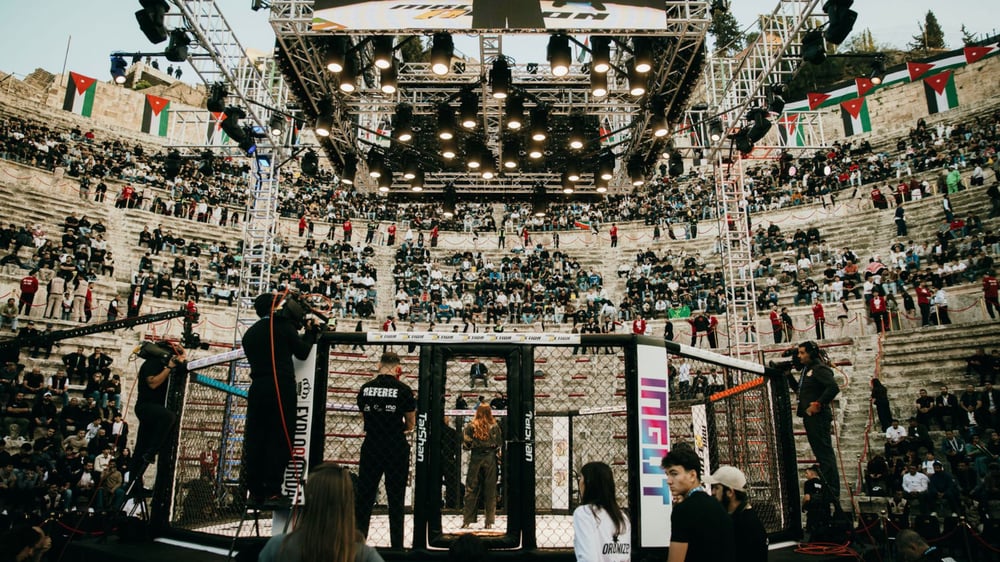
The UFC's $20 million-plus Sphere spend proved the venue deserves top billing. But this isn't just an expensive publicity stunt. There's science behind the spectacle, especially when the venue is a big part of the spectacle. A 2024 study of sports spectators found stadium aesthetics, seating comfort, and accessibility collectively explained 31% of the variation in fan satisfaction, with aesthetics the strongest predictor. The better the venue, the better the experience. Research into MMA fans suggests there's more to selling a fight than the promise of a broken beak. Spectators at a pro MMA event say aesthetics, drama, escapism, and the feeling of success when a fighter you support succeeds are the strongest motivations for plonking your butt on a stadium seat. For smaller MMA promotions, that's the opportunity to give fans something they’ll always remember. They can't match the UFC's production budgets, but they can borrow architecture and events. From France to Croatia and Jordan, promoters are discovering that ancient amphitheaters make spectacular backdrops for modern sports. Why spend millions manufacturing an atmosphere when you can rent somewhere that's spent 2,000 years developing one? Better still, a fight card featuring six blokes whose Wikipedia pages are still under construction suddenly looks like an event of historical significance. All thanks to a few dead Romans who never received a cent in royalties.
WHEN IN ROME
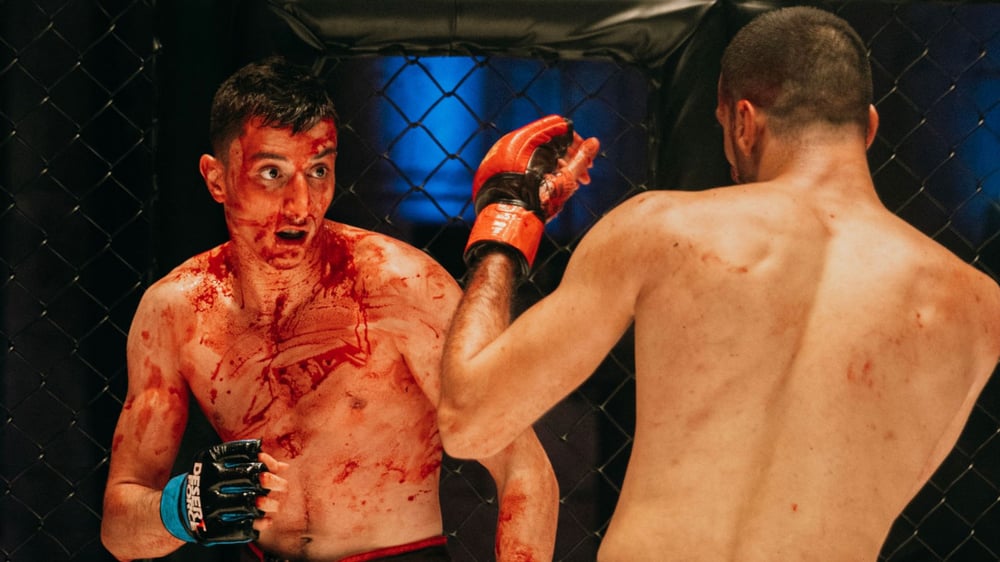
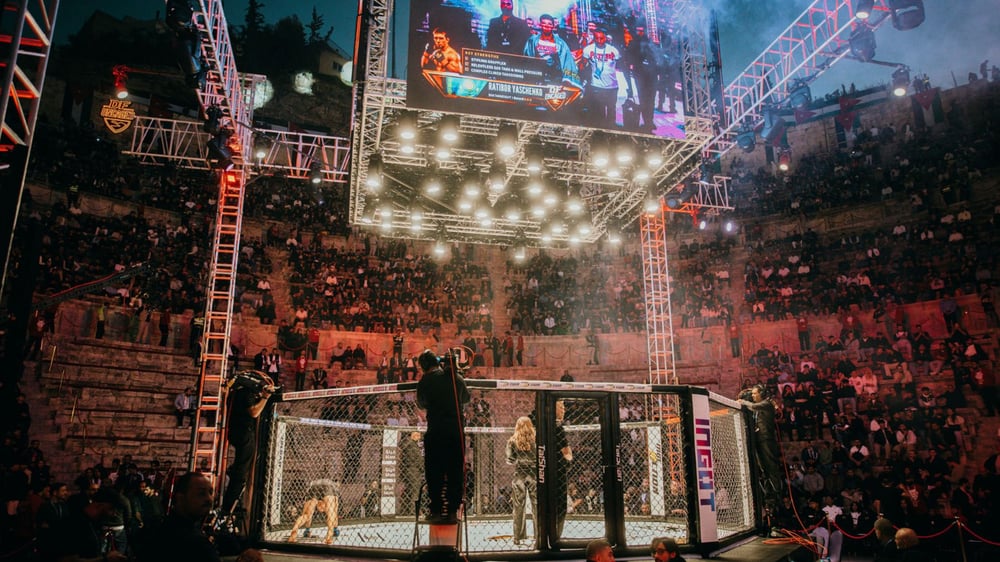
One of the most recent events to capitalize on this trend was Desert Force’s October 30, 2026, fight card that transformed Amman's nearly 2,000-year-old Roman Theatre into a modern gladiatorial arena. The DF Uncaged event reportedly drew 5,000 spectators, with fighters representing 16 nations and a guest list that included Mike Tyson, Ronaldinho, and Hasbulla Magomedov. Despite this, the setting was arguably the biggest star. Built in the second century AD, the Roman Theatre's steep stone terraces provided a spectacular backdrop for modern MMA, complete with walkouts, lighting, and plenty of blood-soaked action. For Lebanese veteran Mohammad Fakhreddine, the setting stirred something almost spiritual.
“It feels like going back to where I was born in a past life,” he told Fighters Only before the event. "I've always felt like I was a warrior before—a samurai or a gladiator. Fighting in a place like that brings that fire out in me again.”
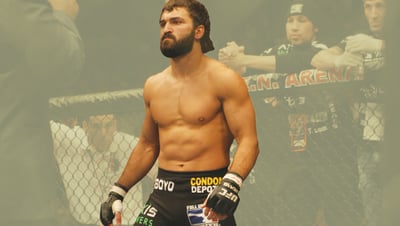
At 42, the three-time BRAVE CF champion announced his retirement after the event, bringing his career to a close in an arena that had entertained spectators nearly 2,000 years before his professional debut. The Romans couldn't have scripted a more fitting final act.
THE TREND
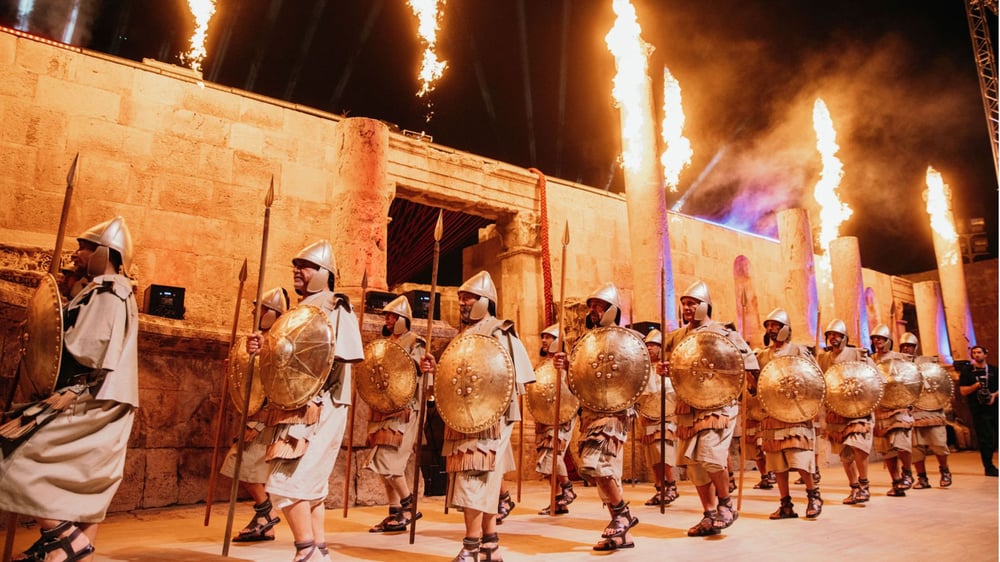
In truth, MMA isn’t being forced into an incompatible space. It’s bringing combat sports back to the exact blueprint designed for them. Roman architects invented the steep, elliptical amphitheater specifically so fights couldn't get trapped in blind corners, creating unobstructed sightlines and natural acoustics that amplify every roar without a single speaker. Two millennia before pay-per-view, those stone bowls were engineered to turn physical combat into shared civic euphoria. Putting modern fighters inside them doesn't require theatrical trickery. The architecture is still doing the exact job it was built for. And Jordan isn't alone in discovering the promotional value of borrowing Roman real estate. France's Hexagone MMA has staged fights at the ancient Roman Theatre of Orange, while Croatia's Fight Nation Championship and BRAVE Combat Federation have taken their cages into Pula Arena, one of the world's best-preserved Roman amphitheaters. A KO inside a conventional arena is just another social media clip. Frame that same KO against towering limestone arches that have survived emperors and earthquakes, and suddenly you've got something people might remember beyond the next fight night. Of course, the Romans had a slightly different approach to matchmaking. Their gladiators didn't have athletic commissions, five-minute rounds, or the luxury of complaining about being overlooked for a title shot. But they understood something modern promoters are rediscovering: the surroundings can be almost as important as the spectacle itself. And unlike a $20 million production budget, ancient architecture doesn't need rebuilding every time someone wants to throw a punch.
THE NEXT BIG THING
And if you think MMA has exhausted its supply of keystone locations, then you can bet that Dana White will prove you wrong. Speaking on The Pat McAfee Show in August, White revealed that UFC production chief Craig Borsari had pitched another extraordinary event.
“This was his idea, and I love it,” White said. “I have to do some more groundwork on it.”
By September, Borsari had spent four days inspecting the proposed location, although White was keeping its identity secret. That naturally sent speculation into a frenzy. Mount Rushmore was ruled out. Rome’s Colosseum has also been floated, particularly after the abandoned Elon Musk–Mark Zuckerberg fight negotiations. Getting permission to fight inside one of the world's most protected historical monuments may require more than a persuasive PowerPoint presentation. Then there’s the Pentagon's central courtyard, Alcatraz Island, Moscow’s Red Square, and even the pyramids. None has been confirmed, but that’s the most revealing part of this trend. Promoting a fight no longer needs to begin with announcing the fighters. Sometimes all you need is a location, a few cryptic comments, and a million people wondering where the hell is coming next. For smaller promotions, the opportunity is even more interesting. They don't need the White House or a multimillion-dollar production budget. Instead, all they need is a setting that makes an ordinary fight night feel extraordinary. Ancient theatres, historic landmarks, and spectacular natural surroundings offer something no amount of promotional trash talk can manufacture: a story that existed long before the fighters arrived. The next great MMA venue might already be standing somewhere, waiting for someone to work out where to put the cage. And somewhere, a heritage preservation officer is about to have a very difficult afternoon.
...