


issue 235
November 2026
New research reveals what’s hiding beneath the muscle of elite MMA fighters and why years of takedowns, heavy lifting and hard training might be building more than fighting skills.
Sometimes you look at a fighter like Merab and feel the urge to peel back his skin (please don’t, if you see him) just to see what’s going on underneath it all. Of the 206 bones in the human body, you can bet his aren’t the same as anyone else’s. That’s also an irresponsible number of breakable things to take into the fight game, but pro fighters have skeletons scientists may want to call dibs on. While we know almost everything about the outside of these athletes, like their height, reach, and weight, the scaffolding beneath it all is considerably more interesting. What kind of real-time evolution happens to the skeleton after years of wrestling, striking, and lifting? Scientists at Nova Southeastern University in Florida wanted to know, so they used sophisticated body scanners to examine professional combat athletes, including current and former world champions. The research is currently available as a preprint and has yet to undergo peer review, but study co-author Dr. Corey Peacock, a sports performance coach at Kill Cliff FC and co-founder of Fight Science Lab at Nova Southeastern University, believes the findings offer an intriguing look at how years of fighting might reshape the human skeleton. Their October 2026 findings paint a picture of the MMA skeleton unlike anything we’ve seen before, because the most impressive part of a fighter might be the one without an Instagram account. Their October 2026 findings paint a picture of the MMA skeleton unlike anything we’ve seen before, because the most impressive part of a fighter might be the one without an Instagram account.
HARDER THAN THE AVERAGE HUMAN
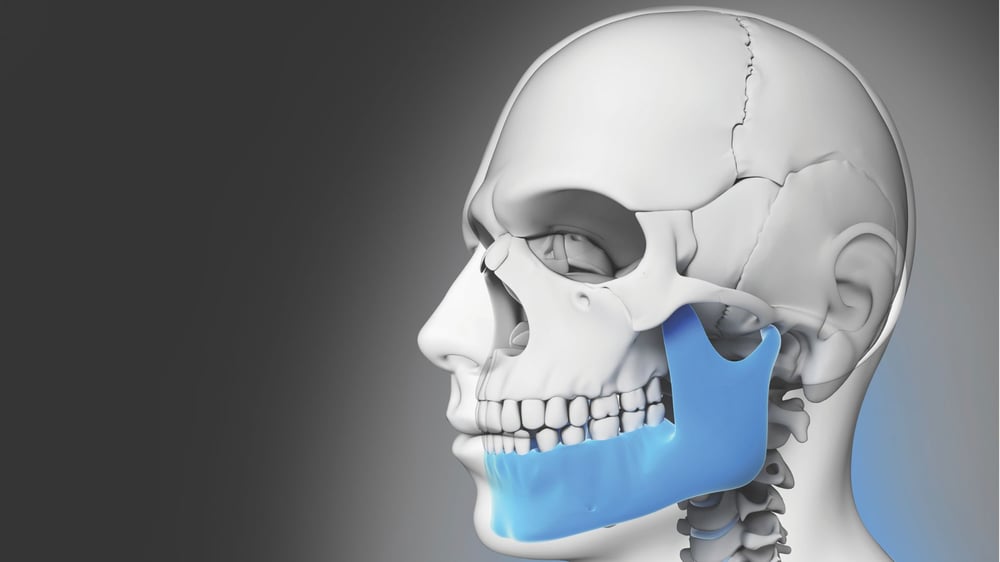
To suss out what’s under the hood of your average fighter, they used low-dose X-rays to measure bone mineral density, bone mineral content, lean tissue, and body fat. They looked at 57 professional fighters, including 48 MMA athletes, eight boxers, and one bare-knuckle competitor. The group included 50 men and seven women, with championship credentials from the UFC, Bellator, and ONE. And what they found might make Wolverine jealous. Male fighters recorded an average bone-density T-score of +2.7, while women averaged +2.3. That's impressive because zero represents the average bone density of a healthy young adult, and the higher the score, the denser the bones. Both groups were well above average. The researchers also compared fighters with people their own age. Once again, their bones came out on top, with men scoring +2.6 and women +2.0. They had unusually dense skeletons, with the bones being roughly 29% denser than those of ordinary healthy young men, while the women's bones were around 17% denser than those of healthy young women. Bones are living tissue. They continually remodel themselves, responding to the demands placed upon them. Lifting weight and high-impact exercise can make the skeleton thicker over time, and MMA coughs up plenty of opportunities to experience all of this. But are fighters born with unusually robust skeletons, or do years of training turn their bones into something that would make Wolverine jealous? Peacock suspects it's a bit of both.
“I believe it's a combination of both, but I would argue that years of training play a substantial role,” he explains. “What's particularly interesting is that we've observed high bone densities in fighters from both wrestling and traditional striking backgrounds, with some of the highest values coming from athletes with extensive Muay Thai experience.”
That's an interesting distinction. Wrestling loads the skeleton through muscular force, while striking introduces repeated impacts. Different ways of making your bones reconsider their career choices. But Peacock is careful not to claim that training alone created these results.
“While our study cannot establish cause and effect, these findings provide a strong rationale for further investigating how different combat sports influence bone development.”
We do know these fighters are officially big-boned, just not in the McDonald’s-created kind of way.
THE SPORTING SKELETON
Pro athletes might have god-like proportions in all sports, but how do they stack up against these MMA warriors? The fighters had bones roughly 8% denser than volleyball players, 9% denser than rugby players, and 12% denser than soccer players. The biggest differences were against swimmers and triathletes. The fighters' bones were around 29% denser than swimmers' and 31% denser than triathletes. That's quite the internal athletic victory over other sports. So, while swimming is great exercise, it doesn’t involve heavy lifting. Conversely, MMA’s wrestling involves repeatedly picking up another human being who's fighting like a cat being lowered into a bathtub. Throw in years of striking, lifting weights, and being dumped onto the canvas, and your skeleton has more work than a chiropractor at a retirement village. Of course, these comparisons come from separate studies, so we can't officially crown MMA the heavyweight champion of bone density. And having denser bones doesn't make you indestructible. The researchers didn't measure fractures, so we don't know whether these fighters actually break fewer bones, which Peacock says is an important distinction.
“Greater bone mineral density is generally associated with greater bone strength, but that doesn't necessarily mean fighters are protected from fractures,” he explains. “We also measured whole-body bone density rather than individual bones of the hands, ribs, or face, which experience very different forces during combat.”
So, while the findings suggest fighters possess unusually dense skeletons, they don't tell us whether those skeletons are better at surviving the particular indignities of an MMA fight. Still, the findings suggest combat sports could provide the kind of physical punishment that encourages bones to adapt.
THE BODY FAT MYTH
MMA also has a peculiar relationship with body fat, well, unless you’re a heavyweight. Yet the DXA results suggest these athletes aren't necessarily maintaining the ultra-low body-fat percentages commonly associated with bodybuilding banana hammocks. The male fighters averaged 14.6% body fat, while the women averaged 21%. But one result was particularly interesting. Despite their different body-fat percentages, the men and women carried remarkably similar amounts of absolute fat mass. Male fighters averaged 28.6 pounds of fat, compared with 30.1 pounds among the women. In other words, the larger male fighters carried a lower percentage of body fat while possessing roughly the same absolute amount as the smaller female athletes. This illustrates why percentages can sometimes tell a misleading story when separated from body weight. It also raises questions about our obsession with fighters looking permanently shredded. What we can say is that this sample of accomplished combat athletes displayed body-fat levels that might surprise anyone who believes professional fighters spend 365 days a year looking like they've been shrink-wrapped for supermarket display.
MORE MUSCLE, MORE ARMOR
Muscle is an obvious advantage in MMA. It’s why we have weight classes, but more muscle might also mean denser bones. The researchers found body weight explained 42.7% of the differences in bone density between fighters, while lean mass explained 48.4%. Among men, those figures were 30.8% and 36.1%, respectively. In simple terms, bigger fighters, particularly those carrying more lean tissue, tended to have denser bones. That's because muscles pull on bones whenever they move, giving the skeleton a reason to adapt and become stronger. Think of it as your muscles bullying your bones into toughening up. Of course, more muscle doesn't automatically guarantee denser bones, but it's another reason to keep building muscle.
THE BONE SHAKERS
If you thought lifting heavy weights and training regularly might not be enough to keep your skeleton in prime condition, there is some potentially inconvenient news. Your bones might respond particularly well to something a little more explosive than a leisurely stroll followed by three sets of biceps curls and a meaningful conversation about creatine. A separate 2026 systematic review and meta-analysis looked at 24 clinical studies involving 1,238 healthy adults. Explosive exercise appeared to give bones a bigger boost than regular weight training or cardio. Scientists found that intense movements increased a blood marker linked to new bone formation, while conventional workouts showed little measurable change. They said that sports like soccer and handball, where you’re asked to accelerate, decelerate, change direction, and generate powerful movements, increased the bone formation markers by 45–46%. Which is slightly awkward considering how much time the fitness industry spends telling people to lift weights for stronger bones. And that's where MMA earns its bona fides. Fighters perform explosive takedowns, sprawls, scrambles, and sudden changes of direction every day. Their bones are constantly being challenged in ways that walking on a treadmill simply can't match. Could that explain why professional fighters have such unusually dense bones? Possibly, although the two studies measured different things. And don't throw away your dumbbells just yet. Weight training still has proven benefits for bone health. The new research simply suggests that adding some explosive movement might give your skeleton something extra to work with. Apparently, your bones don't just want you to lift heavy things. They might also appreciate occasionally moving as if a building’s fire alarm just rang.
BUILD YOUR OWN ARMOR
The good news is you don't need to spend six hours a day wrestling men with necks wider than their heads to build stronger bones. A few well-chosen exercises could help your skeleton age better than the rest of you. Bones respond to pressure. Lift weights, jump, land, and change direction, and you're giving them a reason to toughen up. The trick is doing enough to encourage growth without making your orthopedic surgeon start browsing luxury yachts. Peacock has worked with former world champions and UFC Hall of Famers, including Vitor Belfort, Aung La N Sang, and Robbie Lawler, and believes the secret to maintaining a formidable skeleton as you age isn't necessarily training harder. It's applying the right kind of punishment.
“One thing I've learned is that training athletes into their late 30s and 40s isn't necessarily about doing less, but about being smarter with how we apply training stress.”
One method he favors is contrast training, which pairs high-force isometric contractions with explosive movements. The idea is to expose muscles and bones to different types of loading without simply piling on more training volume.
“My philosophy is that we don't necessarily need more training stress as athletes get older; we need the right stress, applied at the right time, with adequate recovery to support adaptation.”
He believes this approach could help preserve muscle and skeletal health into later life, although its specific effects on bone density still need further investigation. Here's a simple routine based on established bone-health advice, rather than the fighter study itself.
LIFT HEAVY THINGS: Two or three times a week, do three sets of 8–12 squats and Romanian deadlifts, plus two or three sets of standing overhead presses. Choose weights that challenge you without making your technique resemble a drunk giraffe trying to sit down.
GET SOME AIR: If your joints are healthy, start with two sets of 10 small jumps or skipping contacts. Gradually build toward around 50 moderate impacts on most days, provided your body tolerates them. Your bones need a reason to adapt, not a personal vendetta against your knees.
KEEP IT UP: Add weight or impact gradually as you get stronger. Bone takes months to adapt, so don't expect an adamantium skeleton after three gym sessions.
One question the researchers couldn't answer is what happens when fighters retire. Do years of wrestling, striking and lifting leave them with stronger bones into old age, or do those advantages disappear when training slows down? We don't know yet. But the findings suggest that some of a fighter's most impressive physical qualities aren't the ones you can see. Reach, weight, and muscles get all the attention. Nobody walks around showing off their bone density. Which is a shame, because somewhere there's a retired heavyweight with the skeleton of a prehistoric rhinoceros and absolutely no way to impress anyone with it.
...