

Issue 224
December 2025
The body doesn’t always hold up against the rigors of MMA, and these injuries can reroute careers, reshuffle ties, and quietly redraw the sport’s power map.
Fights become a ‘who-cares’ nothing if they don’t have a good backstory. Grudge matches. Title runs. Rematches. We demand them all, but the true kingmaker has always been injury. When it happens in private, we groan at the lag between watching the fight we want and the recovery time it takes to get the gloves on. Jon Jones did it with a pectoral rupture before his Dan Henderson bout. The likes of Chris Weidman and Cain Velasquez did the same in the lead-up to their booked fights. It’s a playbook we see every year because far more damage is inflicted on fighters by their own actions in private than by their opponents in the public eye. More than 77.9% of all injuries that MMA athletes get are from training, while just 22.1% of them are during a competition, according to research in Sport Health. The same pattern plays out in boxing, taekwondo, wrestling, and karate, proving that most fans are sheltered from the true horrors of being a combat athlete. But when a fighter’s body reaches its breaking point under the elite stress of the spotlight, those moments become ones we never forget because they expose how thin the margin is between dominance and disaster. In light of the Tom Aspinall eye poke, we’re forced to reevaluate the times when MMA hasn’t bent to the narrative and preferred to snap it in half, creating a car-crash moment you can’t look away from. Here’s the poor buggers who did it in ways that changed MMA forever.
THE GOAT DESTROYING TIBIA
Anderson Silva vs Chris Weidman - UFC 168
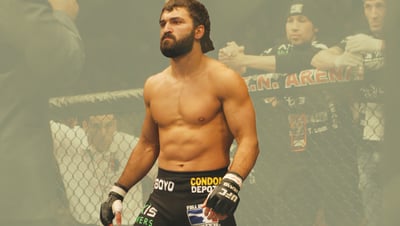
Silva had a beautifully unblemished UFC record before UFC 162, which he lost after showboating with his hands down and his chin high. Love it or hate it, it’s why we loved him. Weidman capitalized on the peacocking and knocked out Silva in what felt more like a cosmic error rather than a changing of the guard. The UFC 168 rematch was set to be Silva’s redemption arc, but when Silva’s leg wrapped around Weidman’s shin and snapped, it ended his career. Only four fighters have ever broken a leg in the UFC, making it the rarest of injuries. This bout was supposed to restore order to the middleweight division, but Silva never reclaimed what he lost that fateful night. Bones heal, but confidence seldom does. Six more defeats followed, but the aura had dulled, and his timing seemed off. Silva was hailed as the GOAT before this fight, and after this night, the sport moved on without him, all thanks to a snap of a calcium stick. In a cruel twist of karmic justice, Weidman broke his leg 8 years later in almost exactly the same way, making this one of the most puzzling coincidences in UFC history.
AN ARM CROWNING A CHAMP
Frank Mir vs Tim Sylvia – UFC 48
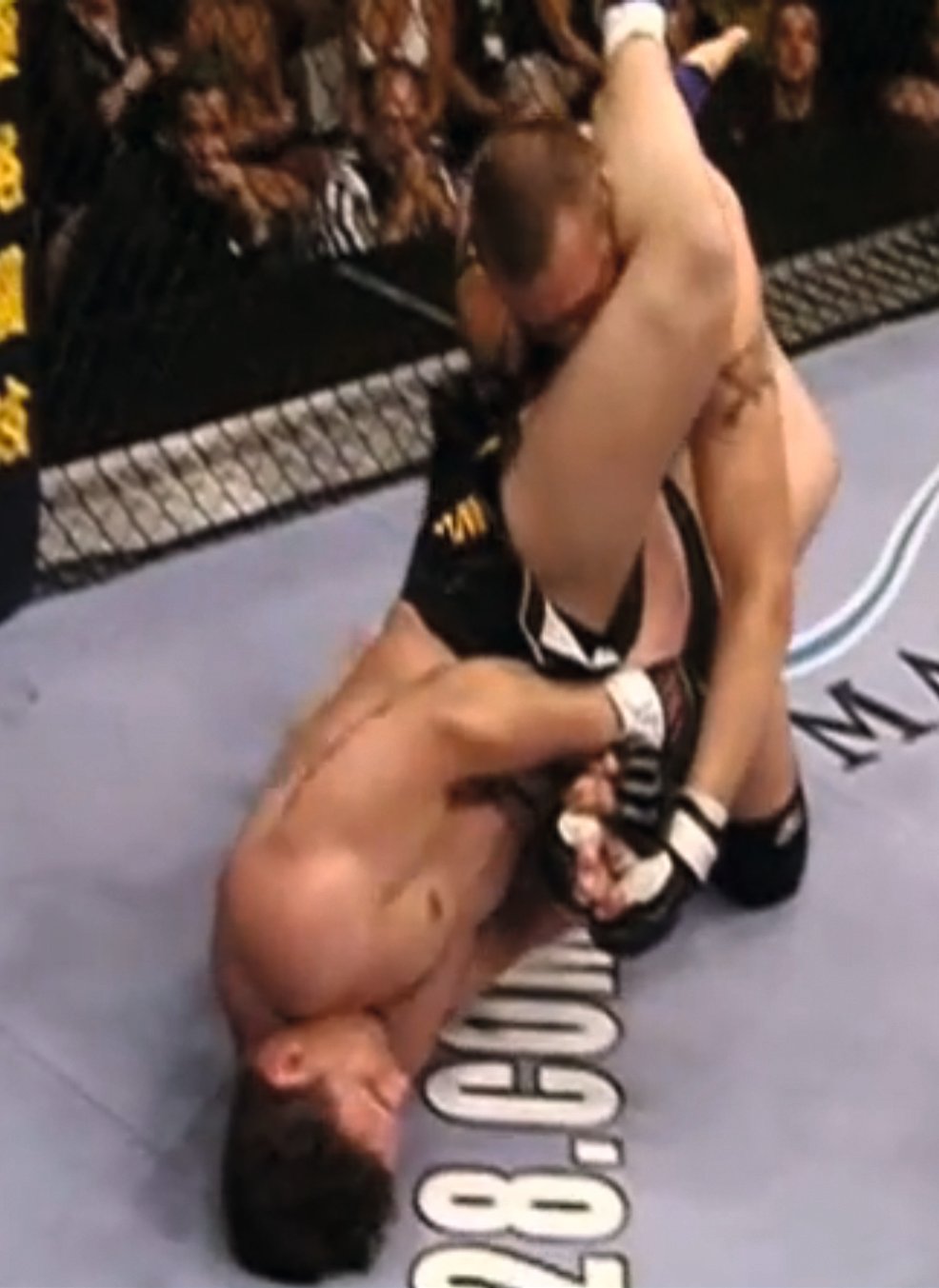
Knockouts have always been currency of the heavyweight division and that payment is accepted until a joint involuntarily swings the wrong way. Frank Mir applied this pressure to Tim Sylvia when he grabbed his forearm and cracked it like a glow stick at a rave no one knew they’d be attending. Sylvia had stood up, driving his own weight into the joint. Instead of the pressure bleeding into the shoulder, it loaded through the forearm. Both forearm bones snapped clean under extension, and the ref jumped in early to save the then-champion and stop the audience from collectively dry-retching. There was no tap because there was no time. The heavyweight belt changed hands, but something bigger shifted. The division had lost its illusion of invisibility because this was the first armbar to win a UFC heavyweight title bout, and it was applied to breaking point. That’s why this injury matters. Arm bars weren’t seen as a lucky gimmick, and were now a risk the human fridges needed to be more wary of than the other divisions, because they put bones on the chopping block. It ushered wrestling skills into heavyweight title conversations. For Sylvia, the break didn’t end his career, but it did reset it. He won the belt back a year later, yet the division no longer treated him as untouchable, and he never quite moved as he had before, cementing the seriousness of this type of injury.
THE SURRENDERING KNEE
Cain Velasquez vs Francis Ngannou - UFC on FOX 21
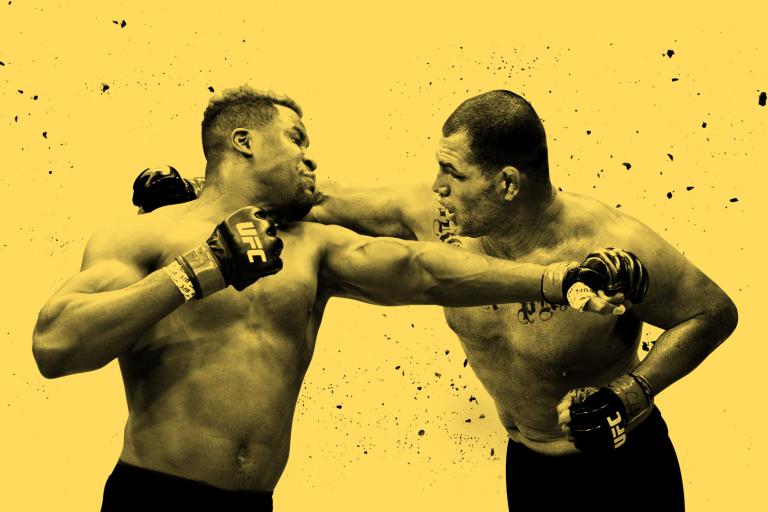
When it comes to punches, Cain Velasquez is a human shock absorber. We’ve seen him walk through punishment that would have folded most heavyweights into lawn chairs. So, while his bout against Francis Ngannou is chalked up to be a KO, it’s actually his knee that gave out.
“Second punch when I went in for that take down, the one that was kind of behind the ear,” Velasquez later said. “I was out on my feet, and I didn’t know it at the time. As I wake up, I’m falling down, like the pain from the knee on the way down is what woke me up. So, I thought, ‘Oh my knee just gave out like some freak accident.”
Would he have been able to continue if his knee had been okay? Who knows, probably, but at the time, he’d gone through multiple knee surgeries, and this was the breaking point. Something that required another knee surgery, but he never fought again. It took just less than 30 seconds to rob the UFC heavyweight rosters of one of their biggest draw cards. He was just 33 at the time, which is the prime age for a heavyweight contender. Instead of watching his reign carved into history one defense at a time, his body quietly rejected what could have been a grandiose career. It was that one knee that said it had had enough and cleared a path to Ngannou’s superstar status, leading to his title win, then defection to boxing and the PFL. It’s worth noting that for this KO, he did not earn a Fight of the Night bonus. And while it’s never been said, this could be when the famous spat with Dana White kicked off, which led to his bad blood with the UFC. You may be able to thank Cain’s knee for that.
BROKEN CASHFLOW
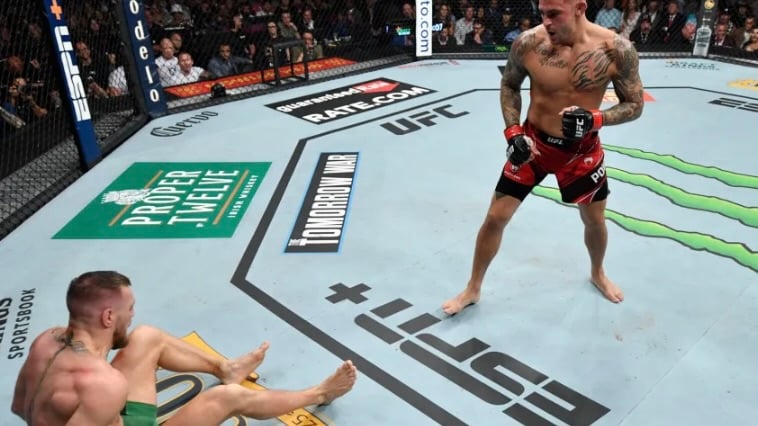
Conor McGregor vs Dustin Poirier – UFC 264
Conor has not fought in the UFC since 2021. It’s been a long time, and this was the fight that ended the career of the UFC’s first global superstar. We can only hope for a comeback with the White House event still looming, but nothing is set in stone. From the opening round of this incredible trilogy, his lead leg was gathering damage at an alarming rate, whether it was via Poirier’s skill or McGregor driving it like a rental car. By the end of the round, even the commentators could sense the warning lights were flashing. As he stepped back, the tibia folded into one of the UFC’s most gory images. The crowd hushed, and the trilogy was over. It matters because outside calf kicks used to be thought of as an annoyance to be brushed off, not as a fight-ending move, as Conor and Silva both found out. The UFC’s biggest cash cow had been put to pasture, and an era that ran on noise, numbers, and bravado was stood on one foot. This broken bone created a seismic shift where the sport stopped orbiting one personality and began spreading its risk by elevating several fighters. In some ways, it forced MMA to grow up, and it flourished thereafter in unprecedented ways. Conor wasn’t replaced by another mega-star, but a deeper, faster-moving ecosystem that no longer relies on spectacle as a strategy. And do we want him back? Of course.
AN ELBOW THAT REFRAMED WINNING
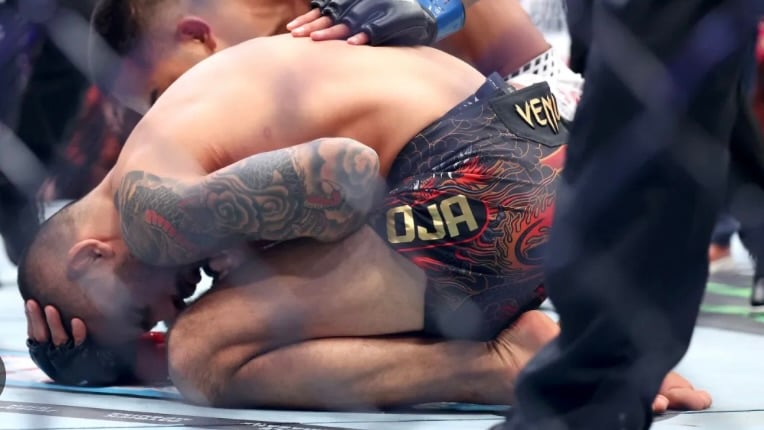
Alexandre Pantoja vs Joshua Van — UFC 323
This fight was a public service announcement to remind people that elbows don’t bend that way. In less than 30 seconds, Pantoja tried to balance while Van dumped him toward the canvas, and his left arm took the load. The result was a freak injury where the elbow joint dislocated instantly. Pantoja knew immediately as the limp limb pointed the wrong way, and the champion could not defend his belt for a fifth time. Van did what any 24-year-old who just won UFC gold would do. He celebrated. Perhaps this was more of a knee-jerk reaction to achieving his life goal. The outcry from his celebration wasn’t pretty. However, this is where MMA needs to be honest with itself. Van didn’t injure Pantoja illegally. No loophole was exploited. He climbed the ladder, applied the pressure, gravity did the rest, and the rules did their job. It’s a reminder that title fights don’t always end cleanly. And if injuries can decide championships, as they always have, then the sport needs to accept that high emotions will always arrive faster than hindsight. The belt had changed hands fairly. The moment just felt wrong because injuries don’t care about ceremony and expectations. It’s a reminder that when we look back on the aftermath of an injury, there’s always something to learn.
THOSE WHO BUCKED THE TREND
Of course, not every injury rewrites history by stopping a fight. Some rewrite it by being ignored. Anderson Silva finished Chael Sonnen while he had a broken rib. Jon Jones defended his title against Chael Sonnen with a dislocated toe that looked like it belonged in a seafood display. Michael Bisping won a world title with one functioning eye and defended it anyway. Georges St-Pierre fought with torn ligaments, cracked bones, and enough surgical tape to make him look like a stationery store. These moments don’t contradict the injuries above, but they do complement them. MMA isn’t the only sport where bodies fail spectacularly. It is, however, one where fighters routinely drag compromised bodies across finish lines that they have no business reaching. Sometimes injury ends the story instantly. Other times, it becomes the story. Either way, the myth of the fully fit champion has always been just that, just a myth. And they will forever change the game.
...