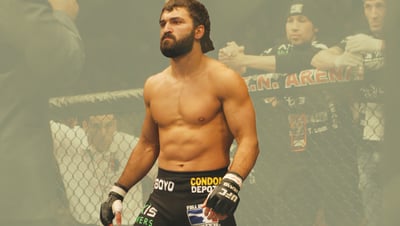

Adrian Lee weathered the storm that threatened his redemption, absorbed the counter right hand that wobbled him badly, and emerged with exactly the statement victory he desperately needed. The 19-year-old Hawaiian demolished Shozo Isojima via first-round TKO at ONE Fight Night 40 on February 13 at Lumpinee Stadium in Bangkok, Thailand, proving his September loss to Tye Ruotolo taught lessons that mattered more than the defeat itself.
The lightweight contest started explosively. Lee stormed forward aggressively, firing combinations at the Japanese judoka before Isojima landed a counter right hand that tested everything the teenager learned from his first professional setback. Five months ago against Ruotolo, that kind of adversity derailed him completely. Friday night revealed a different fighter.
Lee kept his composure, reset himself, then picked apart Isojima from a distance before securing a takedown and unleashing devastating ground-and-pound that forced the stoppage at 2:56 of the opening round. The finish moved his record to 4-1 and announced his return to form emphatically.
The victory carried deeper meaning than statistics suggest. Lee's post-fight assessment revealed brutal self-awareness about what the performance represented, his standards uncompromising despite securing the finish observers expected.
"This sport means everything to me," Lee said. "I dedicate my life to the sport, and all that matters is that I come out with the win."
The game plan unfolded almost perfectly — stay calm, maintain range, strike effectively, secure takedowns, then finish via TKO or submission. But that counter right hand exposed defensive holes Lee acknowledged honestly rather than dismissing.
"I give it like a seven maybe," Lee assessed. "Honestly, for me, I'm quite upset with myself that I got caught with that punch, but it's a fight. For me, unless it's flawless-flawless, then you can't get higher than a seven."
That self-critical approach reflects maturity beyond his nineteen years. Champions identify weaknesses in victories rather than celebrating imperfect performances, understanding elite competition exploits defensive lapses ruthlessly.
The most valuable lesson from the Ruotolo loss manifested clearly Friday night. When adversity arrived via Isojima's counter right hand, Lee demonstrated the composure that abandoned him completely against the submission grappling champion.
"Definitely," Lee confirmed when asked if improved composure stemmed from his September defeat. "I feel like one thing that has definitely upped a lot was my composure in adversity. That's something I've been writing in all my notes, I've been working on constantly ever since that fight. Even though I faced some adversity in this fight, I was able to stay composed, I was able to stick to the game plan, and execute it."
Lee's immediate focus targets rapid turnaround. He's eyeing April's Tokyo card, seeking quick return to competition while momentum favors aggressive scheduling. But longer-term ambitions involve settling unfinished business.
"I would definitely like to run it back with Tye in the future," Lee said. "Maybe for the belt. That'd be the best case scenario to get that loss off my record. The next time we step in the cage, it's gonna be different," Lee promised.