


Issue 226
February 2026
New combat sports research reveals the gut–brain axis may be the silent corner team deciding how you perform.
You might have seen this play out before. Your favorite fighter looks dialed in. Weight cut nailed. The game plan is sharp. Body primed. Then the cage door locks, and something goes sideways. The reads seem slow. Their gas tank drains early. Composure flickers like a basement light bulb. The coaches might call it nerves. Fans call it choking. However, the internal biology speaks to something else entirely. A December 2025 systematic review examining the gut microbiome in combat sports athletes suggests that training intensity, rapid weight loss, and pre-competition anxiety all shift microbial patterns in ways that might affect psychological fatigue, self-efficacy, and performance outcomes. In other words, the fight may start in the intestine long before it reaches the Octagon. What appears to be a mindset issue could be an internal signaling problem. And once you understand how these things have gone largely unnoticed over the years, then the entire idea of mental toughness begins to look somehow incomplete, and the idea of gut feeling earns a new meaning.
THE SIGNAL BEFORE THE STORM
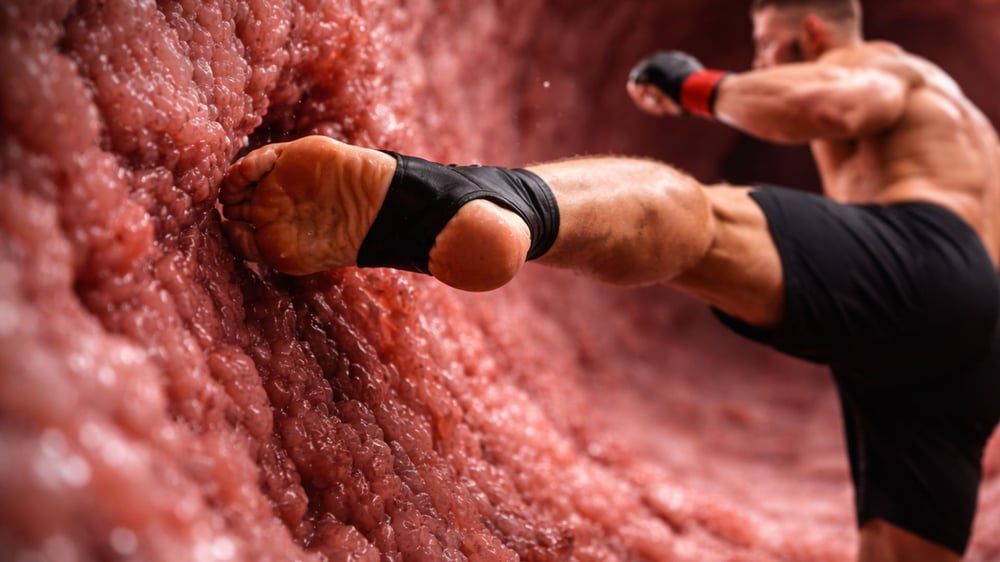
Under all the fight pressure, the gut does not sit quietly. It talks. It releases inflammatory messengers, alters short-chain fatty acid production, and shifts the availability of neurotransmitter precursors linked to dopamine and serotonin. These processes run straight up the gut–brain axis and influence how a fighter’s brain interprets threat, fatigue, and risk. The review pulled together 8 studies involving 247 elite and high-level combat athletes and found a recurring pattern: higher-performing competitors tended to show greater microbial diversity, which creates more stable pre-competition anxiety profiles. When you have lots of different types of gut bacteria, it’s generally linked to better immune resilience, lower inflammation, and more stable stress responses. Okay, so that does not prove causation, but it does suggest that a fighter’s internal gut environment matters. Now, if you add the realities of fight camp and a robust training schedule, that’s when things can get amplified. In weight-class sports, athletes routinely cut at least 5 percent of their body weight in the final week before weigh-ins. That means dehydration, caloric restriction, stress hormones, and disrupted sleep all colliding at once. Those same factors are known to shift microbial balance. So when a fighter feels flat, overamped, or foggy on fight night, it may not be a failure of preparation. It may be that the signaling system between the gut and the brain might have been nudged just far enough off-center to change how fight pressure is processed. The body can be ready for war, but the gut-based biology running the control room might be in a decommissioned state.
THE NEW BLUEPRINT FOR TOUGHNESS
This shift in perspective forces a radical reassessment of what we traditionally think of as a fighter's heart. For years, we’ve watched elite competitors like Robert Whittaker describe weight cuts so grueling they nearly forced him to retire. We’ve even seen dominant champions like Kamaru Usman obsess over the perfect pre-fight meal to avoid the heavy-legged sluggishness that can impact a title defense. When fighters have faced the pre-fight scales, the conversation is usually about their discipline, but the science suggests we should be looking at their gut’s biodiversity. If the gut–brain axis is the primary regulator of the central nervous system’s fatigue response, then gassing out might be an intestinal microbial protest rather than a lack of cardio. And while it might be easy to blame mental fog on the lights or the pressure, it’s more likely the result of a signaling system pushed off-kilter by gut bacteria imbalances. With this in mind, the most dangerous fighter isn't just the one who can embrace the suck the longest. It may be the one who manages their internal ecosystem.
THE ATHLETIC GUT
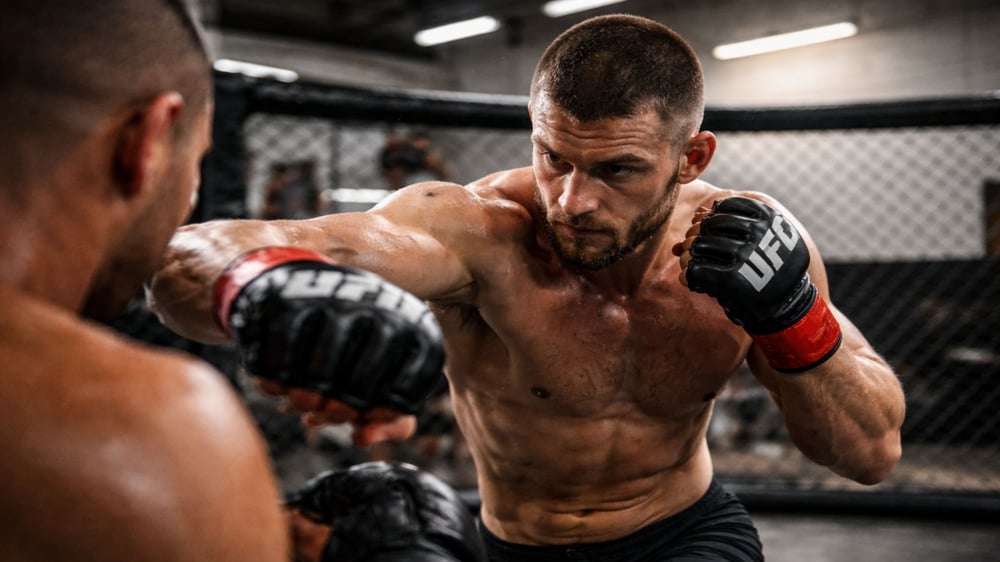
Building an MMA-specific microbiome isn't just about avoiding the chow Paddy Pimblett uses for his post-fight refeeds. Instead, it’s about a proactive, periodized strategy that treats the gut as a trainable organ. Here are the most effective levers to pull.
1. Supplement with the MMA stack
If you’re a fighter, then probiotics and vitamin D are the stack you need. Research on MMA athletes showed that 4 weeks of a multi-strain probiotic (containing B. lactis, L. brevis, L. acidophilus, B. bifidum, and L. lactis) combo’d with 3,500 IU of vitamin D3 significantly improved their time to exhaustion and increased their microbial diversity. It’s an easy win you can add to your supplement schedule.
2. Fiber load during the training block
While fighters often adjust their fiber intake to make weight, researchers found that during the heavy training phase, fiber is essential for energy stability. A 2025 study on college basketball players showed that daily fiber supplementation (up to 6.84 g/day) improved gut microbiome stability, decreased cortisol (stress) levels, and significantly increased maximal power and fatigue recovery. You can try using high-fiber plant foods (legumes, whole grains) during camp to buffer the stress of training before tapering off during the final weight-cut week.
3. Use performance fermentations
Fermented foods, like kefir and sauerkraut, are hot on every wellness hipster's lunch menu, but these are now being studied for how they might boost athletic performance. Some 2025 research on professional female soccer players showed that drinking kefir daily improved gut bacteria, specifically the abundance of Akkermansia muciniphila, which is linked to better energy metabolism, lower inflammation, and improved VO2max outcomes. It’s more powerful than you might expect and does the clandestine work that shows up in big game performance bonuses.
4. Protect the regenerative window
High performance is a two-way street. A healthy gut helps you sleep, and deep sleep repairs the gut barrier. Chronic sleep deprivation in athletes is linked to gastrointestinal dysfunction and increased levels of inflammatory markers, which delay tissue repair. To bridge the gap between sleep and gut repair, set up a strict 2-3-hour fasting window before bed. Digesting large, complex meals during sleep diverts blood flow away from systemic tissue repair. It disrupts the production of Melatonin, a hormone that is not only vital for sleep but also acts as a potent antioxidant and protector of the intestinal lining.
THE MICROBIAL SHARK TANK
Ultimately, we are entering an era in which showing up on the night is no longer a nebulous character trait but a measurable physiological state in the belly of your beast. MMA will always be a contest where the strongest will prevail, but science suggests that the "will" is only as strong as the signals being sent from the gut to the control room on top of your shoulders. It is the strategic modulation of the gut microbiome that provides that extra endurance and lactate usage needed to succeed in the deep waters of the fifth round. Whether it's Alex Volkanovski keeping his engine redlining for 25 minutes or Merab Dvalishvili getting stuck into another grueling war of attrition. The wins might just be their internal ecosystem's ability to stay strong while under fire. By optimizing your gut and diversifying your silent corner team, you aren't just fixing your digestion. Instead, you’re ensuring that when the oxygen gets thin, and your brain starts screaming to quit, your biology has the dog in it to keep throwing hands. In the future, the most dangerous fighter might not just be the one who trains the hardest. It could be the one who has mastered the trillions of microorganisms running their internal control room. Maybe Cooking With Volk is the recipe for success every fighter needs.
...