

Issue 228
April 2026
Giancarlo Aulino sits down with Randy Couture, the calm operator who made elite fighting look routine and turned longevity into his most unfair advantage.
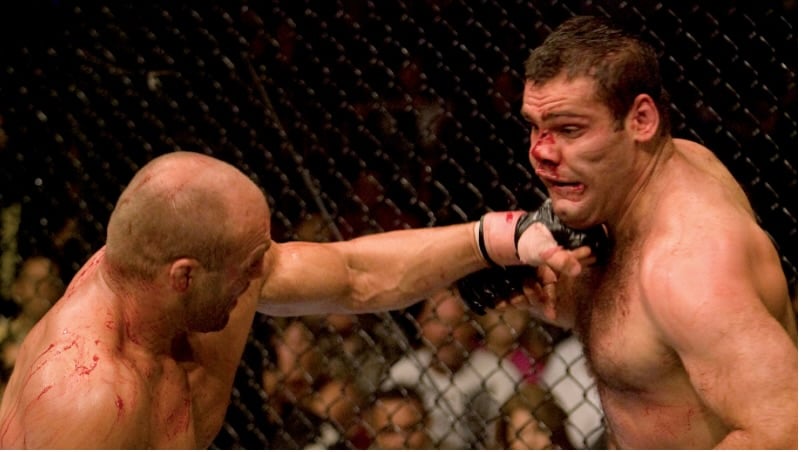
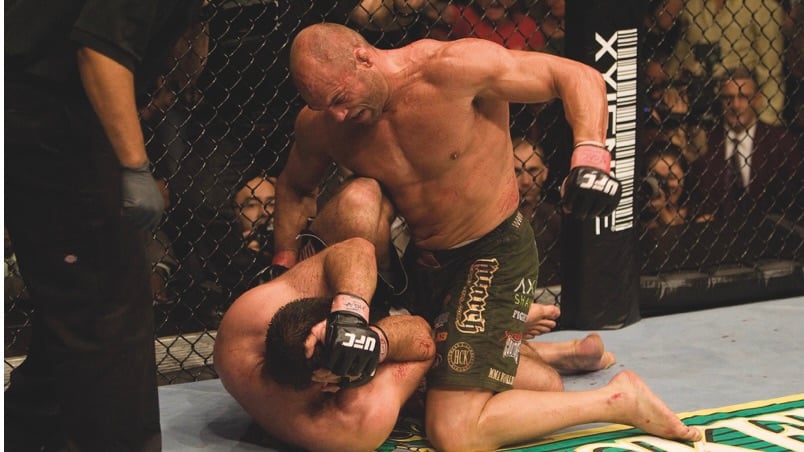
Randy Couture always fought fair, but the records he created were never fair to other fighter. Not only was he outstanding in his youth, but he also excelled at an age when most guys were worried about their cholesterol and knee pain. The UFC Hall of Famer made his professional debut at UFC 13, where he won the heavyweight tournament. He was one month shy of his 34th birthday when he debuted, and he later reached the sport’s highest heights thanks to an ability to make everything look easy, hence the nickname ‘The Natural.’ Couture became the first fighter to win two UFC belts, conquering both the light heavyweight and heavyweight divisions. Anyone who has met Randy will know he’s always operated with the calm, collected confidence of a man who knows exactly how to break you, but would much rather grab shit down and talk shop instead. Fighters Only got in touch with the legend to reflect on his career and find out what life looks like now.
ACCIDENTAL MMA
Before his UFC career, Couture chased five-ring glory.
“In my early career from 1997 when I started fighting, I was still on the national team who was trying to make Team USA’s 2000 Sydney team,” Couture said. “I was juggling both balls at the same time, and then in 2000, I came up short again and didn’t make the Olympic team. I was an alternate yet again for the fourth time, and the Olympic dream and Olympic goal, I knew it was time. I wasn’t going to do another four-year term. I needed to take those boots off and leave them in the center of the mat and retire from wrestling. And then it brought me back to MMA and pursuing MMA full-time with goals. In the fervor that I chased that Olympic dream with, for more than 16 years, I fell into MMA. It wasn’t something I set out to do.”
THE ULTIMATE FIGHTER
The Ultimate Fighter series was a turning point for the UFC, and as a team coach against Chuck Lidell, Couture was a part of it.
“We thought it was really cool that the reality genre was a great vehicle to expose the behind-the-scenes of who we really were,” Couture said. “Most people in the public thought we were criminals and crazy people for getting in a cage and fighting each other and I think that The Ultimate Fighter gave that behind-the-scenes view of the psyche of what makes mixed martial artists want to strip down to his board shorts and walk in a cage and fight another human being. I think it was very important.”
That and the incredible clash between Forrest Griffin and Stephan Bonnar on the finale.
“I think that group of guys was a very special group of athletes because this is how passionate they were about what they were doing in the sport of MMA. They would leave their families and come to this crazy city of Las Vegas and live in a house together to try and get their shot and that I think we should all be very thankful for all of them. They did a hell of a job on that show.”
LIFE AFTER FIGHTING
After a legendary career, Couture retired following UFC 129, which set records with 55, 724 fans in attendance and a $12 million gate. He’s never left MMA and has served as a commentator for the Professional Fighters League (PFL) since 2011.
“I’ve been commentating for the last eight years with PFL, who’s trying to grow the brand and give fighters another outlet,” he says. “They let me go in January, so I won’t be in the booth this year. That gives me some more time to continue to run my charities or a couple of veteran charities. I’m a vet, served in the army in the 80s during the Cold War, and now get a chance with my platform to give back to the community that means so much for me.”
EXCITING HORIZONS
Couture also made a full-time transition into acting and shared news about his latest projects.
“A slasher flick called Pitfall, and I’m not sure what platform that’s going to turn up on yet, but I’ve heard it’s gonna show up on a platform here in May,” he smiles. “It was a lot of fun. I’m the psycho that’s running around killing people, but I like this one because it kind of gives you some flashbacks into what made this guy that crazy and that’s something a lot of slasher or horror films don’t do is kind of get to the root of the issue.”
For Couture, acting was something that sparked his interest after his brief role in Cradle 2 the Grave, starring Jet Li and DMX.
“That was really fun and really interesting. It was like going to Oz and getting to pull back the curtain and see the smoke and mirrors and how it’s all made. I was immediately intrigued and started getting into some acting classes.”
THE EXPENDABLE FRANCHISE
Couture’s most notable role is Toll Road in The Expendables franchise, but Stallone initially had other plans for the role before he met Couture.
“[Stallone] goes back to the script and writes Toll Road into the script as a new character based on the conversation we had,” he recalled. “I just felt amazingly honored that he’s a fight fan and a fan of me and how I represent myself in the sport of mixed martial arts. If you want to be good in an industry that [Stallone’s] been good at for most of his career, that’s a video village tent you want to sit in when he’s directing. He wrote, and he’s now in front of that camera, man. No better place to learn how it’s done and to treat this like a profession. It’s just one of those opportunities that took my abilities both as an actor and my reputation in the industry to a new level.”
FINAL THOUGHTS
Couture is grateful for his life after fighting. If he were to give his younger self advice, he would emphasize the importance of being mentally tough.
“Keep focusing and working on the mental skills that it takes to compete in this sport, and keep smiling,” Couture said. “Sports are supposed to be fun. And if you’re not smiling and having the best time of your life, why the hell are you doing it?”
Couture defied age, achieving success by giving back to the sport as a coach at his Xtreme Couture gym. He will forever be etched in UFC history as proof that a fighter can succeed once the Octagon is over.