

Issue 228
April 2026
Speed, cardio, and a touch of unpredictability mean that Josh Hokit is rewriting the heavyweight blueprint one character at a time, and Ray Klerck caught up with him to find out how.
The heavyweight archetype in almost all combat sports is often a lumbering powerhouse, packing that one-punch power that waits for a single opening to end the night. Josh Hokit is the antithesis of that notion. Like Brock Lesnar, he’s a rare multi-sport athlete who has competed at the highest levels of both American football and elite wrestling. This means he brings a relentless, high-volume pace to the MMA that most men in his division can’t seem to get out the way of. We’ve rarely seen a heavyweight fighter rise through the ranks at this pace. He didn’t do it quietly, but detonated into relevance thanks to his speed, cardio, and elite wrestling. Combine all of those, and you get someone who feels less like a prospect and more like a pressurized system building toward something big. However, he’s more than just a natural athlete with an engine that doesn't quit. He is one of the most intriguing psychological contradictions in the sport. Balancing a self-described introverted personality with a terrifyingly intense competitive persona that thrives in the spotlight, he’s quickly become one of the sport’s most beloved fighters. When someone breaks the mold physically and mentally, you don’t just cover the rise, you dig into the mind behind it, and right now, there’s no one more worth figuring out than Josh Hokit.
CARDIO IS THE GAMEPLAN
Heavyweights are expected to end fights, not ride them out. They wait, load up, and they switch the lights off at the right moment. Hokit doesn’t play that game. He’s there to outwork and outlast bigger men, so they question whether they’re built for the pace they signed up for.
“Well, you’ve got to be realistic with yourself,” he smiled when we asked him about this pace. “So, if you're going to fight these giant men, you’ve got to ask, what will your path to victory be? And so, in my case, yes, I am a smaller heavyweight. But it also comes with advantages, which is cardio and speed. So, I mean, in a fight, you’ve got to understand your path to victory. And mine, it has to be cardio. And so even if I just had speed, if I just had wrestling, if I just had athleticism, I'm nothing without the cardio. And so cardio has to be the number one.”
SUFFERING BUILDS THE MAN
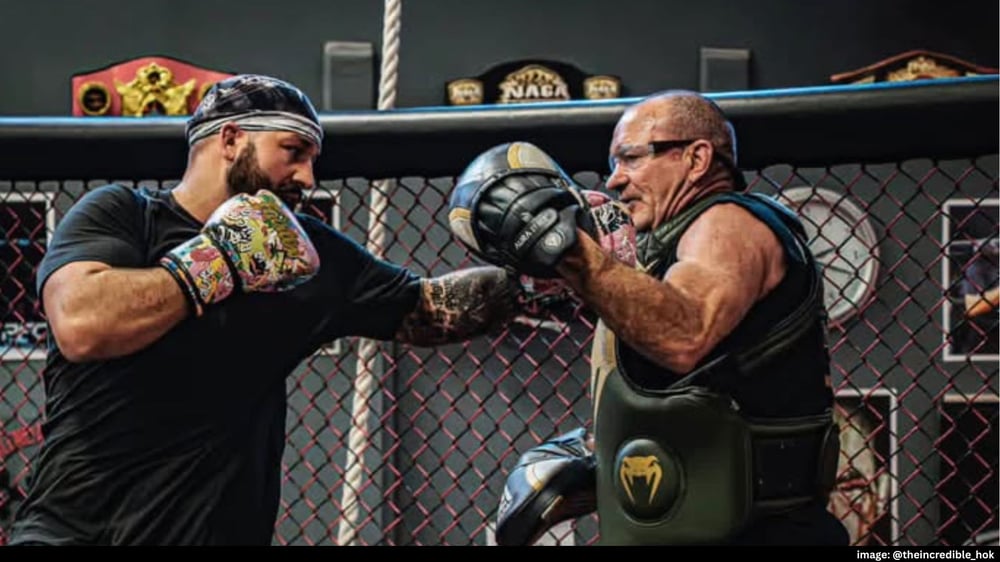
As you might imagine, Hokit was a true iron man for the Fresno State Bulldogs. Not only was he an All-American wrestler for them, but he also played for over 4 seasons as a linebacker and on offense before earning the role of team captain. He went undrafted in the NFL and played on the 49ers and Cardinals practice squads before transitioning to MMA full-time in 2023. So, before the spotlight, there was the slow grind of becoming difficult to break. If you want to know who someone really is, put them somewhere they can’t escape themselves.
“It's not MMA?” he answered, surprised, when pressed, which sport tests a man the most when things go wrong. “Well, other than MMA? I mean, because obviously MMA. MMA is number one. If we're talking about testing, the human spirit, MMA is number one. And then number two would be wrestling. Because it's just so grueling on your body. And that cardio and endurance make the biggest difference in a wrestling match. You guys are just straining and grinding for positions. So, wrestling's up there. I mean, obviously, MMA. It's a longer match, but I mean, wrestling's, I feel like it's just like a seven-minute sprint if you wrestle in college, and it's his will versus your will. And especially if you don't have a quality opponent, I mean, yeah, it's that sport is there's no joke.”
THE PRIME PARADOX
Ask ten heavyweights when their prime hits and you’ll probably get ten different answers, usually involving age, miles, and damage. The stats suggest a heavyweight’s prime is their early 30s, but Hokit doesn’t overthink it. He’s in it now. And somehow, he already knows he’ll probably say the exact same thing in five years.
“I don't know,” he says when asked about heavyweights peaking later. “I don't know about that. I think everybody's different. I feel like obviously I'm in my prime now, but maybe I'll be 30, 31, 32, and then I'll probably say I'll be in my prime then. I don't know. I think it all comes with perspective. And I could see why when you get to 30 years old or in your 30s or low 30s, that it starts making sense. The whole fight game makes sense. And then that's why it feels like you're in your prime because you learn so many lessons along the way. And now it's like, you know how to go about things. But I feel physically in my prime right now. And so, yeah, maybe I'll be 33 and also say the same thing. I don't know.”
He’s either permanently in his prime or permanently in two minds about it, which might be the exact mindset you want in a division where hesitation gets you knocked out.
THE MOST BORING MAN IN THE ROOM
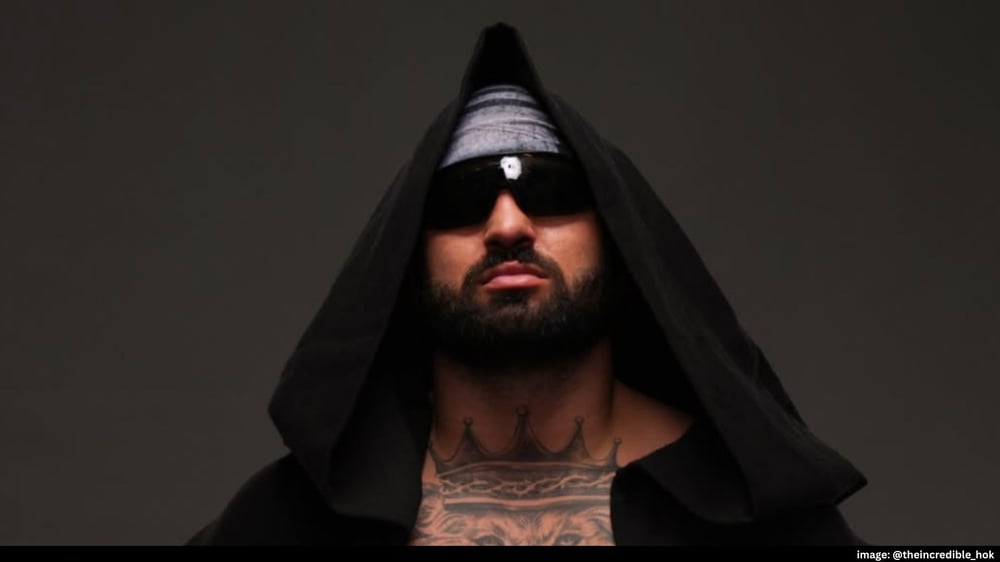
Behind the scenes, you might expect a wild existence, but he doesn’t live the way he fights. Instead, you get a wonderfully warm person who every man would like to have a beer with. It’s almost suspicious how normal it sounds, until he starts explaining the other versions of himself.
“I don't know,” he says, pausing when asked about the things fans might find boring about him. “I'm like a homebody. I'm very introverted. I don't like talking to people, believe it or not. Yeah, I like staying in places where I'm comfortable, which is usually at home. I don't even like to eat out. If I do, I eat Chipotle like every day, you know, it's nice and boring. Yeah, I'm just normal in that sense. Just depends on what day you catch me on. Today, I'm normal. I'm normal Josh. I have different faces. Josh has different faces, you know, so this one's a likable, so to speak. Maybe tomorrow you catch the shy one, maybe. I mean, there's multiple faces to Josh, but let me tell you, ‘Down Vato,’ or he likes to say ‘DOWN VATO,’ you know what I'm saying? It depends where you're at. ‘Down Vato’ and then ‘Incredible Hok’, they are real. They are real. And when you catch Josh and those characters, I mean, you could say it's all a game, it's all characters, that's all they are. No. Ask Curtis Blaines if it was real or fake. Ask all my other opponents if it was real or fake, you know? So, come see me on a good day, though.”
It’s the kind of routine that says there’s nothing to see here, right up until one of those other versions clocks in for work and ruins someone’s evening.
FAME MEETS THE MANY FACES
One fight can change everything, but it can’t always simplify who you are. If anything, it may even complicate it. Now that there are more eyes on every version of Hokit, and not all of them want the same thing.
“Um, so Shy Josh, he doesn't like the attention,” he explains. “The ‘Incredible Hok,’ he likes to just make everybody mad. And so now there are more eyes on that. And, I think he gets a little bit of pleasure from making people mad. And now there's a lot more eyes to make mad. ‘Down Vato’ just likes to stir the pot, you know what I'm saying? He likes to stir things up because he knows how dangerous the Incredible Hok is. And then the shy Josh. Are you following?”
He pauses to make sure we’re getting this right.
“So, the shy Josh, he's the one who kind of runs it. They voted so the ‘Down Vato’ and ‘The Incredible Hok’ voted shy Josh to run, you know, the Josh body, so to speak. And so now, because he's easy to control. He's shy. He doesn't want no problems. But the shy Josh is the one that created those guys as well. So, now they're all battling for the life, you know? Luckily, today, it's a normal, everyday Josh, like the everyday, friendly Spider-Man, you know? That's just how I am today. So tomorrow or maybe later you get someone else.”
We ask if he feels different since winning the most recent fight.
“No, I feel the same in the sense that because I know everything that it took to get here,” he says. “And so, people don't see that. People don't see the suffering and all those lonely nights. Or those days where there weren't many eyeballs on me? And I was still working. All the days when I wasn't getting the respect that I deserved. You know what I'm saying? They don't see those. They just see now. They just see the war that me and Curtis put on. But they didn't see the losses I've been taking since I was 4 years old in wrestling. I started wrestling when I was four. And then all the losses that I took in football. There were a lot of losses so that now it seems like I'm winning, and so it took all of that. And so now I don't take it for a grain of salt. Maybe that's the right saying in that scenario. Because it all doesn't mean anything to me. At the end of the day, the other guys, they like it a little bit more. But for me, I don't really care. Don't really care.”
Most fighters juggle game plans. Hokit’s juggling personalities, and somehow, the most dangerous one might be the one pretending not to care.
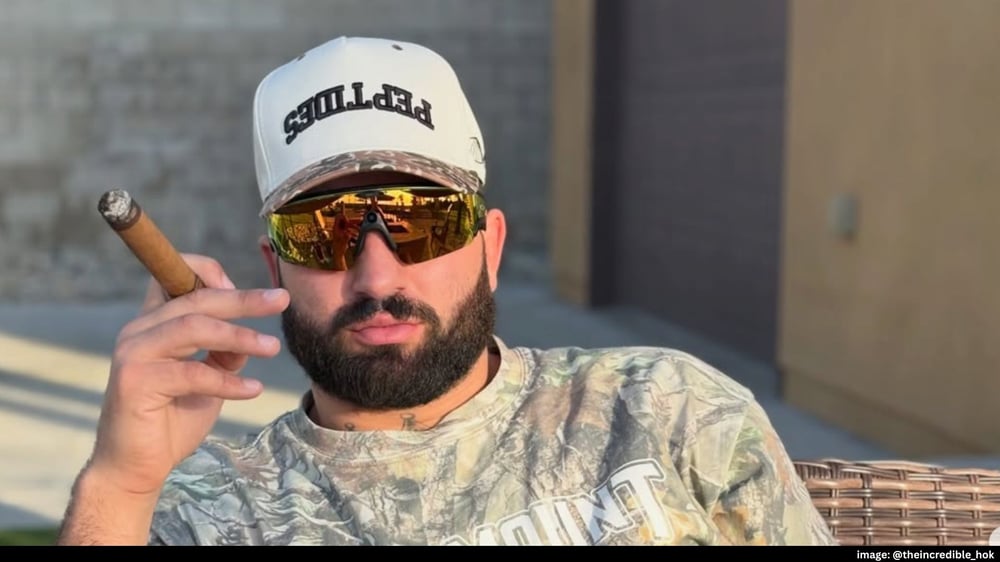
INSTINCT DOESN’T TRAIN ITSELF
You can rehearse perfection in the gym. You can drill reactions until they look automatic. Then someone punches you under bright lights, and all of that gets tested instantly. That’s where instinct shows up, and you either have it or you don’t.
“Man, there is,” he smiles when asked if he’s more about drilled perfection or fights on instinct. “And that's what makes coaching so difficult because in a fight, you could practice slipping a jab and hitting with the overhand and doing all the counters. But even looking back at how I train, and I do train like a wild man. I do go really hard. And maybe you see a glimpse of that, but it's different when the lights turn on, and there's a lot of eyes on you, sold out, I don't know if it actually was, was it sold out? I don't know. It was a packed arena. It was close. It was close enough. In Miami, you know, against a good, you know, durable fighter in Curtis Blades. You never know how it's going to play out. And it's interesting, you know, watching the fight and seeing some of my movements in the fight, if that makes any sense. And it's like, ‘Dang,’ that was a lot of that was instinct right there. Like in the sense of when to slip the punch and when to move your feet and get away, and then when to engage like that, that's hard to be calculated and taught. Like, you have to go and do that to learn that. And so, to see that, you never know how you're gonna respond when someone's hitting you with four-ounce gloves, you know? Because I mean, there's a lot more on the line in that situation than in practice, practicing bigger gloves.”
You can’t fake that kind of timing. It’s the result of doing something so many times that your body answers before your brain even gets a vote.
FROM SMALL TOWN TO THE WHITE HOUSE
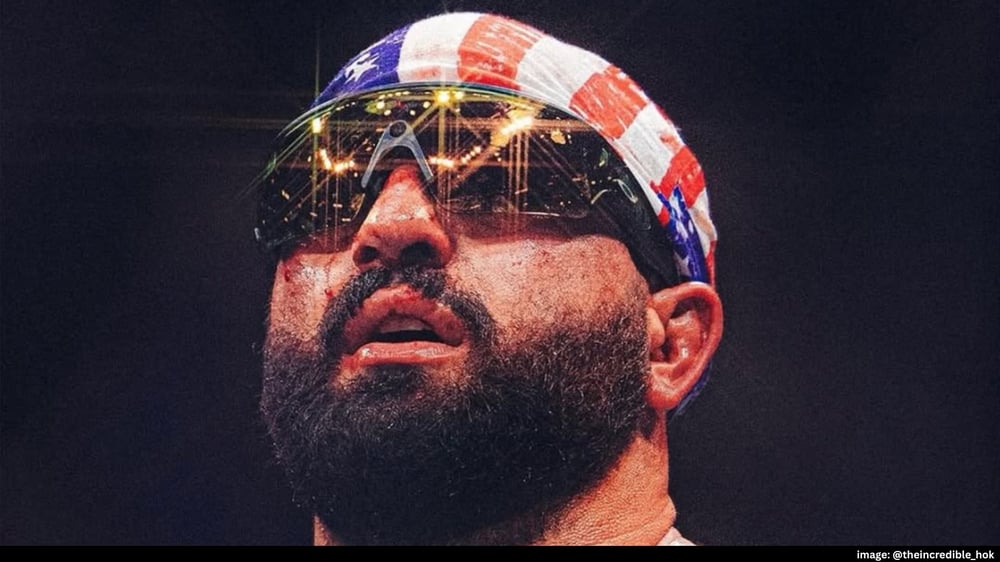
The American flag draped across him during his last win means his next fight isn’t just another venue. Its symbolism is layered atop pressure. A sport that started as a fringe spectacle is now stepping onto one of the world’s most recognizable stages.
“Yeah, I mean, it means so much,” when asked about fighting at the White House, as he pauses to consider the levity of the situation. “You know, I get to represent America in such a monumental, such a historic place. Because that has to be the most famous, most iconic place in America, right? The White House. It's such a prestigious. place. And now, because you hold these politicians, you hold these people up. When you think about the President of the United States, you put them on a pedestal. And now we're bringing such a poor man's sport to this prestigious location. So, especially for me, I'm a kid from a small town. And now to be at the White House to compete, you know, on that type of stage. Who would have thought? I was going to the ambulance. And then Mick was like, ‘Hey, you're the president's new favorite fighter. Do you want to fight at the White House?’ I'm like. Yes. And my hand still hurt, but my hand was turning purple. I couldn't really speak. My jaw, I felt like it was broken. Took some X-rays. I was good to go. I was like, well, I'll see you in two months? This is once in a lifetime. Even my hand is broken. and I get to be cleared one day before the fight, sign me up.”
Most people wouldn’t drive to the store with a purple hand and a busted jaw. Hokit’s signing up for history with it, and we’re confident he’ll put on a show for the ages.
THE REAL FIGHT HAPPENS FIRST
Sometimes the fight isn’t the hard part. The waiting is. The talking is. The pressure that builds before you even make the walk. Every fighter feels it, but not every fighter admits it. Hokit does, and then he leans into it anyway.
“Just knowing, because it's like, we all feel it,” he says when asked about his mental approach on the biggest stages. “We all feel the weight, so to speak. We all feel the anxiety. We all feel the fear. And so, knowing that we're all going through that same feeling and just being comfortable in that, you know? I can look back throughout my life, and I can get confidence in certain situations that when the smoke settles, and all the chaos settles, I'm able to withstand it. And that's what I got to remember. Because I mean, it is, there's a lot of pressure. There's a lot of it. We’ve got to do media, and no one likes to talk. Let's be real. We don't really like to talk and put ourselves out there. I'd rather sit in my room, and you tell me I have to fight. Oh, okay. And go straight to the fight from there. Man, what would that be? Like, I just, all I gotta do is just sit in my room, and then they call me to fight, and I just walk out there and fight. Oh my God, that's easy. So, it's just a mental battle and just, you know, put it in perspective that it makes sense to yourself and brings you comfort.”
Every fighter wants that version of fight week. Sit quietly, get called, do damage, go home. Unfortunately, the circus always shows up first, and those who can manage it are the ones who so often prevail.
THE HEAVYWEIGHT PROBLEM NO ONE SOLVED YET
In a division where most men are built like wrecking balls with a short fuse, Josh Hokit feels like something far more complicated. He doesn’t just hit hard, he makes you work, think, doubt, and then work some more until your lungs file a formal complaint. Add in a rotating cast of personalities, and you’ve got a fighter who doesn’t just beat opponents, he unravels them. The scary part is he’s not pretending to be anything. This is the real thing, built on years of quiet losses, hard lessons, and a refusal to play the heavyweight game the way it’s always been played. And if this is what ‘normal Josh’ looks like, the rest of the division might want to start preparing for the other versions, because they’re coming whether you’re ready or not.
...