

issue 229
May 2026
After Jiri Prochazka’s bizarre post-fight comments, Ray Klerck explores why the brain can behave strangely when adrenaline, ego, and trauma collide during MMA.
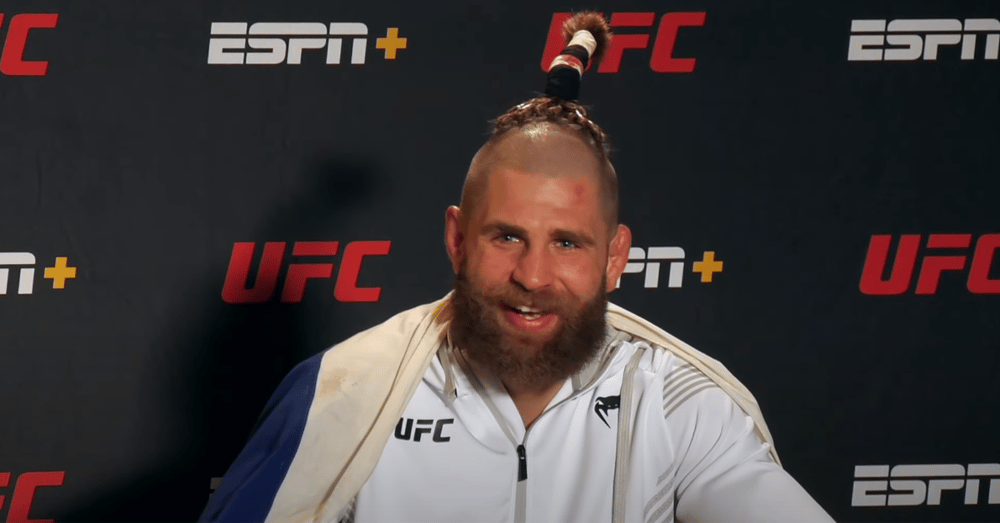
Sore losers. We tend to hate them. Well, unless we’re the ones who caused them to chuck the PlayStation controller across the room. However, MMA may produce them at a higher rate than a Monopoly board on Christmas Day. After Jiri Prochazka’s knockout loss to Carlos Ulberg at UFC 327, fans expected maybe some humble reflection or a mysterious samurai proverb muttered into the void. Instead, they got comments about how he was showing mercy after noticing that Ulberg had an injured leg. This was followed up with an explanation that he mentally dropped to “40 or 50 percent” and began sparring instead of trying to finish the fight that most experts had expected him to win. Predictably, the internet fired up. Jiri’s words were treated like he’d just tried to explain flat-earth theory while concussed in a sauna. But maybe the real story here isn’t whether Jiri was coping, delusional, or protecting his ego. Maybe it’s that the human brain behaves strangely after spending fifteen minutes preparing to kill another man under fluorescent lighting while thousands scream around you like Romans in a gladiator arena.
HELD TO ACCOUNT
In response to stress, the brain has cooked up fantastic coping mechanisms for danger, embarrassment, and public humiliation. Research into combat sports shows adrenaline can surge to more than four times normal resting levels during a fight, creating one of the most violent hormonal spikes seen across any sport. The nervous system is pushed into survival mode. Cortisol rises, adrenaline floods the bloodstream, and the brain becomes hyper-focused on threats and self-preservation. Sometimes those threats can be questions from the media or thousands of strangers applauding your lowest moment in slow-mo. The problem is that once the fight ends, the body’s chemistry doesn’t magically reset itself in the changing rooms. And while critics were quick to savage Prochazka’s comments, it’s easy to forget that he was knocked out, which is a brain injury. This can lead to the brain entering a period of depressed metabolism, which can lead to emotional instability and a detached feeling many athletes experience for up to two weeks. So, in Jiri’s case, he has been knocked out for a third time when the light heavyweight title was on the line, and 16 days later, he’s still being peppered with questions about the loss. Small wonder he starts to call Ulberg a stripper. Fighters can spend hours or even days trapped in a strange hormonal hangover where sleep gets disrupted, emotions swing wildly, and rational thinking takes a back seat to ego protection and survival instincts. In other words, the body might leave the octagon long before the brain does.
THE CHEMICAL COMEDOWN
The strange thing about fight sports is that the body can treat victory and defeat like two different flavors of a car crash. According to Dr. Asoka Wijayawickrama, a ringside medic, BJJ black belt, and doctor who contributes to the medical charity Safe MMA, the hormonal storm that builds during fight camp doesn’t suddenly disappear once the gloves come off.
“Training camp and competing in MMA can be one of the most stressful things you can do,” he explains. “During a fight, stress hormones like cortisol and adrenaline surge through the body, sharpening alertness and preparing fighters for survival. The problem comes afterward when that chemical rocket fuel suddenly shuts off. The adrenaline released during the event, causing increased alertness, suddenly stops, leaving you feeling drained and exhausted. Testosterone can also crash more quickly than cortisol, leaving fighters simultaneously exhausted as their bodies enter a catabolic state in which tissue begins breaking down. Add falling dopamine and serotonin levels into the equation, and it becomes easier to understand why fighters can feel emotionally hollow, flat, or strangely detached afterward.”
In other words, sometimes the sore loser isn’t just protecting their ego. They’re trying to make sense of a brain and body that still thinks the fight is happening.
THE AFTERSHOCKS
The dangerous thing about adrenaline is that nobody warns you how quickly it will come on strong, peak and then dip. You see it in a fight when a fighter comes out hard in the first round, almost gets a finish, then isn’t the same in the second round. It’s what happened with Khamzat Chimaev and Sean Strickland. Fighters can walk backstage after competing in front of millions and feeling like a superhero, only to find themselves lying awake at 3 am staring at the hotel ceiling. According to Dr. Wijayawickrama sleep loss is very normal.
“All of the above hormonal changes may result in a period of insomnia for the first few days after the event, post-fight tremors, feelings of depression, irritability, and anxiety for a few days after the event.”
He also regularly sees fighters struggling with dizziness and light-headedness as their blood pressure crashes back down after sitting at elevated fight levels for so long. Fortunately, the body can be coached back toward normality. “One of the things immediately post-fight to do is slow deep breathing to activate your parasympathetic system,” he explains. “Inhale for four breaths, hold for four, then breathe out again.”
He also recommends hydration, electrolytes, and eating a meal with a 2:1 carbohydrate-to-protein ratio within the first hour to restore glycogen stores and support recovery. Though most guys will probably lay into their favorite pizza. And while a celebratory champagne or beer might feel mandatory after getting punched in the face for a living, Dr. Wijayawickrama warns that caffeine and alcohol can further aggravate the hormonal chaos already unfolding inside the body.
THE RESET BUTTON
The strange irony of modern MMA is that athletes spend 8-12 weeks training like action heroes, only to discover recovery mostly involves behaving like someone’s retired uncle at a wellness retreat. Dr. Wijayawickrama says the first few days after a fight are critical because this is when the nervous system starts trying to drag itself back toward baseline, and this is something that can improve your mental health.
“Try to aim for the recommended 7–9 hours of sleep as this will allow your testosterone levels to recover and lower the cortisol hormones,” he explains.
In other words, sleep stops being a luxury and starts becoming hormonal first aid. But recovery doesn’t mean becoming one with the couch cushions either.
“Active recovery such as light swimming, walking, and shadow boxing will allow your stress hormones to recalibrate,” says Wijayawickrama.
Sports massage and foam rolling can also help calm the battered body, while omega-3 supplements may reduce inflammation and support testosterone production. It’s less Rocky Balboa and more tired Labrador slowly remembering how to function again, but sometimes survival after the fight is about convincing the body that the war is actually over.
THE MAN AFTER THE MOMENT
Maybe Jiri Prochazka wasn’t cooking up lame excuses at all. Perhaps we were just watching a fighter trying to emotionally process one of the most intense biological experiences a human being can volunteer themselves to undertake. Sure, the fans love the beatdowns, but they also expect consistency afterward, as if a man can get concussed under stadium lights, suffer a career-defining loss, flood his bloodstream with stress hormones, and then calmly deliver a TED Talk interview on his accountability twenty minutes later. MMA stars aren’t robots. They’re exhausted human beings operating somewhere between survival instinct, ego protection and mild brain trauma. That doesn’t mean every strange post-fight comment deserves a free pass, but it does mean we should probably stop acting shocked when someone who just got kicked unconscious behaves a little strangely afterward. Because sometimes the sore loser isn’t weak, arrogant, or delusional. Sometimes he’s just a regular dude.
...