

issue 229
May 2026
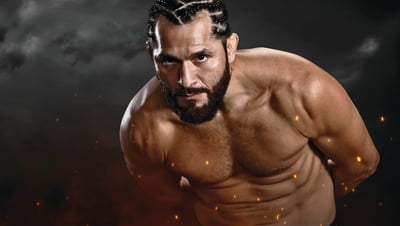
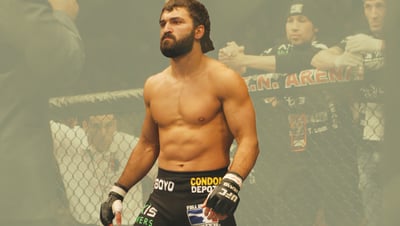
Before championship belts were on the line, the world's greatest fighters were locked in their own battles. We delve into the gritty and inspiring MMA origin stories that forged these warriors into the legends they are today.
BELAL MUHAMMED - HARD-HEADED WINNER
Belal Muhammad was born on July 9, 1988, in Chicago, Illinois, to Palestinian immigrant parents. He grew up as the middle child with two older and two younger siblings, but Belal was far from forgotten or cooperative. With a childhood set on the Southwest side of Chicago, this is a place where you either find a path or the streets find one for you, so he was put to work in the family’s cellphone shop. It meant Belal’s early life was a constant exercise in responsibility and proving himself. Despite his neighborhood having over 18,000 Palestinians, he may have been surrounded by culture, but in the schoolyard, he was often an outsider because of his Arab ethnicity. His first love wasn't MMA, but the asphalt of Chicago’s basketball courts, which shaped his mindset as he told the UFC.
“Growing up where I was, my life, the way that I started, people would always doubt me in everything, whether it was basketball or anything else. Ah, who’s this Arab? He’s not gonna come and play with us! He’s not gonna beat us,’ and it was like, ‘Watch me!’ I’d end up beating them, talking trash, and we’d get into fights.”
However, the fighting spirit was formed at Bogan High School. It was here, during his freshman and sophomore years, that Belal found a mentor in his wrestling coach, and future PFL champion, Louis Taylor. Taylor taught him how to weaponize his hard-headedness, but when the coach abruptly left the school after two years to pursue a professional fighting career, a disillusioned Belal quit the wrestling team entirely. He pivoted back to the basketball courts and focused entirely on his grades, graduating in 2006 with his sights set firmly on becoming a lawyer at the University of Illinois. Reflecting on his Chicago roots, Belal told Imam Omar Sulieman about how it shaped his persona.
“Being from Palestine, we're all hard-headed. We're stubborn, and in this sport, you've got to be stubborn because it's you versus another man. It's going to be the one that gives up first that's going to lose that fight.”
While he was a good student who set his sights on becoming a lawyer, there was a side of him that taught him that plans are only as good as the work ethic behind them. Even when he was studying law at the University of Illinois, the shadow of his wrestling days stayed with him. The spark was ignited when he saw his old high school coach fighting in a local newspaper and realized that the same discipline he had used to survive could be the backbone of a different career. He traded the courtroom ambitions for the mat, realizing that the persistence required of a kid from his background might be the perfect engine for MMA. He made his way up through the regional circuit, at times being dismissed as boring or lacking star power, but for someone who grew up being underestimated, that was just noise. Belal proved that whether it’s the streets of Chicago or the lights of the UFC, the person who refuses to give up is the one who eventually becomes impossible to forget.
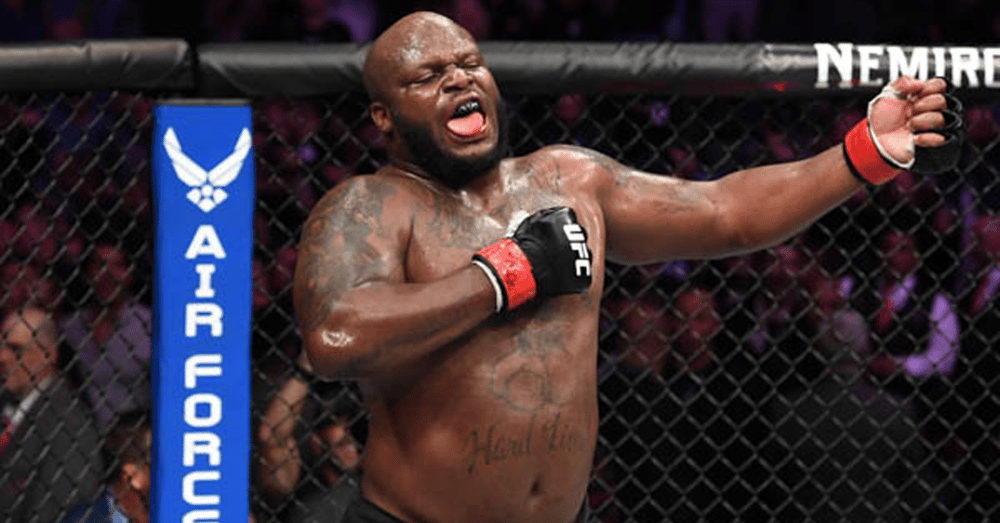
DERRICK LEWIS – THE HIGH FROM THE BOTTOM
Derrick ‘The Black Beast’ Lewis was born on February 7, 1985, in New Orleans, Louisiana. Raised as the second oldest of seven siblings by a single mother, Lewis’s childhood was busy and a little bit unstable. The violence he witnessed wasn't just on the street corners but was right inside his living room when he was a young teenager, as he told TXMMA.
“I moved to Houston in 1999 because my mom, she was in an abusive relationship, so we had to hurry up and leave right away. We had to sneak out of the house while the guy was gone, and from there, we came straight to Houston.
Lewis has said that the raw, explosive anger he brought into his adult fighting career was, in part, generated during those early years, as he told the UFC.
“I grew up without a father, and I didn't know what being a man was all about. I went through that situation that I went through, and it taught me how to look at life a whole different way.”
At 17, Lewis looked like he might find his exit when he discovered a local boxing gym. He was hyper-focused, losing weight and training for his first amateur fight, when the gym abruptly shut its doors. The sudden loss of structure left him completely adrift. Just two weeks after graduating high school, the street life caught up with him. During a night out, an altercation with a man reaching for a shotgun escalated into a situation where Lewis was charged with aggravated assault and placed on probation. A probation violation turned his original slap on the wrist into a harsh reality check: a five-year prison sentence, of which he ultimately served three and a half years behind bars. When the prison gates opened, Lewis was a convicted felon with very few job prospects. His career began when he realized that the only thing he knew how to do perfectly, the very violence that had stolen his youth, might be something people would pay him for. He transitioned into mixed martial arts while grinding as a tow-truck driver, even catching the eye of boxing legend George Foreman along the way. He realized that the survival traits of a kid from New Orleans could be channeled into devastating knockout power. Reflecting on how the view from the top of the heavyweight division completely contrasts with the concrete floor of a cell, Lewis noted
“To go from [being locked up] to getting out and being on top of the world in this sport and the position I'm in now is unexplainable. It's so crazy. It's like a high. My life right now is one of the reasons why I don't get high, because just me thinking about my bad situations to where I'm at now is enough of a high. It don't feel real.”
Lewis tore through the regional scene, translating his absolute refusal to go back to prison into a legendary UFC run that netted him the record for the most knockouts in the organization's history. He proved that you don't need a pristine background to build a legendary legacy. Sometimes, you just need bad enough memories that make sure you never take a single step backward.

SHARABUTDIN MAGOMEDOV – THE TEKKEN BULLET
Sharabutdin Magomedov was born on May 16, 1994, in the rugged landscapes of Dagestan, Russia, a region world-renowned for producing stoic, grappling-heavy legends. But Shara was a different breed entirely. Growing up in a culture that heavily favored wrestling, his first passion was actually the green pitch of the local football club. He possessed elite athletic gifts, but he also carried a notoriously fiery, explosive temperament. His football career came to an abrupt halt following a fierce altercation with a teammate. Kicked off the team and needing a place to put his raw energy, he turned to the streets, he said when speaking to the UFC.
“I started boxing at the age of 12 in order to stand my ground on the street. In Dagestan, as a kid, I often had to fight, and my opponents could be gym-trained boys against whom you needed combat training. Just your natural abilities were not enough to resist them, and losing to someone was not my credo, so I went to the boxing gym.”
Yet, even as he committed to combat sports, Shara refused to conform to the rigid, military-style expectations of his homeland. He famously wanted to train at the legendary gym founded by Abdulmanap Nurmagomedov, father of UFC icon Khabib, but was turned away due to a strict house rule regarding presentation. Speaking to Telecomasia.net, Shara laughed about the stubbornness of his youth:
“I’ve always had long hair. In my youth, I heard about Abdulmanap's gym, but my hairstyle was a problem. I once came to train with Khabib, but he wasn’t there. Nurmagomedov Sr. mentioned that a short haircut is necessary. With time, you start to understand why. Why do guys grow their hair long? To impress girls. But that’s not what an athlete needs. They don’t need to appeal to everyone, especially girls. They will come later when you’re on the podium, even if you don’t have a single hair on your head.”
In further defiance, while other kids were studying wrestling tapes, Shara and his crew were glued to the television, mesmerized by pop culture’s interpretation of fighting. His unique, sniper-like kicking style was forged not just by trainers, but by an obsession with replicating digital movements in the dirt. As he told Fighters Only, his entire style was born out of a childhood desire to bring a video game console to life.
“In my early childhood, my style began to take shape when we watched various fascinating martial arts movies. Motivated by these films, we started bringing what we saw to life, sometimes trying it out on the streets. We also played video games like Tekken and Mortal Kombat, where you could experiment with a wide range of moves. It made me want to replicate those moves in real life.”
This childhood dream of fighting like a video game character morphed into an unorthodoxy that mystified the Russian regional circuits. He eventually transitioned into MMA out of sheer financial necessity, amassing an explosive, undefeated streak built entirely on precision striking. Now widely recognized by his childhood moniker ‘Shara Bullet,’ he has proven that a hot-headed kid kicked off a football pitch could use the blueprints of Tekken and the grit of the Dagestani streets to become one of the most uniquely dangerous strikers on earth.
...