
issue 229
May 2026
From outlawed bloodsport to White House power circles, Ray Klerck traces how the UFC survived political extinction, conquered television, and turned cage fighters into global cultural icons.
At the beginning, the UFC was run like a back-alley dice game. It bounced from state to state like a fugitive carnival attraction, hidden behind society’s moral panic, only dragged into the spotlight whenever someone compared it to the collapse of civilization. Somewhat understandable when you consider the UFC’s very first round saw sumo star Teila Tuli’s two front teeth kicked out so hard that they tumbled out of the Octagon. In the early 1990s, professional MMA was far from a multi-billion-dollar global phenomenon. Back then, grandstanding politicians saw it as having no athletic future. Instead, it was viewed as a dumpster fire of primal urges that needed to be washed out with a fire hose of legislation. Yet fast-forward to 2026, and the transformation is night and day. The very sport that was once evicted from mainstream arenas is now about to stroll through the front gates of Pennsylvania Avenue like something out of a foreshadowing Simpson’s episode. When the top stars of the sport are welcomed onto the White House lawn, it marks the completion of the wildest underdog redemption arc in sports history. To understand how an outlawed sport conquered the highest office, it’s worth mapping its evolution against the oldest spectacles in human history, because we have been here before. MMA didn't just stumble into mainstream acceptance by fluke. Instead, it followed the ancient blueprint laid down by the Greeks and Romans, who relied on political power brokers to transform spectacle into influence.
THE DARK AGES OF THE OUTLAW CAGE
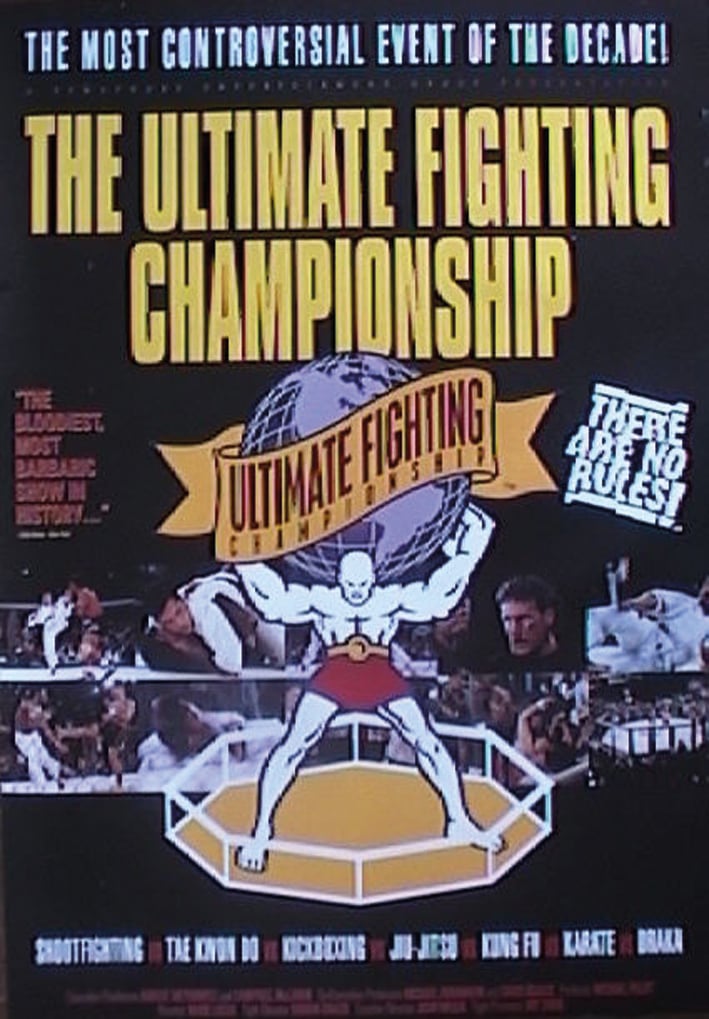
From its inception, the UFC was built on a trifecta of rockstar skill sets. There was Art Davie, an advertising director who was inspired by Greek pankration. Next came Rorion Gracie, the OG BJJ master, who wanted to show the world the power of his family’s grappling style. Finally, there was John Milius, a Hollywood director and writer of films like Conan and Apocalypse Now, who was one of Rorion’s students. Art had read about the Gracie Challenge in a Playboy magazine that details Rorion’s offer to fight any martial artist to prove BJJ’s superiority. He saw the VHS tapes of BJJ dismantling other fight disciplines and knew Milius’s cinematic vision could turn this into a spectacle the world would love. When the octagon finally became a reality at the McNichols Sports Arena in Denver on November 12, 1993, the initial marketing aggressively leaned into the potential for danger, boasting that there were no rules and that death could occur. The UFC team was rumored to be feeding the press lines like this: “The only way a fight ends is by knockout, submission, or if a corner throws in the towel. And we’re not supplying any towels.” Curiously, it still remains very rare to see a corner throw in a towel, ever in MMA, where the most recent laundry item was probably Reinier De Ridder’s loss to Brendan Allen. Meanwhile, across the Pacific, the combat revolution had broken out three years earlier in 1993. In April of that year, Kazuyoshi Ishii launched K-1 in Tokyo, creating a hyper-slick, stand-up striking tournament that searched for the undisputed king of kickboxing and karate. Just five months later, in September 1993, Japanese pro-wrestling icons Masakatsu Funaki and Minoru Suzuki unveiled Pancrase, a direct, open-palm homage to ancient Greek Pankration that beat the UFC to the historical punch by two full months. When Ken Shamrock famously competed at UFC 1 in November 1993, he wasn't stepping into the unknown. He had competed in a grueling, real-fight Pancrase ring in Japan just four days earlier. The world wasn't just watching a lone American experiment. They were witnessing a coordinated, global resurrection of the ancient pastime.
THE UNSTOPPABLE WAVE
The legislators’ response to this marketing strategy was immediate, and they aimed to choke out MMA altogether. Leading this crusade in 1996 was U.S. Senator John McCain. After watching a tape of the early events, he was repulsed, flatly declaring it to be barbaric, not sport, and most infamously, human cockfighting. Rather weirdly, McCain felt so strongly against it that he wrote letters to all 50 state governors to ban the events, forcing the sport off major cable networks and driving it out of traditional athletic arenas. He was a boxing purist who had even authored the Muhammad Ali Boxing Reform Act, but he was against violence in the media, because of the 1990s culture wars it was supposed to fuel, standing alongside the likes of gangster rap and violent video games. In a beautiful marketing pivot, the UFC went on to sell itself as being banned in 49 states, which, of course, made people want it more, but it still failed to convince the legislators despite the rising tide. Still, the various commissions treated MMA fighters like common criminals rather than world-class martial artists. Fighters Only archives vividly recall the era, highlighting how fighters had to fly into obscure jurisdictions, competing in states without official athletic commissions just to cash a check. The consensus among the media elite was that the sport would sputter out and die, as a grotesque footnote in modern entertainment. However, history has a knack for repeating itself.
THE GREEK AND ROMAN BLUEPRINT
When Art Davie first conceptualized an eight-man tournament that would crown the ultimate fighter, his mind was anchored in 648 BC, the year Pankration was introduced to the Ancient Olympic Games. Pankration, meaning “all of the might,” was the Greek world's expression of total combat. It combined striking and wrestling in a naked dirt pit with just two rules. No biting. No eye-gouging. This was the first lesson, and the early UFC realized that lawless combat could cause problems when it lacked structure or rules. Here is where the UFC concept collided with the early Roman gladiatorial games, which were at first private, highly controversial events deeply distrusted by the conservative senate elite, who criticized them for threatening public decency and stirring up lawlessness. That all changed when the Roman politicians realized that this was what the people wanted, and even Julius Caesar reportedly had a choice opinion on the pastime.
“No kind of spectacle is more popular, nor more effectively wins the hearts of the citizens, than the combat of brave men.”
The Roman rulers regulated the bouts, flung open the state coffers, and began to attach their own imperial names to the games. They transformed a widely condemned sport into a tool of state power. The crowd's insatiable desire for combat was no longer a problem to be legislated away. It was a powerful political football that needed touchdowns. Once the ruling class provided imperial sanctuary, gladiators stopped being outcasts and became celebrities many of whom volunteered for the sport for hte glory of being some of the world's first superstars. Their sweat was sold as cosmetics. Their health care was world class. And very few of their fights ended in death because they were a serious investment for their backers. In many ways MMA fighters are no different. Early MMA was trapped in the same volatile cycle that defined the games of ancient Greece and Rome, but when it won the voting public’s soul, it became a tool of influence. It has always been a tale as old as time.
THE ZUFFA OVERHAUL
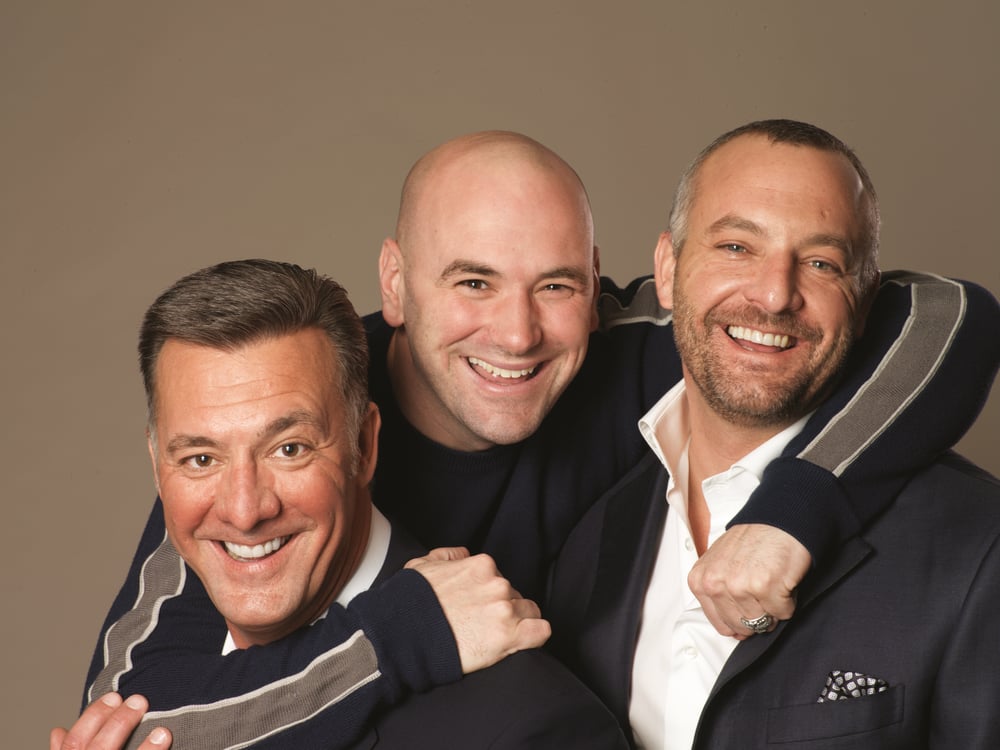
To understand how television executives were finally convinced to screen this new sport, you have to look at the corporate re-engineering job the promotion got after it changed hands. When casino magnates Frank and Lorenzo Fertitta purchased the hemorrhaging UFC brand in 2001 for a modest $2 million, they weren't inheriting a prestigious sports league. Instead, they were buying what many believed to be a toxic asset. Lorenzo Fertitta famously recalled the sheer absurdity of the risk.
“My attorneys told me I was crazy because I wasn't buying anything. I said, ‘What you don't understand is I'm getting the most valuable thing that I could possibly have, which is those three letters: UFC.’”
The newly formed parent company, Zuffa, immediately stripped the brand of its lawless marketing identity. They collaborated directly with state athletic commissions to draft the Unified Rules of Mixed Martial Arts, introducing mandatory gloves, weight classes, strict time limits, and explicit bans on headbutts and groin strikes. The raw violence was repackaged into a highly regulated, hyper-athletic science. It was this clean, corporate armor that finally made the sport palatable to network executives, and it laid the groundwork for the mainstream media boom that was about to follow.
THE TV TURNED THE CAGE INTO CULTURE
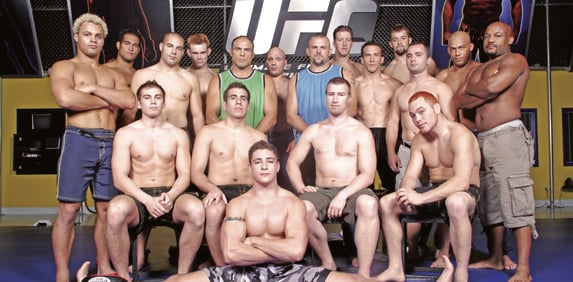
The UFC didn’t truly explode because the regulators finally stopped clutching their pearls. It became popular because television figured out how to sell fighters as human beings rather than as anonymous concussion-delivery robots. Before the mid-2000s, following MMA meant hunting down grainy VHS tapes, buying expensive pay-per-views, or staying awake until midnight watching obscure broadcasts squeezed between infomercials for suspicious ab machines. Fighters Only archives from 2007 paint the picture perfectly, with promotions like the IFL airing on MyNetworkTV, BodogFIGHT hidden away on smaller networks, and The Ultimate Fighter beginning to dominate Spike TV ratings. At the time, The Ultimate Fighter was regularly pulling around 1.5 million viewers per episode, while IFL broadcasts hovered above the 1-million mark. These were staggering numbers for a sport politicians had tried to bury only a few years earlier. More importantly, television stopped selling MMA and started selling personalities. Fans suddenly cared about the lives, rivalries, and glorious weirdness of fighters like Forrest Griffin, Michael Bisping, BJ Penn, and Jens Pulver. Once audiences were emotionally invested in fighters rather than simply watching violence, the sport stopped feeling underground and started to feel inevitable.
THE NAYSAYERS PROVED WRONG
The politicians weren't the only ones praying for MMA to wither away. The boxing elite saw the upstart sport with a mix of aristocratic disgust and financial terror. Legendary boxing promoter Bob Arum led the charge, actively trying to alienate mainstream sports fans from MMA. In 2009, Arum famously attempted to reduce the entire MMA fanbase to a toxic stereotype, sneering to reporters that MMA was nothing more than a passing fad for “beer drinkers,” “homosexuals,” and “skinhead white guys.” Arum confidently predicted that the Fertitta brothers would lose money on what he called a garbage product. Decades later, as boxing struggled with fractured sanctioning bodies and unmade superfights, the UFC sold for over $4 billion, leaving Arum’s comments to age like milk left out in the blazing Nevada sun. Dana White's modern response to Arum’s decades of hate remains characteristically blunt.
“Does anyone give a f*** about Bob Arum or what he thinks? I didn’t know he was still alive!!? I remember a bitter, fat, red, alcohol-abuse-faced Arum chirping about the ‘oodles of money’ the Fertittas were going to lose on the UFC [10 years ago]. Arum is the biggest dirtbag in all of sports. I look forward to sticking around and continuing to kick his ass in every aspect of our business.”
The final, ironic surrender came from within the regulatory system itself. Marc Ratner, the Nevada commission boss who once fought to keep the sport outlawed, didn't just change his mind. He was hired by Zuffa in 2006 as the UFC’s Vice President of Regulatory Affairs, becoming the chief architect responsible for securing legal sanctioning of the sport across all 50 states and globally. If you can’t beat them.
THE TRUMP CARDS
When the UFC was gasping for air in the late 1990s and early 2000s, completely locked out of major venues like Madison Square Garden, an unexpected savior stepped out of a luxury limousine. Enter Donald J. Trump. Long before he ever considered the presidency, he had a lion’s instinct for populist entertainment and a long-storied relationship with fight sports. While other venue owners treated Dana White and the Fertitta brothers as if they were selling bad gas-station sushi, Trump looked at the underlying mechanics of it all and saw pure box-office gold. Trump threw open the doors of the Trump Taj Mahal in Atlantic City, hosting UFC 30 and UFC 31 in 2001. This was the critical pivot moment when Zuffa took over the company. It provided the cash-strapped organization with a legitimate, high-profile sanctuary right when they needed it most. As Dana White later recalled, those desperate early hotel room negotiations meant the world to them.
“We bought a company that had nothing. It was a brand that was completely dead, but Donald was the guy who called us and said, ‘Come to my place, let's put the fights on here.’”
This created an unbreakable, decades-long bond between Dana White and Trump. White would later credit Trump’s early belief in the promotion as the sole structural pillar that kept the UFC afloat, while the rest of the corporate world treated it as poisonous. Trump would often come to watch the live fights and support the sport, which boosted the company’s profile and helped it to secure future venues.
“Nobody took us seriously then, except Donald Trump,” said Dana in 2018. “I would never say anything negative about Donald Trump because he was there when other people weren’t.”
It took over a decade for the sport to dominate the cultural landscape before its fiercest political critics finally folded their tents. In 2007, Senator John McCain officially completed his famous about-face, admitting to reporters: “They have cleaned up the sport to the point, at least in my view, where it is not human cockfighting anymore. I approve of them now.”
So, this is where some of the intersections of MMA and political approvals were forged. And while some foolish detractors have claimed Trump started supporting the UFC because it won the popular vote, they are dead wrong. Trump was there from the beginning because he’s been a fan for more than 300 UFC events, and without him, there may not have been a UFC.
GLOBAL DOMINION
The conquest of America was only the first phase of the plan. Once the UFC established its regulatory armor on home soil, it set its sights on global expansion, systematically exporting the Octagon to every continent on Earth. The strategy was simple. Find local fighting heroes, build an international television footprint, and break into markets that had historically been ruled by soccer or traditional boxing. When the UFC marched into Brazil, they filled soccer stadiums with thousands of screaming fans, creating an atmospheric wall of sound that redefined sports entertainment. This was replicated in Canada, the United Kingdom, Europe, and Asia. The modern UFC roster reads like an atlas of human combat, pulling elite talent from the mountains of Dagestan, gyms of Auckland, cities of Europe, and arenas of Africa. This international diversity transformed the promotion from an American curiosity into a borderless athletic empire. By creating localized heroes on a global stage, the organization tapped into a tribal sense of national pride that has created the juggernaut the world is better for today.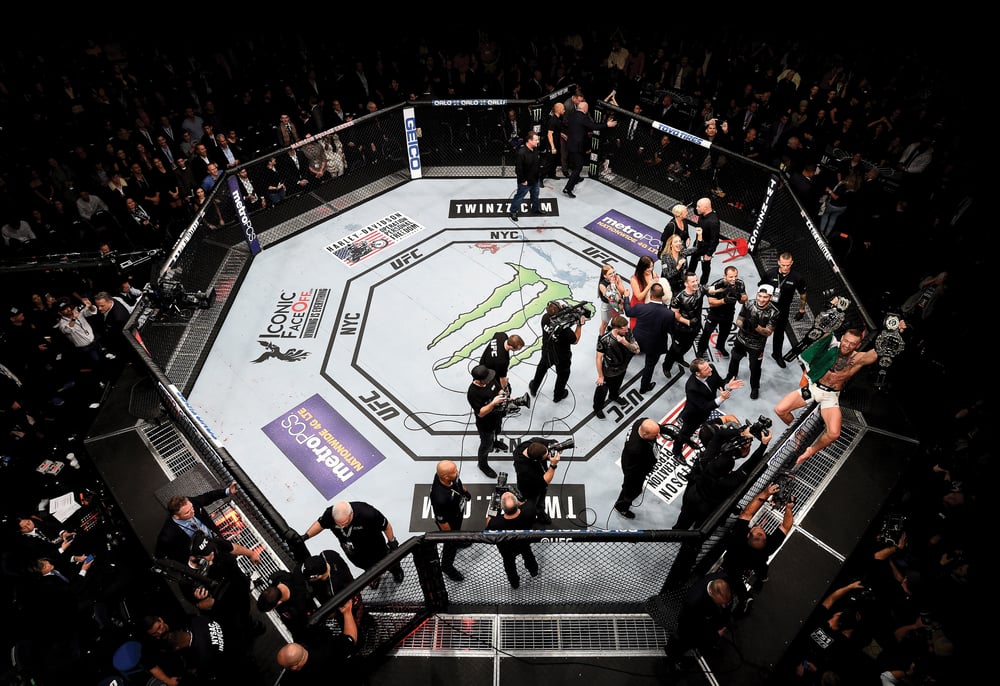
THE EXECUTIVE LAWN CORONATION
By the time the modern fight calendar rolled into 2026, the sport’s global dominion had evolved into an undeniable political reality. The corporate strategy of creating localized heroes across borderless territories had completely shattered the old glass ceilings of cultural acceptance. The sport is now too massive, too wealthy, and too universally watched for the political establishment to ignore any longer. The ultimate narrative circle was squared up when Donald Trump returned to the apex of America, bringing the decades-long loyalty forged at the Trump Taj Mahal straight into the presidential halls of power. When the sport's reigning champions are officially called to step out under the porticos of Pennsylvania Avenue, it represents a profound milestone that fulfills an ancient blueprint. A spectacle once targeted for systematic legislative execution by the state is instead adopted by the executive branch as the ultimate celebration of national grit, physical mastery, and populist power. The fighters are no longer outlaws hiding in the unregulated shadows. They are global icons standing on the White House lawn, their hands raised by the presidency itself.
THE APEX OF THE NEW EMPIRE
Today, anyone trying to coast on the old-school narrative that MMA is a subculture for meatheads and outlaws is playing a losing hand. The strategy has shifted permanently from a desperate scramble for survival to total, uncompromised institutional dominance. The modern fighter is a finely tuned kinetic machine, backed by the sophisticated sports science of the UFC Performance Institute, and celebrated by presidents, prime ministers, and tech billionaires alike. The sport has reclaimed its classical role as the premier theater of human drama, proving that the ancient Greek and Roman instincts of the crowd never actually left our DNA. The journey from the old Senate’s condemnation to the historic handshakes on the White House steps proves that if you fight hard enough through the darkness, eventually, you get to rule the light. And as the world’s elite fighters look out at a sport that now has a leading part in global culture, they can safely smile knowing that the long, bloody war for legitimacy didn’t just end in a tactical victory. Instead, it ended in a clean, unconditional knockout.
...