


issue 229
May 2026
Ray Klerck explores why modern MMA stopped worshipping beach muscles and started building functional power instead.
There is a strange correlation in modern MMA between how much a dude looks like he drives a 2014 Honda Civic and how likely he is to absolutely ruin your life inside a locked Octagon. Abs are supposed to be linked to championship belts, right? Well, that’s the expectation because it’s what we get at weigh-ins, and for a brief time, the sport had a bodybuilding aesthetic. But today, Sean Strickland looks like he installs garage doors. Belal Muhammad could pass for a dad yelling at junior soccer referees. Dad bod dominance isn’t new. Even the all-powerful Fedor Emelianenko carried a little insulation around the middle while rag-dolling his fellow heavyweights across an entire era thanks to his absurd timing and power. Modern fighting stopped caring about visible abs for good reason – they mean very little. Though Paulo Costa seems to be the exception that proves the rule. The science is beginning to show that the real core isn’t built for show-pony mirror muscles. It’s built for balance and the transfer of force from the lower half to the punches. And if you aren’t dialing in your mid-section spring, you could be missing out.
ABS ARE LAME
The old-school ab circuit was mostly performance art. Endless crunches are designed to make your stomach look incredible, but do very little to help you stay upright when another bloke is trying to remove your consciousness. Core strength does, however, play a significant role in your likelihood of winning. A systematic review on striking in combat athletes found that core strength training improved kicking frequency, striking force, impact speed, balance, and explosive movement. Another study found that MMA fighters improved their center-of-gravity balance and explosive movement after core resistance training. In plain English, core strength meant fighters became better at generating punching power in awkward positions without losing their stability or power. That’s why fighters like Islam Makhachev and Petr Yan can throw such devastating combinations while staying absurdly balanced. Their core isn’t decorative. It functions more like industrial wiring, carrying force from the floor straight into their opponent’s jaw. One of the more interesting findings is that core training improved the efficiency with which fighters could deliver force while moving. Some of the gains were big enough to make your right eyebrow abandon its assigned seating position. The Muay Thai athletes increased the impact force of their jabs by almost 18% and improved the speed of their crosses by more than 45% after dynamic core training. Whip kick striking force increased by almost 25% after core-focused training, alongside major improvements in straight punch power. That might change how you should think about abs entirely. The old idea was that your core existed mainly to look impressive at weigh-ins and stop your body from wobbling back and forth like a washing machine full of cement blocks when you got a body blow. Its real role is the middleman that transfers energy between the lower and upper body as efficiently as possible while stabilizing the entire system under pressure. The rear cross is the prime example. The punch starts at the feet, rotates through the hips and torso, and then detonates through the shoulder and fist. Here, the core acts as a spring, absorbing rotational force while keeping everything stable enough to transfer maximum power. If energy leaks somewhere in the middle, the strike loses force like a shopping trolley with one wheel trying to outrun traffic.
BUILDING A FIGHT-SPECIFIC CORE
The good news is that modern core training no longer involves lying on a yoga mat while a Billy Blanks-like instructor screams about feeling the burn. The studies showed the biggest gains came from training the core the way fighters actually use it. This involves resisting rotation, transferring force, stabilizing the spine, and generating explosive movement under pressure. The fighters who improved their striking power and balance didn’t spend hours doing crunches. They used dynamic core work, anti-rotation exercises, unstable surfaces, rotational throws, and isometric holds. In other words, they trained the torso to behave like suspension cables on a bridge rather than decorations you take to the beach. The biggest improvements in striking speed came from dynamic movements, while static holds improved stability and force production. The sweet spot seems to be combining both. This means this is less about ab-day or learning to shrug off body shots. Instead, there’s a special way to do it that the research suggests.
THE MODERN MMA CORE
The studies repeatedly showed that the biggest improvements came from exercises that taught the torso how to resist force, transfer force, and stay stable while the body moved at odd angles. That means your core session should feel less like bodybuilding punishment and more like preparing your body for organized car crashes.
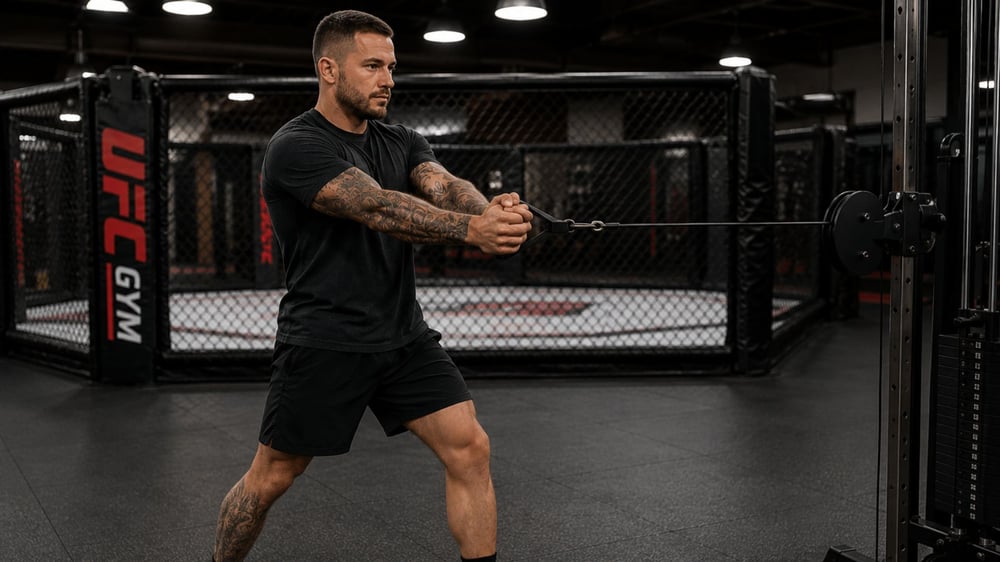
1. Pallof press
3 sets x 10 reps each side
Stand side-on to a cable machine or resistance band, hold the handle against your chest, and press it straight out while resisting the urge to rotate. This trains anti-rotation strength, which is exactly what happens when you throw punches without wobbling across the cage like a supermarket inflatable outside a tire shop. Slow and controlled wins here.

2. Suitcase carries
3 sets x 30-40 meters each side
Grab one heavy dumbbell or kettlebell and walk while staying upright. The uneven load forces your obliques and deep stabilizers to work overtime to stop your body from collapsing sideways. Think of it as teaching your torso to survive getting bumped, clinched, dragged, and punched while staying balanced enough to fire back.
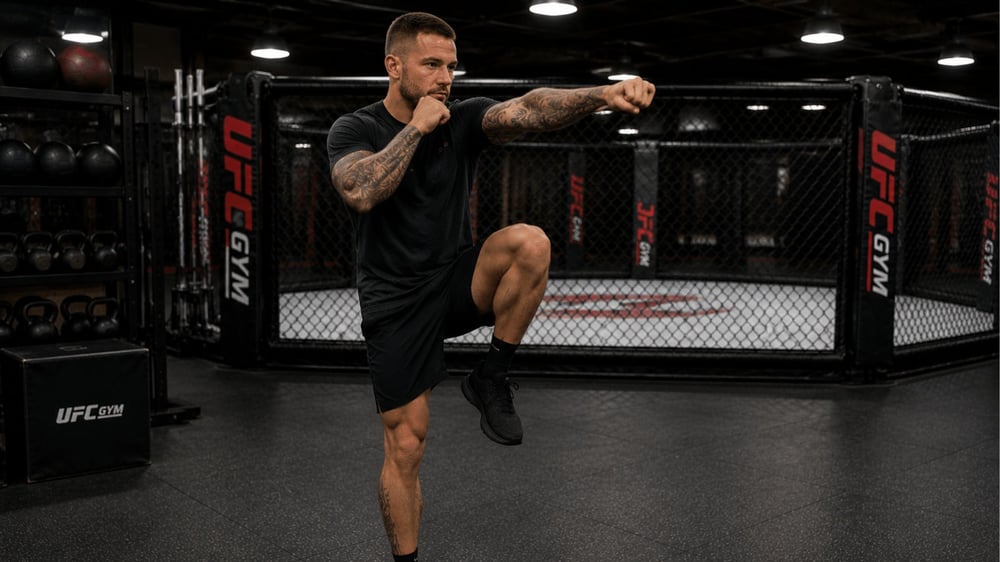
3. Single-leg balance hold with punches
3 sets x 30 seconds each leg
Stand on one leg while throwing light shadowboxing combinations or hit a bag. Simple. Horrible. Effective. This lights up the stabilizers around the hips, trunk, ankles, and spine while forcing your body to coordinate movement under instability. It directly transfers to kicking, scrambling, and staying upright during exchanges.
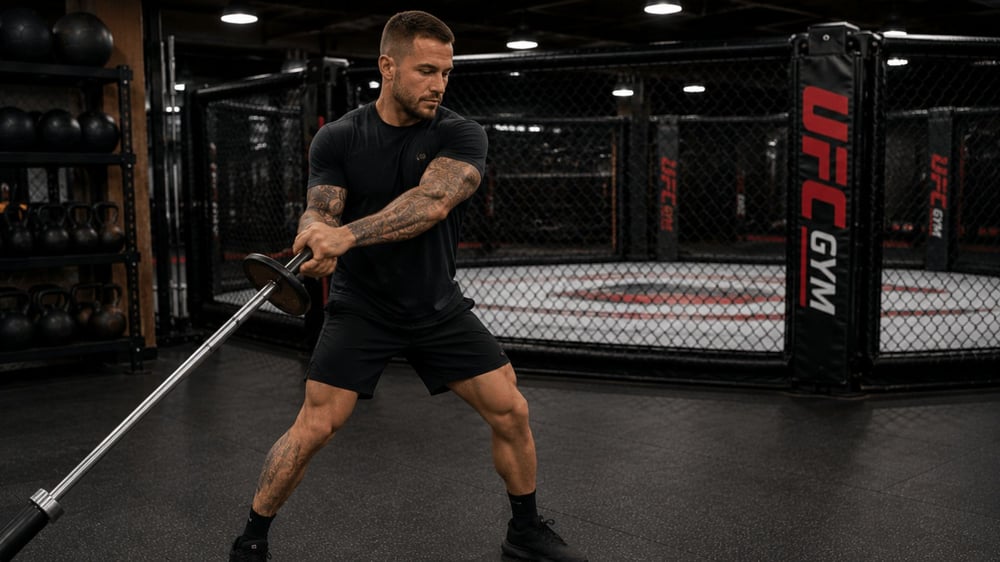
4. Landmine rotations
4 sets x 8 reps each side
Hold the end of a barbell in both hands and rotate explosively from hip to hip. This teaches rotational force transfer from the ground through the torso and into the upper body. In other words, exactly how a rear cross works when it doesn’t resemble someone trying to swat a mosquito.
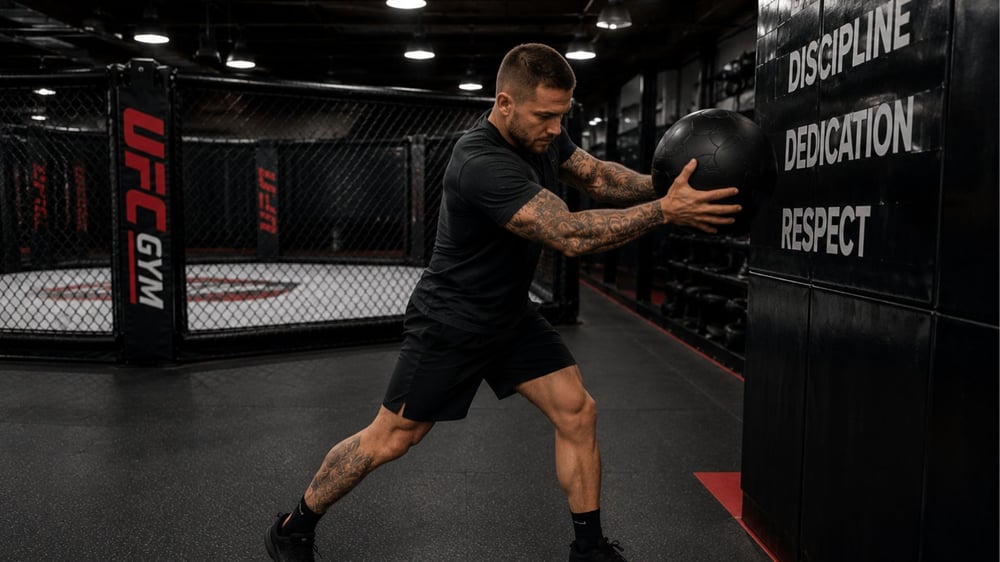
5. Medicine ball rotational slams
4 sets x 6 reps each side
Rotate hard and launch the ball into the wall or floor using your hips and torso together. The studies showed major gains in strike speed and power after explosive core work, especially rotational movements. This is where you train your body to release force violently rather than simply look good shirtless.
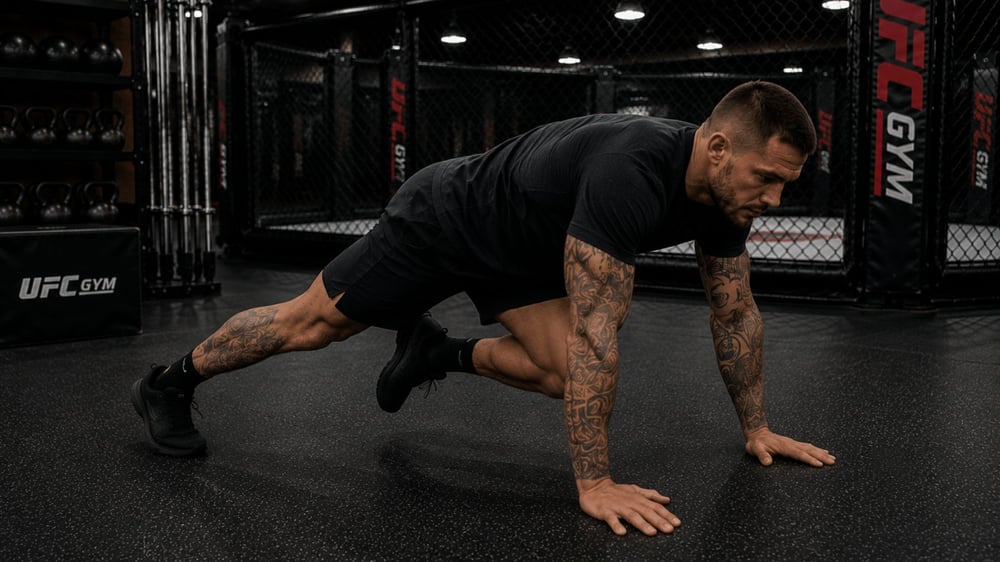
6. Bear crawls
3 sets x 20-30 meters
Crawl forward slowly while keeping your knees hovering just above the ground. Your shoulders, trunk, hips, and spine all work together to stabilize movement while under tension. It feels ridiculous until you realize your lungs are collapsing like a cheap camping tent halfway through the second set.
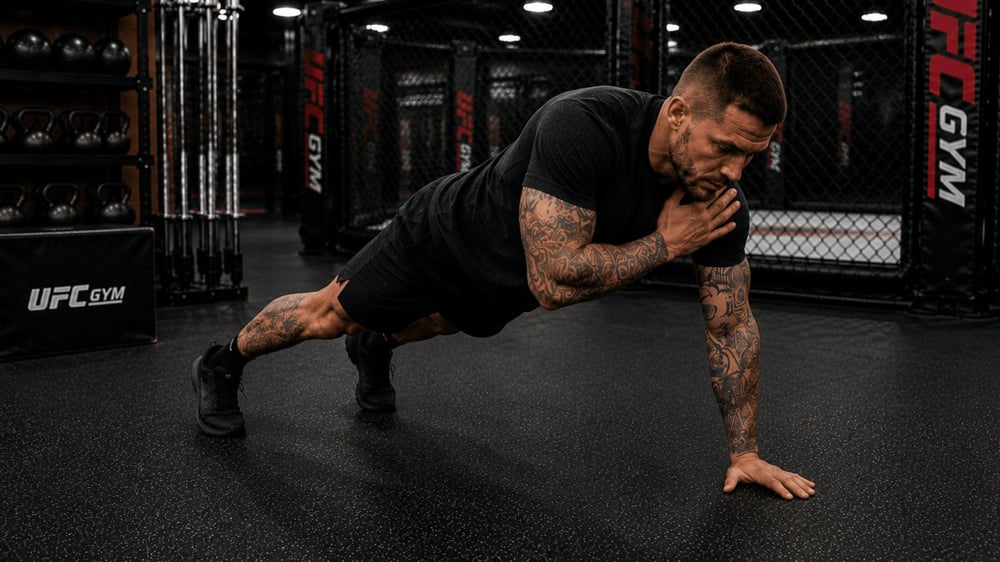
7. Plank shoulder taps
3 sets x 20 total taps
Hold a high plank and slowly tap each shoulder without letting your hips twist. This builds anti-rotation endurance and teaches your body how to stabilize while one arm moves explosively, which is basically striking in a nutshell.
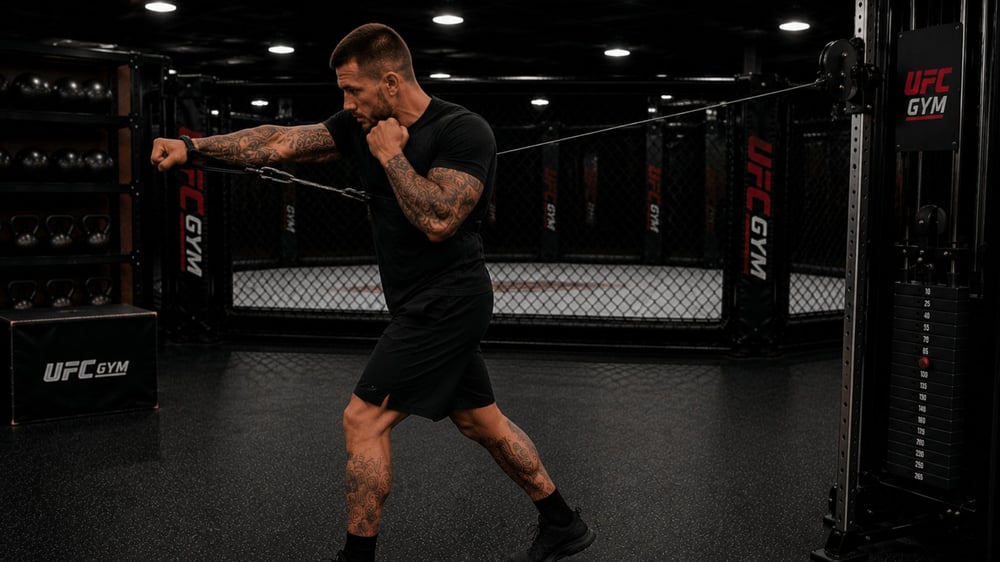
8. Cable punches
3 sets x 12 reps each side
Attach a cable handle behind you and throw controlled punches against resistance. The movement teaches the body how to connect the feet, hips, torso, and hands into one fluid chain instead of several disconnected body parts arguing with each other.
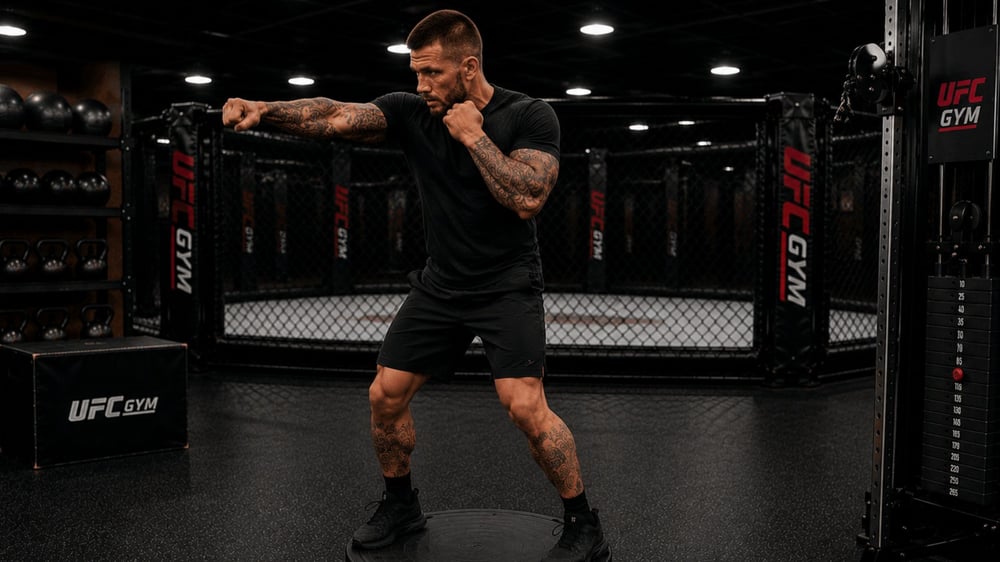
9. Shadowboxing on an unstable surface
3 rounds x 1 minute
Stand on a balance pad, BOSU ball, or soft surface and throw light combinations while maintaining posture and balance. The goal isn’t speed. The goal is to teach your nervous system to stay calm and efficient even when unstable. Which, coincidentally, is most of the fighting.
THE CORE YOU CAN’T SEE
None of the above means visible abs are useless. If you’re lean enough to grate cheese on your stomach while throwing people into the shadow realm, congratulations to you and your genetics. But modern MMA has quietly exposed the difference between looking athletic and being mechanically dangerous. The best cores in the game are often invisible because they’re built for stability, force transfer, balance, and surviving exchanges without the body folding in half. That’s why top fighters can pressure opponents for rounds while staying absurdly composed under fire. Their midsection isn’t there for Instagram thumbnails. It’s there to keep the entire machine connected when the fight gets ugly.