
issue 229
May 2026
The same body mechanics that make fighters dangerous may also explain odd injuries because while most sports protect weaknesses with rules, MMA monetizes finding them.
“F**k Malott!”
After absorbing two low blows in the opening round, Kevin Holland didn’t mince his words when he spoke about his unanimous decision loss to Mike Malott in 2025. This wasn’t a walk-it-off knock, either; it was life-changing. Holland somehow finished the fight before going home to discover that normal life suddenly felt agonizing.
“I couldn’t drive my tractor, I couldn’t ride the horse,” Holland said afterward. “Other than that, that thing was hurting. It was one of those situations where it’s like I’m blessed I’ve already got two kids. Those type of things affect you. F*ck Malott, but other than that, good to go.”
If you’re a dude, you probably just crossed your legs and felt a small wave of phantom pain. Then came the even more relatable part. Holland admitted the physical pain lasted weeks, but the mental side stuck around, though he was able to overcome it and get back in the win column.
“The trauma from getting hit in the nuts is still there,” Holland explained. “Any time anybody aims in that area, I’m like, whoa, chill out!”
Groin trauma can also linger longer than expected because the pain is just local. It has an echo that can trigger abdominal pain and nausea. Just ask Alex Perez, who, after a groin kick in the recent Macao event, was left vomiting for more than 5 minutes, then could not continue. Back to Holland’s sack-whack, a week later, Tom Aspinall revealed he’d been dealing with ongoing eye issues following Ciryl Gane’s controversial eye-poke, adding another bizarre entry into MMA’s growing collection of injurious oddities. Dead calves. Crushed orbital bones. Floating kneecaps. The more fights we see, the more stress testing the human body undergoes. Curiously, many of these injuries may not be random at all, and here’s why every genetic advantage in MMA appears to arrive with its own hidden manufacturing defect.
THE BODY TYPE BOOBY TRAP
You instinctively know certain body types change things. Nobody looks at Alexander Volkanovski and expects him to fight like Israel Adesanya. Then there’s Sean O’Malley, who looks like he’s been stretched out in a medieval rack but KO’s guys half his size. Then there’s Yoel Romero, who looked as if he were assembled by the Soviets from old superhero parts. MMA physiques create different weapons, but they also create different liabilities. A May 2026 studyexamined the physiques of 28 MMA, boxing, and BJJ athletes. The fighters, standing around 170-177cm tall and weighing 60-72kg, often showed the deadliest mix of speed, agility, and power. This seemed to be the athletic sweet spot. Meanwhile, heavier athletes generated terrifying force but sacrificed movement efficiency and endurance. One fighter clocked in at 183cm tall and a colossal 150kg, giving him obvious size and strength advantages, but researchers noted the extra mass reduced his overall athletic movement compared to lighter fighters. At the opposite end of the scale, a 161cm, 48kg athlete displayed what researchers called “extreme agility” and rapid directional movement, which is scientific language for “good luck getting a glove on that slippery bastard.” The important part isn’t who won the MMA science fair. It’s what those body types allow fighters to do mechanically and how that opens them up to unique injuries. Taller fighters with longer limbs often adopt bladed stances to maximize reach and kicking range, but that can unintentionally leave the groin, calf, and eyes more exposed during exchanges. That partly explains why long-range strikers and karate-style movers seem magnetically attracted to eye pokes and low blows. Meanwhile, shorter pressure fighters spend their careers crashing through knee, elbow, and uppercut territory just to close the distance. In other words, every great MMA physique comes with its own hidden tax. The same frame helping you hurt people may also determine exactly how your body eventually gets hurt back.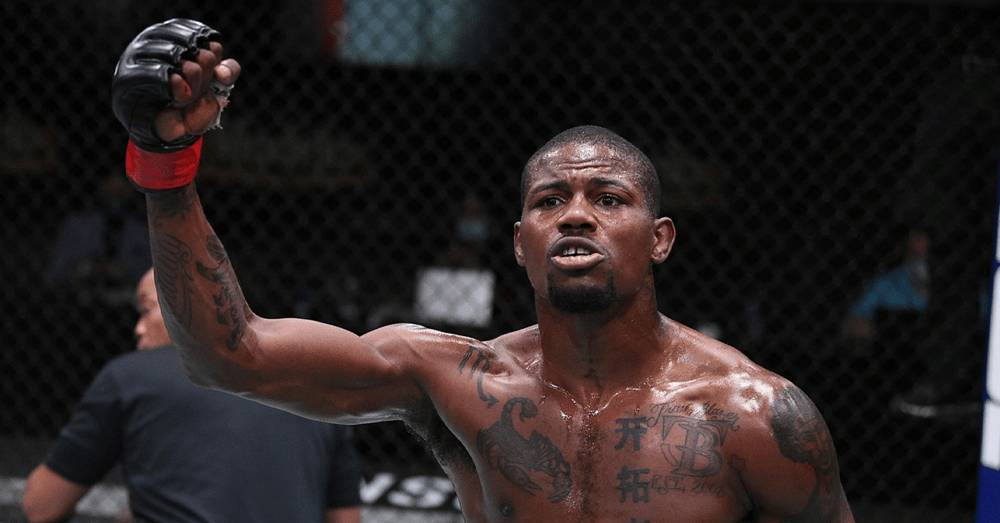
THE REACH ADVANTAGE MYTH
Genetic gifts don’t come more obvious than arm length, but it’s not a cheat code. Tale of the tape graphics flash across your screen, and suddenly, a guy with an extra four inches is the favorite, which is understandable when you consider Jon Jones built an entire generation of paranoia around his reach. But a massive five-year analysis of 2,229 professional MMA bouts found that reach and height barely mattered in most divisions. They did find that younger fighters consistently beat older fighters, but stature and arm span rarely separated winners from losers. In fact, arm span showed a meaningful advantage only in the heavyweight division, where winners averaged a reach of 198.4cm compared to 196.1cm for losers. Everywhere else, the so-called ‘ape index’ advantage was wildly overstated. Which actually makes perfect sense when you watch enough MMA. Long limbs help you hit people from further away, but they also create more moving parts to attack. Longer stances expose the calf and groin. Extended frames create openings for eye pokes and body kicks. Tall fighters often struggle once shorter pressure fighters bulldoze inside their little circle of trust. Reach can look like a superpower until somebody starts cashing in on the openings it creates. It tells you that every physical advantage in MMA comes with a coupon for a different kind of suffering.
THE EYE POKE ERA
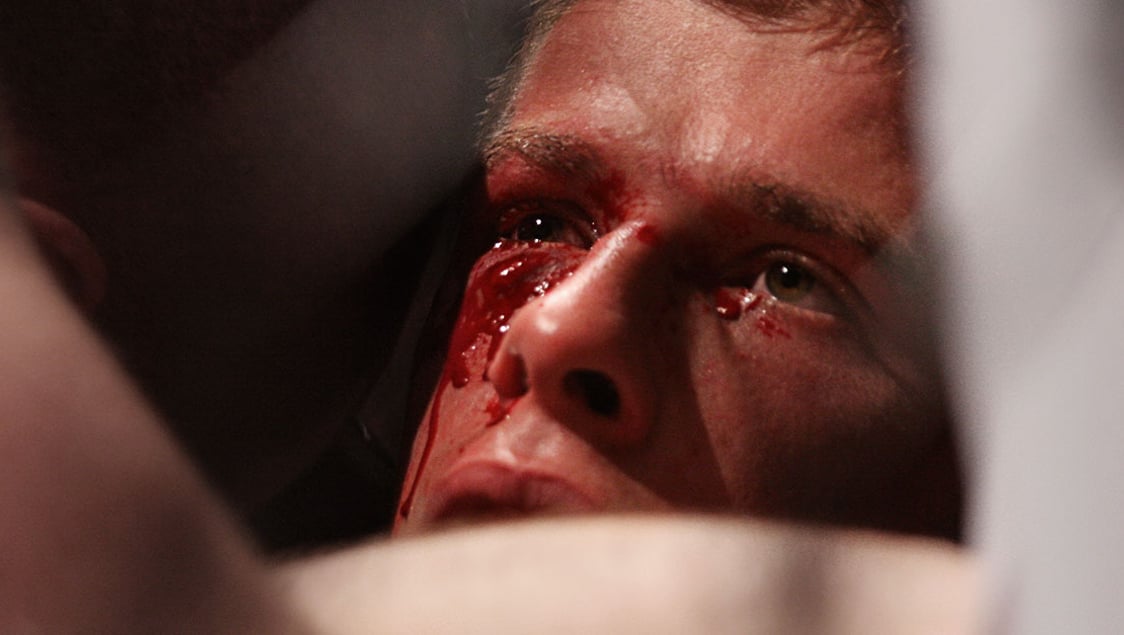
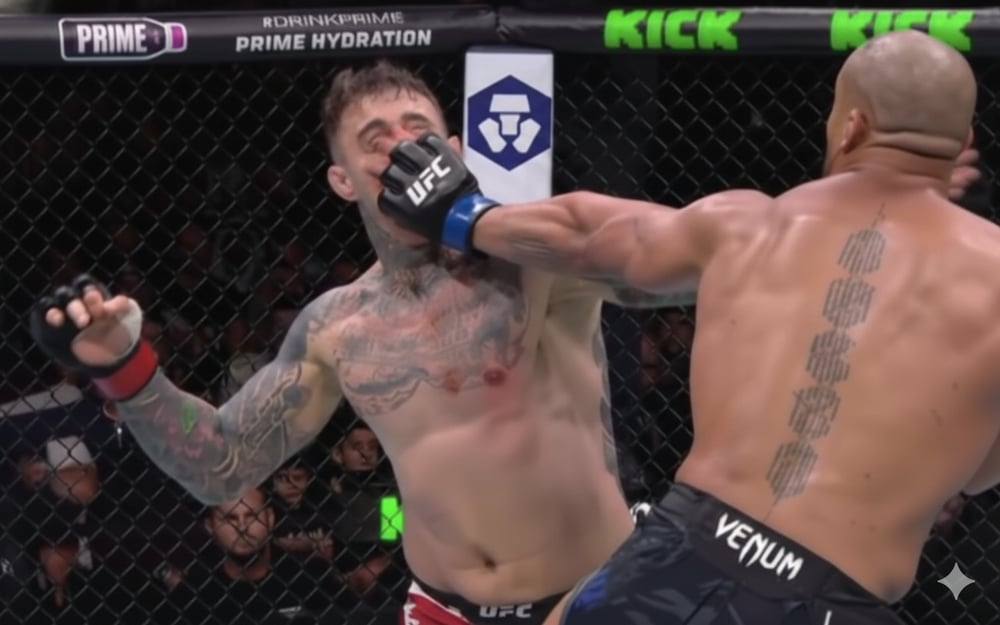
While there were pioneers of MMA’s dirty arts, like Chuck Liddell, Jones was the first fighter to weaponize eye poke and give it mainstream controversy, even after admitting to it. The problem is that modern MMA practically engineers accidental eye contact into the sport itself. Fresh research released last month now suggests this isn’t just bad luck. Eye injuries account for roughly one-third of injuries in boxing and MMA, while studies have found up to 78 percent of MMA injuries involve the head region. The UFC’s own Performance Institute research paints an even uglier picture, finding eye pokes occur approximately once every 14 fights and delay bouts for an average of 50 seconds. That means somewhere inside almost every major fight card, somebody is briefly standing there blinking like they just rubbed hot wing sauce into their globes. That starts making more sense when you consider how modern strikers actually fight. Tall, rangy athletes use long-framed guards to control distance. Karate-style movers flick out probing hands to measure range before attacks. Wrestlers post on the face while scrambling. Then fatigue arrives, reactions slow, and suddenly fingers start drifting dangerously close to places they were never supposed to go. What makes eye injuries especially nasty is how quickly they can alter careers. A calf kick hurts. A low blow traumatizes your subconscious. But vision problems affect the very things fighters rely on most, like timing, reaction time, and spatial awareness. Just ask Michael Bisping, who spent years fighting with one functioning eye while still somehow becoming champion because MMA occasionally feels scripted by the impossible. Even Aspinall’s recent issues after the Ciryl Gane fight showed how one awkward moment can linger long after the swelling disappears. The same reach and distance-management tools that make long fighters effective may also help explain why eye pokes continue to plague modern MMA.
THE BODY KEEPS THE RECEIPTS
The strangest injuries don’t always show up on scans. Sometimes they live inside a fighter’s head. Kevin Holland eventually recovered from being booted directly in the bloodline, but mentally, the damage lingered far longer. A 2026 multidisciplinary review on fear of reinjury found that this stuff is incredibly common across elite sport. More than 50 percent of athletes recovering from major injuries reported significant fear about getting hurt again, even after being medically cleared to return. Researchers identified the fear of reinjury as a major reason athletes fail to return to previous performance levels despite physical healing. So the body heals, but the brain still acts like the injury is waiting around the corner with a baseball bat. The really fascinating part is how that fear changes movement itself. Athletes recovering from ACL injuries showed altered gait patterns and different muscle activation strategies months later. Achilles tendon patients redistributed force through different joints during explosive movements years after the original injury. Even military personnel who had fully recovered from pectoral injuries still avoided bench pressing heavy weights because their brains kept warning them. Now throw that into MMA, where hesitation gets punished immediately. A fighter worried about another eye poke may blink earlier in exchanges. Somebody recovering from calf damage may subtly change stance width. A fighter who’s had their liver punched enough times may tense every time they see a kick loading up. Fear changes reactions. Reactions change movement. Movement changes openings. Suddenly, the injury itself may begin to influence the conditions for the next injury. MMA doesn’t just damage fighters physically. Sometimes it quietly rewires the operating system.
OVERRIDING THE SYSTEM BUGS
MMA has spent decades treating these injuries like structural bad luck, but modern sports science is finally starting to patch the software. It starts with the gear. The sport practically begs for eye pokes because standard four-ounce gloves are built flat, forcing a fighter’s hand into an open-palm layout the second their forearms relax. The fix isn't just asking guys to be nice. It’s geometry. Mandating heavily curved, pre-set glove templates forces the fingers to naturally curl downward at a 30-degree angle when at rest. To poke someone with that setup, you have to actively fight the glove’s internal foam. Then comes the tactical pivot. If long, bladed stances leave Jim and the Twins sitting out like a target on a dartboard, coaches have to rewrite the defensive tactics. We’re already seeing tall, rangy strikers abandon the classic open-palm measuring guard in favor of a closed-fist high shell or a modified Philly defense, swapping extended fingers for forearms and shoulders to control distance. Simultaneously, the ‘dead calf’ epidemic is being countered by heavy stance-switching and dynamic calf-checking, forcing fighters to actively meet an incoming shin with hard bone rather than letting their nerve absorb the blunt force. To break that trauma loop, coaches are turning to neuro-cognitive conditioning. This sees fighters using stroboscopic visual training, where they wear specialized strobe glasses that blink and disrupt visual data while objects are thrown at them, forcing the brain to relearn spatial awareness under stress. Pair that with virtual reality exposure, and you can slowly convince an athlete's hypervigilant nervous system that a strike heading toward their old injury zone no longer equals a career-ending catastrophe.
TRAIN THE WEAK SPOTS
Everyone is built with strengths and weaknesses they didn’t choose. Some bodies are naturally explosive. Some are built for endurance. Some can absorb punishment like an old Nokia 5110. Success isn’t about finding the perfect body. It’s about understanding that every fighter has some sort of hidden manufacturing defect somewhere in the system. The sports medicine researchers listed above found that athletes recovering from injuries often move differently long after their bodies have technically healed. They suggest that to overcome reinjury fear, graded exposure training, movement retraining, confidence rebuilding, and integrated rehabilitation programs can help them restore trust in injured areas while reducing altered movement patterns that may increase future injury risk. And sometimes the sport adapts around the injury itself. Jon Jones’s eye pokes became so frequent that some opponents built training camps to survive them. Quinton ‘Rampage’ Jackson later revealed that, before fighting Jones in 2011, his coaches repeatedly poked him in the eyes during sparring to help him practice fighting through blurred vision. For fans, it also explains why certain injuries seem to stalk some fighters for years. It’s why a fighter can look medically cleared but still move like they no longer fully trust parts of their body. Eventually, every fighter discovers the real opponent was hiding underneath their own skin the entire time. Therein lies the irony. Your greatest weapon is almost always your greatest vulnerability.
...