

issue 230
June 2026
Before championship belts were on the line, the world's greatest fighters were locked in their own battles. We delve into the gritty and inspiring MMA origin stories that forged these warriors into the legends they are today.
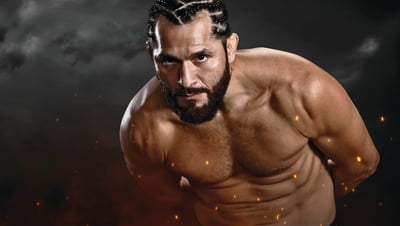
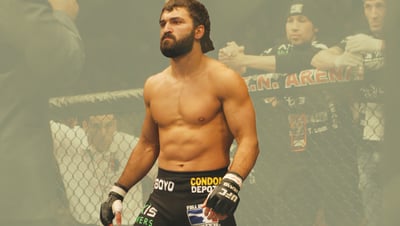
BENOÎT SAINT DENIS – THE ALL-OR-NOTHING WARRIOR
Benoît Saint Denis was born on December 18, 1995, in Nîmes, France, a historic city with plenty of Roman landmarks. As the eldest of five brothers, Benoît’s childhood was anchored in rigid structure, especially given that his father was an officer in the French Army and a high-level judoka, while his mother worked as a schoolteacher. In a busy household ruled by order and athletic output, sports seemed to be the family’s language of choice. Bouncing between soccer fields and rugby pitches as a young boy, he was also urged by his father to master the mats. Judo was a grueling family discipline designed to teach the brothers how to handle physical conflict. From age 8 to 16, he was involved in a strict training regimen across both France and Germany. He eventually earned his black belt, developing a poker face that makes him look completely detached from fear. Saint Denis later explained where that mentality came from in an interview with UFC.com.
“I think just discipline. Because in mixed martial arts, you have so much to study and to learn and to practice. You have no time to lose. I think that mentality I had from my family, from my education and, of course, my time in the French Special Forces, which allowed me to forge it to be a guy that you will never see fade or lose a fight because of the mental part.”
Following in his father's footsteps, Saint Denis took his childhood conditioning straight into the real world, enlisting in the elite 1st Marine Infantry Paratroopers Regiment, which is a renowned unit of the French Army Special Forces Command. For five years, his workplace didn’t have fans like it does today. Instead, it was the volatile combat zones of Mali and West Africa, fighting in counter-terrorism operations. While serving in the special forces in 2017, he began training kickboxing and Brazilian jiu-jitsu, initially as a complement to his military career. The big shift happened when he tested his combat baseline by entering a multi-man amateur MMA tournament in Spain and won the entire thing. It was a win that convinced him there might be another life waiting after the army, one where the bullets were replaced by four-ounce gloves so in March 2019, he officially left the military. Speaking to France Info, Saint Denise looked back on this career change.
“When I left the army in March 2019, I gave myself a clear objective: to reach the elite of mixed martial arts within two years. I only had enough savings for two years of full-time training, so I made myself a promise that I had to make it to the highest level. In this game, you have no time to waste.”
With his life savings ticking down, Saint Denis treated the regional European MMA circuit as a counter-terror mission. He tore through his opponents on a brutal streak of back-to-back finishes, completely bypassing the years of slow, amateur seasoning that most prospects rely on. Appropriately dubbed ‘God of War,’ he’s proof that when you combine the lifetime discipline of a military household with the unbreakable focus of a Special Forces soldier, a two-year timeline isn't a limitation, it’s an execution order.
CORY SANDHAGEN – THE CREATIVE MENTALITY
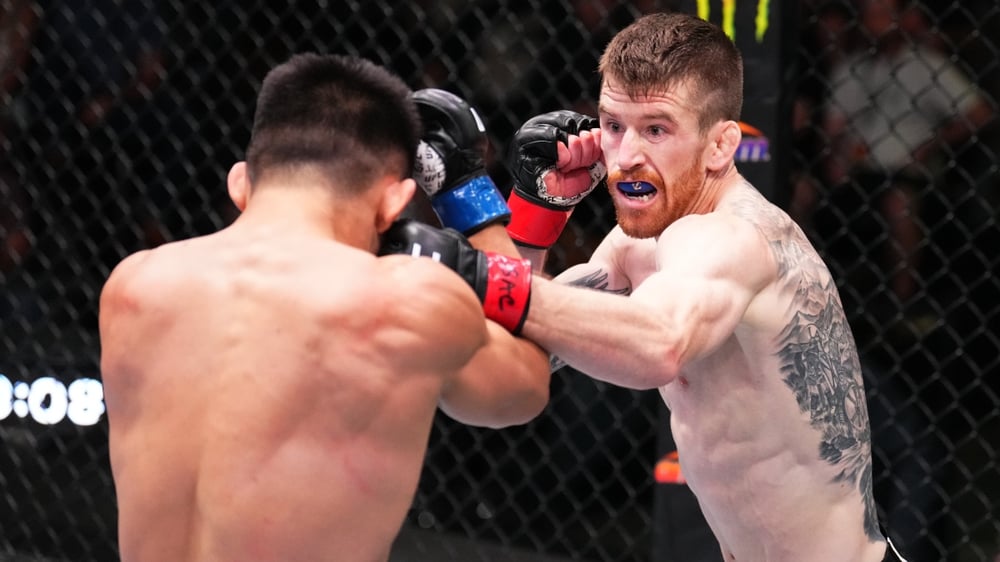
Cory ‘The Sandman’ Sandhagen was born on April 20, 1992, in Aurora, Colorado, and unlike many future fighters, there were no dramatic tales of hardship at the foot of his bed. He grew up in a stable suburban household, but beneath the quiet rhythm of Colorado life was a kid who seemed strangely fascinated by getting punched in the face. At six years old, his parents put him in Taekwondo classes, but it became obvious, he wasn't built for the rulebook. His coaches constantly scolded him for throwing punches during sparring, eventually frustrating him enough to quit. To redirect all that energy, his parents even headed to Walmart and bought him a pair of American flag boxing gloves. Unfortunately, the gloves spent more time gathering dust than collecting sweat. By high school, Sandhagen had traded martial arts for basketball. As a guard at Smoky Hill High School, he dreamed of playing college ball but wasn't tall or good enough to attract the schools he wanted. Instead of sulking, the 17-year-old walked into High Altitude Martial Arts in January 2010, originally hoping to improve his fitness and balance for basketball. That plan lasted about five minutes. Under coach Christian Allen, basketball became the least interesting thing in the room. Sandhagen told the University of Colorado about his shift in focus.
“I was a big sports kid growing up. When I was in high school, I wanted to play basketball in college, but I wasn't big enough or good enough to play at a school that I wanted to go to. I started doing martial arts because I saw it on TV and thought it was a cool-looking sport. It consumed my life not long after. I poured all of my former basketball energy into fighting.”
The dream really took hold while attending the University of Colorado Boulder, where he earned a degree in psychology. His days became a game of Tetris, squeezing classes around training and bouncing between gyms while competing on the amateur kickboxing circuit. Along the way, he captured WAKO National and World titles and began developing the unusual style that would later leave elite bantamweights looking like they were trying to catch smoke with oven mitts. Speaking about how his mindset has evolved, Sandhagen explained:
“Success in this sport requires creativity. You have to be able to think outside the box. My early style, I feel, was very creative. There's a lot of, ‘Oh, I like this here, I don't like this here.’ At this point in my career, now that I'm past a lot of those learning steps, it's way more militant. Now I know that if I do all of these certain things at the right time, then I'll get the outcome that I want.”
After tearing through the regional scene, Sandhagen received a short notice call to the UFC in 2018 and established himself as one of the sport's most inventive strikers. Not every MMA fighter needs a tragic backstory or a childhood spent fighting in the streets to become world class. Sometimes all it takes is a missed basketball dream, a psychology degree and the stubborn refusal to let a pair of American flag boxing gloves go to waste.
LONE'ER KAVANAGH – THE BRED ASSASSIN
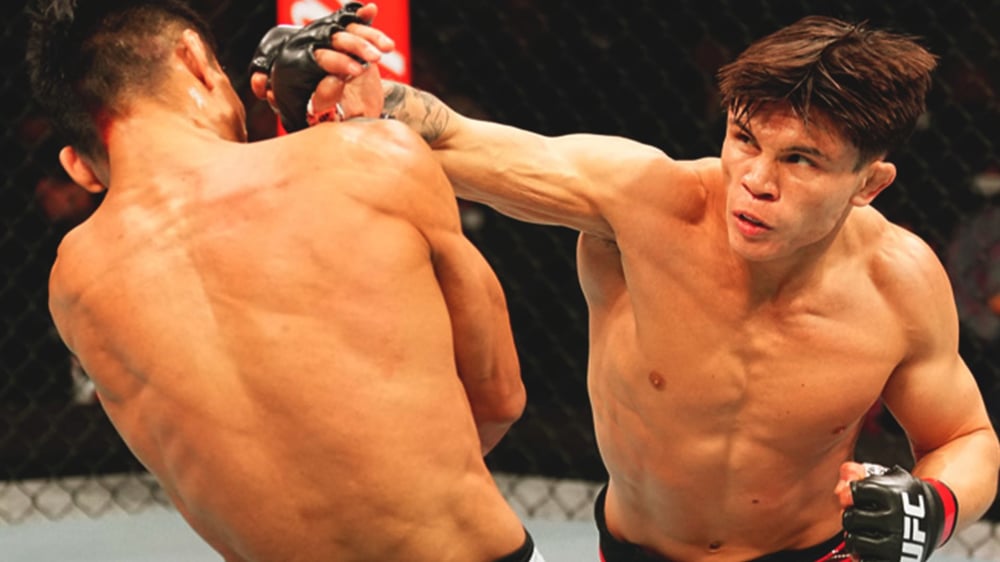
Lone'er Kavanagh was born on June 9, 1999, in London, England, into a household where martial arts was practically the family business. Born to an Irish father and a Chinese mother, his identity was shaped from the very beginning. Even his first name, Lone'er, translates to Little Dragon in Chinese, a name chosen by his mother long before anyone knew he would grow up trying to remove people's consciousness for a living. Both his parents were martial artists who met through their shared love of combat sports. But when Kavanagh was just six years old, tragedy struck with the passing of his father. Left with a hole in his life, it was his mother who kept him connected to those fighting roots by enrolling him in kickboxing. Kavanagh told the London Evening Standard about his unusual upbringing.
“Because my parents were fighters, I was surrounded by it, but I first started when I was eight. My first competition when I was 10. It's fun and I just like the atmosphere in the gym and everyone's like family. I've been bred for combat since I was eight.”
Despite growing up around martial arts, the spark that pulled him towards MMA came from one of the unlikeliest heroes imaginable. Kavanagh admits he was a chunky kid growing up, and his entire outlook changed after watching an old UFC fight. Speaking to House of Solo Magazine, he recalled when the unlikely hero stepped up.
“One of the first ever fights I watched was a Roy Nelson fight. I was a bit of a fat kid growing up, so when I saw this big, fat hillbilly knock someone out, jump on the cage and rub his belly, I was like, ‘That's something I can see myself doing.’ And then I kind of fell into it from there.”
Not many future UFC fighters can trace their inspiration back to Big Country rubbing his stomach like he'd just won a pie-eating contest, but role models come in all shapes. As the years rolled by, Kavanagh's natural speed and athleticism began separating him from the pack. He captured five kickboxing world titles and became a regular fixture at Great Britain Top Team under former UFC contender Brad Pickett. His mother occasionally had the unenviable task of trying to convince him that school might actually be useful. He eventually earned a sports science degree, although by that stage his career path had already been decided but it clearly gave him perspectives on professional success. Speaking about the sport, Kavanagh explained:
“I feel like fighting is 70% mental. You're going to have days where you doubt yourself, or when you've got a fight coming up and you're thinking, ‘What if this happens? What if that happens?’ It's about being able to replace those with positive thoughts and understanding that they're just passing thoughts and you're going to do it anyway.”
After tearing through the British regional scene and earning a UFC contract with a first-round knockout on Dana White's Contender Series, Kavanagh quickly announced himself as one of the flyweight division's most exciting prospects. Greatness doesn't always come from growing up on the wrong side of town. Sometimes it comes from a mother who names her son after a dragon, a father who left behind a fighting blueprint, and a childhood belief that if Roy Nelson could make it, then maybe the chunky kid from London could too.
...