

issue 230
June 2026
9 April 2011
San Diego, California, USA
Strikeforce: Diaz vs. Daley
By Ray Klerck
As MMA settles into an era of pristine tactical mastery, it is worth looking back fifteen years to one of the moments where the old world collided with the new. There was a time when the spectacle wasn't about a clean transition or a calculated scorecard. Sometimes it was a raw, high-wire thrill to see who would fall first, and that was what got the crowd on their feet. There are classic fights out there that test a game plan over five rounds, and then there are single rounds that feel like they span a lifetime. Strikeforce: Diaz vs. Daley was far from a marathon, which is usually featured here. Instead, fans got a five-minute drag race inside a burning building.
THE LANDSCAPE OF 2011
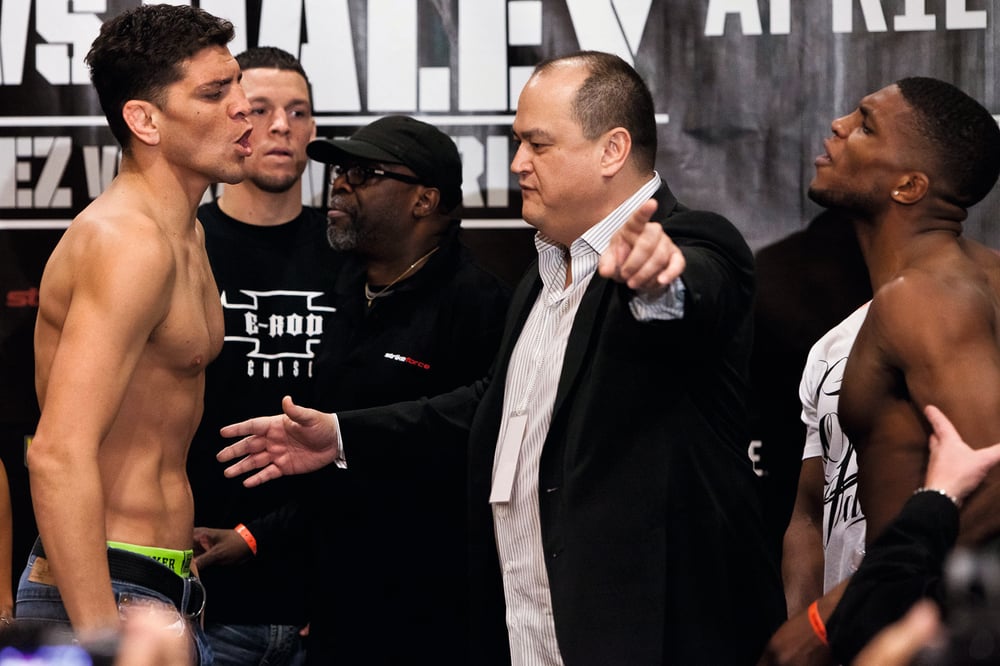
By the spring of 2011, Strikeforce was viewed by some as an outlaw promotion that kept the spirit of unfiltered, competitive madness alive. Although Zuffa, the UFC’s parent company, had somewhat shockingly bought the organization just one month prior, the fighters competing under Strikeforce didn’t care and still put everything on the line. The welterweight division belonged to Nick Diaz, the personification of Stockton, California: a high-volume, foul-mouthed triathlete with a chin made of granite who was riding high on a nine-fight win streak. Standing across from him was Paul ‘Semtex’ Daley. The British slugger was fresh off four wins, including a victory over Jorge Masvidal, and carried a terrifying rep as the most concussive, single-shot puncher in the weight class who had recently been exiled from the UFC for his hot-headed nature. On paper, it was a classic matchup of styles. Diaz has the death-by-a-thousand-cuts attrition boxing against Daley’s one-punch power.
THE HIDDEN BACKSTORY
What the replay won't show you is the invisible ticking clock hanging over both men. Daley was fighting for professional redemption. A year earlier, he had been permanently banned from the UFC after throwing an infamous, post-fight sucker punch at Josh Koscheck. Strikeforce was his final life-line to the elite tier of the sport, and the championship belt was his ticket to force his way back to relevance. Diaz, conversely, was fighting to protect a kingdom he had spent years building in northern California. His success had captured the cultural imagination of fans who loved the raw, uncompromising path he was carving.
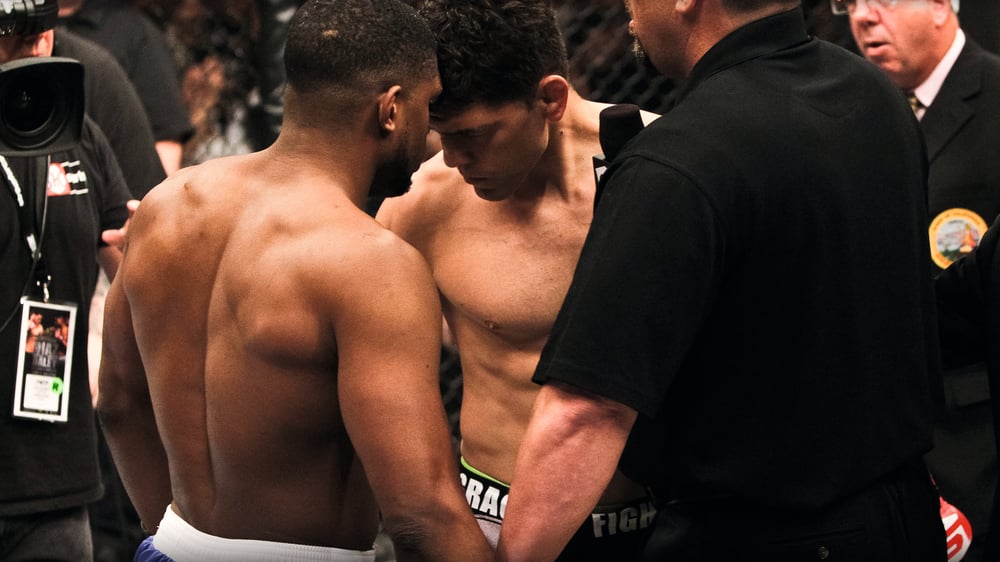
Backstage, the tension was suffocating. There were no friendly handshakes or mutual respect. When the fighters met at the weigh-ins, a riot of insults broke out between their respective camps. They didn't care about the new corporate overlords at Zuffa. They only cared about destroying the other man.
THE FIRST DOWN
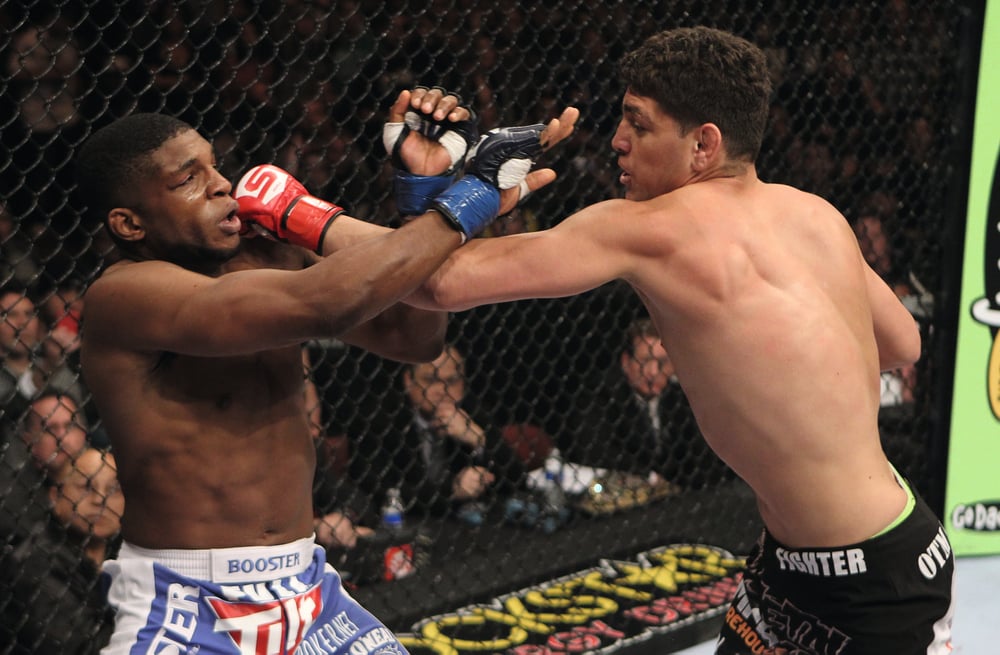
The opening bell rang, and any concept of a strategic feeling-out period was blown to smithereens within three seconds. Diaz walked straight to the center, drop-stepping into his boxing stance while slinging verbal insults at Daley, goading the Brit to hit him. Daley obligingly accepted the invitation. ‘Semtex’ let fly with a roaring left hook that connected flush, sending Diaz staggering backward against the fence. Diaz hit the deck, sending a shockwave through the San Diego crowd.
But what the tape doesn't fully capture is the psychological defiance that followed. Diaz was down on all fours, bobbing and weaving his head then somehow stood right back up, wiped the sweat from his eyes, smiled through the blood, and regained his composure. It was a moment that Daley would possibly regret as he didn’t capitalize enough on it.
DROPPED AGAIN
Daley swarmed immediately, unloading a barrage of hooks that would have put a normal man into the front row of the bleachers. The arena was deafening as Daley connected with another thunderous shot, clipping Diaz and forcing him down for a second time. It looked like it could be an early execution. Yet again, Diaz scrambled back to his feet, refusing to let the British slugger establish positional dominance. Daley, sensing the finish was close, rushed forward and landed a third devastating left hook that dropped Diaz once more. The champion was floating in deep space, out on his feet for a microsecond, but his muscle memory and Stockton guard held. He clawed his way back up, using the cage to steady his footing while returning fire through a crimson haze.
THE MAP TO VICTORY
With less than two minutes remaining in the frame, Diaz’s master plan began to take shape. He relied on his metronomic, piston-like jab to disrupt the rhythm. Every time Daley swung for the fences, Diaz subtly rolled with the punch and met him with a short, stinging right hand that forced a reset. Daley, who had expended an immense amount of explosive power looking for the early knock downs, began to look slightly hunched and sluggish. Diaz sensed the micro-fatigue and instantly turned up the volume. He trapped the Brit against the cage, abandoning any defensive safety to hammer short hooks into Daley's ribcage and head. Diaz was forcing Daley to learn that raw power is a finite resource.

THE SEPARATION FROM SENSES
In the final thirty seconds, the sequence bordered on absolute madness. Daley found one last desperation surge, uncorking a massive left hook that briefly wobbled Diaz and got him to the ground where he bobbed and weaved once more. Daley with 1”05 left on the clock was ground and pounding Diaz with powerful hammer fists, looking like he was a clear winner. It was the Brit's final bullet because he unexpectedly let Diaz stand up with just 30 seconds on left. Diaz doesn’t blink when he gets a lifeline. He absorbed the blow, stepped forward, and unloaded a crisp, multi-punch combinations that caught Daley right on the jaw. The Brit’s legs turned to jelly. He collapsed forward onto the mat, completely spent and separated from his senses. Diaz swarmed with ground-and-pound strikes, and referee John McCarthy stepped in to stop the slaughter at 4:57 of the very first round.
THE FINISH BEFORE THE BELL
Was the stoppage 3 seconds too early? Some say Daley could have survived, but there was no second round. No third round. Just five minutes of some of the most concentrated, high-stakes collision the sport had ever witnessed. Nick Diaz kept his Strikeforce Welterweight Championship, but the performance did something far larger. It became the defining artifact of the Stockton fighting method. It was a system built entirely on the systematic breaking of an opponent’s soul through relentless volume and psychological warfare. For one night in San Diego, before the sport reached its current era of hyper-disciplined grappling mastery, two men proved that you don’t need 25 minutes to make a fight timeless. You just need five minutes of full, unadulterated commitment.
...